
On October 1, 2013, two weeks after Grand Theft Auto V went on sale, Rockstar switched on a multiplayer mode that had shipped in the same box at no additional cost. The servers fell over. The press coverage that week was mostly about the servers falling over. Nobody writing at the time described the launch as the most consequential thing Rockstar would do that decade, and there was no particular reason to: free multiplayer bundled with a single-player game was an ordinary thing for a large release to include in 2013, and this one did not appear to work.
Thirteen years later, that mode is the reason Grand Theft Auto VI exists in the form it does, and the reason it took until now to exist at all.
The standard account of Rockstar's influence on the shape of contemporary games is the open world: the ambient city, the traversal, the mission structure radiating out from a map, the whole grammar that Grand Theft Auto III established in 2001 and that a generation of games absorbed. That account is true and it is the wrong emphasis, because the open world was the most copyable thing Rockstar ever made. It was reproduced within eighteen months by every studio with an art department, refined by Ubisoft into a production methodology, and is now a commodity feature that a mid-sized team can deliver on a licensed engine. Whatever Rockstar's contribution to it was, that contribution has been fully distributed.
This is a form-and-systems reading of the thing that was not distributed, because it could not be. Grand Theft Auto Online is a machine that converts player attention into revenue at a rate sufficient to make shipping another game economically optional, and the design of that machine, rather than the design of any city, is Rockstar's actual inheritance to the medium. It bought the studio something no other studio has been able to buy, which is the ability to say nothing for a very long time.
Look at what the machine is, mechanically, because the mechanism matters more than the totals.
The mode runs on a single in-fiction currency. That currency can be earned by playing and it can also be bought with money, through packs that Rockstar named after sharks and priced in tiers. The two supply routes are the whole design. Everything else in the system exists to set the exchange rate between them: how long an activity takes, how much it pays, what a new vehicle or property costs, and how those two curves move relative to each other over time.
Over the mode's life they moved apart. Content added in later years carried prices that bore no relationship to the payouts of activities added in earlier years, so the amount of playing required to buy the newest thing rose steadily, year over year, while the price of a card stayed where it was. This is not a hidden mechanism and it is not a scandal. It is the standard architecture of a currency-based live economy, and Rockstar executed it with more patience than most, wrapping each expansion in a heist, a business, a set of missions that were genuinely made rather than merely priced. The updates arrived on a weekly cadence for years. Somebody was writing them.
What the architecture produces is an income stream that does not depend on a release. Take-Two's own reporting language for this category is recurrent consumer spending, and the company has spent a decade describing it to shareholders as a growing share of what it takes in. A publisher whose revenue arrives in a lump when a game ships is a publisher on a schedule: the next game has to arrive before the last one stops paying, and every quarter of delay is a hole in a forecast that somebody has to answer for. A publisher with an annuity is not on that schedule. The hole fills itself.
That is the whole argument, and the numbers around it are almost incidental. Grand Theft Auto V passed a billion dollars of sell-in within three days in September 2013 and has since sold more than two hundred million copies, which are the figures everyone cites. The figure that actually explains the last thirteen years is the one that never appears as a headline: the amount arriving every quarter from a game released during the previous console generation, from players who bought it years ago, in a mode whose servers fell over on the first day.
Consider the release intervals in that light. Four years separated San Andreas from Grand Theft Auto IV. Five separated IV from V. Thirteen separate V from VI. The intervals did not lengthen because games became harder to make, although they did become harder to make. They lengthened because the pressure that used to force the interval closed was removed.
Before the part that matters beyond one studio, there is a formal consequence inside the work that gets very little attention, and it is the most interesting thing the machine did.
Grand Theft Auto V's single-player campaign was built around heists: a planning stage, a crew hired from a roster with real tradeoffs between cost and competence, an approach chosen from two options, and an execution in which the earlier decisions came due. It is the most structurally ambitious thing in the game and it was, in 2013, the clearest statement of what the series thought a mission could be. That structure was then lifted into the online mode, expanded, and turned into the core of a decade of content, where it became the thing a group of four people did together on a Saturday.
Which means that the last decade of Rockstar's design work on the Grand Theft Auto form has happened almost entirely in the multiplayer mode, under a weekly release cadence, for an audience that returns every seven days. That is a completely different authorship model from the one that produced the single-player games, and it produces different objects. A weekly cadence rewards novelty over coherence, because the thing being sold is a reason to come back on Tuesday. It rewards escalation, because each addition has to be legible as more than the last. And it rewards spectacle over friction, because friction is what a returning player has already paid for once.
The drift is visible in the mode's contents over its life. Grand Theft Auto V's Los Santos was, by the standards of the series, restrained: a satire of a real city with a satirist's commitment to recognisability. The online version of the same city acquired, over a decade of updates, a research facility plot, a doomsday scenario, extraterrestrial material, and a hovering rocket-armed motorcycle that became for years the defining object of the mode's social life. None of that is a failure. It is what the weekly form asks for, and the studio supplied it competently. But it is a different aesthetic from the one the single-player games were built on, and it has been the studio's daily work for longer than the single-player games ever were.
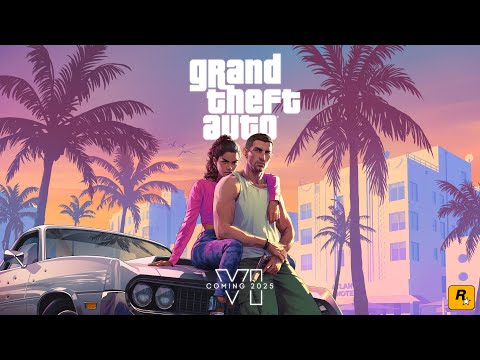
This is the open question underneath the new game that no trailer can answer. Grand Theft Auto VI will ship with a campaign and, on any reasonable expectation, an online mode will follow it. The campaign was designed by a studio whose accumulated recent muscle memory is in the other form. Whether the single-player game arrives shaped by thirteen years of grounded satire or by thirteen years of weekly escalation is a question about which department's habits won, and it is the one thing about November worth being genuinely uncertain about.
Now the part that matters beyond one studio.
What Rockstar exported was not the open world and not the annuity. It was an expectation. Somewhere in the last decade the idea settled, among audiences and among the executives who commission work, that a serious game of a certain scale should take the better part of a decade, cost several hundred million dollars, and be delayed however many times the delay requires. Players now defend delays on the studio's behalf. That expectation is a direct product of one studio's public behaviour, and it has been adopted by studios that do not have the mechanism that makes the behaviour survivable.
This is the mismatch that has done the damage. A publisher inheriting the Rockstar timeline without the Rockstar annuity is a publisher spending eight years of payroll against a single day of revenue, which is a bet that cannot be hedged and cannot be repeated if it fails. The rational responses to that bet are all bad for the medium's commercial middle: raise the budget until the project is too visible to cancel, attach a live-service economy to it in the hope of manufacturing an annuity of one's own, or do not make the thing at all. Games in the twenty to sixty million dollar range, which is where a great many of the medium's most interesting works were made between roughly 2005 and 2015, are the ones that have thinned out, and they thinned out because that budget band offers neither the safety of a small project nor the returns needed to justify a long one.
It is worth being precise about who bears that mismatch, because it is not distributed evenly. A studio owned by a publisher with a broad catalogue can absorb one long project against the rest of the portfolio. An independent studio financed project by project cannot, and its funding conversation now begins against a comparison it did not ask for: the reference points a financier has in mind for what a serious open-world game looks like were all made under conditions no independent has access to. The comparison is not stated in the room. It does not need to be.
The second-order effect is on what gets proposed at all. A team that knows the finished thing will be measured against work produced by six hundred people over a decade tends not to propose the thing it could actually make well in three years with sixty. It proposes either something much smaller, where the comparison does not apply, or something that gestures at the scale it cannot reach. The middle option, a game of moderate scope executed to a high standard, is the one that has become hardest to argue for, and it is not because anyone decided it was a bad idea.
There are three counter-readings here and each of them lands somewhere.
The first is that blaming a single studio for a structural change is lazy, and it is. The squeeze on mid-budget production has causes that have nothing to do with Rockstar: the collapse of retail shelf space as a discovery mechanism, the cost of user acquisition on storefronts holding hundreds of thousands of products, the rise in engine and art costs faster than in ticket prices, and the interest-rate environment that made speculative content financing expensive after 2022. Rockstar did not do that. What Rockstar did was normalise a timeline that made the situation harder to survive, which is a smaller claim and a defensible one.
The second is that the annuity is not obviously a good thing to have, and that the studios which chased one mostly destroyed themselves doing it. The last decade is full of large projects built as live services that shipped, failed to hold an audience, and closed within a year or two, taking their studios with them. Set against that record, the correct thing to credit Rockstar with may be restraint: the company built exactly one of these and did not attempt to convert every subsequent project into another. It is a stranger and more interesting discipline than it looks.
The third is that a long development does not buy quality, and the record is full of counterexamples in both directions. Games have emerged from decade-long development in poor shape, and games have been made quickly and well. The wait is a permission, not a guarantee.
The argument is easiest to see in the two studios that sit at either end of it.
Valve is the extreme case of the annuity. It operates a storefront that takes a share of a very large fraction of all personal-computer game sales, which is an income stream of a scale no development schedule can meaningfully affect. The observable result is that Valve has released almost no games. Sixteen years separated Half-Life 2 in 2004 from Half-Life: Alyx in 2020, and the intervening output was small in number and mostly experimental in intent. This is not a criticism, and Alyx is a serious piece of work. It is a demonstration of what happens at the limit: when revenue is fully decoupled from shipping, shipping becomes something a company does when it feels like it, and the company will feel like it rarely.
CD Projekt Red is the other end. Cyberpunk 2077 followed The Witcher 3 by five years, was announced far in advance, carried a public date, and was released in December 2020 in a state that forced Sony to remove it from the PlayStation store, prompted refunds, and cost the company a substantial part of its market value. The studio had the ambition and the talent. What it did not have was an income stream that would let it move the date a fourth time, and the difference between that position and Rockstar's is the whole distance between a game that was finished and a game that was shipped.
Rockstar sits between them, which is the interesting place to sit. The annuity is large enough to remove the schedule and not so large that shipping has become optional. That is a narrow band and it is not a position any studio can plan its way into.
The permission is nonetheless the thing worth naming, because it is visible in the work.
What thirteen years of not needing to ship produced, at the level of the object, is a studio able to make decisions that no schedule would allow. Red Dead Redemption 2, in 2018, opens with roughly five hours in which very little happens and the player is asked to walk through snow, which is a decision only a studio with no quarter to fill can make. The animation systems in that game carry costs, in production time and in player responsiveness, that a project on a release calendar would have written off in the first review. Rockstar's whole aesthetic since 2013, the weight, the friction, the refusal to speed anything up, is downstream of a financial position rather than of taste alone.
The costs are visible too, and they belong in the same account.
Red Dead Online, launched alongside the same game, was the attempted second annuity and it did not work; the updates thinned and then effectively stopped, and a substantial player community was left holding a game the studio had moved on from. In October 2018 Dan Houser told an interviewer that some teams had worked one hundred hour weeks to finish Red Dead Redemption 2, a disclosure that Rockstar then spent weeks clarifying, and which made unavoidable a conversation about what the long timeline actually costs the people inside it. The freedom from a schedule at the corporate level did not distribute evenly to the people doing the work. In September 2022 roughly ninety clips of unfinished Grand Theft Auto VI footage were taken and published by an intruder, an event that ended in a Southwark courtroom the following year, and which forced a studio that had said nothing for nine years to make a statement about a game it had never announced. And the announced date has moved more than once since the first trailer put a year on the screen in December 2023.
None of that reads like a company in comfortable control of its own timeline. It reads like a company that has bought the right to take as long as it needs and is discovering what taking as long as it needs actually involves.
There is a category of business that operates this way outside of games, and it is worth looking at because the shape is old. A cathedral chapter with an endowment does not build to a deadline; it builds until the money or the will runs out, and the fabric fund pays the masons whether or not the west front is finished this decade. The endowment is what permits the standard of work, and it is also what permits the work to go on so long that nobody now alive remembers commissioning it. The masons are still paid on Friday.
Grand Theft Auto VI arrives on November 19. Somewhere in a Take-Two filing, a line item will record what a twelve-year-old game earned in the quarter before it.