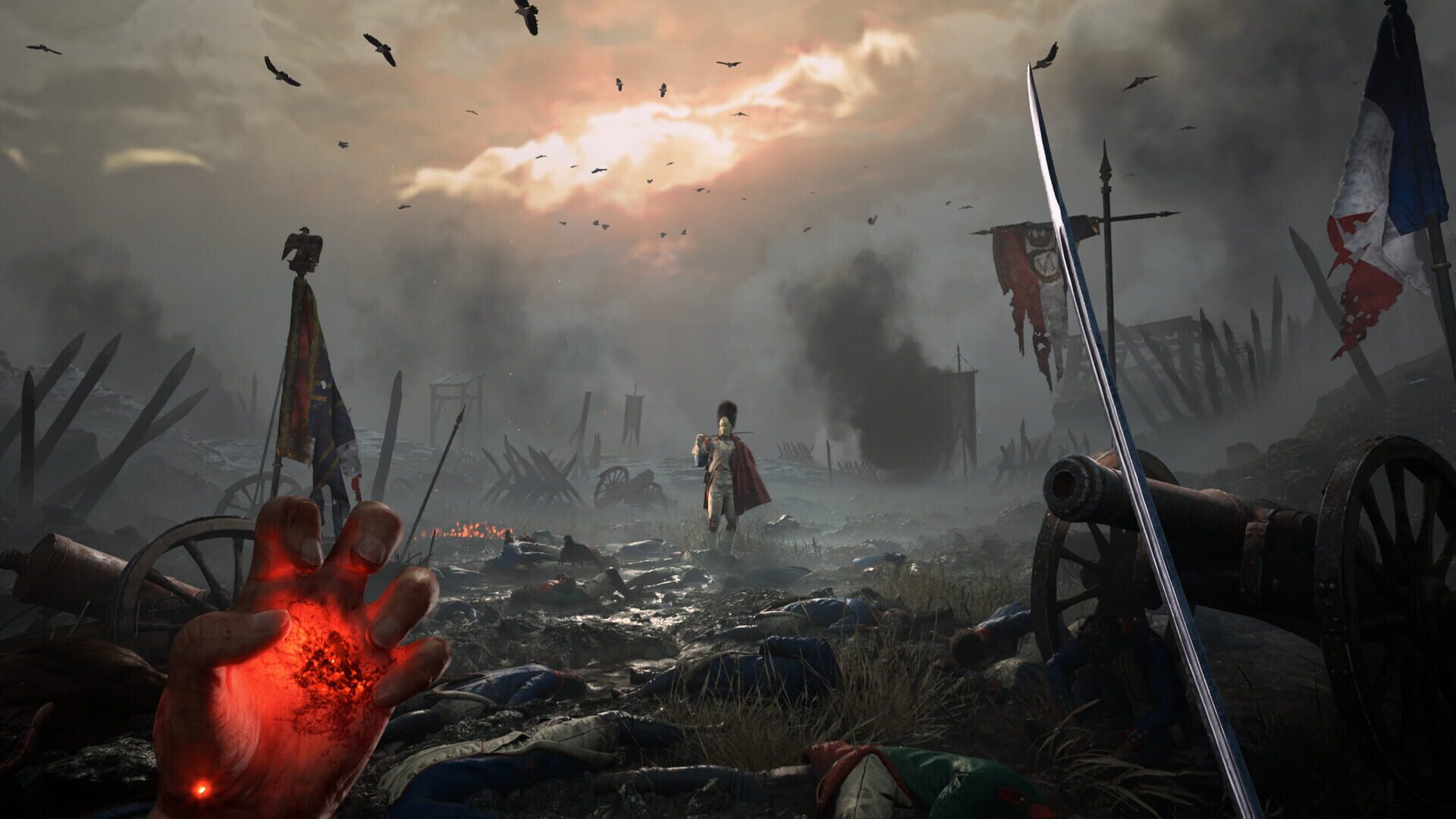
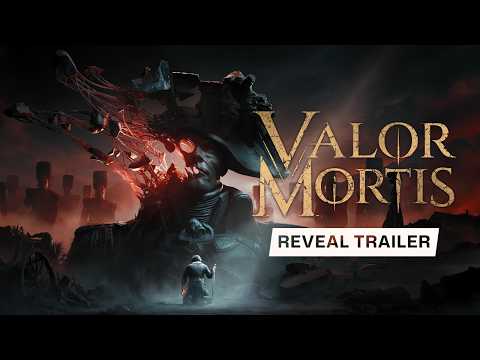
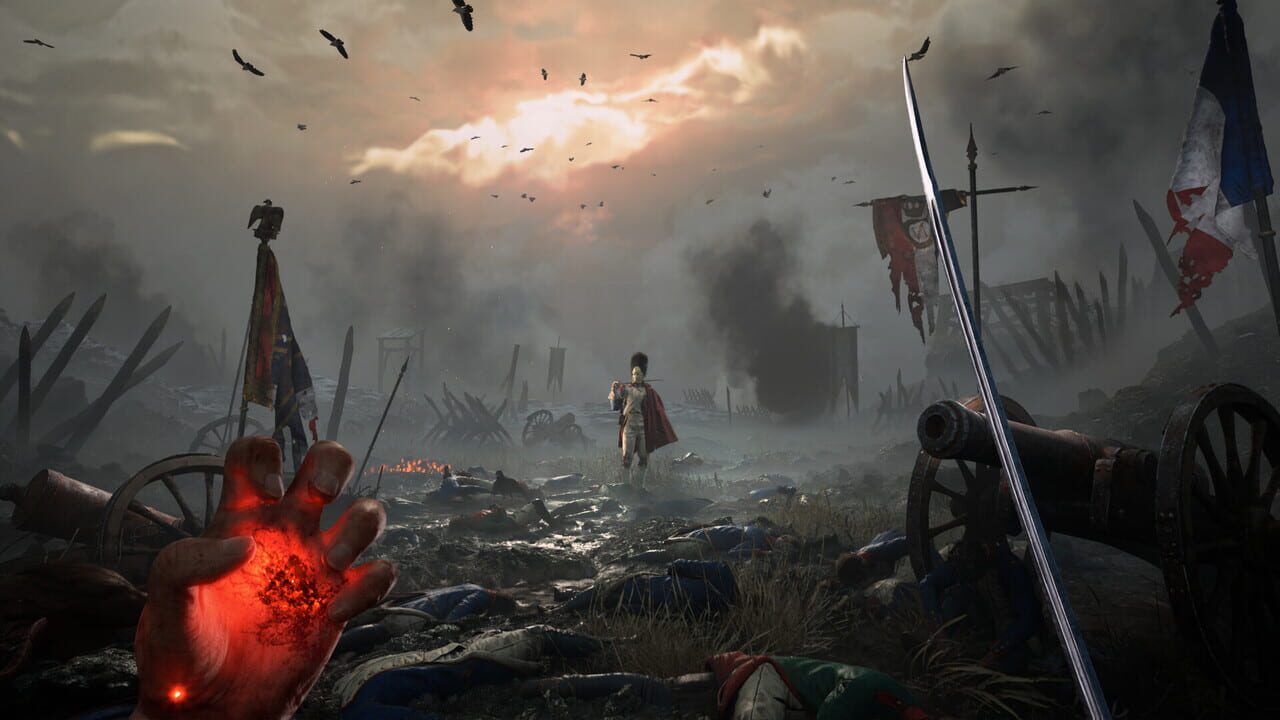
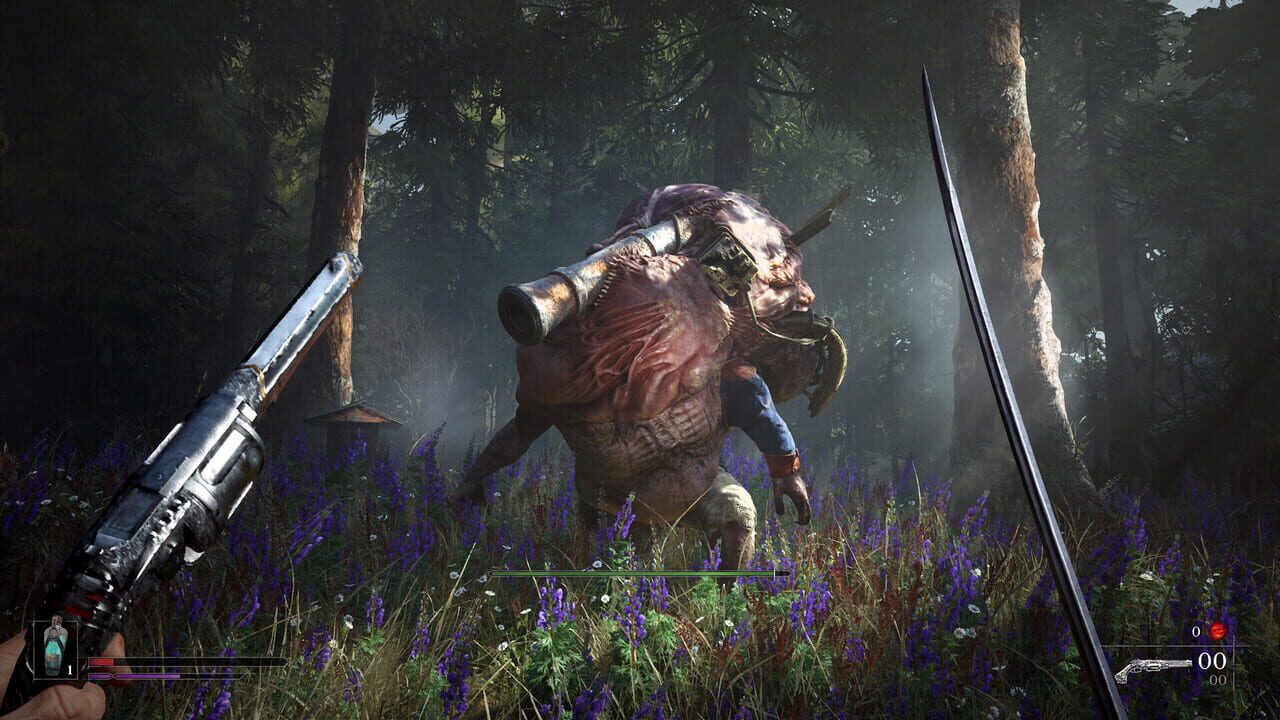

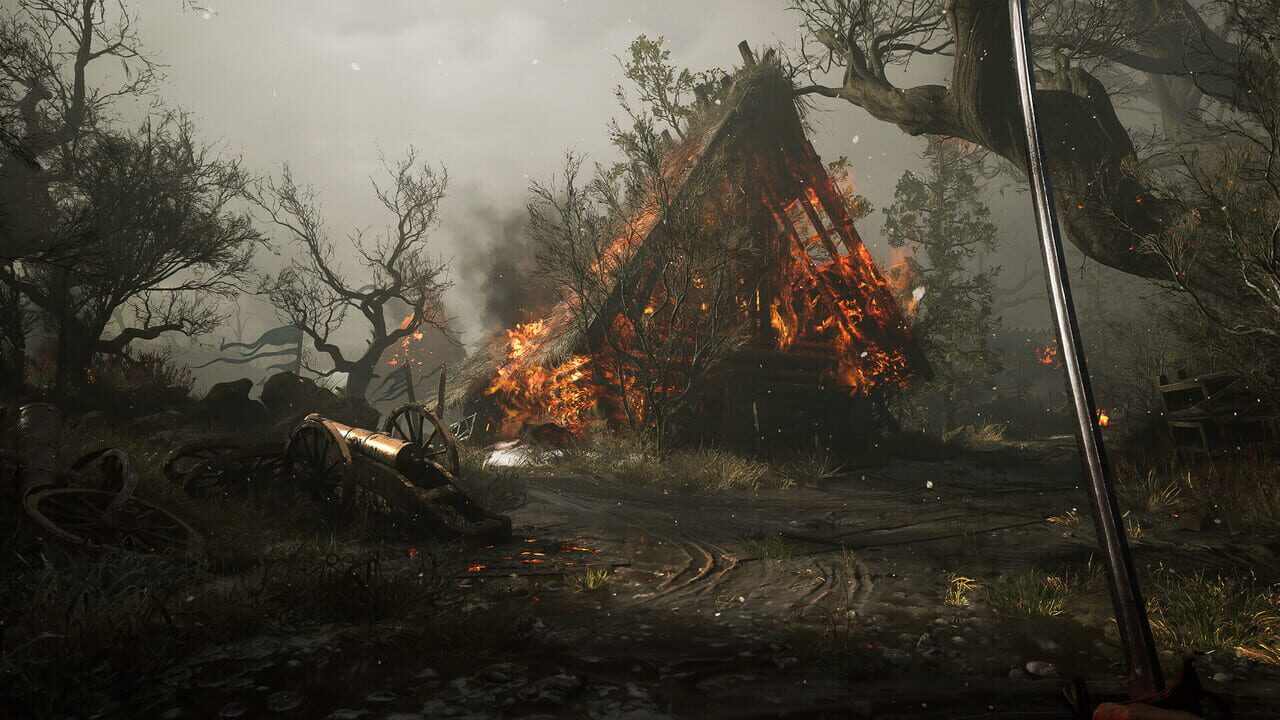
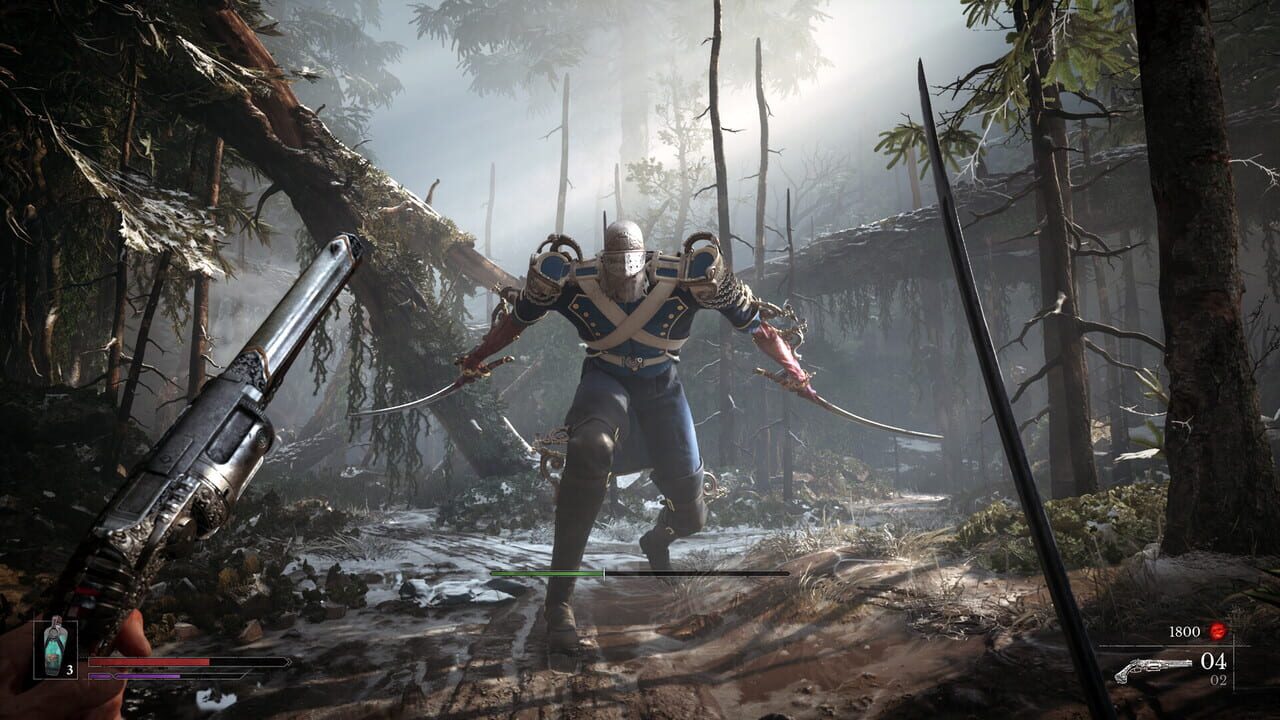
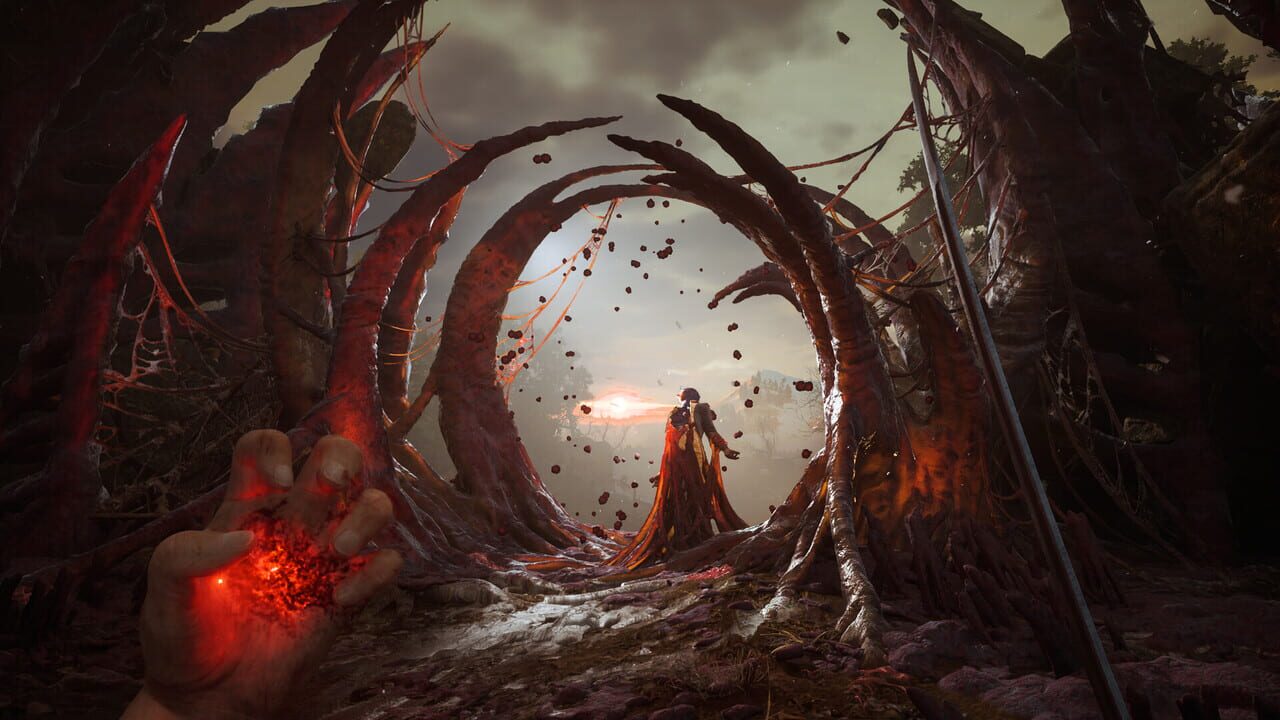
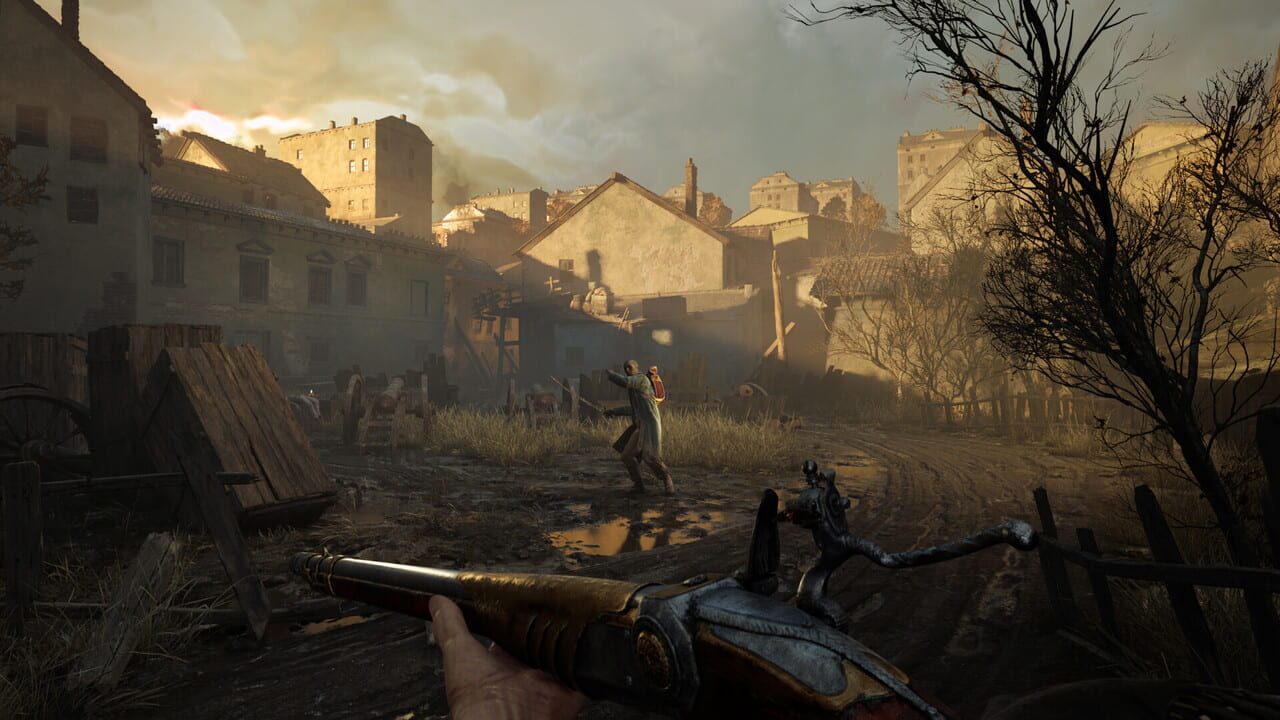
By the time the Grande Armee reached Smolensk in mid-August 1812, less than two months after crossing the Neman with something like 450,000 men in its main columns, it had already lost roughly a third of that number, and almost none of them to Russian muskets. Historian David Chandler put the toll from disease, starvation, heat exhaustion, and straggling at levels that dwarfed anything the rearguard actions had cost. Men were dying of dysentery in ditches beside the road. Others simply stopped marching, sat down, and did not get up. The campaign's first great battle was still weeks away. The army was already coming apart from the inside, and it had not yet fired most of its shots. This is a History & Memory reading, and the history is doing the actual argument, not the decoration around it. Valor Mortis, the first-person soulslike from Ghostrunner studio One More Level, due out this October, imagines a Napoleonic soldier named William who dies during the 1812 Russian campaign and is dragged back into motion by a substance the game calls Nephtoglobin, which has already turned his former comrades into something worse than corpses. The premise reads, at a glance, like standard-issue historical horror: take a real war, pour a fantastical plague over it, watch the dead walk. What the historical record actually shows is that this description does not require the fantastical plague. It describes, with only the names changed, what eyewitnesses who marched out of Russia in the winter of 1812 were already writing down. The point of this essay is not that a video game happens to resemble history, which is a coincidence any marketing department would be delighted to claim credit for. The point is that the resemblance runs the other direction. The undead-soldier premise is not a horror writer's embellishment sitting on top of the Napoleonic Wars. It is closer to a documentary transcription of what contemporaries reached for when they tried to describe what they were looking at, dressed in the vocabulary of a genre that did not exist yet. Get the real attrition right, and the horror premise stops being an invention and starts being a translation. The numbers bear this out with a bluntness that is almost embarrassing to a novelist's imagination. The Grande Armee that crossed the Neman River into Russian territory on June 24, 1812 numbered somewhere around 685,000 men across its full order of battle, by the historian Adam Zamoyski's accounting in Moscow 1812: Napoleon's Fatal March, the most exhaustive modern reconstruction of the campaign's demographics. Fewer than 50,000 crossed back out in fighting condition. Some estimates of the men who recrossed the Neman in any state at all, including stragglers and the sick, run closer to 100,000 or a little above, still a loss on the order of five out of every six men who entered. Zamoyski's account, like Chandler's before it, is unambiguous about where those losses came from. Combat deaths at Borodino, the campaign's single bloodiest day, are usually put between 30,000 and 40,000 French and allied casualties, a horrific number by any standard and still a fraction of the total. The rest, the overwhelming majority, came from typhus, dysentery, exposure, and starvation, sometimes in that order and sometimes all at once in the same man. Typhus alone had cost the army something on the order of 80,000 men within the campaign's first month, well before Borodino was fought, by the reckoning of French army medical records examined by historians of the campaign's health services. Stephan Talty's The Illustrious Dead traces the epidemiology in detail: typhus, carried by body lice that thrived in the unwashed wool uniforms of men who had not changed clothes in weeks, moved through the army's close-packed columns faster than any Russian cavalry could have managed, and it did not distinguish between combat units and supply trains. A 2025 analysis of DNA extracted from a mass grave of Grande Armee soldiers found near Vilnius, published in Current Biology, confirmed the presence of Salmonella enterica Paratyphi C, a cause of paratyphoid fever, and Borrelia recurrentis, the agent of louse-borne relapsing fever, in the teeth of soldiers who died during the retreat. The Vilnius grave holds an estimated 3,000 sets of remains from a single burial pit outside a city the army passed through in December 1812. The bacteria that killed them are not a metaphor. They are recoverable, sequenceable, sitting in tooth enamel two centuries later, waiting for a lab to confirm what the survivors' letters already said. What the survivors' letters said is where the game's premise stops looking like invention. Armand de Caulaincourt, Napoleon's Master of the Horse, rode with the emperor through the retreat and kept one of the war's most detailed firsthand accounts. His memoirs describe men freezing to death on their feet, upright in the marching column, dead before they toppled out of formation, their bodies keeping the shape of the walk they had been doing when they died. He describes horses collapsing on ice too slick to hold a hoof, and regiments that had entered Russia as disciplined formations dissolving, mile by mile, into shapeless crowds of starving men who no longer answered to rank or unit. This is not a soldier's memoir reaching for horror-genre language it did not have access to. It is a soldier's memoir describing, plainly, men who were still moving after the conditions that should have stopped them had already been met. The distinction between a living soldier and a dead one, in the last weeks of the retreat, had become a technicality the column did not have time to enforce. The men in that column were not, for the most part, professional soldiers who had chosen the life. By 1812, historians of French conscription have found, the Napoleonic state had drafted roughly eight out of every ten eligible Frenchmen of military age into its armed forces over the preceding two decades, a rate that had only been sustainable because draft evasion, which ran high in the Revolution's chaotic early years, had collapsed by more than two-thirds between 1806 and 1810 under an increasingly efficient conscription bureaucracy. The Grande Armee that crossed into Russia was not an army of volunteers. It was closer to a conscripted cross-section of a continent, Germans and Poles and Italians and Dutchmen marched alongside Frenchmen under a single eagle, most of them men who had been assigned to the campaign rather than chosen it. That matters to the horror the campaign produced, because an army raised this way does not desert cleanly when it starts to die. It comes apart in the specific way a body comes apart when the systems keeping it upright fail one at a time rather than all at once: stragglers first, then whole companies, then, by December, entire divisions reduced to a few hundred men answering to officers who had lost the rest of their command to the road itself rather than to the enemy. The Berezina crossing at the end of November supplies the campaign's single most literal image of that collapse, and it is worth setting beside the game's premise for what it shows about how thin the line between marching and dying had become. Trapped between two Russian armies with a half-frozen river in front of them, French engineers built two makeshift bridges at Studzianka under fire, and something like 60,000 soldiers made it across in the days that followed. The crossing itself became a byword: "Berezina" entered the French language as a synonym for catastrophe, and the toll historians attach to it runs to roughly 25,000 combatants and 30,000 non-combatant stragglers, camp followers, and wounded, killed in the crush, drowned, or cut down on the riverbank by pursuing Cossacks while the bridges held. Contemporary sketches and later paintings of the crossing show a mass of bodies indistinguishable from one another, some still moving, some not, pressed into the same frozen crowd. By the time what remained of the army reached Prussian territory in December, the surviving fighting force numbered in the low thousands. The Grande Armee that had crossed into Russia as a marching image of imperial confidence recrossed the border as something closer to a rumor of itself. That is the documentary weight sitting underneath Valor Mortis's premise, and it is worth pausing on before the essay turns to what the game does with a body once it has one. The plague-corrupted soldier, dragged back into motion after death, corrupted into something that keeps fighting past the point a body should stop, is not a fantastical addition to the Napoleonic Wars. It is the 1812 retreat's actual texture, given a name and a status effect. One More Level did not need to invent the horror. The horror was sitting in Zamoyski's footnotes the entire time, and putting a substance called Nephtoglobin into the bloodstream is, if anything, a mercy: it gives the audience a cause they can point to, instead of the actual cause, which was an army's logistics collapsing in real time around men whose uniforms had not been designed for a Russian winter, and who had eaten their horses before eating each other became a documented last resort among stragglers on the Smolensk road. This is where the essay has to turn from the history to the form, because the history alone does not explain why Valor Mortis is a soulslike, or why it matters that it is a first-person one. A soulslike is not just a genre with bonfires and difficult bosses. It is a genre organized around a specific contract between the player and the screen: the game will punish a mistimed action harshly, and in exchange it will give the player, at every moment, complete visual information about their own body's commitment to the action currently in motion. Dark Souls did not invent difficulty. Difficult games predate it by decades. What it refined into a genre-defining grammar was legibility under pressure: a third-person camera that keeps the player's entire silhouette on screen, so that a heavy weapon's wind-up is visible as a held pose, its recovery frame is visible as a beat where the character's weight is still committed to the swing, and the exact moment a dodge roll's invincibility frames end is visible as a specific point in an animation the player has watched hundreds of times. The player is not just watching the enemy. They are watching themselves, from outside, and that outside view is where the skill actually lives. A Souls player does not read timing from a stopwatch. They read it from the shape of their own character's motion, which the third-person camera keeps permanently in frame. First person deletes that information by construction. There is no silhouette to read, because the camera is inside the head that would be casting it. The player cannot see their own wind-up, their own recovery frame, their own weight shifted onto a leg they should not have committed. What a third-person soulslike gives the player for free, first person has to build back some other way or do without, and Valor Mortis has to make that trade explicitly, because it is not layering first person onto an existing genre grammar. It is asking whether the grammar survives the deletion. One More Level's answer, based on what the studio has shown and said about the game so far, is to replace the missing silhouette with something else: a first-person pistol used to target specific enemy weak points, a burning left-hand ability, and a parry-and-stagger system built around watching the enemy rather than watching the self. This is a coherent trade, and it is not an arbitrary one, because it is the same trade the studio already made once, in Ghostrunner. That game solved the first-person action problem by removing the need to read one's own recovery frame at all: a single hit kills the player, and a single hit from the player kills most enemies, which means the entire skill test collapses onto positioning and reaction time rather than commitment and recovery. Game director Radoslaw Ratusznik has described the appeal of that design directly, saying a player can feel powerful even as a fragile character who dies in one hit, because the one-hit-one-kill exchange syncs cleanly with a sword. It is an elegant solution to first person's missing silhouette problem, and it works precisely because it refuses to need the silhouette in the first place. There is no recovery frame to misjudge if there is no surviving a mistimed swing regardless. A soulslike cannot take that shortcut, or at least not entirely, because a soulslike's core loop depends on sustained engagements, staggered exchanges, and a health bar the player is meant to manage across a fight rather than gamble in a single exchange. Ratusznik has said, in discussing Valor Mortis, that first person is where the studio feels most comfortable and that it lets players appreciate environmental detail Ghostrunner's speed rushed past, which is a real advantage and also a slightly different claim than a claim about combat legibility. The environmental case for first person is easy to grant. The combat case is the harder one, and it is the one the finished game will actually be judged on, because a soulslike that cannot let the player read their own commitment to an action is a soulslike missing its central nervous system. Parries, staggers, and weak-point targeting can substitute for silhouette-reading, but they substitute a different skill: they ask the player to read the enemy's tell rather than their own body's promise, which shifts the entire genre's emphasis from self-knowledge to opponent-reading. That is not a lesser game. It is a different one, wearing the same bonfires. It is worth granting the counter-reading directly, because it is a real one. FromSoftware's own Bloodborne, released in 2015, already pushed against the pure silhouette-reading model the earlier Dark Souls games had established: it removed the shield-and-block option that let cautious players hide behind their own visible stance, replaced healing with a regain mechanic that rewarded aggression, and asked players to read enemy tells at a faster tempo than the wind-up-and-recovery grammar of the original game had trained them for. The genre, in other words, was already drifting toward opponent-reading before any studio put a soulslike in first person. Bloodborne's players still had a silhouette to watch, their own included, but the game had already started treating that silhouette as a smaller part of the skill test than Dark Souls had. First person is not a break from that drift so much as an acceleration of it, a genre tendency taken to its logical edge rather than a foreign grammar grafted onto an unwilling host. This does not erase the cost. It relocates the argument: the question is not whether soulslikes can survive without a silhouette, since Bloodborne shows a version of the genre already leaning that way, but whether a first-person implementation can replace the remaining scraps of self-legibility, the visible stagger, the weapon still in frame at the bottom of the screen, that even Bloodborne kept. Ghostrunner 2, released in 2023, is the more direct evidence, because it is the same studio's second attempt at first-person action combat and shows what the team does when it revisits its own design rather than defends its first pass. The sequel added a motorcycle chase sequence, an armored mech-suit combat mode, a stamina meter governing dashes and deflects, and a new block option, changes that collectively slowed the game's core melee tempo down from the original's instant-death, instant-kill rhythm. Player reaction to that slowdown was genuinely divided: some found the more deliberate pace sluggish compared to the first game's velocity, a complaint that shows up repeatedly in player feedback about the sequel's combat. That division reads, in retrospect, like a studio testing exactly the muscle Valor Mortis now needs and finding the results were not uniformly convincing. Slowing first-person combat down to allow sustained, multi-beat engagement, rather than the original's single decisive strike, is precisely the shift a soulslike's health-bar-and-stagger loop requires, and Ghostrunner 2's mixed reception on that specific point suggests the studio already knows, from its own most recent release, that the trade is a live design problem rather than a solved one it is importing with confidence. There is a way in which this formal problem and the historical one are the same problem, and the essay should say so plainly rather than let the parallel sit implied. The Grande Armee's soldiers on the Smolensk road lost the ability to read their own bodies' limits well before their bodies actually failed. Men marched past the point where hunger, cold, and disease should have stopped them, because the column kept moving and stopping meant dying alone rather than dying in formation, and because the accumulated exhaustion of weeks on the road had eroded whatever internal signal would once have told a healthy man he needed to rest. Caulaincourt's frozen men, upright in the column, are not just a horror image. They are a description of bodies that had stopped being legible to the minds still nominally running them. First person, in a combat game, does something structurally similar to the player: it removes the outside view of the body's own commitment and asks the player to keep fighting on trust, on the strength of tells read elsewhere, the way a starving man on the Smolensk road kept marching on the strength of a column moving around him rather than any signal his own legs were still sending accurately. The genre's central contract, readability under pressure, is the same contract the retreat itself broke. None of this requires Valor Mortis to succeed as a game, and this essay is not the place to predict whether it will, since the game has not shipped and no honest critic writes its review in advance. What the history and the form both support is a narrower, sturdier claim: the premise the marketing sells as invention is closer to reportage than the studio may realize, and the genre choice the marketing sells as a stylistic departure is a real formal gamble whose cost is precisely calculable in advance, because the cost is the same information every third-person soulslike has been supplying for free since 2011. A player who has never read Zamoyski or Caulaincourt will still feel the historical weight the moment the game's marching columns start looking less like an army and more like a procession. A player who has logged four hundred hours in Dark Souls will feel the formal cost the moment they realize they can no longer see their own weapon's arc, and will have to decide, fight by fight, whether what the game gives back is worth what it took away. The frame worth carrying past this particular game is a general one. Any first-person action game inheriting a third-person genre's grammar has to answer the same question Valor Mortis is answering, whether or not its marketing frames the question that explicitly: what do you build to replace the silhouette. Some studios answer by removing the need for it entirely, the way Ghostrunner did with instant death in both directions. Some answer by shifting the read onto the opponent, which is the harder and more interesting answer, and the one that keeps a game's difficulty honest rather than merely brutal. The next first-person soulslike to ship, and there will be others, deserves to be read against that specific question rather than against the vaguer one of whether first person is simply a bold choice. Boldness is cheap. Replacing a deleted information channel with a working one is not, and it is the only part of the trade that actually matters to the player holding the controller. The men on the Smolensk road did not get to choose whether they kept marching. Their column decided that for them, mile after mile, past the point their own bodies could have honestly answered for. A game that puts a player inside one of those men's boots, literally, in first person, with no outside view of the body doing the marching, has accidentally built a formal echo of the exact thing it is trying to depict. Whether that echo is intentional almost does not matter. The history was already there, waiting to be found, months before anyone wrote a line of the game's combat code.
Tuesday analysis
Napoleon's Army Was Already Undead
- Writer
- J. A. Marsh
- Lens
- History & Memory
- Published
- FEB 27, 2026
- Length
- 3,394 words / 15 min
- Notes
- 10 sources
The Grande Armee did not need a plague to become an army of the walking dead. It had typhus, dysentery, minus thirty degrees, and six hundred miles of open road, and that turned out to be enough.