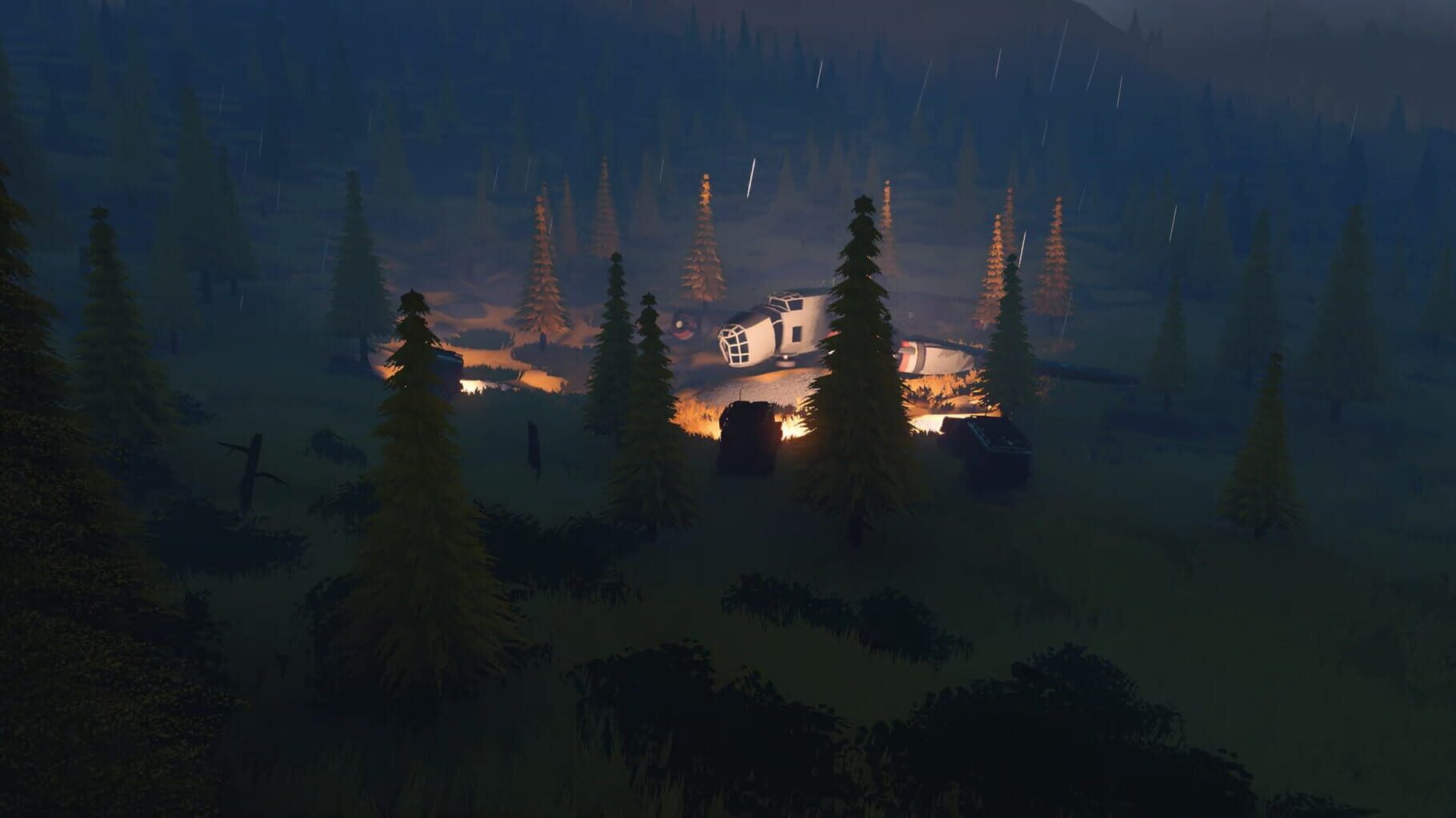
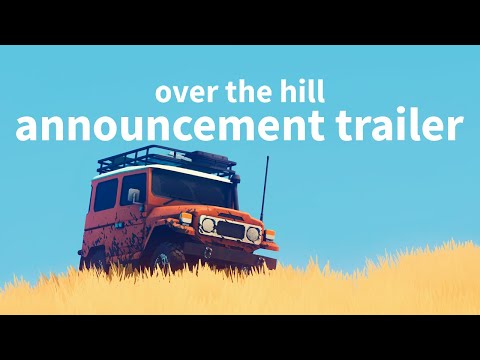


Picture the same fall afternoon repeating itself across the Sierra foothills through the early 1970s. A man in a Ford Bronco spends forty minutes moving his own vehicle nine feet. The trail is a washed-out fire road above a creek bed, the kind of route the California Association of 4 Wheel Drive Clubs had been mapping and defending since 1959, arguing to state land managers that a truck picking its way over granite was a legitimate use of wilderness and not a defacement of it. His problem is a boulder the size of a washing machine, sitting exactly where his front-right tire needs to go. He backs up. He tries the left line. He gets out and looks at the boulder from three angles, the way a person looks at a jigsaw piece that will not seat. He airs down his tires by a few pounds to widen the contact patch. He tries again. When the tire finally catches and climbs, there is no one there to see it, no clock that has been running, and no scoreboard anywhere recording that it happened. The nine feet are the whole event. That scene, unremarkable and endlessly repeated across four decades of Broncos, Scouts, Jeep CJs, and Land Cruisers, is the actual historical substrate of the driving genre Funselektor Labs is now building a game around. Over the Hill, from the Vancouver studio behind Absolute Drift and art of rally, puts players in off-road vehicles from the 1960s through the 1980s and sends them into wilderness trail networks with no lap timer, no ranked opponent, and no scored objective beyond the terrain itself. This is a Form & Systems reading: an essay about what happens to a driving game, structurally, when the two features that have organized the genre since Pole Position, the clock and the rival, are simply removed. What is left in Over the Hill is not a lesser driving game. It is closer to the genre's original material, stripped of the layer that later got added to make that material legible as competition. Racing games are, formally, remarkably uniform. Whatever the skin, whether it is Formula One cars or hovercraft or karts throwing shells, almost every one of them resolves to the same underlying contract: traverse a defined space faster than a rival, faster than a previous attempt, or faster than a target time. The clock and the ghost are not decoration on top of the driving. They are the mechanism that turns "driving" into "racing" in the first place. Remove them and you do not get a diminished racing game. You get a different verb. Funselektor has been circling this removal for its whole catalog without quite completing it until now. Absolute Drift, the studio's 2015 debut, kept score but built a free-roam mode explicitly, in founder Dune Casu's own description, as "a relaxing place to practice your skills without consequences." Art of rally kept the stopwatch of its rally stages but wrapped them in an open, unhurried touring map between events, low-poly hills the player could simply drive across with no objective at all. The pattern across both games is a studio that keeps building the pressure-free mode as an escape valve next to the competitive one, as though acknowledging that the driving itself, independent of the timer, was the thing worth preserving. Over the Hill is what happens when the escape valve becomes the whole game. Funselektor's own framing of the shift, in press materials for the new title, is direct: "There's no rush. No ticking clock. Just the open wilderness and the road, or lack of one, ahead." What replaces the clock is terrain, and terrain in Over the Hill is not a track. According to previews of the demo, the game's Canadian-inspired regions include a forgiving valley of smooth switchbacks, wetlands where the challenge is mud bogs and rock-crawling paths, and mountain routes with steep ascents and icy cliffs. None of this is scenery a player drives past on the way to the finish. It is the whole obstacle course, in the literal sense: a landscape that has to be read, route by route, before it can be driven. A demo preview for the game notes that players must "carefully choose your routes to be able to access" certain locations, which is a sentence that could not appear in a review of a track-based racer, because a track-based racer has already chosen the route for you. The route selection is the game. This is the point at which the essay's central claim needs stating plainly. Delete the opponent and the timer from a driving game and the surface becomes the antagonist. Not a backdrop the antagonist happens to stand on. The thing itself that resists the player, calculates against the player, and has to be out-thought. A racing game's rival AI exists to be beaten through speed and precision under time pressure. A slope, a mud bog, or a loose scree field resists differently: through weight distribution, tire pressure, momentum management, the angle of approach, the willingness to abandon a line halfway through and pick a worse one that is at least survivable. The terrain does not care how fast the player is. It only asks whether the player has understood it correctly. That is a different cognitive demand than racing has ever made, and it is closer, structurally, to a puzzle, or to what negotiation actually feels like when the other party cannot be rushed and does not respond to aggression: the vehicle inches forward, meets resistance, and the player adjusts the offer. The genre has a name for the moment when the terrain wins outright, and the name matters. In a racing game, losing means finishing behind, or against a wall, or off the track entirely, at which point the game usually resets you to keep the pressure legible. In Over the Hill, and in the recovery-focused off-road genre it belongs to, getting stuck is not an interruption of the activity. It is an event within it. Previews of the demo describe the recovery toolkit directly: planks laid under spinning tires, winches anchored to trees or, in co-op, to a second vehicle. Multiplayer winching is one of the few systems the previews single out by name, the moment when "you can ask your friends to pull you using the winch," and it is worth noticing what kind of moment that is. It is not a failure state the game apologizes for. It is a cooperative puzzle the stuck vehicle has just generated for the group, one that did not exist thirty seconds earlier and that the whole party now has to solve together. This is a rare inversion in game design, and it deserves to be named precisely rather than gestured at. In most systems, the fail state is defined by its opposition to content: it is the thing that stops content from continuing, the screen that says try again, the interruption the player wants to get past as quickly as possible to resume the actual game. Over the Hill's fail state, a bogged axle, a rolled chassis, a vehicle nosed into a ravine, is not an interruption of the activity. It is a continuation of it by other means. The winching, the digging, the plank-laying, the negotiation between a co-op group about who pulls whom and from what angle, is not waiting room before the real game resumes. It is the real game, doing what it always does, which is asking the player to solve the terrain in front of them. A racing game that crashes you into a wall wants you back on the track as fast as possible. An off-road game that buries your axle in a bog wants you to stay right there and work the problem, because the problem is the point. The wider vehicle-recovery genre this belongs to, the simulation-heavy log-hauling and cargo games built around identical winch-and-plank mechanics on notoriously unforgiving Russian and Alaskan terrain, has already demonstrated that this inversion has an audience willing to spend hours on it. What Over the Hill changes is the framing around the same underlying loop. Those games present recovery as labor: a job, a delivery, a contract that a stuck truck is now late for. Over the Hill presents the identical mechanical act, stuck wheel, winch cable, patient extraction, as leisure with no clock attached to it and no cargo waiting anywhere. The mechanic did not need reinvention. It needed the pressure removed from around it to reveal that the mechanic itself, not the delivery deadline wrapped around it, was where the pleasure had been living all along. Co-op sharpens this further, because a stuck vehicle in a group is not only a puzzle against the terrain. It is briefly a puzzle between people. The previews describe winching between vehicles as one of the demo's more memorable exchanges, and the reason it is memorable is that it forces a small, low-stakes negotiation that most driving games never ask players to have: who has the better anchor point, whose vehicle has the stronger winch, is the pull going to drag the helper truck sideways into the same bog. None of this is written dialogue. It is spatial problem-solving conducted entirely through positioning and timing, closer in structure to two people trying to move a couch around a stairwell landing than to anything a racing game's rival AI has ever demanded. The terrain, in other words, does not just replace the clock. It replaces the opponent too, by converting what would have been competitive pressure between players into cooperative pressure applied by the ground itself. It would be dishonest to treat this as an unqualified virtue, and the essay's own lens requires taking the obvious objection seriously rather than around it. No-fail, no-timer design has become one of the dominant currents in games released in the last several years, from cozy management sims with no loss condition to walking simulators built explicitly to remove stress from the interaction. The appeal is real and well documented: pressure-free design produces games that are, by design, approachable and stress-free, low-stakes spaces meant to help players unwind rather than perform. But the objection follows immediately. Without a clock, without a rival, without any scoring system that tells the player how they are doing relative to some standard, does skill remain visible at all? A player who successfully threads a mountain trail in Over the Hill and a player who bulldozes through it clumsily, burning through recovery tools and time, receive the same nominal outcome: they got where they were going. If the game will not distinguish the two performances, in what sense is either one a display of skill, rather than just an activity that eventually resolves? Mihaly Csikszentmihalyi's flow theory, developed across decades of research into optimal experience, gives the sharpest version of this worry. Flow states, in Csikszentmihalyi's model, depend on a tight coupling between challenge and feedback: the activity has to be difficult enough to demand full attention, and it has to tell the performer, continuously and legibly, how they are doing against that difficulty. Take away the feedback loop and the activity risks becoming merely occupying rather than absorbing, pleasant without being sharpening. A racing game's timer is, in this light, not an arbitrary competitive overlay. It is the feedback channel that makes flow possible in the first place, the number that tells a driver in real time whether the line they just took was the right one. Over the Hill's answer to this, on the evidence of what the game actually does rather than what it declines to do, is that it relocates the feedback rather than deleting it. The clock disappears, but the vehicle itself becomes an extraordinarily articulate feedback instrument. A wheel that spins uselessly is telling the driver something specific: too much throttle, wrong gear, insufficient traction on that particular surface. A chassis that leans dangerously on a sidehill is telling the driver something else: wrong line, too much speed for that camber. The recovery tools required, the specific plank, the specific winch angle, are themselves a scoreboard, just not a numeric one. A driver who reads the terrain well needs the recovery kit rarely. A driver who reads it badly needs it constantly, and knows it, because digging a truck out of a bog for the third time in an hour is not an ambiguous signal. The game has not removed the feedback loop Csikszentmihalyi's research says flow requires. It has swapped a clock, which measures the driver against an abstraction, for the terrain, which measures the driver against the actual physical consequences of the choices made. That is arguably a more honest feedback channel than a stopwatch ever was, because a stopwatch can be beaten by memorizing a route and executing a rehearsed sequence of inputs, which is closer to choreography than to driving. A bog does not care that the player memorized anything. It has to be read fresh, every time, because it is not scripted content. It is terrain. There is a second layer to this essay's argument that the lens alone does not fully cover, and it would be a failure of the reading to leave it out, because it is doing real emotional work in the game's design and it deserves to be named rather than assumed. The vehicles in Over the Hill span the 1960s through the 1980s specifically, the Bronco-and-Scout-and-CJ era, and that choice is not incidental set dressing. The whole fantasy the game is selling rests on it. A vehicle from that period is, mechanically, a machine a determined owner could still substantially understand: a carbureted engine instead of a sealed computer-managed one, a mechanical linkage instead of drive-by-wire, a chassis a person with a socket set and a Saturday could actually get underneath and diagnose. Matthew Crawford's Shop Class as Soulcraft makes the broader argument this fantasy is drawing on, that there is a specific and increasingly rare satisfaction in working on objects whose failure modes are legible, in contrast to a contemporary built environment full of systems, cars very much included, that fail in ways ordinary users are neither expected nor equipped to understand. A modern off-road vehicle, however capable, is a machine the driver mostly trusts rather than comprehends. A 1974 Bronco is a machine the driver, in the fantasy the era supports even when the individual player has never turned a wrench, could plausibly still read. This is why the recovery sequence in Over the Hill lands as content rather than punishment in a way that a modern-vehicle equivalent might not. Getting a computer-controlled 2020s SUV stuck would mostly feel like defeating the vehicle's own safety systems, a kind of failure against the machine's intentions. Getting a period-correct Bronco stuck and then winching it out by hand feels like a continuation of exactly the relationship those vehicles have always implied: machine and driver, working a problem together, with no electronic intermediary insisting it knows better. The 1960s-through-1980s window is not nostalgia for its own sake. It is nostalgia for a specific kind of comprehensibility, the sense that a person could still, in principle, understand the whole machine they were operating, and that sense is exactly what a puzzle-terrain design needs its vehicle to promise if the winching and digging are going to feel like problem-solving rather than inconvenience. The counter-reading worth sitting with, briefly, is that this comprehensibility fantasy could just as easily curdle into a kind of costume nostalgia, the same impulse that sells distressed leather jackets and vinyl records to people who never owned either the first time. Funselektor's own history argues against that reading, if not conclusively then at least meaningfully. Casu has described developing art of rally largely on the road, traveling through the US, Canada, and Mexico in a camper and folding the landscapes encountered along the way directly into the game's environments. That is not a studio borrowing a period aesthetic secondhand from mood boards. It is a studio that has spent a decade actually driving through the kind of terrain it keeps building games about, which at minimum suggests the mechanical-legibility fantasy in Over the Hill is sincerely held rather than merely marketed. Set against the wider landscape of pressure-free contemporary design, Over the Hill's specific move is worth isolating precisely because most no-fail games remove difficulty altogether rather than relocating it. A cozy farming sim with no loss condition genuinely has nothing left to fail at; the absence of pressure and the absence of challenge are the same absence. Over the Hill keeps the challenge and only removes the artificial time pressure and the artificial rival. The mountain does not get easier because nobody is timing the ascent. The bog does not care whether a rival truck already passed. What the game has actually done, formally, is separate two things the racing genre spent decades treating as inseparable: difficulty, which the terrain still supplies in full, and competition, which the game has simply declined to manufacture. That separation is the reading this essay wants to leave with the player of any driving game, not just this one. The next time a racing game feels hollow despite a full roster of tracks and rivals, the useful question is not whether the game needs more content. It is whether the difficulty on offer is actually terrain, something that has to be read and negotiated on its own terms, or whether it is only a clock, a number the player is racing that has no opinion of its own about the route. Somewhere in Over the Hill's mountain region, on release, a wheel will spin uselessly on ice for the length of a held breath, catch nothing, and the driver will ease off, back down six feet, and try a shallower angle. No one will be timing it. No rival will pass. The trail will simply still be there, unimpressed, waiting to be read correctly, the way the granite above that Sierra creek bed was waiting in 1972, and the way it is still waiting, off camera, for anyone willing to get out and look at it from three angles before trying again.
Tuesday analysis
A Driving Game With Nobody to Beat
- Writer
- J. A. Marsh
- Lens
- Form & Systems
- Published
- MAY 15, 2026
- Length
- 3,036 words / 13 min
- Notes
- 10 sources
Take away the finish line and the surface stops being scenery. It becomes the only opponent left in the game, and it is a much better one than any AI driver Funselektor could have coded.