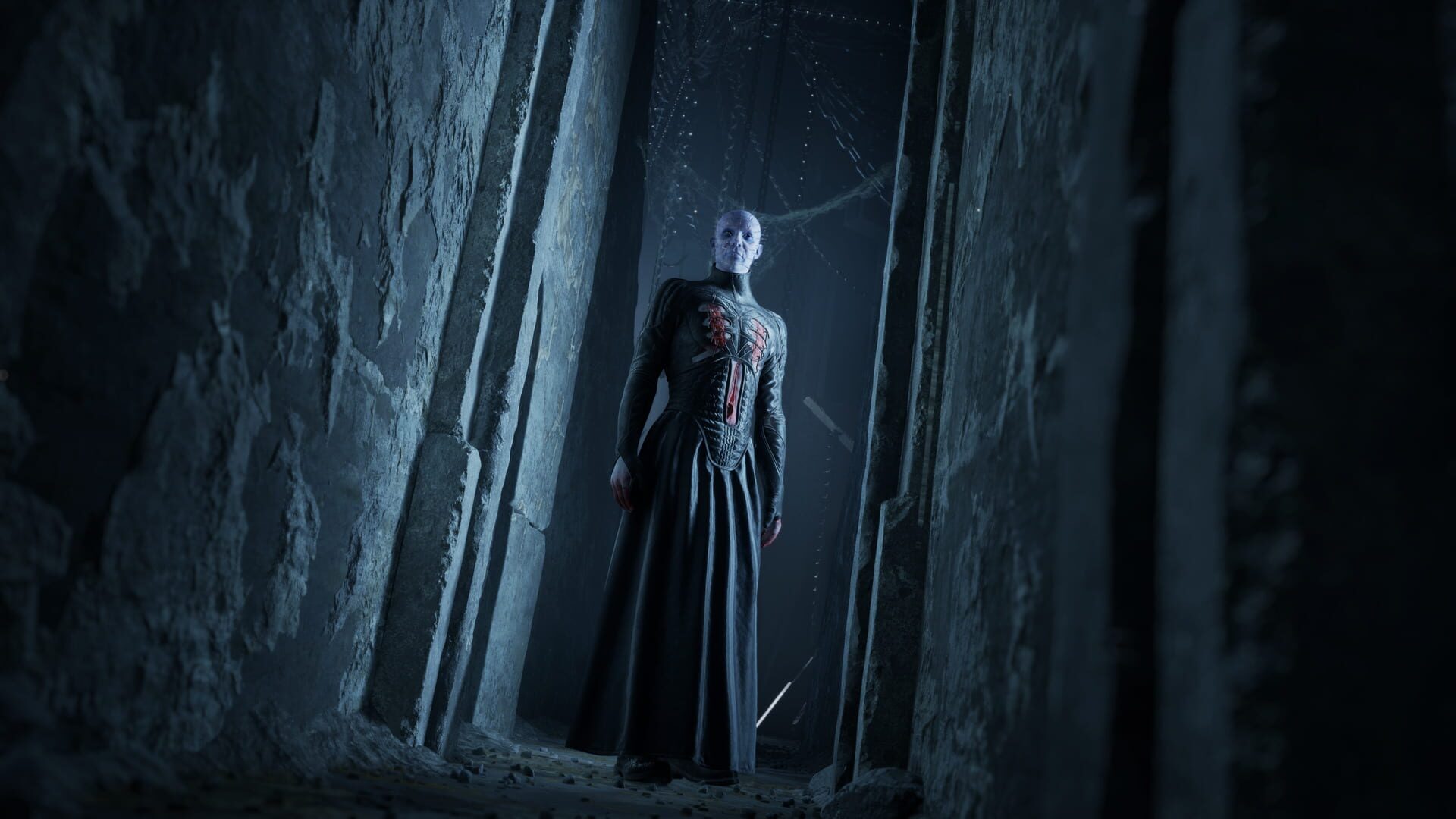

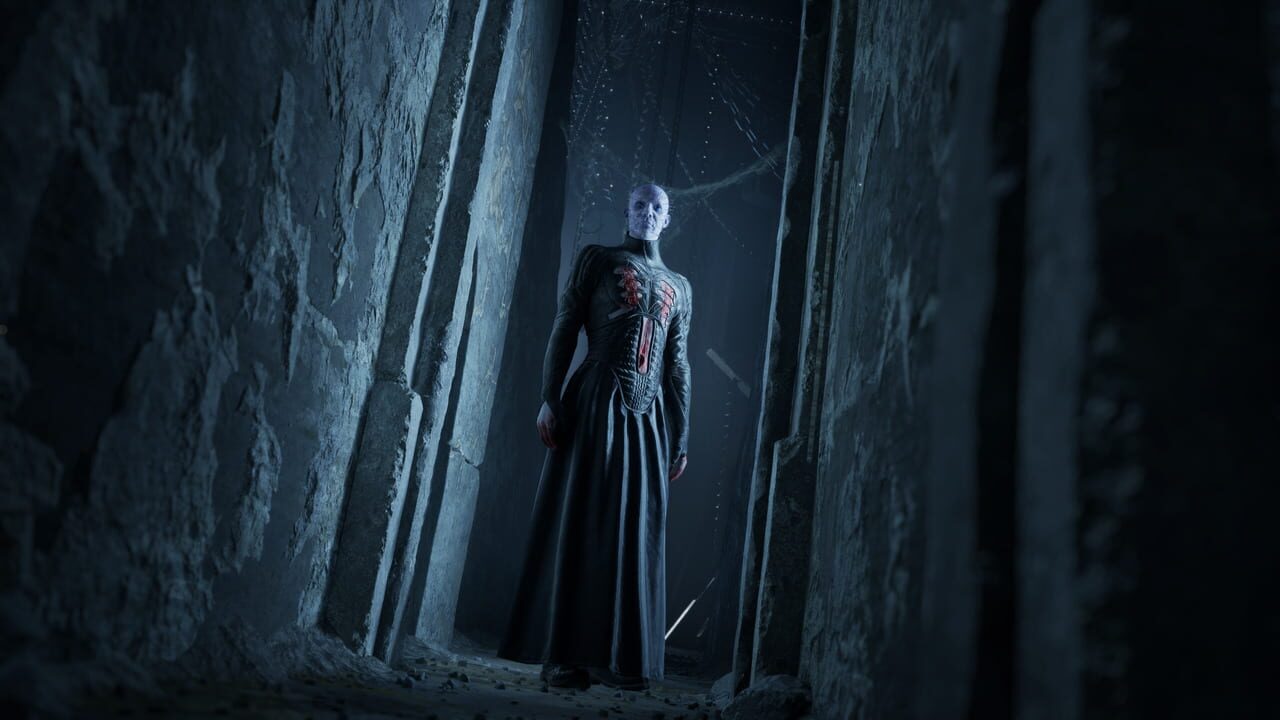
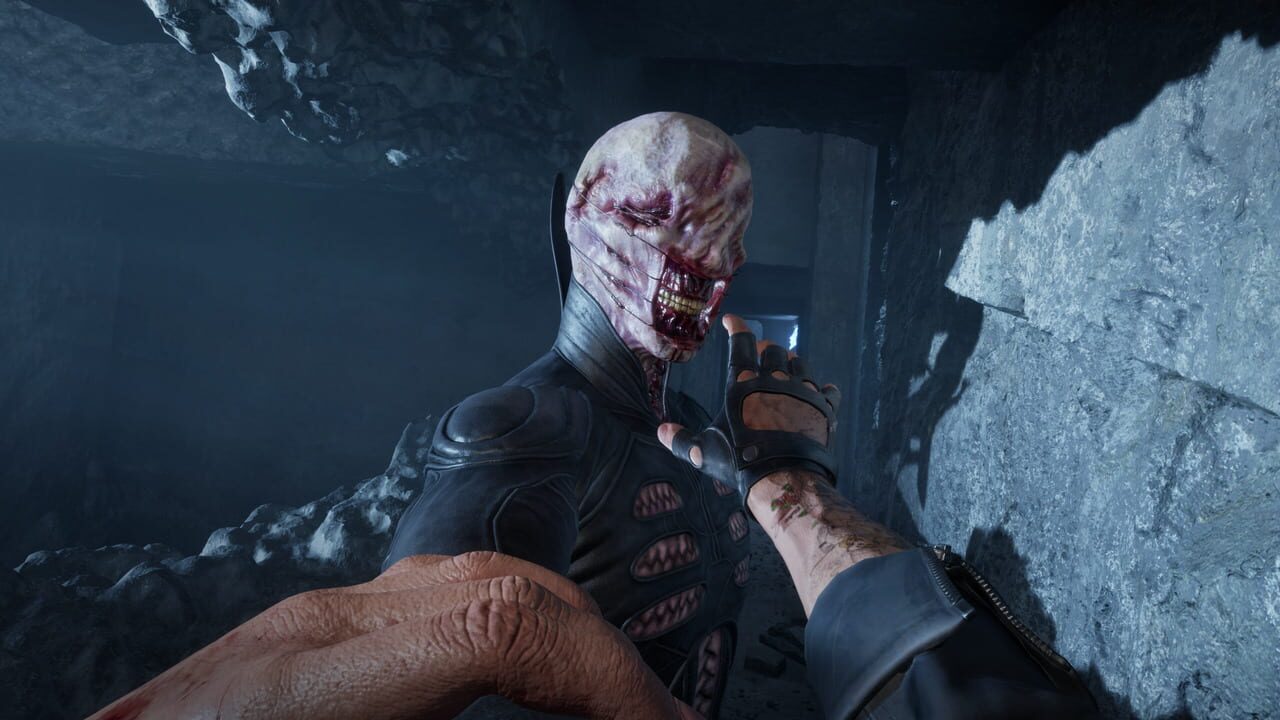
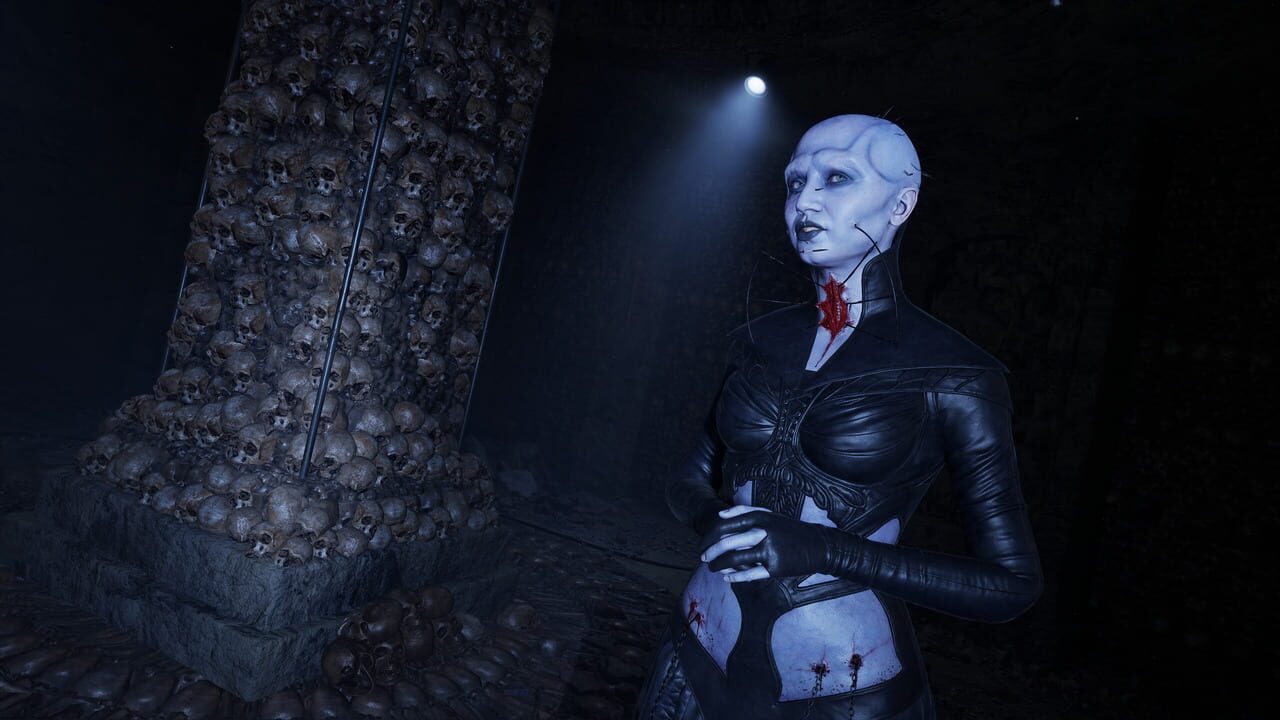
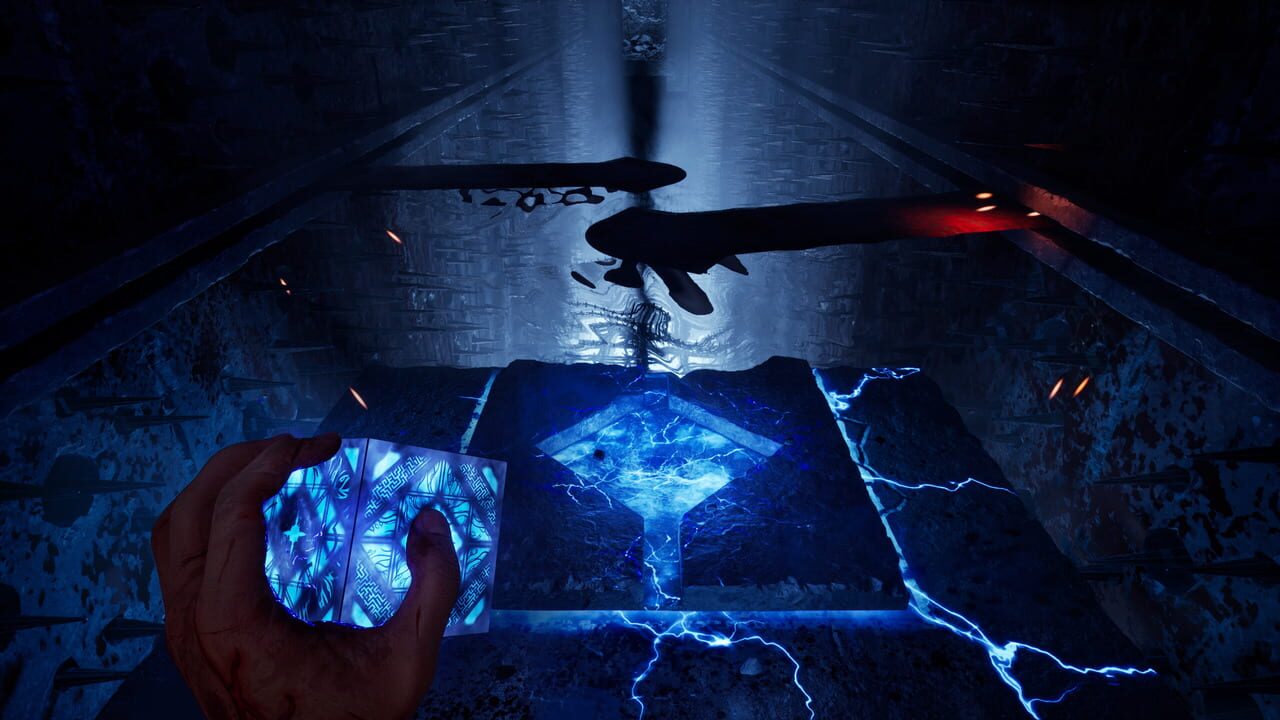
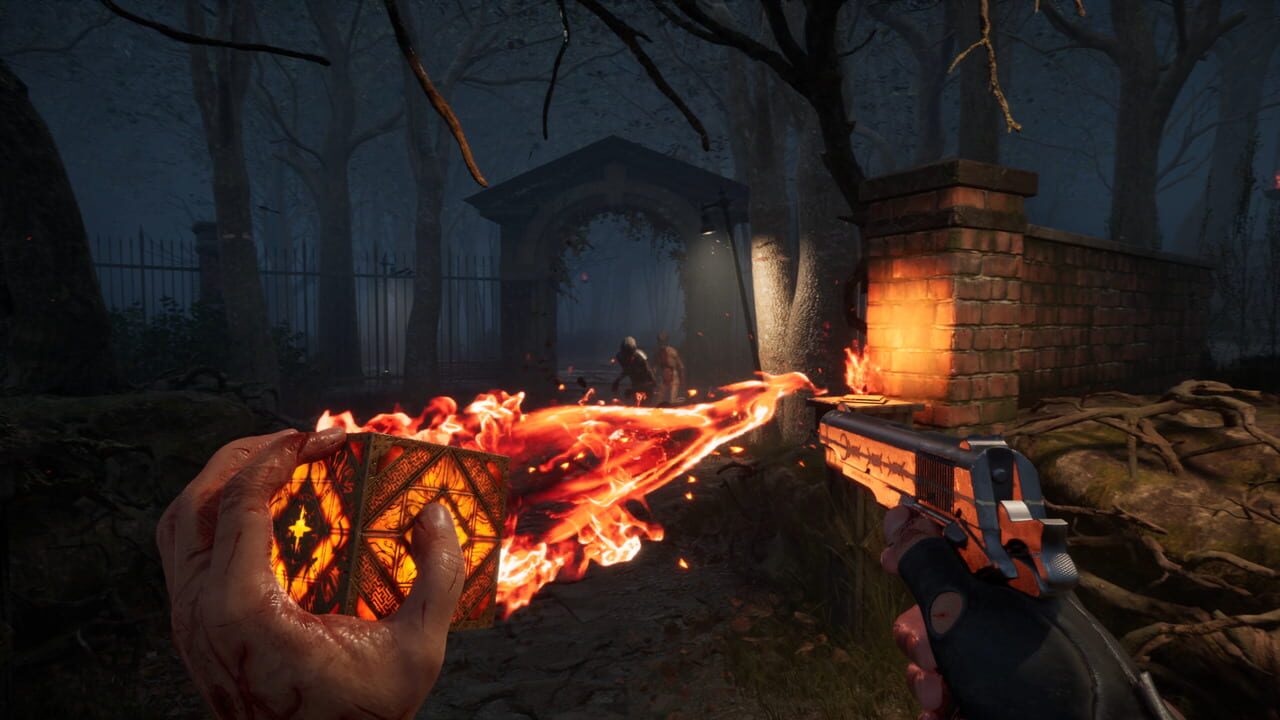
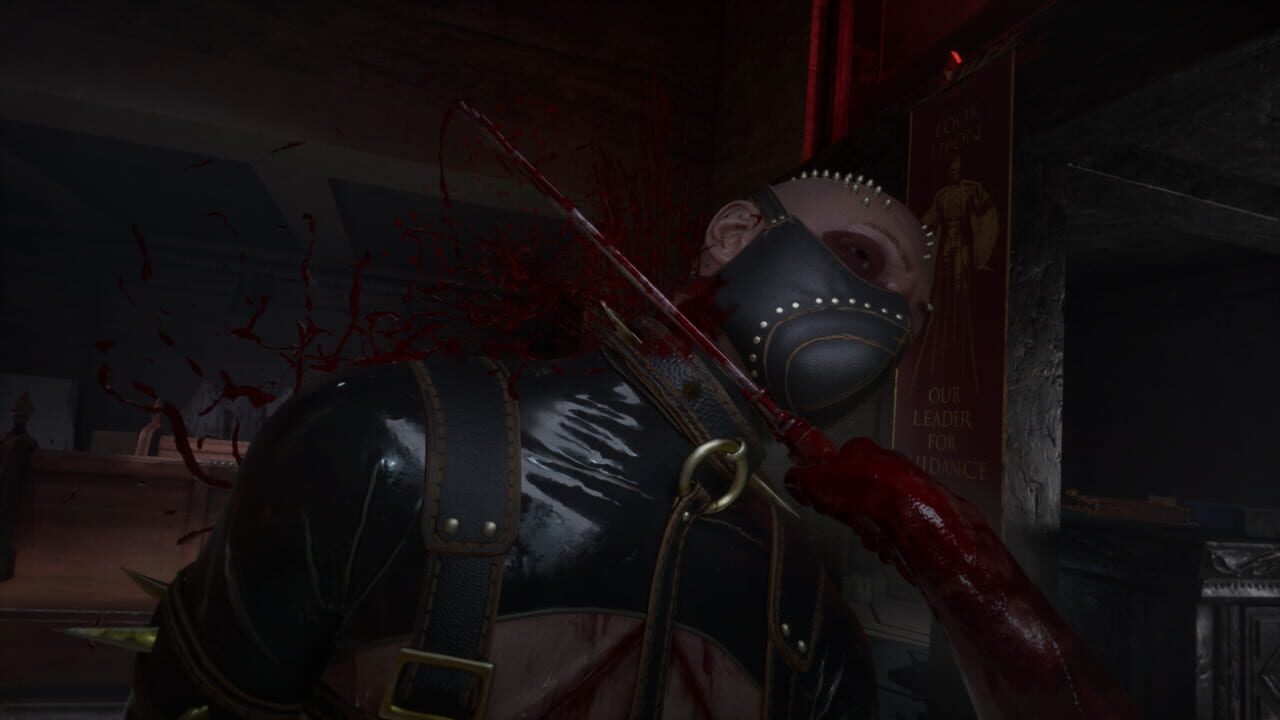
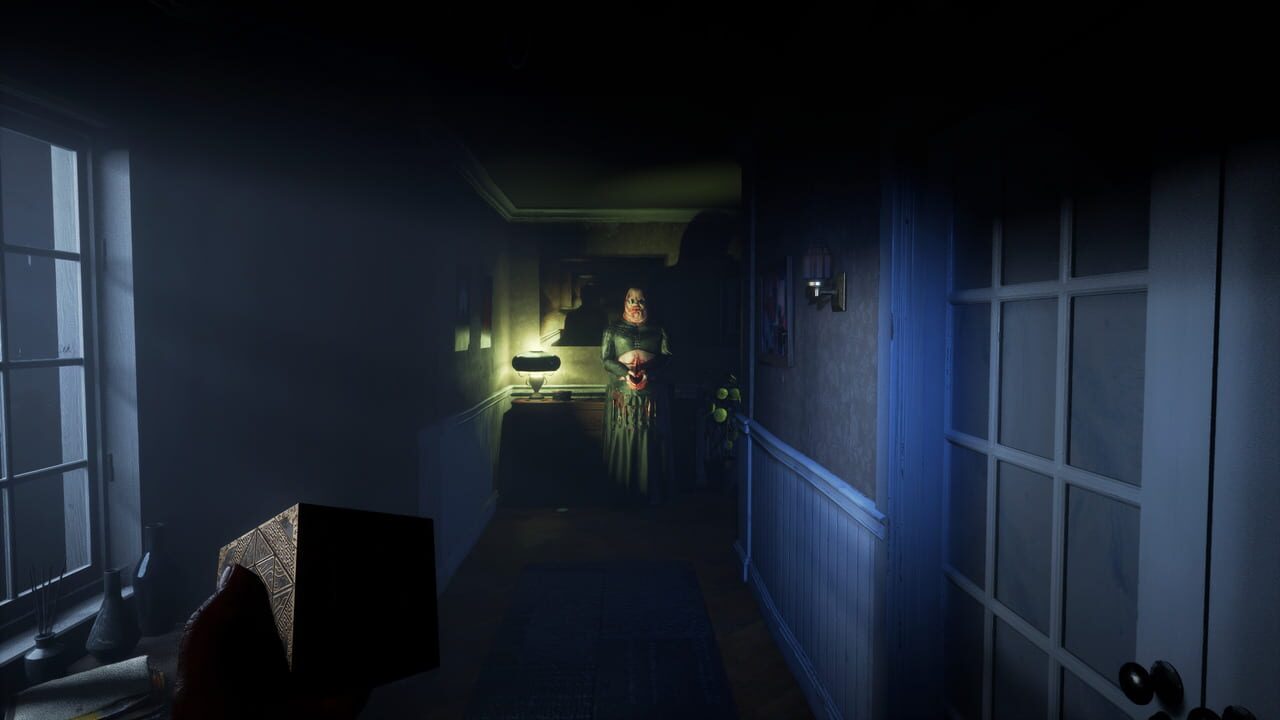
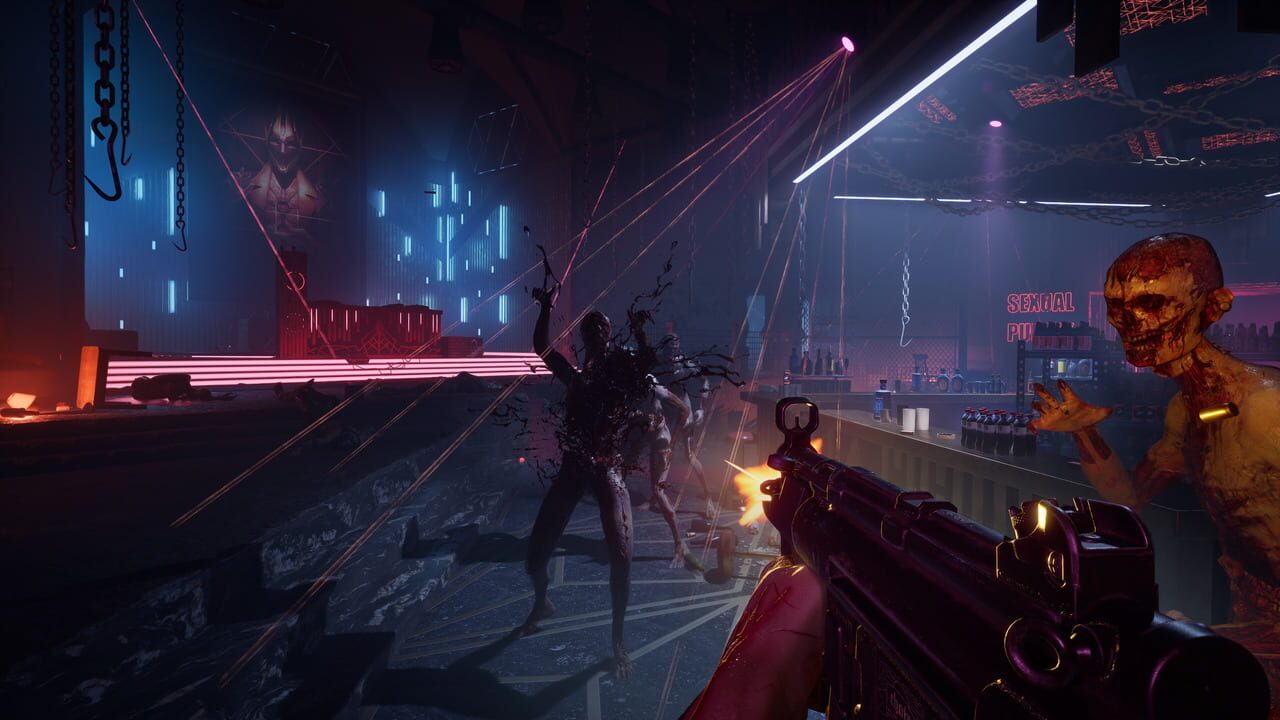
Frank Cotton buys the box from a dealer in Düsseldorf who will not meet his eyes. He carries it home the way a man carries something he has already decided will ruin him, which is to say carefully, in both hands, wrapped in a shirt. The box is small, black and gold, a Chinese puzzle built by a toymaker named Lemarchand under commission from a clergyman with unusual tastes. Frank has heard what it does. He has heard it from a source he trusted enough to pay for, which is the only kind of trust Frank extends to anyone. He locks the door of the house. He turns the box in his hands until a seam gives, and then another, and the geometry that seemed fixed a moment earlier starts to come apart into a shape that was apparently inside it the whole time, waiting to be found. Barker's prose does not slow down to admire the mechanism. It moves at the pace of a man who has stopped being able to stop. That is the entire transaction the box was built to perform, and it is worth being precise about what Frank thinks he is doing before the Cenobites arrive and prose stops being able to help him. He believes he is operating a device. He believes that solving a puzzle is the kind of act that produces an outcome proportional to the skill and desire brought to it, because that is what solving puzzles has always meant to him, and to everyone. Clive Barker's Hellraiser: Revival, the survival horror game Mad Head Games and Saber Interactive are releasing this October, asks the player to believe the same thing about a box the game calls the Genesis Configuration, and to keep believing it for the length of a full campaign. The player will wield it as a weapon, channeling telekinetic force against enemies and pressing it into the Labyrinth's locks to force a passage through. This is a piece of design analysis, not a review of a game that has not shipped, and the design question is not whether that system will be fun. It probably will be. Puzzle boxes that light things on fire tend to be. The question is what happens to Barker's premise the moment the box starts working the way Frank thought it would. Say the lens plainly, because the rest of the essay depends on it: this is a Form and Systems reading, an argument about what the box does mechanically, once it has to belong to a player's toolkit rather than to Frank's, Julia's, or Kirsty's ruin. The Hellbound Heart is a short book with an unusually clean argument for a horror novella, and the argument is entirely structural. The box is not a weapon, not a key in the ordinary sense, not a summoning circle drawn with intent. It is advertised, within the story's own logic, as a machine for delivering sensation beyond what the body normally permits. Frank opens it wanting pleasure without ceiling. What answers the summons are the Cenobites, who give him exactly what he asked for and nothing else, which turns out to be the same thing as giving him nothing at all, because a nervous system fed unlimited sensation does not experience ecstasy, it experiences dissolution. Barker's own description of the trade is unambiguous: solving the box requires "intellect and systematic investigation," and what it grants in return is "access to this sudden surge of physical experience," a mismatch between the register of the effort and the register of the consequence that Barker has said he found "deeply appealing" as a piece of construction. The appeal is structural, not moral. The box does not punish Frank for being wicked. It punishes him for believing that a correctly solved puzzle owes you an outcome you can survive wanting. This is the asymmetry the whole novella depends on, and it is worth stating in a register a systems designer would recognize rather than a literary critic's register, because the asymmetry is a design fact before it is a thematic one. In any game, solving a puzzle produces a state change the player can use: a door opens, a resource unlocks, a power is granted. The premise of a puzzle, understood as a genre convention going back long before video games existed, is that correct input yields legible output, and the legibility is the reward. The Lament Configuration honors the mechanism and violates the convention. The input is correct. Frank solves the box exactly as it was built to be solved. The output is not legible in the way a solved puzzle's output is supposed to be. It is not a door. It is a category of experience the human body was never built to receive as a reward, delivered by entities who are, by their own account in the film, entirely uninterested in whether Frank enjoys it. "We have such sights to show you" is not a promise. It is closer to a diagnosis, delivered to a patient who insisted on the test. Bernard Suits, in his 1978 philosophical fable The Grasshopper, defined playing a game as the voluntary attempt to overcome unnecessary obstacles, adopting what he called the lusory attitude: the player accepts a set of arbitrary rules because accepting them is what makes the activity possible in the first place, not because the rules are efficient or necessary. Frank's error, read through Suits, is that he treats the box as if it belongs to that voluntary, rule-bound category. He assumes there is a lusory contract in effect, an implicit agreement that following the puzzle's logic entitles him to a result scaled to his effort and his desire, the way winning a hand of cards entitles you to the pot. The horror of The Hellbound Heart is that no such contract exists. The Cenobites did not sign it. They are not obstacles Frank chose to overcome inside an otherwise safe framework. They are what was always going to happen once the box was opened, indifferent to whether Frank wanted a fair game. Barker's trap works because it borrows the shape of a game, the satisfying click of tumblers falling into place, the geometric elegance Barker built the box to have, and then declines to be one. This is the exact shape a video game structurally cannot borrow, because a video game cannot decline to be a game. Once the Genesis Configuration is bound to a control input, once turning it, holding it, aiming it produces a reliable and repeatable in-world effect, the lusory contract Frank wrongly assumed is real is, in Hellraiser: Revival, actually real. Every puzzle box mechanic described so far in the developers' own account behaves exactly the way Suits says a game obstacle should behave: the box reshapes to match a locked gate, and the gate opens. The box channels power, and an enemy catches fire. Miguel Sicart, in Play Matters, argues that a system's ethics live in what it lets the player do repeatedly and predictably, since repetition is what turns a single choice into a habit and a habit into a value the game is teaching. A mechanic the player can trigger on demand, tuned for readability and repeatable payoff, is teaching the opposite lesson from the one Barker's box was built to teach. It is teaching legibility. It is teaching that appetite, correctly channeled, gets you through the gate. None of this is a claim that the developers have failed to understand their own source material. Saber Interactive's own announcement copy is, if anything, more honest about the tradeoff than most marketing tends to be, promising a game in which the player will "harness the unique abilities of the Genesis Configuration in combination with an arsenal of earthly weapons to inflict bone-breaking, flesh-searing pain (or pleasure?) upon your enemies." That sentence is doing real design work, whether or not it was written with this argument in mind. It identifies the box as the most legible, most ownable object in the franchise's iconography, the one prop a player will recognize on sight, and it makes the reasonable observation that a puzzle-shaped object should drive puzzle-shaped gameplay, harnessed alongside conventional weapons rather than instead of them. This is not a failure of fidelity. It is what fidelity to the icon looks like once the icon has to survive contact with a genre, survival horror action, that requires the player to have things to do with their hands for eight or ten or fifteen hours. A game cannot ask its protagonist to spend a campaign failing to operate the central object. Failure that total is a five-minute short story, which is roughly the length of the scene in which Frank opens the box. It is not a commercial single-player game. So the honest way to describe what the Genesis Configuration is doing, mechanically, is this: it converts a trap into a resource economy. Resource economies are legible by design. They tell the player what they have, what it costs, and what it buys, because a system the player cannot read is a system the player cannot use, and an unusable system in an action game is a broken one. The box, once it is playable, has to publish its own rules. It has to say, in effect: turn me this way, spend this much of whatever currency governs my use, and you will receive fire, or a shape, or passage. That is a coherent, even elegant design decision. It also happens to be the precise inversion of the box's only function in Barker's telling, which was to have no published rules at all, to look like a system while refusing to behave like one. It is worth pausing on what the game gains by making this trade, because the trade is not merely a loss, and treating it as a purity complaint would be its own kind of dishonesty. A verb the player can perform is a verb the player can master, and mastery is one of the primary pleasures games are built to deliver, arguably the primary one games are better at delivering than any other medium. Turning the Genesis Configuration into a wielded power gives the player a legible relationship to the labyrinth's geometry: agency over locked space, agency over threat, a felt sense of competence accumulating across hours of play, the specific satisfaction of understanding a system well enough to bend it to a specific gate or a specific enemy. None of that is available to Frank, who understands nothing about the box except that it opened for him once. The game's version of the box can be studied, learned, optimized. Frank's cannot. What the game buys with that inversion is precisely what a novella cannot offer and a game specializes in: a felt, minute-to-minute experience of competence, in exchange for the one thing Barker's premise was built to withhold. This is not a defect specific to Hellraiser. It is closer to a structural limit on what interactive puzzle-boxes as a genre convention can say about temptation, a limit worth naming because it recurs anywhere a game tries to dramatize appetite through a system the player operates. A slot machine that always paid out would not model gambling; it would just be a coin dispenser with theming. A game that wants to represent the seduction of a bad bargain has two available moves, and both cost something. It can make the bargain genuinely bad within the system, punishing overuse with a real cost the player feels and resents, in which case the mechanic becomes legible risk management, a resource to be rationed rather than a temptation to be resisted, since a risk you can price is a risk you have already tamed. Or it can make the bargain a narrative event outside the player's control, a cutscene, a scripted consequence, a moment where the game takes the controller away, in which case the system has stopped being systemic and has become, honestly, closer to what The Hellbound Heart already is: a story told at the player rather than through the player's hands. Every game that has tried to gamify Faustian appetite, from morality-meter dialogue trees to loot systems dressed up as addiction, has picked one of these two exits, because there is no third one available. Agency is the raw material games are made of, and Barker's premise specifically withholds agency from the person making the bargain. Frank does not get to negotiate the terms after the fact. He does not get a skill tree. He gets exactly what he asked for, at a scale no petitioner could have wanted, and the story's entire horror is that this was always, in retrospect, a fully predictable outcome of asking. The obvious counter-reading is that games have, in fact, found ways to dramatize a trap you cannot master, and the counter-reading deserves its due. A game can force the player to make an irreversible choice under incomplete information and then live with a consequence the system will not let them undo, which is a real approximation of Frank's position, closer than a resource-managed ability ever gets. But notice what that move requires: it requires the game to stop being a system, at least at that moment, and become a single gate the player passes through once. The moment a mechanic recurs, the moment it can be triggered again on the next enemy or the next locked door, it has re-entered the resource economy this essay has been describing, because recurrence is what resource economies are. A one-time irreversible choice can honor Barker's asymmetry. A wielded power, used dozens of times across a ten-hour campaign, structurally cannot, no matter how well the individual encounters are written, because the fortieth use of an ability is never going to carry the moral weight of the first time Frank turned the box in his hands not knowing what waited on the other side of the last click. There is a second thing worth taking seriously here, which is that Barker's own account of pleasure and pain is stranger and more specific than the culture around Hellraiser has generally allowed it to be, and the strangeness matters to this argument because it is exactly the part a game system is least equipped to carry. The popular afterlife of the franchise flattened Pinhead into a slasher-adjacent icon, a leather-clad villain with a body count and a catchphrase, which is a genuinely available reading of the sequels but a poor description of what the Cenobites are doing in the original film and novella. Barker has described them as "sadomasochists from beyond the grave," a line that sounds glib until you notice what it is actually claiming: that the Cenobites are not evil in the sense of wanting to harm Frank, they are simply operating from a value system in which the distinction between harm and reward has ceased to have content. "Their pleasure was my pain," Barker has said of the dynamic, and the sentence works in both directions at once. It is not that the Cenobites enjoy Frank's suffering as cruelty enjoys a victim. It is that suffering and enjoyment, inside their frame, are not two things. The film gives this idea its clearest line, spoken by the lead Cenobite to Kirsty: they are "demons to some, angels to others," explorers, in the film's own phrase, of "the further regions of experience," a description that refuses to sort itself into hero or villain, reward or punishment, because sorting is precisely the operation their reality has stopped performing. A game system cannot host that refusal, because a game system's entire reason for existing is to sort. Health goes up or down. A resource is spent or banked. An enemy is on fire or is not. Every mechanic is, definitionally, a device for converting an ambiguous situation into a legible one, which is the opposite operation from what Barker built the Cenobites to represent. This is not a failure of imagination on the part of any particular designer; it is closer to a category fact about interactive systems, the same way a photograph cannot carry a smell no matter how skilled the photographer. The Genesis Configuration, wielded, will always be legible in a way the source material insists its object cannot be. The fire it grants will be priced in resource terms the player can learn to manage. The gates it opens will each have exactly one correct configuration, discoverable through the ordinary adventure-game logic of trial, observation, and reward that Mad Head Games, the studio developing the title alongside Saber Interactive, built its name on in a long catalog of hidden-object adventure titles. That logic is honest, well-suited to its genre, and entirely foreign to a box whose defining property in Barker's telling was that it had no correct configuration a petitioner could survive wanting to find. None of this means the game is making a mistake by existing, or that its designers should have built something unplayable in the name of fidelity. It means the game has made a genre decision that the marketing will never state as plainly as the mechanics themselves state it: this is a story about defeating the Labyrinth using the box as a tool, not a story about being consumed by having wanted to open one. Aidan Lynch, the game's protagonist, uses the Genesis Configuration to rescue Sunny, which is a rescue narrative, a fundamentally different shape from a temptation narrative. Rescue narratives need a working tool. Temptation narratives need a tool that only ever looks like it is going to work. Hellraiser: Revival has chosen, whether its makers would frame it this way or not, to tell the first kind of story with the props of the second, and the choice is legible the instant the box becomes something the player presses a button to use rather than something that, once opened, was never again under anyone's control. Kirsty, at the end of The Hellbound Heart, is handed the box by the Engineer, the lead Cenobite, disguised as an ordinary man on an ordinary street. She takes it home. Barker gives her the box back not as a reward for surviving but as a continuation of the trap's actual logic, which was never about punishing Frank specifically. It was about the box finding, generation after generation, someone else convinced that this time the puzzle would honor the deal. The last image the novella offers is not triumph. It is transmission: the box changing hands, waiting for the next person who believes that a correctly solved system is required to give back what it took in. That is the frame worth carrying past this particular game, into whatever the next puzzle-box, morality-meter, or forbidden-power mechanic turns out to be. The question to ask of any system that dramatizes wanting something dangerous is not whether the writing around it is dark enough. It is whether the mechanic itself can still refuse the player, in the specific sense of declining to honor the transaction the player believes they are making, or whether it has already, structurally, promised to pay out. A trap that can be operated is not a trap anymore. It is a tool, and tools are judged by what they get you, which is the one question the Lament Configuration was built to make unanswerable.
Tuesday analysis
The Box Was Never Supposed to Be a Power
- Writer
- J. A. Marsh
- Lens
- Form & Systems
- Published
- APR 17, 2026
- Length
- 3,230 words / 14 min
- Notes
- 11 sources
SpoilersThis essay discusses the full arc of Clive Barker's novella The Hellbound Heart and the ending of the 1987 film Hellraiser, including the fates of Frank, Julia, and Kirsty. It does not describe playing Clive Barker's Hellraiser: Revival, which is unreleased, but does discuss its announced puzzle-box mechanic.
A trap that can be operated is not a trap anymore. It is a tool, and tools are judged by what they get you, which is the one question the Lament Configuration was built to make unanswerable.