


On June 26, 1948, The New Yorker printed a short story by a thirty-one-year-old writer named Shirley Jackson, tucked between the cartoons and the ads with no special notice attached. "The Lottery" describes an annual ritual in an unnamed American village of a few hundred people: the children gather stones first, then the adults assemble in the square at ten in the morning, and the town draws folded slips of paper from a black wooden box, splintered and no longer quite the color it started as, that has been used for this purpose longer than anyone present can remember. The drawing moves fast. Mr. Summers, who runs the coal business and has time for civic duties because he has no children of his own, keeps the line moving so the whole procedure is finished in under two hours, in time for everyone to be home for noon dinner. The woman who draws the marked slip, Tessie Hutchinson, spends her last minute of life protesting that the process was not fair, that her husband was rushed when he chose. Then her neighbors, people who have known her for decades, and finally her own children, stone her to death in the square where she buys her groceries every week.
Readers did not take it as invention. Jackson later wrote, in an essay called "Biography of a Story," that the magazine's mail room filled for the rest of that summer with letters, most of them angry or bewildered, and that a striking number asked something more practical than whether the story was any good: where, geographically, did this happen, and could a reader arrange to go and watch. Nobody had written in to ask where they might stand to see a masked killer stalk a babysitter, or a stranger get murdered on a subway platform. A meaningful slice of the magazine's readership was prepared to believe, from a few pages about a square and a box, that an actual American town could organize itself once a year to kill one of its own residents in public, on a fixed date, with no institution anywhere nearby capable of stopping it. That readiness was not gullibility. It was an accurate instinct about what a small town structurally is: two social facts that do not ordinarily travel together, laid on top of each other in the same few square miles, and horror fiction has been extracting value from the overlap for most of a century since.
The first fact is thin institutions. A town of a few hundred or a few thousand people typically supports one general practitioner, one funeral home, one hardware store that also sells ammunition, a volunteer fire department, and a sheriff's office that might field two cars on a bad night. When something goes wrong, there is no second doctor to get a different opinion from, no anonymous 911 dispatcher fifteen floors removed from the outcome, and often no fast way to reach anyone who is. The distance is not a genre exaggeration. A 2021 report from the United States Government Accountability Office, tracking the effects of more than a hundred rural hospital closures over the preceding decade, found that the median distance to general inpatient care in the affected areas rose from 3.4 miles in 2012 to 23.9 miles by 2018, a twenty-mile jump in six years for the residents left behind when a hospital in a small town shuts its doors. A twenty-mile drive on a two-lane road, at night, in weather, is not an inconvenience in the genre's terms. It is the difference between help arriving and help arriving too late, and it is a fact about present-day American geography before it is a fact about any horror movie's plotting.
The second fact runs in the opposite direction. A small town is also the one American setting where almost nobody is anonymous. The sociologist Ferdinand Tönnies gave this contrast its classic name in 1887: Gemeinschaft, community bound by kinship, neighborhood, and long acquaintance, against Gesellschaft, the impersonal, contractual society of the city, where relations are transactional and most of the people one passes in a day stay strangers by design. In a Gemeinschaft, everyone's business is, structurally, everyone else's. The Lynds' 1929 sociological study of Muncie, Indiana, published as Middletown, spent fifteen months cataloguing exactly this texture in a real American town of about thirty-five thousand: which church a family attended and how regularly, whose credit was good at which store, who had fallen behind on payments and who therefore knew about it by Tuesday. None of this required a conspiracy. It required only the ordinary machinery of a place where the same few hundred adults saw each other at the same church, the same diner, the same three-pump gas station, week after week, for their entire lives. Total visibility of this kind is what community feels like from the inside rather than a surveillance system imposed from above, and Jackson's village runs on precisely this mechanism: the black box is not hidden, the ritual is not secret, every household sends a representative, and the horror is not that something has been concealed. It is that nothing has, and the town does it anyway, in front of itself, as a condition of belonging to the town at all.
Put the two facts together and the genre's favorite setting stops looking like an accident of atmosphere. A small town is the rare place where nobody can help fast enough and everybody would immediately know. The city cannot generate this particular fear because it runs on the opposite premise. Georg Simmel, writing about Berlin in 1903, described the psychological posture city life demands of its residents as a kind of reserve, a blasé indifference to the sheer volume of other people one must ignore simply to get down the sidewalk. Urban horror since has been faithful to that premise: the appeal of the slasher moving through a dorm, the stranger on the train, the serial killer whose victims never see a connection between them, is precisely that no one is watching closely enough, that a scream competes with traffic and a thousand other apartments' worth of noise. That is a real fear and a well-worked one, but it is a different machine from Jackson's, running on absence of attention rather than surplus of it, and by 2026 it is also the more heavily depreciated of the two, having furnished three decades of killers stalking cities and never once needing a neighbor to explain anything.
Wilderness fails the test from the other side. A forest, a mountain, an unmarked stretch of highway can certainly kill a character, and horror set in true wilderness, Deliverance among the clearest examples, John Boorman's 1972 film from James Dickey's 1970 novel, gets real menace out of isolation and out of a river with no rescue on either bank. But wilderness has no social contract for anyone to violate, because there is no society out there to keep faith with anyone. Deliverance actually smuggles a town's worth of horror into its second half, once the canoeists meet men who live along the river, and the film's fear at that point stops being about nature and becomes about people who are coded as backward, isolated, and only technically part of the same civic order as the tourists in the canoes. The forest itself, absent people, only ever offers indifference. Indifference is frightening. It is not the same fear the small town produces, because indifference asks nothing of anyone and violates no expectation. The small town's horror requires an audience that was supposed to help and didn't, or worse, helped the ritual along.
That specific requirement is why the setting became so reusable so quickly, and why, by the time any studio sits down in 2026 to build one, the town arrives pre-assembled. Invasion of the Body Snatchers, Don Siegel's 1956 film from Jack Finney's 1955 novel, planted its pod people in Santa Mira precisely because a small California town was the only setting in which the protagonist's real terror, that his neighbors have been replaced by strangers wearing familiar faces, could register at all; the premise needs total mutual visibility to corrupt. By 1978, the convention had matured enough to be assembled on purpose rather than discovered. John Carpenter has said plainly that he and his collaborators invented Haddonfield, Illinois, for Halloween because they were, in his words, looking for "a mythical, small-town America where this whole drama could play out." Carpenter did not think he was documenting the Midwest. He was building a stage set out of a genre's shared inventory, brick by pre-approved brick, and audiences read Haddonfield instantly because the inventory was already public property. Twin Peaks, which David Lynch and Mark Frost put on American television in 1990, pushed the construction one step further into open self-awareness: Special Agent Dale Cooper, an outsider with a badge and no history in the town, arrives to investigate the death of a popular teenage girl, Laura Palmer, and spends two seasons discovering that everyone he interviews, the sheriff, the diner's owner, the girl's own father, already half-knew something. Twin Peaks replaces the arriving monster with a town's own accumulated, distributed knowledge, finally forced to answer for itself, which is Jackson's mechanism run for twenty-nine televised hours instead of six pages.
Video games arrived at this inventory from outside American culture and have been drawing on it, by citation rather than by residence, for more than a quarter century. Silent Hill, released by Konami's Team Silent in 1999, is the clearest early case: a small fictional lakeside resort in Maine, built by a Japanese studio whose director, Keiichiro Toyama, has said the team was working from the atmosphere of American horror media, Stephen King prominent among the influences, rather than from any American town anyone on the team had lived in. The choice worked, commercially and critically, precisely because the American small town had already become detachable from America, a genre code fluent enough to be operated correctly by people who had only ever visited it through other people's fiction. Remedy Entertainment, a studio in Espoo, Finland, ran the same play in 2010 with Alan Wake, whose novelist protagonist investigates his wife's disappearance in Bright Falls, a Pacific Northwest town the game's own developers have acknowledged owes its dark water and diner culture directly to Twin Peaks. Two decades and two continents apart, neither studio needed lived sociological knowledge of small-town America to use it effectively. They needed only the prior media, which is the entire argument for calling the setting pre-loaded rather than observed.
The counter-case matters and belongs here before the argument goes further. Stephen King, whose fiction supplied both Team Silent and Remedy with source material, did not need citation to reach the same setting, because he had lived inside its sociology first. 'Salem's Lot, published in 1975, transplants a vampire into Jerusalem's Lot, a fictionalized version of Durham, Maine, where King had lived and taught school in the years before he wrote it. The novel's engine is not the vampire's fangs. It is the town's habit of assuming someone else has already noticed a missing neighbor, the exact total-visibility logic described above curdling into its own blind spot, because in a Gemeinschaft everyone assumes everyone else is watching, and therefore no single person quite is, all of the time, about all of the same people. King wrote it accurately because Durham had taught him directly, not because he had seen it done well in an earlier film. The distinction that matters from here is not outsider against insider as a question of biography or belonging. It is citation against observation as a method, and a studio can, in principle, do the work of observation through research rather than residence. Whether Silver Pines has done that work is the question the rest of this essay tests directly.
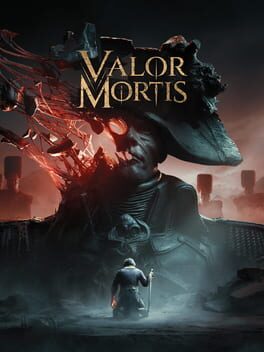
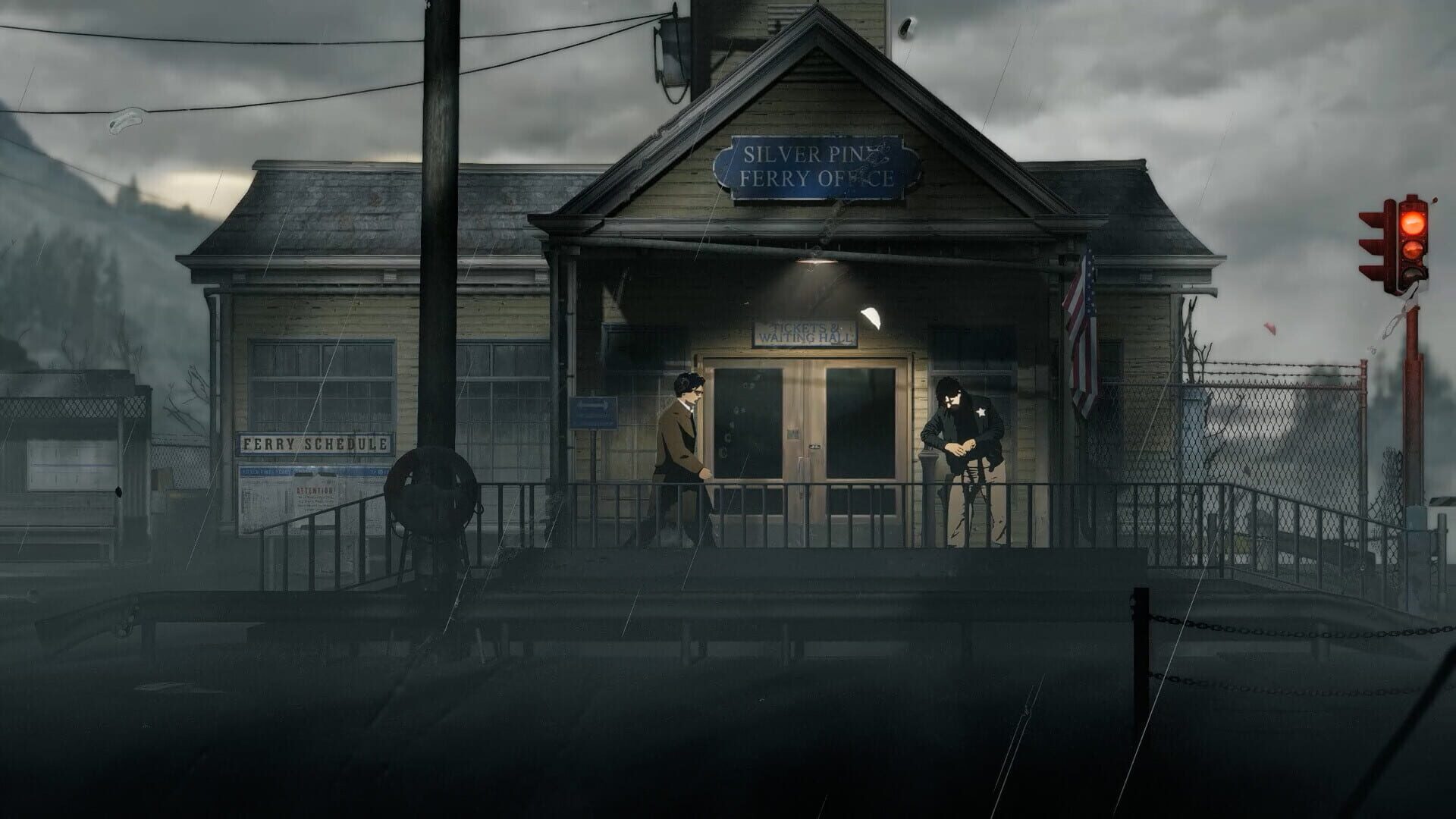
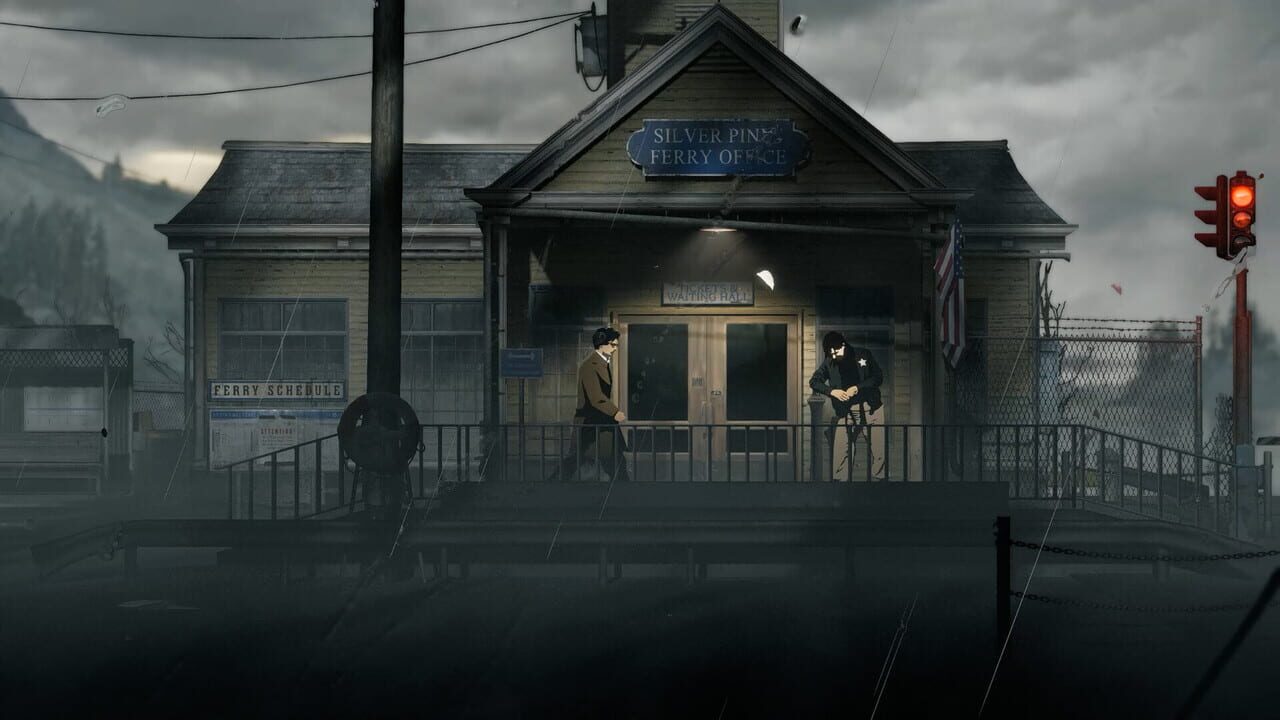
Silver Pines, from the Sweden-and-Norway-based studio Wych Elm, is this argument's newest test case, and the announced facts should be kept separate from what the trailers merely evoke. Team17 confirmed the game in October 2025 and dated it for October 8, 2026, on PlayStation 5, Xbox, Nintendo Switch, and PC. It casts the player as Red Walker, a private investigator hired to find a missing musician named Eddie Velvet, in a settlement the studio's own copy describes as half-abandoned and half-forgotten. Coverage has reached for David Lynch and Twin Peaks on tone and for Resident Evil and Silent Hill on mechanics, and the comparisons are earned: the game is a side-scrolling survival-horror Metroidvania built from photo textures that have been painted over and staged in a three-dimensional space, in which Walker fights or evades nightmarish creatures, solves puzzles that gate locked doors, and manages limited ammunition and healing items while new tools open previously inaccessible parts of the map. The Metroidvania shape does real work on its own, separate from the setting, because it is structurally opposed to the escape narrative a linear horror game defaults to. Rather than moving Walker forward and out toward a gate that finally opens onto the highway, it returns him repeatedly to streets and buildings he has already crossed, now rearranged by whatever new key or tool he is carrying. That loop is one of the few places where the design and the sociology could actually meet: a town nobody can leave until they have walked its entire layout enough times to understand it is, mechanically, a fair description of what a small town's actual residents do for a lifetime, minus the monsters. Wych Elm's own description of the premise promises that uncovering the town's mysteries "could hold the key to redemption," and that Walker, as the investigation proceeds, experiences what the studio calls a nightmarish descent beyond his control. This is Silver Pines's actual announced shape, not an inference: an outsider with a job to do, a town built from photographs of a country the developers do not live in, and a resolution pitched, by the marketing's own language, as one man's redemption rather than as anything the town itself has to answer for.
That last detail is where the premise's real test sits, and it cuts against the setting doing the sociological work this essay has been describing. Jackson's mechanism, and Twin Peaks's after it, depends on the horror being distributed across the town rather than resolved inside one visitor's arc: the village draws lots collectively and every household is implicated by attendance; Twin Peaks spends its runtime discovering that half the cast already suspected the truth and said nothing. A redemption framed around Walker, an investigator who was not there for whatever the town did or allowed, relocates the moral weight from Silver Pines's residents to Silver Pines's visitor, which is a different and structurally easier story to tell. It is possible for a finished game to reverse that impression, if the mystery Walker uncovers turns out to implicate the town's own institutions, ordinary people who did an ordinary, terrible thing and kept living next door to each other afterward, the way Jackson's villagers do and the way Twin Peaks's sheriff does. Nothing in what has shipped so far rules that out. But nothing in what has shipped so far requires it, either, and the mechanical description on offer, scarce ammunition, healing items, locked doors, nightmarish creatures, is genre furniture that would sit just as comfortably in an abandoned hospital or a derelict submarine, both settings that have hosted the identical inventory without needing a single neighbor. Resource scarcity becomes sociological evidence only if the fiction ties the shortage to the town's own depopulation, to abandonment as a cause rather than a backdrop; nothing yet confirmed says whether Silver Pines intends to make that connection or whether the half-abandoned town is simply where the studio decided the ammunition should run low. The puzzles carry the same ambiguity in miniature. This genre typically delivers its backstory through found documents: letters, photographs, ledgers, the residue of people no longer present to explain themselves in person. That format is exactly what Jackson's version of the story would need to work as a game: a paper trail that names who signed off on what the town did and who else witnessed it. Whether Silver Pines's puzzles turn out to be assembled from Silver Pines's own paper trail, or from generic keypad codes and item combinations that could belong to any locked door in any building anywhere, is not yet public information. The difference between those two versions is the entire difference this essay has been describing, reduced to the size of a single inventory screen.
The honest counter-argument to all of this deserves its full hearing, because it is not a strawman. A real and long-standing critique holds that small-town horror, especially the backwoods and hillbilly variant that flowered after Deliverance in the 1970s, most bluntly in The Texas Chain Saw Massacre two years later, functions as urban condescension toward rural America: city-made entertainment casting rural populations as inbred, backward, and threatening, a fear less of social structure than of people its makers regard as insufficiently civilized to begin with. That critique is largely correct about the films it targets, and Silver Pines, a Lynchian, monster-filled small town built by a European studio for players who mostly do not live in one, is a plausible target for the same charge. But the critique's force depends on a distinction worth keeping sharp rather than collapsing into a single complaint about setting. Hillbilly horror's fear requires its rural characters to be lesser: degenerate, inbred, other. Jackson's fear requires the opposite. Her villagers are not depicted as strange at all. They are cheerful, orderly, mildly funny about the whole business, entirely recognizable as neighbors, and that ordinariness is the entire point, because the story's claim is that ordinary, undegenerate people, doing exactly what their community asks of them, will kill a woman they have known for years and go home for dinner afterward. A story that needs its small-town characters to be freaks is making the condescending argument. A story that needs them to be normal is making the more serious and considerably less comfortable one, and it is the second story, not the first, that Twin Peaks and Jackson both belong to.
Where does that leave a game about nightmarish creatures preying on a half-abandoned town, built by developers working from photographs rather than memory. Not automatically guilty of condescension, since the hicksploitation charge specifically requires rural people to be cast as the threat, and Silver Pines, on everything announced so far, casts monsters in that role instead, which sidesteps the charge rather than answering it. But sidestepping is its own kind of cost. A game that populates its town with creatures rather than with complicity does not insult small-town America the way Deliverance's backwoods men do. It simply declines to say anything about it, borrowing the genre's genuinely earned atmosphere, the shuttered storefront, the two-lane road, the neighbor recognized on sight, while opting out of the sociology that made the atmosphere mean something in the first place. That is the risk specific to 2026, when the American small town has been photographed, painted over, and shipped as horror set dressing so many times that a studio can build a wholly convincing one without ever asking what, sociologically, a small town actually is. The atmosphere no longer requires the argument to arrive intact. It can be licensed on its own.
What a town like this actually offers, before any creature is added to it, is a two-lane county road running past a scatter of houses whose porch lights everyone on that road can name on sight, leading eventually, after enough miles, to a hospital that used to be closer than it now is. Nobody on that road is anonymous to anyone else who lives on it, and nobody on that road is more than an accident away from finding out exactly how far away help currently sits. Both of those facts are true right now, this year, independent of any studio's trailer, in the part of the country the trailer is borrowing its look from. The genre keeps redrawing that road because the road is real. What varies, from Jackson's version to Carpenter's to whatever finally ships on the eighth of October, is only whether the fiction remembers that the road runs in both directions, and whether anything is required to travel down it besides the monster.