

In 1987 Capcom shipped a game whose title screen offered six doors at once. Behind each was a robot with a theme, a room built around that theme, and a fight at the end of it. The unusual part was not the non-linearity, which several games of the period had. It was what happened at the moment of victory. The defeated robot did not drop a key or a coin or a health refill. It handed over its weapon, and the player walked out of the room able to do the specific thing that had, ninety seconds earlier, been used against them.
Mega Man's structure is so familiar now that it is difficult to see how strange it is. Almost every other action game ever made treats an enemy as a problem that disappears when solved. This one treated the enemy as a lesson with a test attached, and the test came first.
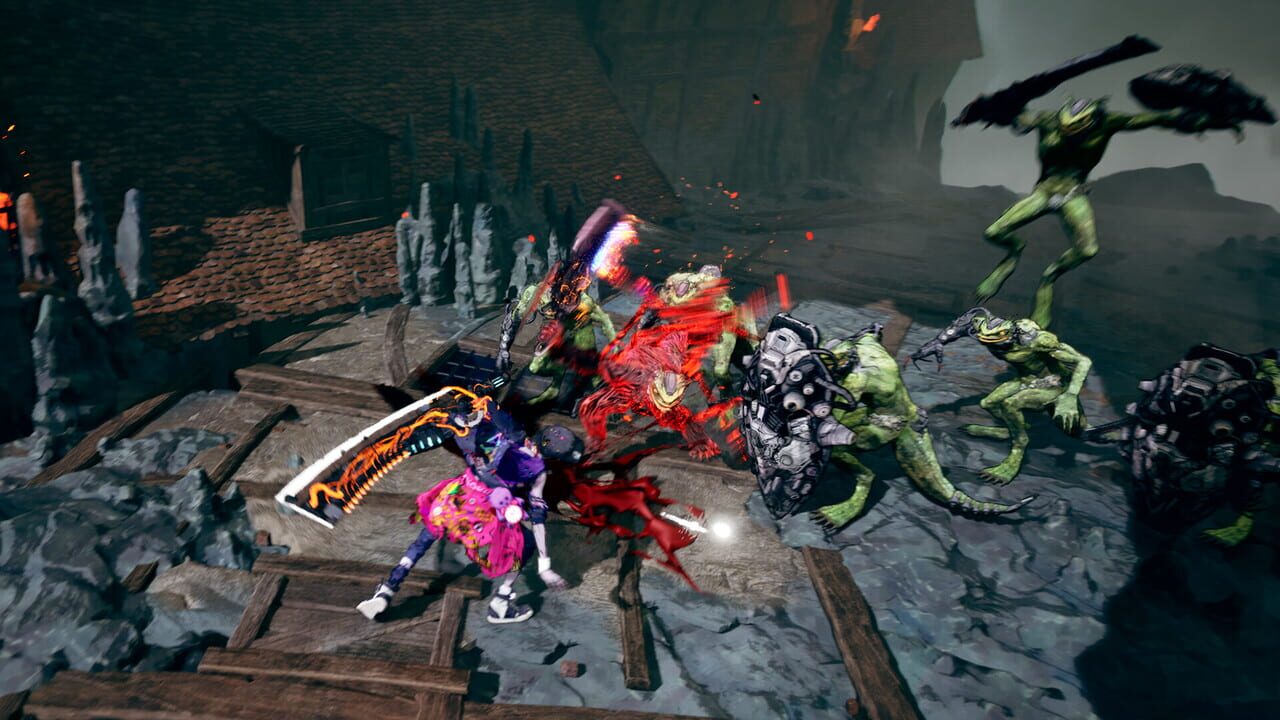
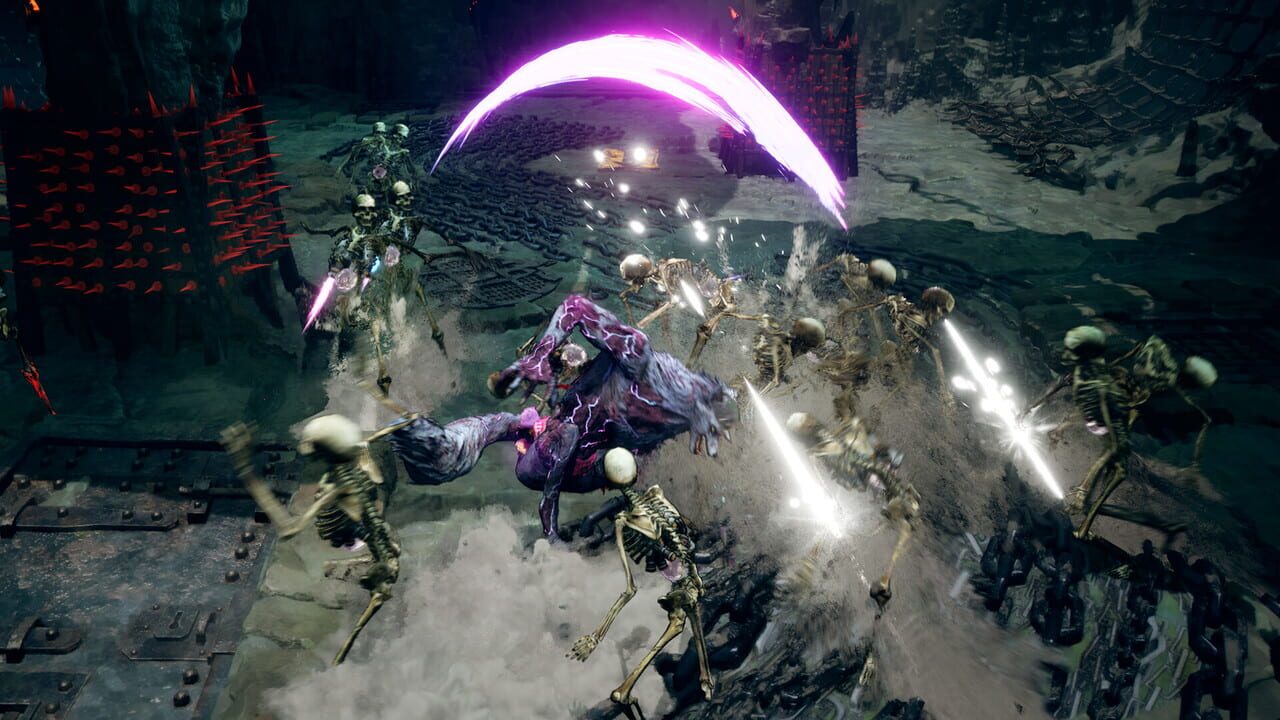
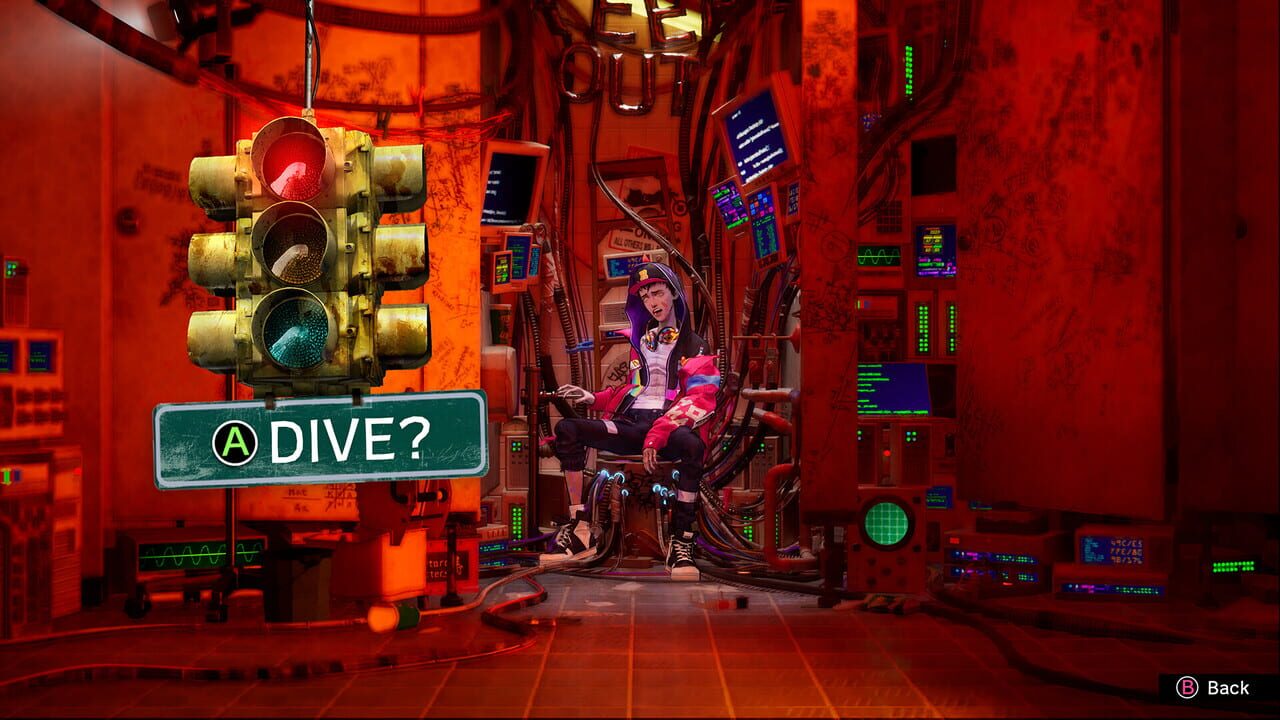
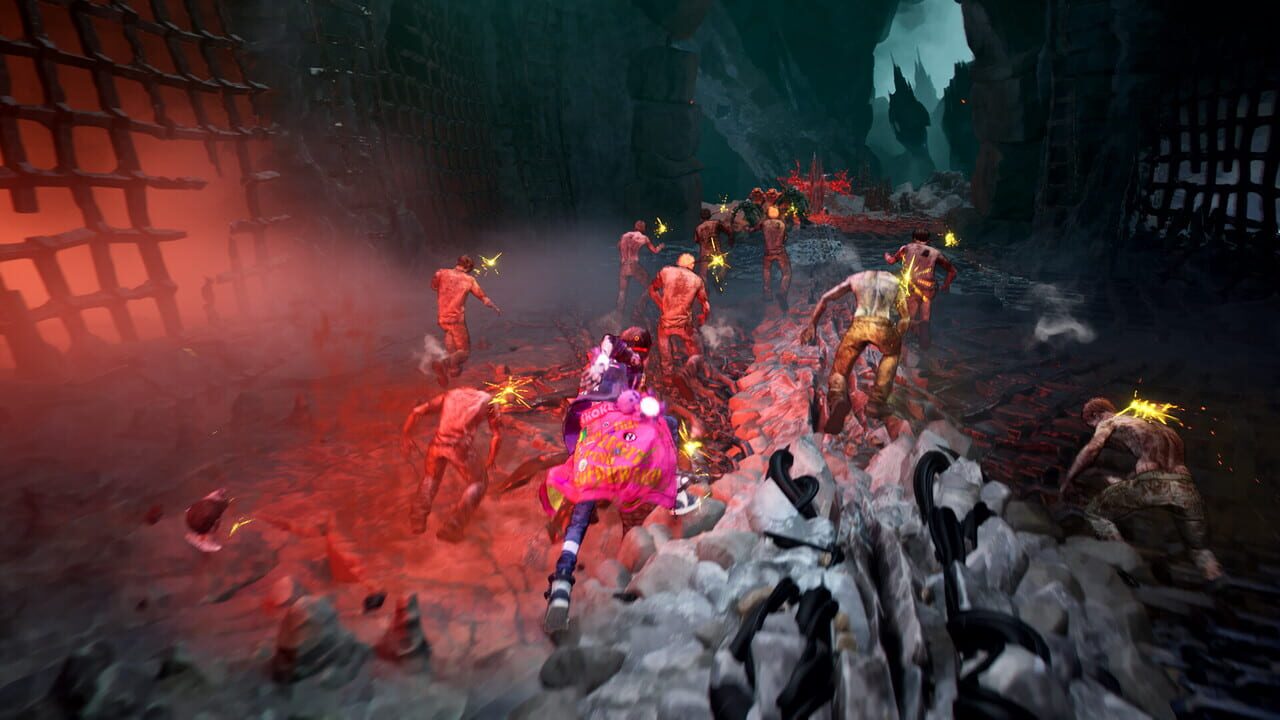
That structure has never become the default, and it has never gone away either. It surfaces every few years in a game that decides its progression system should be made of other characters rather than of equipment, and it is the structure Stupid Never Dies is built on: a timid zombie named Davy, at the bottom of a monster society that has no particular use for him, working his way upward through a dungeon by taking the abilities of the things he kills. This is a form-and-systems reading of that arrangement, because the arrangement is doing something specific with the relationship between difficulty and reward, and the something is easy to describe and unexpectedly hard to execute.
Begin with what an enemy normally is, informationally.
In a conventional action game the enemy carries exactly one piece of content, which is its attack pattern, and the pattern exists to be read. The player learns the tell, learns the window, and applies the answer. When the enemy dies, the pattern goes with it. What the player keeps is a number: experience, currency, a drop, a percentage of a bar. That number is fungible, which is the point of it. It can be spent on anything, and what it is spent on has no relationship to where it came from.
This is an efficient design and it has a specific consequence that is worth stating plainly. In a fungible-reward system, the enemy roster and the progression system are two separate machines that meet only at a cash register. The player's growing power is a record of how much they have played, not of what they have played. A character at the end of such a game carries a build assembled from a menu, and the menu was the same menu available to everyone.
The ability-theft structure severs that. What the player carries out of a fight is the fight, in portable form.
Three games worked out most of what this makes possible, and they did it within six years of each other. Mega Man in 1987 established the basic contract and, more importantly, established the second-order effect: because each acquired weapon is strong against exactly one other robot, the enemy roster becomes a dependency graph. There is an order, the order is discoverable, and discovering it is the actual game underneath the platforming. A player who beats the bosses in the right sequence has an easier time than one who does not, and nothing in the game states the sequence.
Final Fantasy V in 1992 took the idea somewhere stranger with the Blue Mage, a job that learns spells only by being hit with them. The requirement is not victory but survival, which inverts the usual relationship between damage and progress: taking a spell in the face is the acquisition event, and a player pursuing a complete spell list ends up deliberately standing in front of attacks they have spent the rest of the game avoiding. It is the only progression system in the medium that rewards being wrong.
Kirby's Adventure in 1993 made the transaction instantaneous. The first Kirby game, in 1992, had no copy ability at all; the sequel added it, and in doing so converted every enemy on screen from an obstacle into an item. What that produced was not depth so much as fluency, a game in which the moveset changes several times a minute and the player is constantly deciding whether the ability they are holding is worth more than the one walking toward them.
Three different implementations, three different feelings, one shared claim: the enemy is a curriculum rather than an obstacle, and the roster is the syllabus.
The reason this matters beyond taxonomy is that it solves a real and persistent design problem, which is the tension between breadth and legibility.
Any action game with a large moveset faces the same difficulty. A player handed twenty abilities at once will use three, because twenty is more than working memory will carry into a fight and because there is no reason to prefer the eleventh over the fourth. The standard mitigations are all imperfect. Gating abilities behind a level curve teaches the player nothing about them. Tutorialising them individually is expensive and interrupts. Letting the player pick from a tree produces a build assembled before the abilities were ever felt in play.
Acquisition by defeat solves it almost incidentally. By the time the player owns an ability they have already spent several minutes on the receiving end of it, watching its windup, its range, its recovery and the situations where it is dangerous. The teaching has happened, and it happened under conditions that made the player pay attention, because the information was being used against them. There is no tutorial because the fight was the tutorial. This is the most elegant property of the form and it is very rarely stated as the reason the form works.
It also produces a texture that fungible progression cannot. A player's build in a game like this is a route. It says where they went and in what order, and two players who finished the same game will have arrived carrying different things for reasons they can each narrate.
There is a second lever, less discussed than the first, and it is where the form gets genuinely interesting: what the theft costs.
In Mega Man it costs nothing. The weapon arrives and stays, ammunition aside, and the player ends the game holding all eight. That is generous and it is also why the Mega Man moveset is remembered as a set of tools rather than as a set of decisions. Kirby charges a real price: taking a new ability means discarding the current one, immediately, with no storage, so every acquisition is also a loss and the player is constantly appraising what they are holding against what is walking toward them. Final Fantasy V charges the strangest price of all, which is damage taken on purpose, and in doing so converts the acquisition into a small act of deliberate incompetence.
Those three prices produce three different games out of one structure. The lesson is that the theft is not the mechanic. The exchange rate is.
Stupid Never Dies has announced the vocabulary of an exchange rate without stating one: a body that is customised with upgrades, which implies places to put things, which implies a finite number of them. If the abilities occupy slots on a body that has fewer slots than there are abilities, the game has Kirby's economy with more bookkeeping, and every acquisition becomes an argument with the player's own past choices. If the body simply accumulates, the game has Mega Man's economy at four times the scale, which is the failure mode described above arriving by a different road.
It is worth noting where this premise comes from, because it is not an invention and the lineage explains the design.
A recognisable body of Japanese web fiction from the last fifteen years is built on precisely this shape: a protagonist begins at the very bottom of a monster hierarchy and ascends it by consuming what they defeat. Re:Monster, serialised from 2012, gives its reincarnated goblin an absorption ability that grants him the traits of whatever he eats, and the novel's actual content is the resulting bookkeeping, a ledger of acquisitions rendered as a career. That Time I Got Reincarnated as a Slime, from 2013, starts its protagonist as the weakest creature in the setting and makes his rise legible through the same accounting. These stories are enormously popular and they are popular for a reason that is relevant here: they combine a progression system with a social one, so that getting stronger and getting somewhere are the same event.
That combination is what a game in this tradition has usually lacked. Mega Man's robots have no society. Kirby's enemies have no standing. The abilities in both cases come from nowhere in particular, which is fine mechanically and inert dramatically. A dungeon organised as a hierarchy, with a protagonist at the bottom of it, supplies the missing half at no mechanical cost, and it means the question the player asks about each new creature is not only what does it do but where does it sit.
Now the failure mode, because the form has one and it is severe.
The curriculum collapses into an inventory when the abilities become too many and too shallow. Twelve stolen techniques, each a slight variation on a projectile, is not a syllabus. It is a menu with provenance, and provenance is not a mechanic. Once the player is choosing from a list rather than remembering a fight, everything the structure was buying has been spent: no teaching happens, because the abilities were not distinctive enough to teach anything, and no route is recorded, because the list is the same list everyone has.
Mega Man knew this and kept the number at eight. The constraint looks like a hardware limitation and is at least partly a design one, because the dependency graph only functions if the player can hold the whole roster in mind at once. A game with forty robot masters has no weakness chain; it has a lookup table.
This is the specific knife-edge Stupid Never Dies is standing on, and it is why the announced framing is worth reading closely rather than charitably.
The premise is strong. A monster society with a hierarchy, and a protagonist at the bottom of it, gives the ability-theft structure a fiction that explains itself: Davy is not collecting powers, he is climbing, and each acquisition is a social ascent as much as a mechanical one. That is a better justification than most games in this tradition bother with, and it sets up something the form has rarely had, which is a reason to care about which enemy the ability came from. A stolen technique that was previously the property of a specific creature with a position in a social order carries information a Robot Master's weapon does not.
The announced material also promises bizarre bodily upgrades, a large stock of strange items, and fast-paced combat with a great deal of innovation in it, which is the vocabulary of breadth. Breadth is the enemy of this structure. Every additional acquirable thing dilutes the teaching value of each one, and a game that wants both a deep curriculum and a large collection is going to have to choose, probably late, probably under pressure.
The judgment, then, is narrow and testable: the game will be as good as its enemy roster is small and distinct. If the creatures Davy climbs past are individually memorable enough that a player can name where each of their techniques came from, the structure will do its work and the fiction will amplify it. If the dungeon is populated by variants, the whole apparatus becomes a loot system wearing a costume, and it will be a perfectly ordinary action game about a zombie.
One question remains, which is why a structure this elegant has stayed marginal for nearly forty years. The answer is not that designers have failed to notice it. It is that it is expensive in a way that does not show up on any feature list.
Every enemy in an ability-theft game has to be built twice. Once as an opponent, which requires an attack pattern, a tell, a recovery window and a place in the difficulty curve. Then again as a tool, which requires the same move to work when the player is holding the controller: responsive on the frame the button is pressed, cancellable, aimable, useful against a range of situations the enemy never faced, and readable from a camera position the enemy was never viewed from. Those are different engineering problems and the second is considerably harder, because players notice input latency and enemies do not.
The cost compounds. An ordinary action game can afford a filler enemy, a thing that exists to fill a room and apply pressure, because nobody will examine it closely. A game in this tradition cannot, because every enemy is a promise. Put a creature in the dungeon whose move is dull and the player who takes it has been handed a dull thing and told it is a reward. So the roster has to be small, every entry has to be distinct, and every entry has to survive being used a thousand times rather than fought once. That is why Mega Man had eight, why Kirby's abilities are individually large enough to reorganise the whole moveset, and why almost nobody attempts this at open-world scale.
Which is a reason for cautious optimism about a small studio taking it on. This structure punishes breadth and rewards discipline, and discipline is the thing a smaller team can actually afford. The games that ruined the form did so by having too much of it.
There is a real counter-reading and it deserves an answer.
The objection is that this distinction is cosmetic. Equipment-based progression also records history: the sword that dropped from a particular boss carries that boss's name, and players remember where their gear came from perfectly well. On this account the difference between taking a weapon from a corpse and learning a technique from a fight is a matter of framing, not of structure.
The reply is that the two differ in one measurable place, which is whether the player learned anything before the acquisition. A sword that drops from a boss teaches nothing about itself, because the boss was not using it in a way the player had to read. An ability the player has spent four minutes dodging arrives pre-taught. That is not a framing difference. It is the difference between a reward and an education, and it shows up immediately in how quickly a player becomes competent with the new thing.
The tradition is old, small and stubbornly durable, and its best entries have all understood the same thing: the value is not in owning what the enemy had. It is in the interval before that, when the enemy still had it, and the only way to learn it was to stand there and be hit.