
In much of late medieval England, the death of a household's head could trigger two departures before the funeral had even been arranged. The manor's lord took the best beast in the yard, a due called heriot, owed simply for the privilege of having died as someone's tenant. The parish priest then took the second-best beast or chattel, a customary payment known as a mortuary, owed for the privilege of being buried by the church at all. Two men could lead two animals out of a grieving household on the same afternoon, and neither transaction was thought remarkable enough to record as anything but routine income. The livestock went out the gate before the body went into the ground.
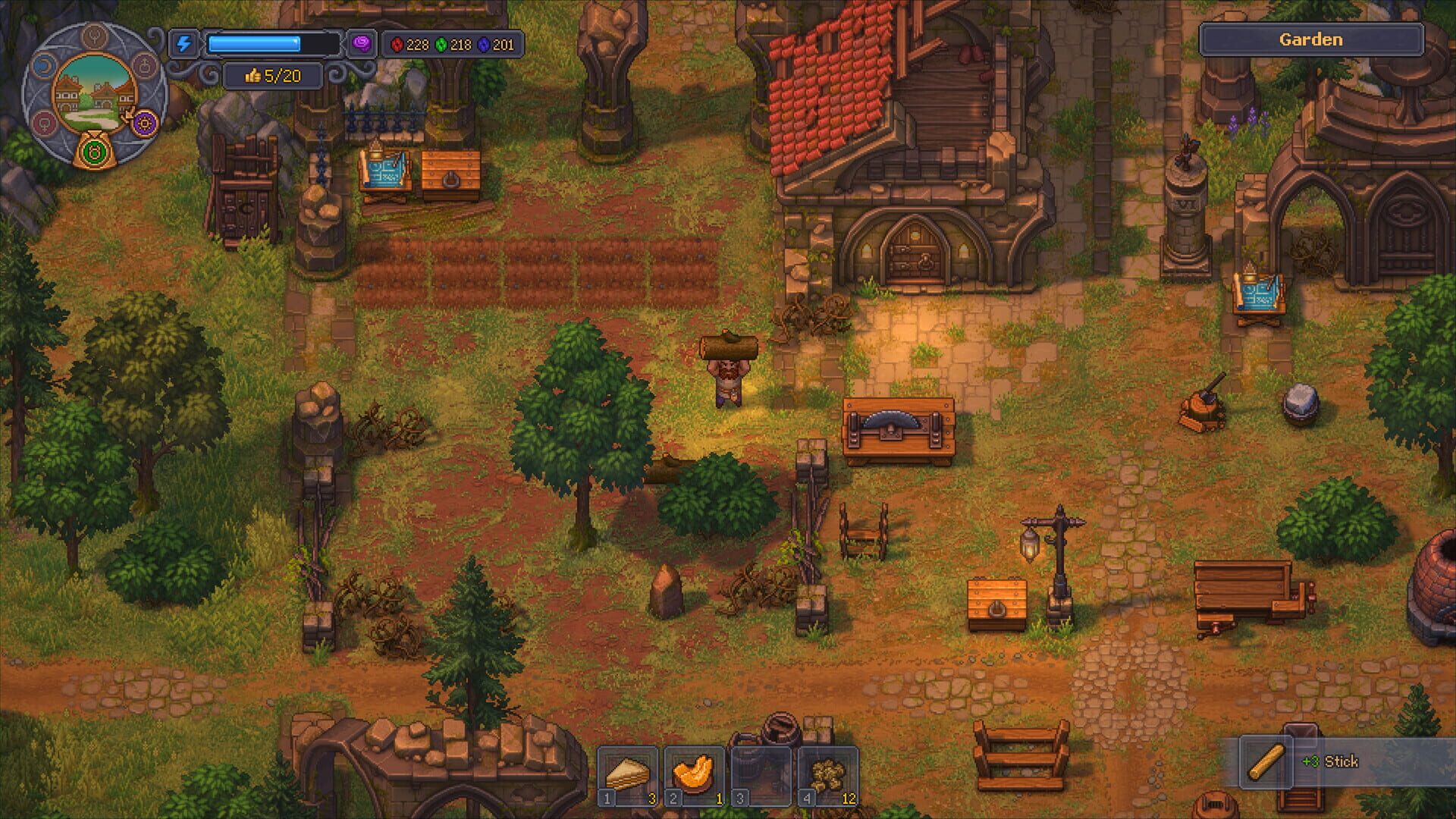
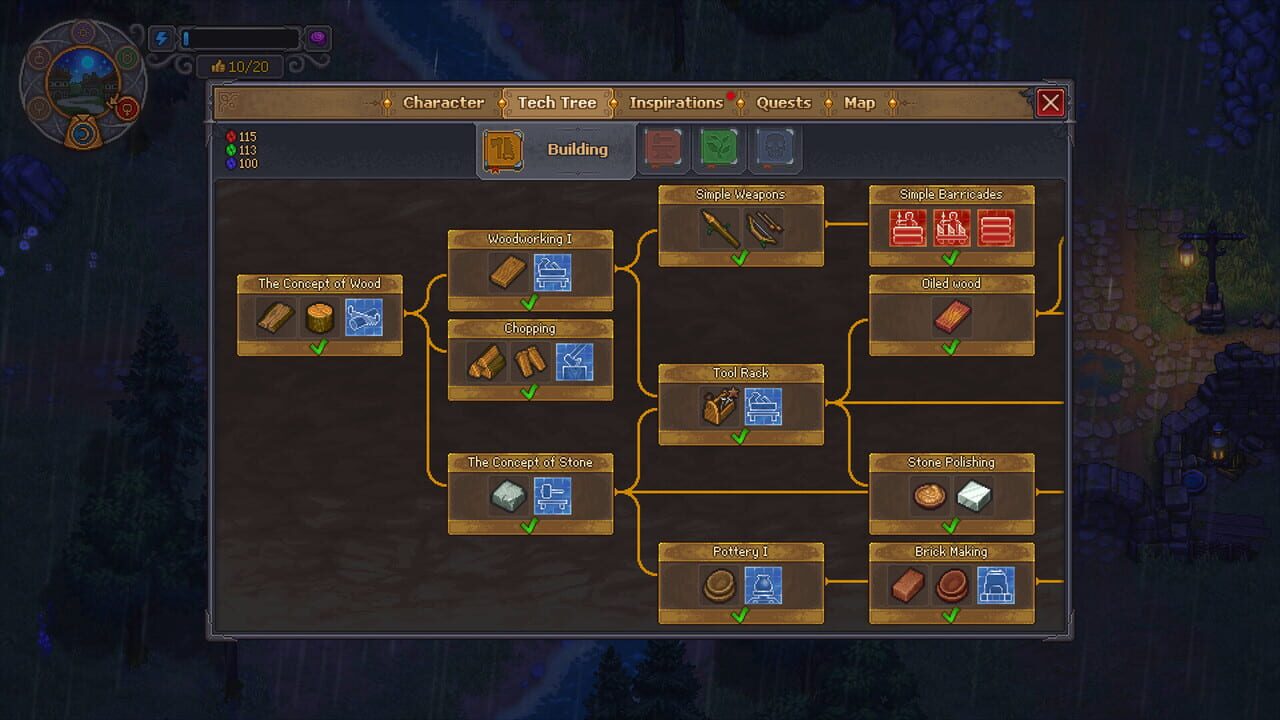
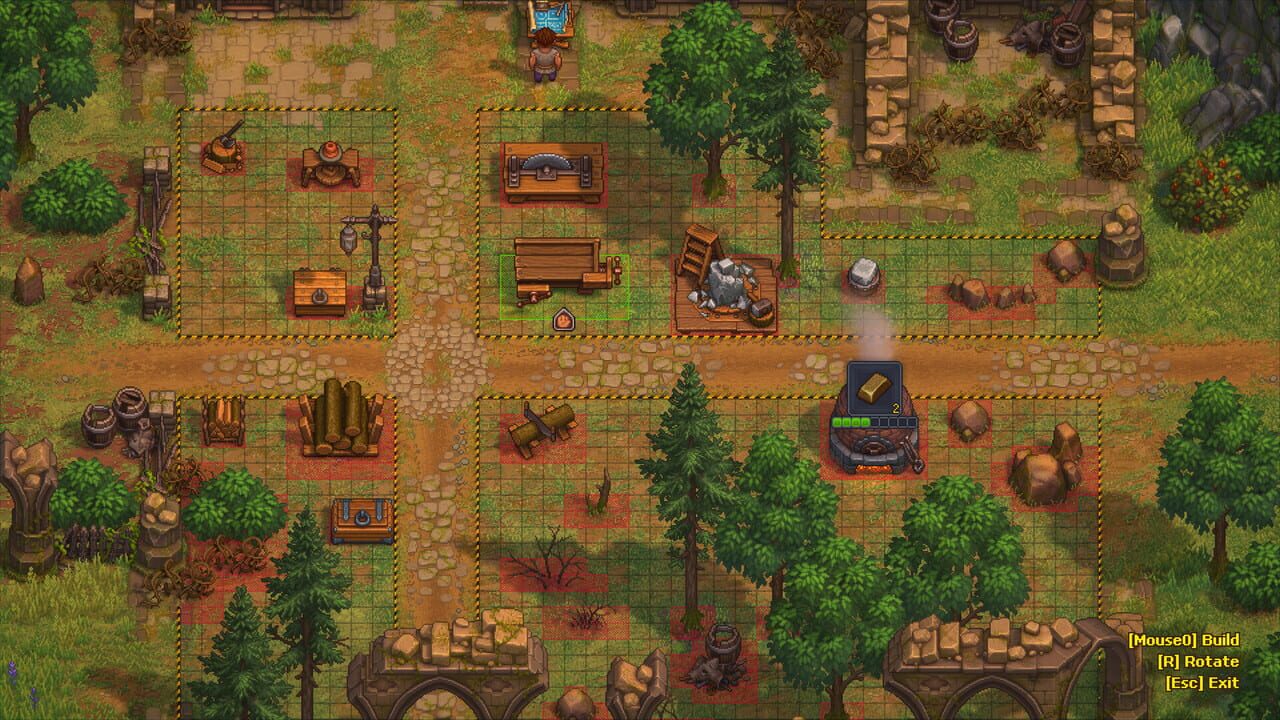
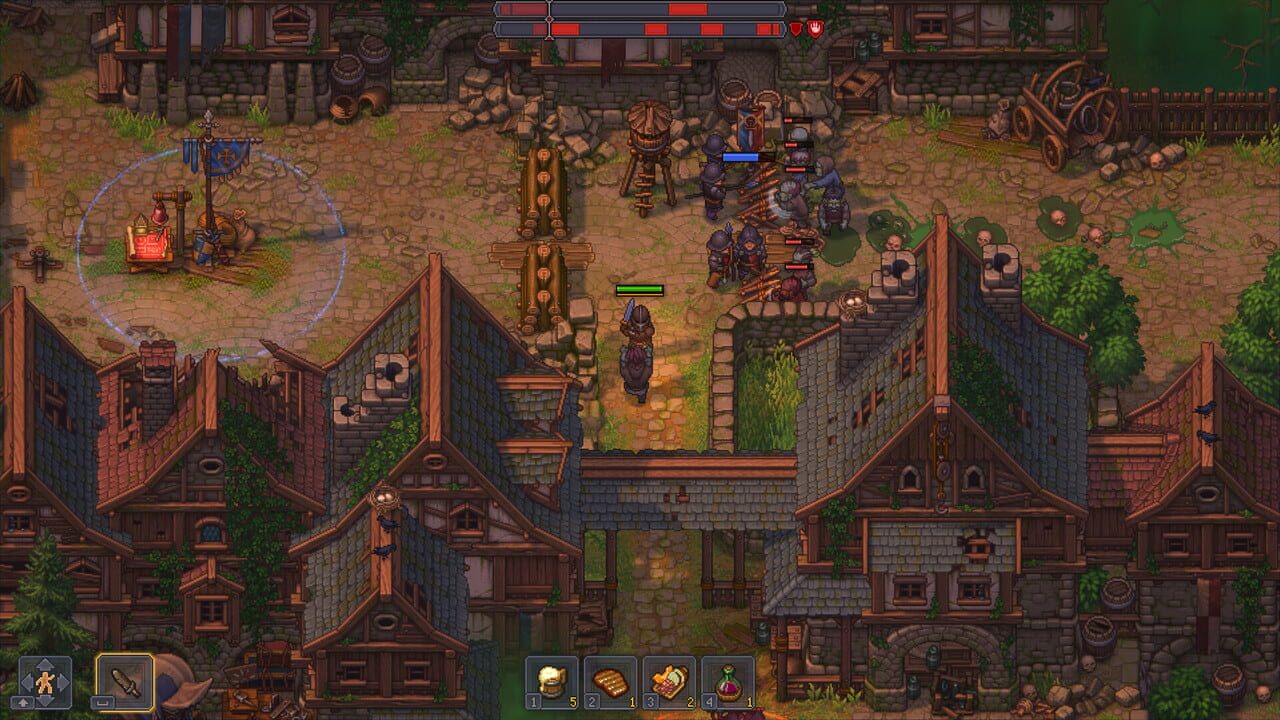
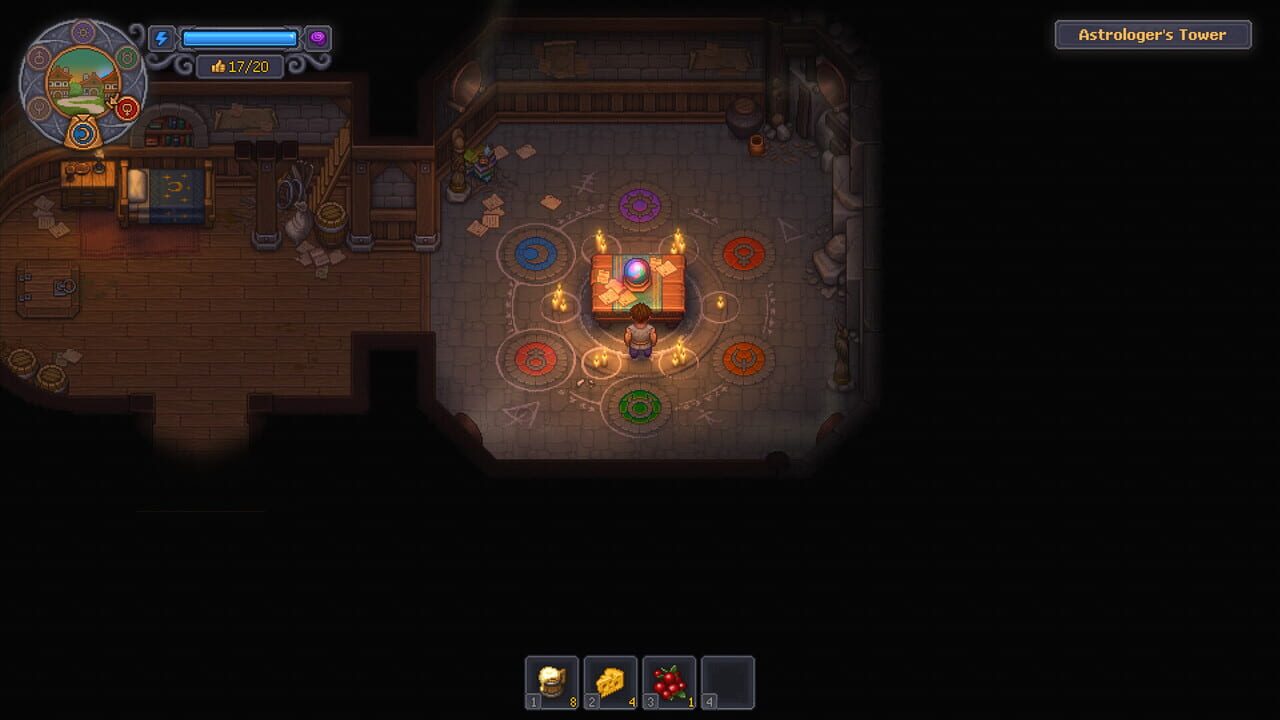
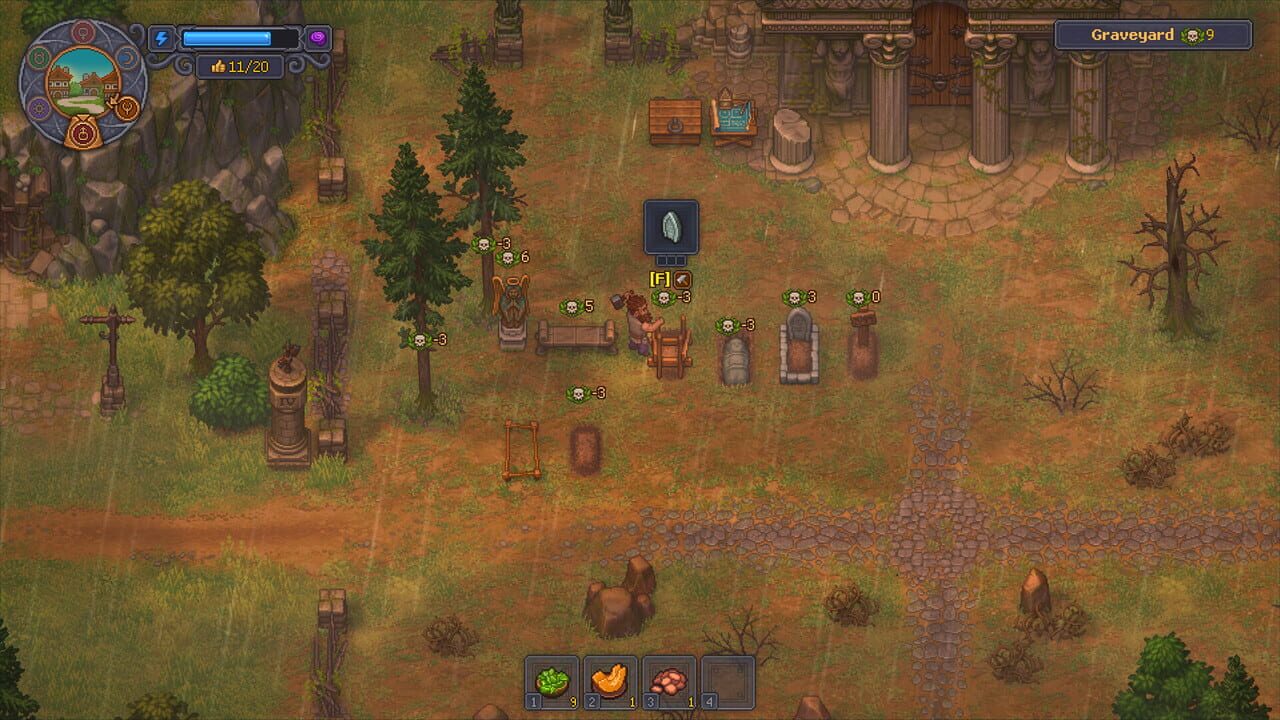
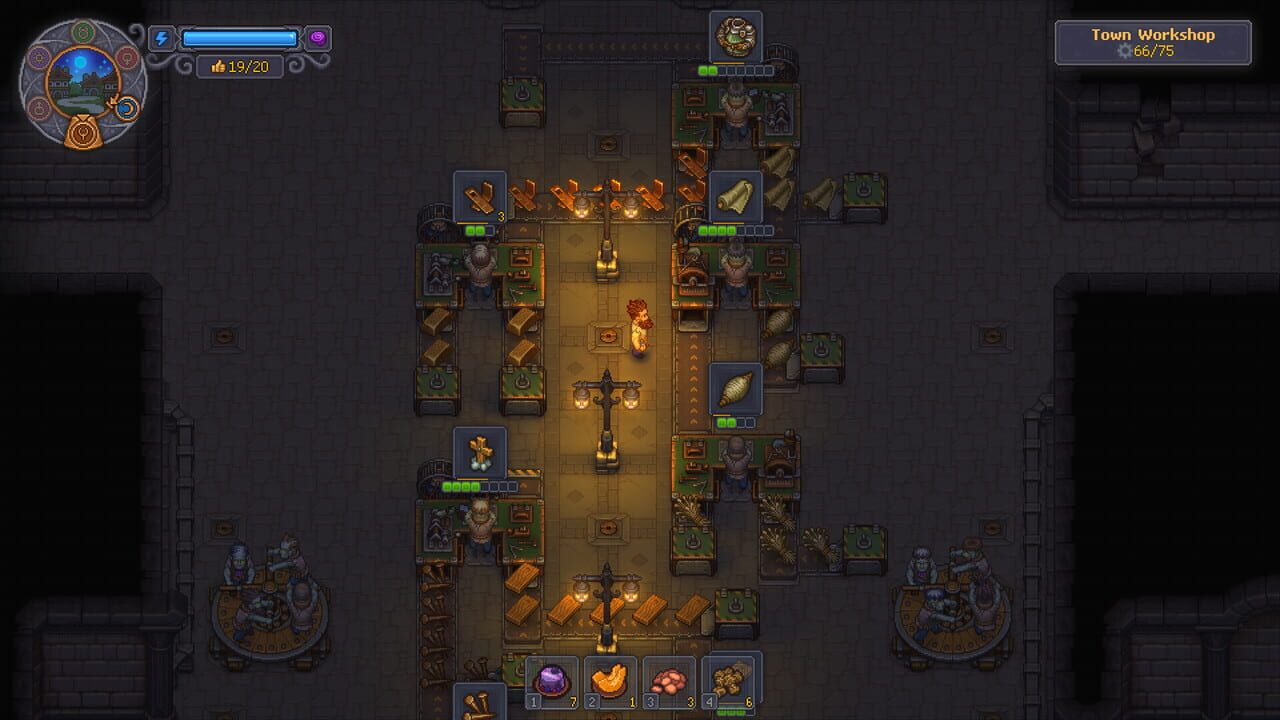
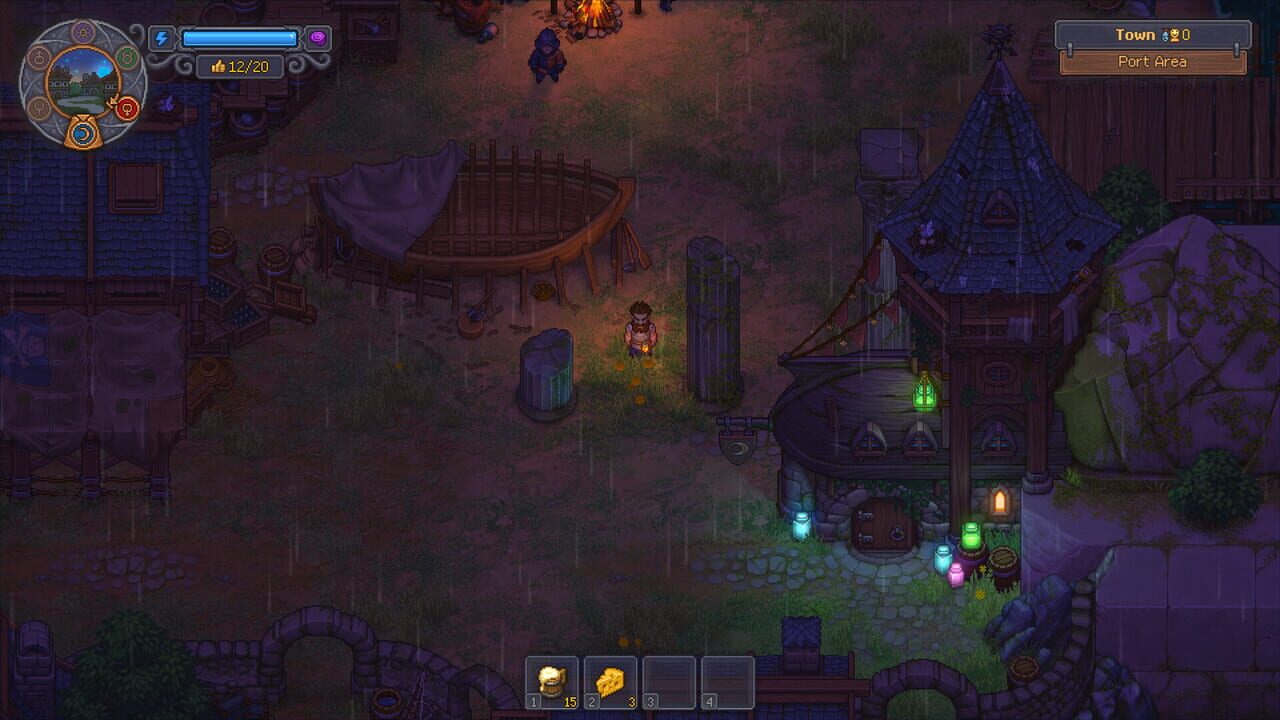
The record does not say how the widow felt about this. It says only what it cost her, which is the shape the evidence takes across nearly the whole of documented European history: the disposal of a corpse was never a transaction the dead arranged for themselves, and rarely one the living arranged out of sentiment alone. It was negotiated, taxed, and priced, by canon law, by royal statute, and by the plain institutional need for income, in societies with far less spare currency than this one. Graveyard Keeper II, developed by Lazy Bear Games and published by tinyBuild, due September 22, 2026, arrives at that same fact from the opposite direction, through the spreadsheet rather than the archive. Its predecessor, released in 2018, described itself without apparent irony as the most inaccurate medieval cemetery management simulator. The sequel's player restores a ruined town, runs a graveyard as a going concern, automates the processing of the dead into saleable goods, and eventually leads an army raised from that same graveyard into battle, the whole operation pitched as turning a zombie problem into a profitable business. The joke on offer is that commerce has been smuggled into a world too pious and too poor to have had any. The archive suggests the smuggling ran the other way.
What the record keeps and what it lets fall are not the same thing, and the gap between them is the actual subject of a history-and-memory reading of any of this. A churchwarden's account book will say, in a specific hand, that a grave was dug on a specific day and a specific fee was received for it. It will not say what the family felt watching the second-best cow led away an hour after the first mourner arrived, and it was never designed to. The archive of medieval death is overwhelmingly an archive of transactions: probate inventories, mortuary rolls, chantry certificates, churchwardens' accounts, parish registers, all of it generated because institutions needed to track money and property, not because anyone thought grief was worth recording for its own sake. Historians have learned to read the feeling back out of the transaction, carefully and with real interpretive risk, but the transaction is what survives. This is worth naming because it is also, structurally, the exact problem a management simulation has. A game can render a fee, a quota, a production chain, all of it drawn with real specificity. It cannot render what a fee felt like to pay, not because the medium is shallow, but because that is precisely the information neither the archive nor, in a different way, the ledger was ever built to hold. The historian and the designer are working from the same kind of incomplete document, whether either of them would put it that way or not.
The fee schedule went well beyond the mortuary due, and, like the mortuary due, it was mapped directly onto the ground. A place inside the church, close to the altar or to the sacrament reserved there, cost the most and belonged in practice to the gentry, the clergy, and whoever had paid for the building's upkeep. The historian Vanessa Harding, comparing burial practice in early modern Paris and London, has traced how precisely this hierarchy of ground was priced: proximity to the altar, to a favored saint's image, to the tombs of the already-important, carried a premium a family paid in cash at the moment of its greatest grief, and paid again for a stone marker meant to outlast whatever lease it held on the plot beneath it. The poor went outside, into the churchyard proper, often specifically to its north side, ground long associated with suicides, the unbaptized, and the unlucky, because that side was the one nobody had yet paid to avoid. Even the digging was somebody's exclusive franchise. A parish sexton typically held the sole right to open graves in his own churchyard, collected a set fee per grave, and had every reason to defend that right, since a churchyard is a small and finite property and he was, in effect, its only licensed contractor.
Above the price of ground sat the price of intercession, where the medieval church did its most serious business. Purgatory, as doctrine held it, was a place of finite suffering that prayer, and specifically the mass, could shorten. A family with money could buy time off a relative's sentence there, in bulk, by endowing a chantry: an income-producing grant of land or rent that paid a priest, for a fixed term or in perpetuity, whose entire occupation was to say masses for one name. The historian Eamon Duffy has documented how thoroughly this economy saturated late medieval English parish life, from perpetual chantry chapels built onto the sides of churches by the genuinely wealthy down to the humbler trental, a bundle of thirty masses within reach of a prosperous tradesman's estate. A chantry priest was, in the fullest sense available before the term existed, an employee: salaried from an endowment's income, tasked with producing a fixed volume of intercession on a schedule. A medieval bishop, offered the modern pitch of turning a zombie problem into a profitable business, would not have laughed at the premise. He would have asked to see the opening balance sheet.
That apparatus was large enough, and lucrative enough, to require an Act of Parliament to dismantle. The Chantries Act of 1547, passed within months of the boy king Edward VI's accession, dissolved chantry foundations across England and confiscated their endowments to the crown, on the doctrinal argument that purgatory itself was an invention and the whole intercession trade a fraud on the grieving. The historian J. J. Scarisbrick has traced how much of the resentment that made this confiscation politically possible had been building for decades over exactly these charges: mortuary dues, probate fees, chantry rents, real money leaving real households at the worst possible moment, extracted by an institution that controlled the only market in the product it was selling. A trade does not usually require a statute to end it. Nobody legislates against a trade in nothing.
The other side of the ledger, the disposal of bodies nobody had troubled to mourn, was priced with even less delicacy. When Henry VIII's government chartered the Company of Barber-Surgeons in London in 1540, the grant included a standing allotment of executed felons' bodies each year, delivered from the gallows to the dissecting table, a legal recognition that a guild's need for cadavers was a supply problem to be solved administratively rather than a matter left to grieving families or to chance. Two centuries later, Parliament made the underlying logic explicit and a good deal more punitive. The historian Ruth Richardson has traced how a 1751 statute aimed at deterring murder ordered that the body of anyone convicted of the crime be denied burial altogether, delivered instead for public dissection or hung in chains, on reasoning stated plainly in the law itself: that the prospect of what happened to a body afterward might succeed where the prospect of the noose had failed. Parliament had concluded, correctly as these things go, that some people feared a surgeon more than they feared dying, and had written a corpse-supply policy on that basis. The bodies did not always go. Crowds at English executions sometimes fought the surgeons' men for possession of the corpse before it could be carted off, not out of simple sentiment but from a real and widely held belief that a body cut apart could not be made whole again at the resurrection promised on the Last Day. The historian Peter Linebaugh has documented these disturbances at Tyburn in some detail: relatives and friends of the condemned pulling against the anatomists' hired agents over the same rope-marked body, a tug of war with theological stakes on one side and a guild's supply chain on the other. Nobody in that crowd needed a designer's spreadsheet to understand that a corpse was property in dispute. They understood it well enough to fight in the street over which claim would win. The shortage the anatomy schools still faced, even with the gallows working at capacity, would spend the following century driving a black market in freshly buried bodies that the law kept trying and failing to close. Somebody has always had to do something with the bodies. For a long stretch of European history, the church, the crown, and the trade guild all had a documented, monetized, occasionally violent opinion about who that somebody would be, and what they would be paid for it.
None of this required a game designer's imagination. It required only what the historian Thomas Laqueur spends The Work of the Dead (2015) demonstrating at length: that a corpse has no natural claim on the living whatsoever, and that everything done for it, a marked grave, a mumbled prayer, a dissection table, is manufactured by people who are still breathing, for reasons that belong entirely to them. The dead do not lobby for a mortuary fee or draft a statute about dissection. The living do both, out of fear of purgatory, or need for parish revenue, or a guild's professional requirements, or a state's appetite for a punishment worse than hanging. Laqueur's point is clarifying rather than cynical: because a corpse makes no claims of its own, every claim made on its behalf is a cultural fact, built and defended and priced by whichever institution is doing the building. A medieval bishop and a modern hospital administrator are, in this one narrow respect, running the same kind of operation.
Even the ground itself was rarely a permanent purchase. Urban churchyards, packed for centuries onto a fixed footprint, could not expand to keep pace with their parish's dead, so most graves were understood, by long practice if not always by written contract, to be temporary. A body went into the earth, was given some years to reduce to bone, and was then exhumed to make room for the next tenant, its remains moved to a charnel house or ossuary rather than discarded, because the bones still mattered even after the plot they occupied did not. Paris ran this system at a scale that eventually became its own emergency. The Cimetière des Innocents, in continuous use for the better part of a millennium and holding the layered dead of a large share of the city, was closed to new burials in 1780 after its overflow drew public health complaints from the neighborhood built up around it. Laqueur gives some of his most vivid pages to what followed: beginning in 1786, cartloads of bones were moved by torchlight from the exhausted cemetery into the abandoned limestone quarries beneath the city, stacked into what tourists now visit as the Catacombs of Paris. A grave, in other words, was often a lease of undisclosed length, renewed for whoever could keep paying to keep a name on a stone, and reclaimed without ceremony from whoever could not. The wealthy bought permanence. Everyone else rented a place in a queue.
Set against this record, Graveyard Keeper II's premise stops looking like satire in disguise and starts looking like an accurate summary with the mood changed. A game in which a player restores a town, runs a graveyard as an enterprise, and automates the processing of the dead into goods is not importing commerce into a world too innocent to have had any. It is compressing four or five centuries of documented parish economics into a single playable loop and giving that loop a soundtrack. Philippe Ariès, tracing attitudes toward death across roughly a thousand years in The Hour of Our Death (1977), described the premodern relationship to dying in three broad movements: a tame death, familiar, expected, managed in public and attended by the whole household; a later, more anxious death of the self, weighted by individual judgment and a fear of dying unprepared; and finally, in Ariès's own century, a death he called forbidden, removed to the hospital, professionalized, and largely hidden from the people who loved the person dying. The mortuary fee and the chantry endowment belong to the tame end of that arc. They were transactions, but they were conducted by people who believed, with real dread, that a soul's comfort in the next world depended on getting the transaction right, in full view of a village that would be watching and judging the arrangements. The bishop pricing a plot and the family paying for it were on the same side of the same fear. What a management simulation adds to this picture, by the nature of the genre rather than by any single writer's choice, is a dose of exactly the emotional distance Ariès located centuries later, at the forbidden end of his arc: a player meets the graveyard as a set of production targets to optimize, screened from consequence, which is a recognizably modern relationship to death wearing medieval accounting as a costume. The commerce is medieval. The equanimity is contemporary, transplanted backward by several hundred years without a passport. If the game wanted to advertise its one true anachronism, it would not be the shop interface. It would be how relaxed everyone seems while using it.
None of this commercial architecture ran on paperwork alone. Somebody had to perform the actual labor the fee schedule was pricing, and that labor was neither clean nor especially respected. A sexton digging in a churchyard that had been receiving bodies for two or three centuries was, quite literally, digging through the parish's own history, striking earlier burials with some regularity and reburying what he found without much ceremony, because the alternative was refusing to dig at all in ground that had run out of virgin space. Gravedigging ranked, in most places and periods, closer to the bottom of the local occupational ladder than the top, poorly paid relative to its unpleasantness even though the church could not function without it. Comedy has always found something to do with this fact. Hamlet's gravedigger sings while he works and swaps skulls like a man doing inventory, a scene Shakespeare could write around 1600 because an audience already knew a sexton as a specific, recognizable kind of tradesman, brisk about the dead because briskness was the job. A player automating that same labor four centuries later is not applying a new sensibility to an old profession. The profession got there first.
This is worth taking seriously as a claim about the genre's form, not only about one game's mood or one trade's working conditions. Every management simulation, whatever its ostensible subject, a hospital, a prison, a pizza restaurant, a graveyard, performs the same operation on whatever it is handed: it breaks the subject into inputs, labor, throughput, and margin, because that decomposition is the genre's actual grammar, the thing that makes it a management simulation rather than a story. Applied to a hospital, the decomposition produces a mild and familiar irony, since nobody seriously believes medicine was always secretly a spreadsheet. Applied to the medieval treatment of the dead, the same decomposition stops being an imposition and starts being a redescription, because the medieval treatment of the dead already was a matter of inputs, labor, throughput, and margin, administered by people who kept records to prove it. A chantry priest producing a fixed volume of masses against an endowment's income is production automation in every sense the term carries in a technology tree, minus the tree. A sexton paid per grave dug is a laborer on piece rate. A parish clerk entering a name, a date, and sometimes a fee into the register that Thomas Cromwell's 1538 injunctions required every English parish to keep was doing throughput accounting for the dead, in ink, four hundred years before any studio rendered the same function as a meter filling on a screen. The spreadsheet, on this reading, is less an imposition on history than a continuation of it: the same bookkeeping, ported to a new machine, the dread edited out and a soundtrack added.
There is an obvious objection, and it deserves a straight answer rather than a wave. Graveyard Keeper II is a comedy about zombie labor and undead armies, made by a studio whose first entry built its entire pitch around advertising its own historical inaccuracy. Comedy games owe the record nothing, and a publication spending several thousand words reading one this closely risks becoming the joke the marketing copy was already making at its own expense. The zombie army especially has no archive behind it. Nobody in fifteenth-century Burgundy was conscripting the reanimated dead into a militia, and nothing here claims otherwise.
The distinction worth holding is between two different claims, only one of which is being made. The larger and sillier claim would be that the game is covert historiography, smuggling real economic history past players who think they are plundering crypts. That claim needs no defense because it is not true, and nobody involved needed to have read a page of Duffy or Laqueur for the game to work as a game. The claim actually being made is narrower: that the genre's throughput grammar, applied with no historical intention at all, reconstructs something true about how the medieval dead were actually processed, because that processing really was a matter of labor, inputs, and margin, administered by people keeping records to prove it. A form can be right about history by accident, simply by doing what it always does to whatever subject it is handed. That is not a credit to the developers. It is a fact about the machine the joke was built inside of, and it is, not incidentally, the reason a publication otherwise committed to serious criticism can justify spending this many words on a farming game about corpses.
Parish registers of the kind Cromwell's injunctions mandated still survive in county record offices across England, kept now in acid-free boxes instead of parish chests, the ink browned but legible. A typical page from the middle of the sixteenth century holds perhaps thirty entries: a name, a date, occasionally a cause, occasionally a fee, in the cramped secretary hand of a clerk who had a great many other names to get through before dark and who did not, on any surviving evidence, regard the work as morbid. It was simply the register, and the register had to be kept, because a parish that could not account for its burials could not account for its income, and a parish that could not account for its income did not stay a parish for long. Graveyard Keeper II will render the same fact as a ledger column that fills and chimes softly when a quota is met. Neither object is lying about what it is doing. Somebody has always had to do something with the bodies, and somebody has always had to write it down.