


In the middle act of Portal 2, the modern testing track gives way to a level of the facility the game has not shown until then. An accident sends the player down an elevator shaft into a wing of Aperture Science built decades earlier: exposed brick, hand-stenciled signage, control panels wired with mechanical switches instead of touchscreens. A public-address speaker clicks on, and a man's voice fills the chamber. The voice belongs to Cave Johnson, the company's founder, and Cave Johnson is not in the building. He has not been in the building for a long time, and by any reasonable accounting he is not anywhere. What plays through the speaker is a recording, one of hundreds wired into these walls decades ago on a proximity trigger, addressed to engineers who worked here and are themselves long since retired, fired, or dead. The chamber ahead needs a viscous blue gel, dispensed from an overhead pipe, that turns any surface it touches into a trampoline. Johnson explains, in the recording, why his scientists built the dispenser and what it was meant to do for a company that had recently decided, on his authority alone, to abandon the shower-curtain business for physics research, and the player bounces up a shaft engineered for bouncing, on a substance ordered into existence by a man who cannot be asked a single follow-up question, obeying a design fixed in poured concrete before the puzzle was ever a puzzle.
Upstairs, in the newer chambers, the facility's other voice never stops talking. GLaDOS narrates every test in real time, mocks the player's technique, changes the rules mid-chamber when it amuses her to do so. That relationship is a conversation, hostile but live: she is present, she is watching, and any door she locks can, in principle, be talked around, sabotaged, or simply overtaken by the plot. Cave Johnson's wing runs on the opposite principle, and by design: Valve's writers built him, according to contemporaneous accounts of the game's development, specifically to give Aperture Science a human history that its computerized narrator could never provide on her own. Nothing the player does or says reaches him. The chamber's logic has to be read off the chamber itself: the dispenser's angle, the height of the ledge it aims at, the era's fondness for exposed piping over discreet ductwork. This is the distinction the rest of this essay is built on, and it is a distinction about form before it is a distinction about story. An obstacle designed by someone still in the room is a negotiation. An obstacle designed by someone who left decades ago is a message, and a message is a different kind of object entirely: fixed at the moment of sending, unrevisable, and built to be complete without its author present to finish the thought.
Every environmental puzzle adventure runs on some version of that second relationship, and the genre is unusual in how consistently it insists on it. In a shooter, a locked door is level geometry: a pacing decision, dressed in a texture, that the fiction rarely bothers to justify beyond a red light and a keycard icon. Nobody in the world of a corridor shooter is understood to have personally decided that this door, in this hallway, should require this specific key. The door is an interruption in the level, not a claim about a person. The environmental puzzle adventure will not let a door be that innocent. From Myst's island, where every mechanism the visitor touches was built by a named engineer for a stated reason, through the test chambers of Aperture Science, to the sealed hatches of a stranded space station, the genre insists that its obstacles are never merely there. They are the residue of a decision. Somebody wanted this corridor closed, this valve hidden, this code known to only a handful of people, and somebody built the object that keeps it that way. The puzzle, underneath its levers and switches, is an argument made in steel and circuitry by a person the player will never meet.
This is why solving one of these puzzles produces a feeling with almost nothing in common with clearing a difficult jump or surviving a hard fight. A boss pattern is learned by the body: fail, adjust, fail differently, until the timing sits in the hands without needing to be thought about. The reward on the far side of that kind of difficulty is competence, the sense of a skill now owned. A puzzle chamber built by an absent character offers a different reward, by a different route. There is no pattern to drill, because the chamber does not repeat and does not care how many times it is attempted. There is only a question, implicit in the arrangement of the room, about what a specific person wanted and how they went about getting it. Solving the chamber means guessing correctly, not at random, but by reconstructing, from the physical evidence left behind, the shape of a reasoning process that belongs to somebody else. The moment the gel dispenser's purpose clicks into place is not the moment a skill is acquired. It is the moment a mind, otherwise inaccessible, becomes briefly legible. That is a narrower pleasure than mastering a boss, and a stranger one: less like sport, more like reading a stranger's notebook and abruptly understanding, a few pages in, exactly what kind of person wrote it.
The absence is not scenery. It is a requirement the form cannot do without, and the proof is what happens to the genre when the requirement is relaxed. Adventure games with present, speaking characters, the Monkey Island model, solve their puzzles partly through dialogue: a locked gate might open because a guard is talked out of his key, which is to say, because the obstacle is treated as a live negotiation rather than a fixed message. That is a legitimate and much older tradition, but it is a different one, because the moment a character can simply be asked why a door is locked, the door stops working as a locked door and starts working as a plot device with a pause button. The environmental puzzle adventure keeps its builders permanently out of reach, dead, vanished, or turned into something that can no longer hold a conversation, for the same reason a letter has to say everything it means to say inside the envelope: there will be no opportunity to clarify afterward. Ordinary communication draws this line without needing a specialist vocabulary for it: an exchange where confusion gets resolved in real time is a different animal from one where a message has to be complete and self-sufficient because the sender cannot be interrogated once it has been sent. A locked door with a mechanical code is about as pure a case of the second kind as the medium has produced, information addressed forward across an unspecified stretch of time by someone who, by design, cannot answer a single follow-up question.
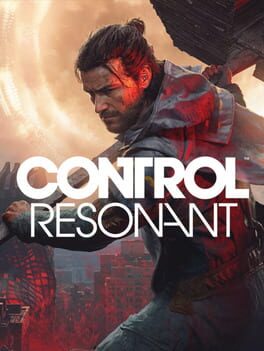
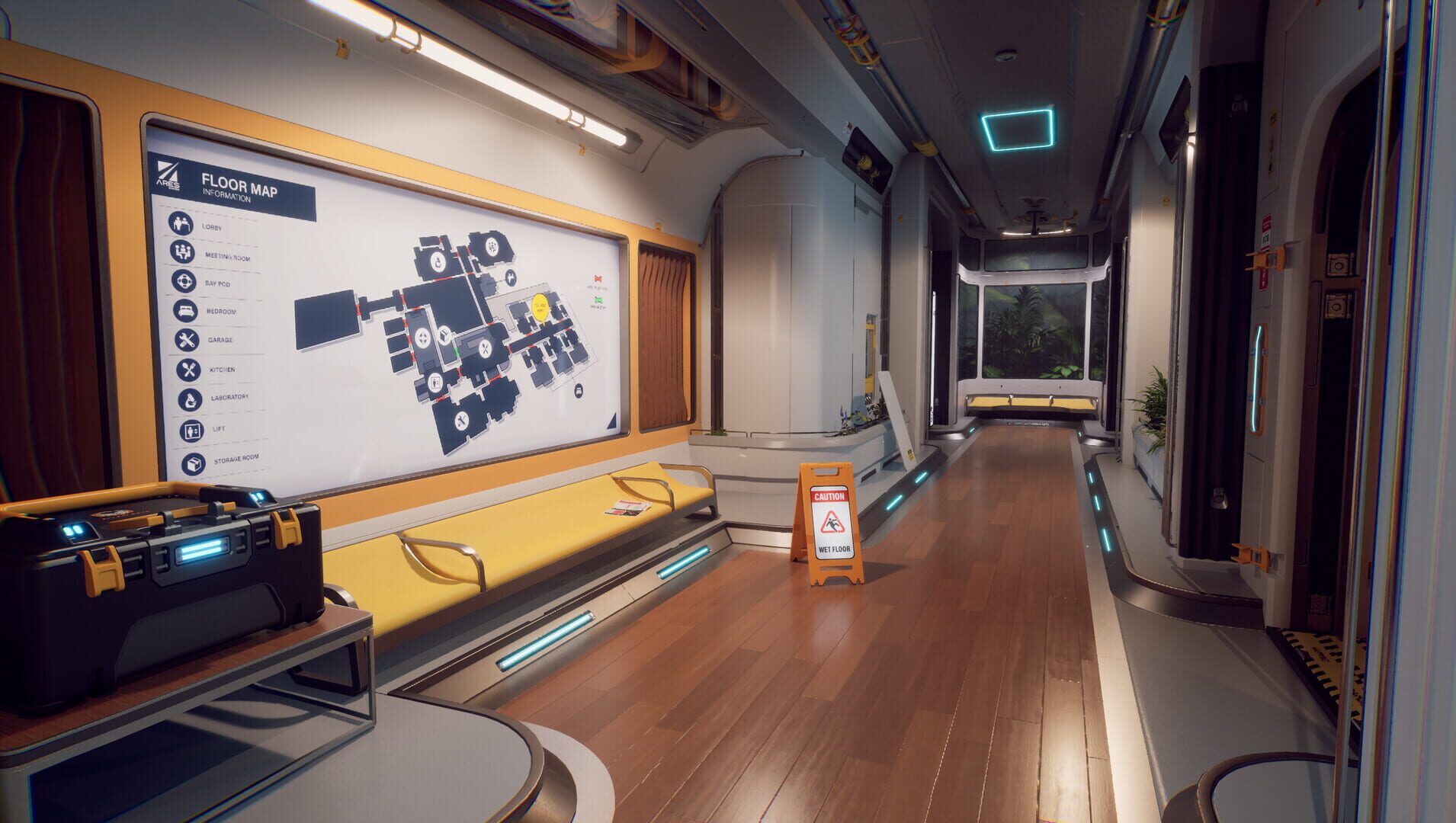
Rivage, the first-person puzzle adventure Exnilo Studio is releasing through publisher Raw Fury on September 22 for PlayStation 5, Xbox, and PC, builds its entire premise out of exactly this arrangement, and does it with an unusually clean division of labor. The player wakes as Miranda aboard the station A.R.E.S., trapped inside a spatial phenomenon, with the rest of the crew missing and the reason left for her, and the game, to discover. Notice what that premise withholds as a source of instruction: the phenomenon itself, whatever it turns out to be, is not an author. A spatial anomaly does not build a door and does not mean anything by building it. It is weather, not decision, and no amount of correct inference will produce its reasoning, because it does not have any. Anything else Miranda finds sealed, rerouted, or deliberately left behind belongs to the opposite category by definition: a person under pressure built it, or moved it, or shut it, for a reason that made sense to that person at the time. The missing crew occupies exactly the position Cave Johnson occupies in his own facility, absent, unreachable, and legible only through what their hands left fastened to the walls. A premise this well suited to the genre's actual mechanics is not a horror trope borrowed for atmosphere. It is closer to a specification. The genre needed an author who could not be asked, and a missing crew is what that requirement looks like when a premise is honestly drawn.
The pattern holds cleanly enough across the genre that it is worth checking against a case where the fiction says so outright, rather than leaving the inference to the player. The Talos Principle, Croteam's puzzle game written by Tom Jubert and Jonathan Ingold, drops its player into a set of ruined outdoor archives, Roman colonnades, Egyptian temple courts, guarded by an unseen, booming presence called Elohim who forbids climbing a distant tower. Text terminals scattered through the ruins turn out to be the archive of a research team that built the entire simulated world before a pandemic ended the civilization that built it, and Elohim himself is revealed to be a program left running by one of those researchers, a woman named Alexandra Drennan, specifically so that whatever mind eventually solved its way to the top of the tower would find her farewell waiting there. Nobody has to argue that the puzzles in The Talos Principle are messages from someone who left. The game says so plainly, in its own last act. What that confirms is not that one game happened to be unusually candid. It is that the genre's architecture has been organized around this fact for long enough that at least one entry stopped bothering to keep it as subtext.
What makes a message like this transmissible at all, given that nobody is present to explain it, is a fact about knowledge itself that the chemist turned philosopher Michael Polanyi worked out from an entirely different set of examples. In The Tacit Dimension, published in 1966, Polanyi argued that people know a great deal more than they can put into words: a swimmer cannot fully explain what keeps her afloat, a physician recognizes a shadow on an X-ray before he can say which features told him so, and skilled practice of every kind passes from master to apprentice not through verbal instruction but through the apprentice working alongside the master until the body learns what the mouth was never going to manage to say. Polanyi's phrase for this, that people can know more than they can tell, describes exactly the transaction a well-built puzzle chain is running. Nobody sits the player down and explains Cave Johnson's engineering logic. Instead, the first gel chamber teaches one fact by letting the player feel it: this surface bounces. The second chamber adds a variable, an angle, a second surface, without saying so. By the fourth or fifth chamber the player is anticipating the room before finishing the one before it, has absorbed something like a grammar for how this particular mind attacks a physical problem, and could not necessarily say what that grammar is if asked. The instruction was never written down because it was never the kind of thing that could be, and it arrived anyway, the way a craft arrives in an apprentice's hands rather than in a manual.
That transmission can fail, and when it does, the failure is specific enough to name. It happens exactly when the hand guiding the puzzle stops belonging to anyone the fiction has accounted for, and starts belonging, instead, to the actual person who was paid to build the level.
The clearest vocabulary for what goes wrong comes, appropriately, from the study of doors themselves. Donald Norman's The Design of Everyday Things, first published in 1988, examines why simple objects, doors above all, so often defeat the people trying to use them: a flat metal plate where a handle is expected, a handle where a plate is expected, a door dressed in every visual signal of one that should be pushed and that must, in fact, be pulled. Norman's terms for the failure are affordance, what an object's shape actually permits a body to do with it, and signifier, the perceptible cue that tells the body which affordance to use. A door fails when its signifiers lie about its affordances, and Norman's sharpest observation is what happens next: the person who pushes a pull door rarely concludes the door was badly designed. She concludes she is clumsy. The design failure gets absorbed as a personal one. Environmental puzzles run on exactly this apparatus, borrowed whole and pointed at fiction instead of hardware. Every switch, symbol, and locked hatch is a signifier claiming to belong to a specific builder's affordances, a specific person's way of marking danger, routing power, or hiding a spare key. When the claim is honest, the puzzle teaches the way Polanyi describes, hand to hand, without a word of instruction. When the claim is false, when a color code exists only so the player can tell two pipes apart and not because any plausible engineer would have painted them that way, the door is lying in exactly Norman's sense, except the one who takes the blame is no longer a clumsy hand on a handle. It is the fiction itself, which the player stops believing.
There is a specific, recognizable sensation that marks the moment this happens, and it is worth naming precisely, because it is the tell that separates a well-made puzzle chain from a broken one. It is the moment a player stops asking what this person was thinking and starts asking what the designer wants, and those two questions are answered by looking in opposite directions. The first is answered by looking harder at the room: studying it, imagining the hands that built it, testing a hypothesis about a specific person's fear, habit, or shortcut. The second is answered by looking away from the fiction entirely, toward the genre's own conventions, trying every rotation of four statues or every combination on a three-digit dial, because the room has stopped offering a reason and started offering a lock with no story attached to its key. The felt difference is the difference between being a detective and being a laboratory animal pressing a lever because pressing levers is sometimes rewarded. A puzzle whose logic belongs to the level designer rather than the fictional builder almost always announces itself the same way, through a solution that could have been reached by any competent person holding a controller, using no information about the specific people who supposedly live, or lived, in this world. The room stops being a room somebody built for a reason and becomes a room somebody tested for a difficulty curve. Once a player notices the difference, every subsequent locked door in that game gets read a little more cynically, because the fiction has already confessed, once, that it was never really the author.
None of this is a case against puzzle design that carries no fiction at all, and the case against it needs to be made honestly rather than waved off, because abstract puzzle design is one of the medium's oldest and most serious traditions. Tetris carries no builder, no station, no absent crew. Alexey Pajitnov wrote it in 1984 on a Soviet Elektronika 60, using the seven shapes that can be made from four squares, and the game has never once pretended that a character somewhere wants its lines cleared. Nobody built the well the blocks fall into for a reason a player could reconstruct, because there is no reason to reconstruct, only a rule system revealing more of its own structure the longer it is watched in operation. That is a real pleasure, and not a lesser one. It is a different one, closer to the pleasure of noticing a mathematical pattern than to the pleasure of reading someone's intentions, and a serious account of puzzle design has to hold both without collapsing one into the other. What sinks a puzzle is not the presence or absence of fiction. It is the mismatch between the two: a game that borrows the atmosphere of an authored space, a facility, a station, a ruin, without doing the work of making its puzzles answerable to anyone who could plausibly have built them, is neither an honest abstraction like Tetris nor an honest message like Cave Johnson's gel chamber. It is a Norman door dressed as a story: its signifier promises that a person built this, while its actual affordance only ever supported a difficulty curve.
Miranda's position aboard A.R.E.S., then, is not a mood the marketing has chosen for texture. It is the only position that makes the rest of the design legible. She is not fighting anyone, and she is not being tested by anyone watching in real time. She is reading, the way a person reads a will, or the handwriting in a dead relative's ledger, or a lock a stranger installed on a door in a house the reader has only just inherited. Every barricade she meets was somebody's answer to a specific, local fear: this compartment should stay sealed, this system should be rerouted before anyone comes looking, this passage is not for whoever comes next. None of that reasoning can arrive as dialogue, because dialogue requires a speaker still willing to be questioned, and the premise has already emptied the station of anyone able to hold up that end of a conversation. What arrives instead is what this genre has always specialized in delivering: the reasoning itself, encoded in steel and wiring and the specific, human shape of a decision made under pressure, waiting for whoever eventually stands in its maker's place.
A station named for the Greek god of war is an odd vessel for a story about people who built things to keep others safe, or at least to keep them out, but the coincidence, if it is one, suits the genre better than a gentler name would have. War is what happens when reasoning has to be inferred from what somebody left behind rather than asked of them directly: a fortification read after the army that built it has gone, a code broken after the officer who wrote it is dead, a hatch bolted from the inside by someone who did not survive to explain the bolt. Nothing yet shown of Rivage says which of its doors will matter most, or what Miranda finds behind the one that finally answers the question the game has been asking since she woke. But the genre guarantees the shape of the answer before a single frame of it is played. Somewhere aboard A.R.E.S. there is a door that a member of the missing crew closed on purpose, for a reason that made complete sense to them, in the last ordinary minute before whatever happened to the station happened. Miranda will stand in front of it eventually. The door will not explain itself. It will simply be exactly as its builder left it, waiting, the way every door in this genre waits, for someone else to finish the sentence.