

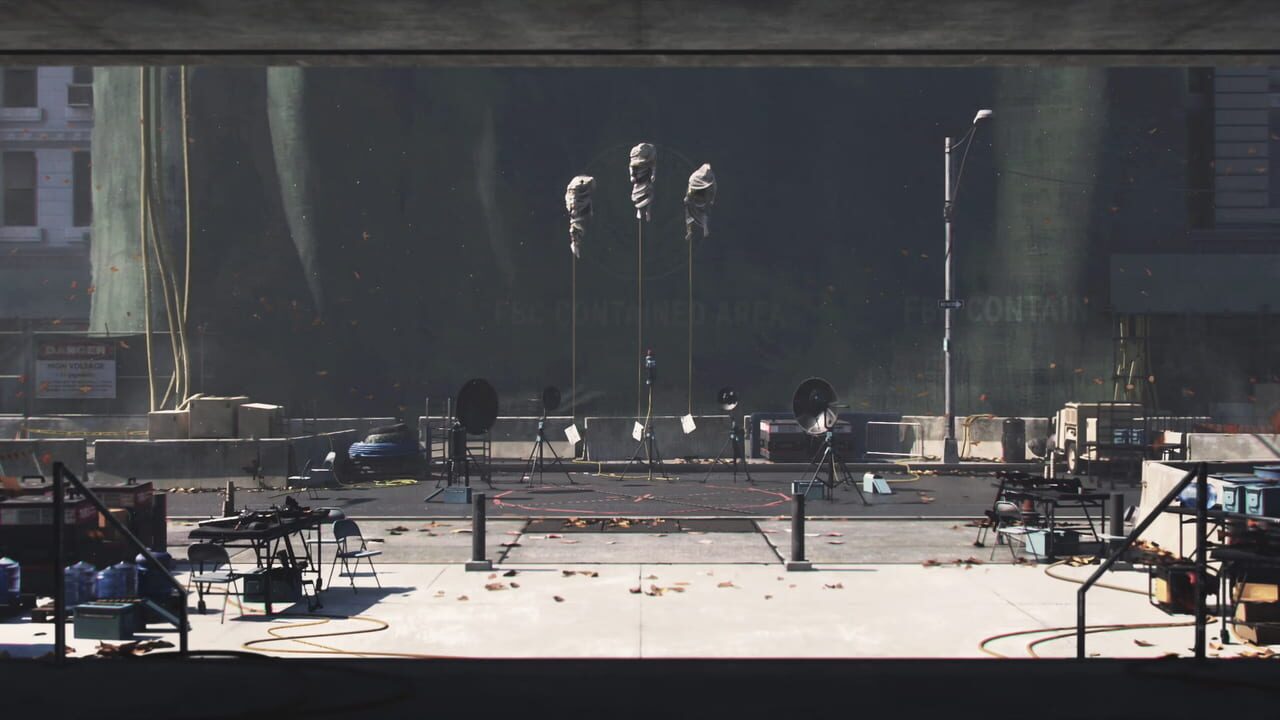
There is a specific, low-grade unease that certain buildings produce, and it has nothing to do with anything that ever happened inside them. A corporate lobby at the wrong hour. A municipal building's third-floor corridor. The long interior of a hotel, carpeted into silence, where the doors run on past the point the eye expected the floor to end. The building is, by every measurable standard, ordinary and safe. The fire exits are marked. Nothing is decayed. And the body, walking through it, goes wary anyway: the ceiling is a little too high, or too low, the light is even and seems to come from nowhere, the proportions are off by an amount too small to name and too large to ignore. Most people have stood in a building like that and had no word for the feeling. Remedy Entertainment has spent a career learning to manufacture it on purpose, and its clearest instance of the trick, a Manhattan skyscraper called the Oldest House, is about to have the ground pulled out from under it.
Control, the studio's 2019 game, gave its building to a secretive federal agency called the Bureau of Control and gave the building itself the plainest possible name. It is one of the few environments in the medium to be discussed, by the people who moved through it, the way people discuss a place they have actually stood in. This is an Image and Sound essay, and its subject is that building, the specific psychological mechanism the building runs on, and what happens to that mechanism when Control Resonant, Remedy's September 2026 sequel, breaks the building open and lets its logic loose on the city around it.
The word the low-grade feeling has been waiting for is old. Sigmund Freud published an essay in 1919 called, in German, "Das Unheimliche," usually rendered "The Uncanny," and he spent its opening pages doing something that looks like a detour and is the whole argument. He chased the word itself. Unheimlich is built from heimlich, and heimlich means homely in the full, warm sense: familiar, intimate, belonging to the house, the opposite of strange. The expected logic says unheimlich, the un-homely, should name the alien, the thing from outside. Freud, working through the dictionary entry at length, found the logic does not hold. Heimlich carries a second, quieter sense, built up over centuries of use: concealed, kept from sight, the private thing held back inside the house. Along that second sense the word slides until it touches its own supposed opposite. The uncanny, Freud concluded, is not the alien. It is the familiar that should have stayed hidden and did not. It is the known thing wearing a face the known thing was not supposed to have.
That is, with precision, the register the Oldest House operated in for seven years. The building is not alien architecture. It is the most familiar architecture in modern adult life: the office. Desks, partitions, corridors, a mail room, fluorescent panels, grey institutional carpet, the filing apparatus of an enormous bureaucracy. A player walking in recognizes every surface, because every surface is the surface of the buildings ordinary working life is spent inside. Then the building is wrong, and the wrongness is not imported from anywhere. It is the office itself, the most homely workspace there is, showing a face an office is not supposed to have. A genuinely alien building would only be strange. This one was strange in the worse, more intimate way, recognized first and distrusted second, the distrust having to travel back through the recognition to arrive.
What Freud worked out as a psychological category, the architectural historian Anthony Vidler took up, in 1992, as a question about buildings specifically. The Architectural Uncanny asked how architecture, as architecture, produces the unheimlich, and Vidler's answer turned on the same root. The uncanny is at bottom about the home, the unhomely, and the building most able to produce it is the building that ought to shelter and instead estranges. Modern architecture, the architecture of the rationalized plan, the cleared grid, the institutional repetition of identical units, has a particular gift for this. A space can be rationalized so completely, organized so thoroughly toward order and legibility, that it loops back around into the irrational: the corridor of identical doors that stops feeling navigable and starts feeling like a trap, the plan so total it reads as a mind rather than a building. The uncanny, in Vidler's account, is not produced by adding something strange to a space. It is produced by the rational pushed one notch past the point where rationality reassures.
The Oldest House was a precise instrument built on exactly that principle. Remedy did not make it frightening by making it a ruin, a crypt, or any of the standard furniture of the haunted place. The studio made it frightening by taking the most rationalized architecture available, mid-century institutional Brutalism, the bureau, the cubicle grid, the standardized service corridor, and letting the rationality slip its own limits. The corridor ran longer than the floor it sat on could allow. The room was larger on the inside than its outside admitted. The stairwell returned the player to a place they had not left. The light stayed even and sourceless. None of this was a monster. Each was the building's own logic, the logic of the rational plan, carried past the notch Vidler identified. The horror was not a thing loose in the office. The horror was the office, doing what the geometry of an office is not supposed to be able to do.
Which is the essay's real claim, and the game's own plot has always worked against it a little. The conventional haunted place runs on an event: something terrible happened here, the convention says, and the building has been marked by it, replaying the event for anyone unlucky enough to stand in front of it. The place is the medium, the event is the message, the horror is a horror about history. The Oldest House inverted every term of that. It was not a place marked by an event. It came pre-wrong. The proportions, the loops, the impossible interior distances, were doing the full work before any plot arrived, and would have gone on doing it if every supernatural incident in Control's story had been deleted. Strip the plot from the 2019 game entirely and walk the building empty. It would still produce the unease, because the unease was structural, located in geometry and light and a rationalized plan slipping its own limits, none of which depended on a narrative event. The plot was downstream: Remedy's explanation, offered to the player, for a feeling the architecture had already manufactured.
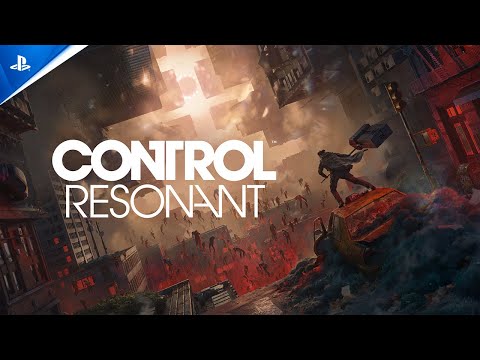
Control Resonant does something the first game never had to consider, because the first game never had a predecessor to answer to. It breaks the premise. In the sequel's opening, which Remedy has shown in detail across its 2026 marketing, the Oldest House has fallen. The building that was the whole argument of the first game is no longer standing as a sealed object; everything it once contained is, in the studio's own phrase for the trailer that introduced the sequel's new protagonist, now loose in Manhattan. The player takes control of Dylan Faden, the younger brother of Control's Jesse Faden, a character who spent the entire first game imprisoned inside the Oldest House and has, according to the sequel's setup, lived his whole life within its walls. Dylan wakes from the coma the first game left him in, fights his way free of the collapsing building, and steps through a door onto the street. For Dylan, Remedy's own framing has it, that door might as well open onto an alien dimension. He has never seen an ordinary city. He is about to find out that Manhattan, on the other side of the door, is no longer ordinary either.
This is the structural reversal creative director Mikael Kasurinen has described directly. Jesse, in the first Control, travels from the outside into the Oldest House; the whole game is the slow discovery of a building that gets stranger the deeper the player goes. Dylan, in Resonant, travels from the Oldest House to the outside, and the whole game is the discovery that outside has stopped meaning what it used to mean. Kasurinen has framed the two games as siblings in the literal sense, "two sides of the same coin," each built around a protagonist whose relationship to the paranatural is the mirror image of the other's. Jesse arrives a stranger and becomes an insider. Dylan has only ever been an insider, and steps out to find that the world he is entering has, in the seven years since the first game, been reorganized by the same forces that reorganized his childhood home.
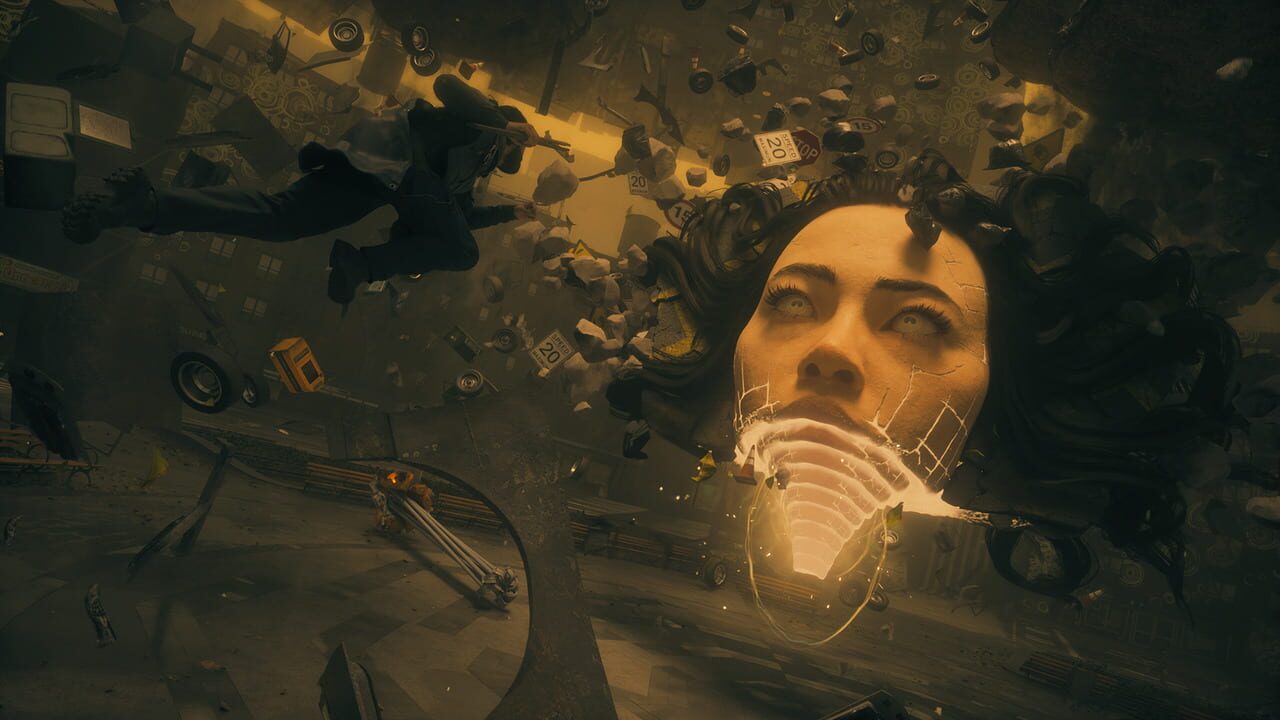
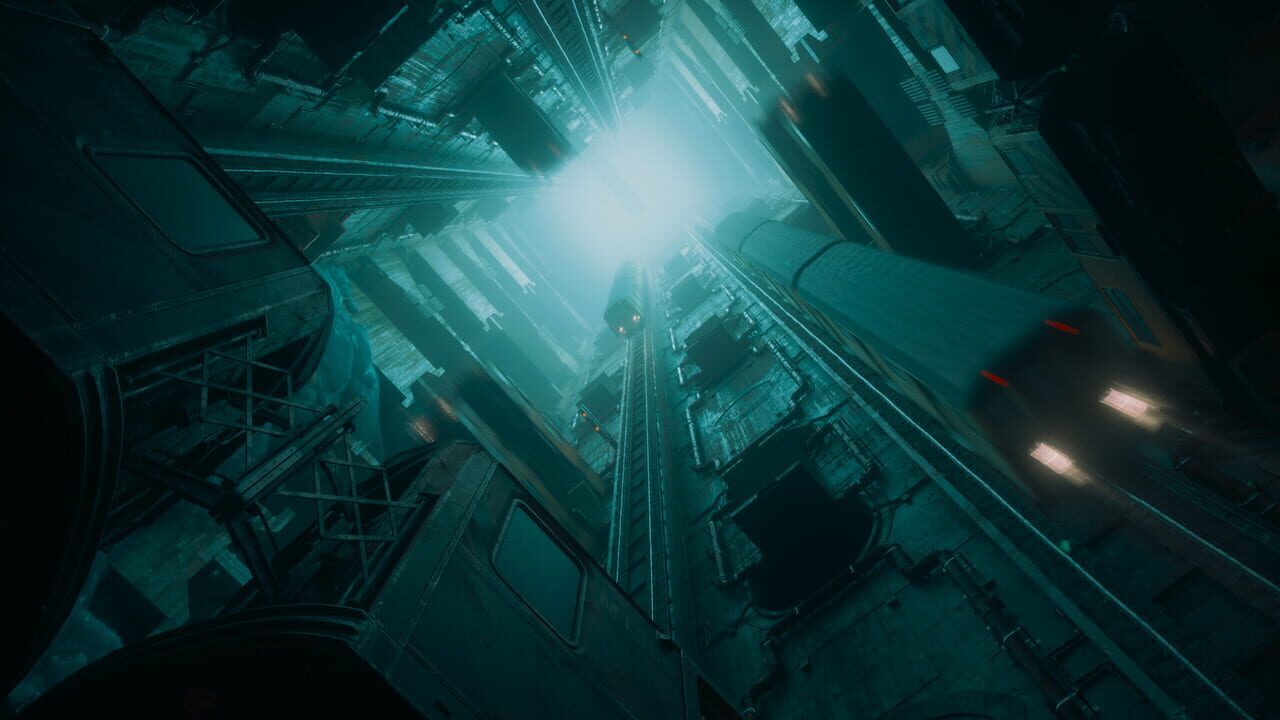
The mechanism doing the reorganizing has a name in the game's own marketing material: the Patterning, an antagonistic force that art director Elmeri Raitanen has described as taking the city that is already there and restructuring it according to its own strange, otherworldly logic, rather than replacing it with something invented from nothing. That description matters, because it is the same description Vidler gives for the uncanny in architecture generally: not a strange thing added to a familiar space, but a familiar space pushed past its own limit. Streets in Resonant's Manhattan fold back at right angles that should not connect. Buildings stand in fragments, floating apart from the ground plans that used to hold them together, the pieces still legibly office towers and brownstones and subway entrances, still recognizably New York, just no longer obeying the geometry New York is supposed to obey. Coverage of the game's hands-on previews has reached for the online Backrooms tradition, the amateur horror genre built entirely around empty, over-familiar liminal space, as the nearest available comparison, which is itself evidence that the game is working the Freudian seam precisely: the dread is legible to players because it resembles a form of horror already built on recognizing, rather than inventing, the wrong.
The sound half of the argument is doing quieter, stranger work than the visual half. Remedy's marketing trailer for the warped Manhattan setting is scored to an original track, "Manalan Mailla," written for the game by Teemu Brunila, Jurek, and the Finnish singer Vilma Jää, who performs it in a style drawn from the Ingrian runonlaulu tradition: heterophonic choral lines, lyrics built on alliteration and repetition, herding calls worked into the arrangement. The title translates roughly to "in the lands of Manala," Manala being the underworld of Finnish folk cosmology, the land of the dead in the Kalevala tradition that predates the country's written literature by centuries. That is, for a game about Manhattan, a strange place to reach for a score. It is also exactly the right place, on Freud's terms. The uncanny needs the ancient-familiar wearing the face of the present-strange, and a millennia-old funeral and herding tradition, sung over drone footage of Fifth Avenue folding into itself, is that structure made audible. The song does not sound like a horror score. It sounds like something home, from very far back, singing over a home that has stopped behaving like one.
The scale is the part worth sitting with, because it is the part the first game did not attempt. The Oldest House worked its trick on a single building, a contained and legible object a player could, eventually, learn the shape of. Manhattan is not a building. It is the most rationalized urban plan in North America, laid down by the Commissioners' Plan of 1811 as a grid of numbered streets and avenues specifically because a grid is legible, navigable, and endlessly repeatable: the exact quality Vidler identifies as architecture's gift for producing the uncanny when pushed past its own reassurance. A single building rationalized past the point of comfort produces a haunted house. A city grid rationalized past the point of comfort, its numbered streets folding into loops that no longer resolve, its blocks repeating with a wrongness the original plan never had, produces something closer to a haunted civilization. Remedy's own framing of the design brief makes the scaling explicit: reporting on the game has described Manhattan as built to look and function like the ever-changing Oldest House rather than like a regular city. The building did not get replaced by an open world. The open world got made to behave like the building.
There is an obvious objection to reading Resonant this way, and it comes from the same design documents that supply the evidence for the reading. The sequel is, by Remedy's own description, an action role-playing game: Dylan levels a character sheet, invests points into talent trees, and upgrades a shapeshifting weapon called the Aberrant into deliberately chosen melee forms. Talent trees and stat allocation are the vocabulary of mastery. They tell a player, explicitly and continuously, that the space they are moving through can be learned, quantified, and eventually dominated, which is close to the opposite of what an uncanny building is supposed to do to a person standing in it. Kasurinen has framed the sequel's actual thematic center as a story about gaining control over one's own life, not about rescuing a sibling or saving a city, and a character-progression system is the natural mechanical expression of that theme. A studio building a game about a person learning to master his own capacities has good reason to give the player systems that reward mastery, and reward systems are, on their face, dread's enemy.
The objection does not survive contact with what those systems are attached to. A talent tree tells the player their character is becoming more capable. It says nothing about whether the world the character is becoming capable in will hold still long enough for that capability to matter. Dylan's growing mastery of the Aberrant is not mastery of Manhattan, because Manhattan, on the Patterning's terms, is not a fixed problem to be solved the way a level typically is. The uncanny in Resonant is not located in whether Dylan can fight; it is located in whether the city will still be arranged the way he last saw it when he needs it to be. A player can level up indefinitely and still round a corner onto a street that used to connect somewhere it no longer connects. That is, if anything, a sharper design instrument than the first game had available, because it isolates the specific kind of control an action RPG usually promises, and then withholds exactly that one, in the one place it would matter most.
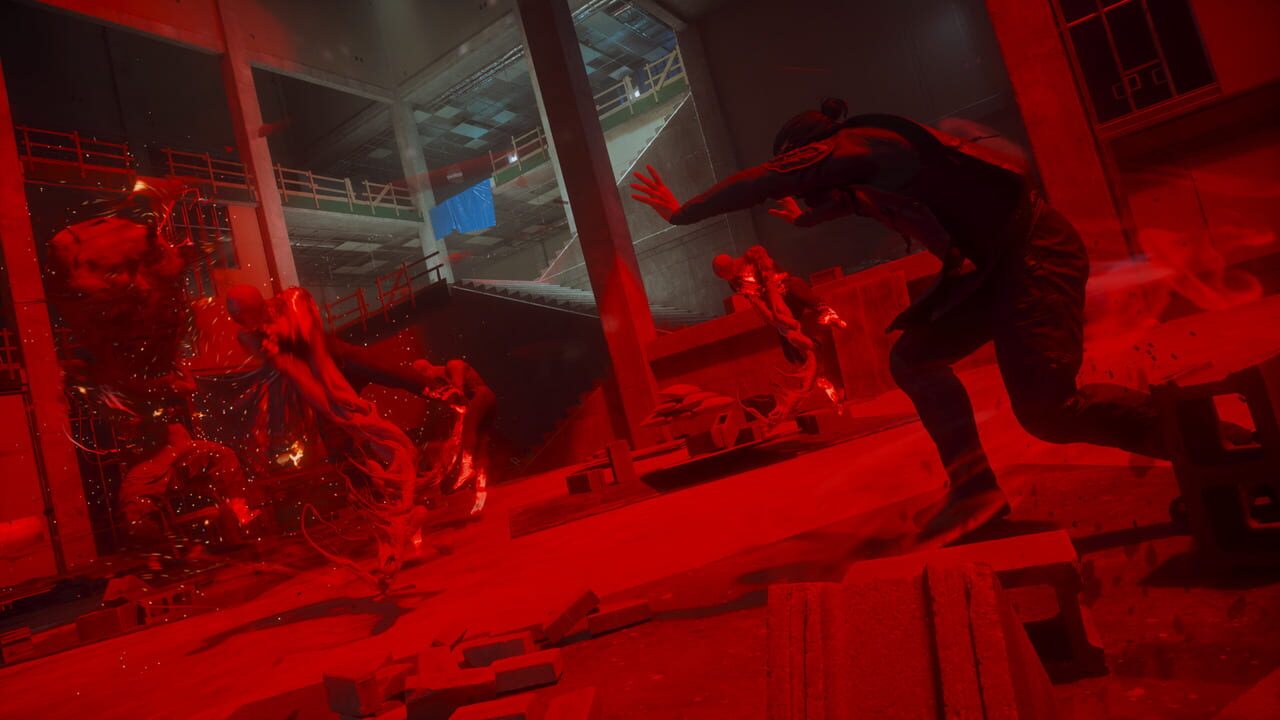
This is where the sequel's plot, unlike the first game's, is not incidental to the argument. The Oldest House falling is not a background detail Resonant's story happens to include. It is the mechanism by which Remedy is testing whether the specific trick that made the first game's building work, the rational pushed one notch past reassurance, can survive being unbound from a single contained structure and let loose across a city block by block. The first Control had one advantage the sequel cannot inherit: no one had been inside the Oldest House before, so every corridor carried the full weight of the uncanny on first contact. A city, walked for dozens of hours across explorable zones and side objectives, faces the uncanny's oldest enemy, which is familiarity. A loop, walked enough times, becomes a route the player knows loops, and knowing is the opposite of dread. Remedy's answer, on the evidence of what the studio has shown, is to keep the Patterning active rather than fixed: streets that were navigable on one visit reorganize themselves by the next, buildings shed and regrow fragments, the red-dominant corruption spreading through the color palette does not settle into a stable, masterable state the way a level design usually rewards mastering. Whether that holds for the length of a full game is the question no amount of marketing material can answer before release, and this essay does not claim to know.
What can be said now, without waiting for September, is what the design decision reveals about what Remedy has understood the Oldest House to have been doing all along. A studio that believed the building's horror lived in its plot, in the paranatural bureau and the specific mythology of the Hiss, would have had no reason to break the building at all; it could simply have written a new mystery and set it in the same halls. A studio that believed the horror lived in the architecture itself, in Freud's familiar wearing an unfamiliar face and Vidler's rational plan pushed past its limit, has every reason to ask what that architecture does when it stops being contained. Resonant's decision to collapse the House and pour its logic into the city is, read this way, not a departure from what made the first game work. It is the same argument, run at the only scale left to run it at once the original building had been fully explored and, in the sense the uncanny requires, worn out.
The frame this leaves the player, and it is a frame that travels well past a September release date, is that the buildings which unsettle a person in ordinary life were never unsettling because of their histories. Almost none of them have histories worth the dread. They are unsettling because of geometry: a proportion slightly off, a plan slightly too total, a light slightly too even, the rational pushed the one notch too far. A person who understands what the Oldest House was doing can walk back into the wrong-feeling lobby or hotel corridor of their own week and find, instead of a vague and storyless unease, something legible: not a haunting, but a set of decisions about ceiling height and corridor length and the source of the light, decisions someone made, doing precisely this to the body on purpose or by accident. What Resonant adds to that frame, if the design holds, is the harder and more useful version of the same lesson: that the feeling does not require a haunted building at all. It only requires enough of the ordinary, rationalized world, pushed carefully enough past the point where rationality reassures. A skyscraper can do it. On the evidence Remedy is building toward this September, so, eventually, can a city.
Dylan Faden's whole life, before the sequel opens, has been the inside of one building. When the door in front of him finally gives, what waits on the other side is not the ordinary Manhattan a native would recognize. It is the Oldest House, un-walled, and still doing the only thing it has ever known how to do.