

The character appears, for the first time, on the last page of The Incredible Hulk #180, cover-dated October 1974. He is drawn by the artist Herb Trimpe from a script by the writer Len Wein, with the design partially attributed to John Romita Sr., who had sketched a costume for the character at an editorial meeting earlier in the year. The page is the cliffhanger leading into the next issue. The Hulk is in the Canadian wilderness, having stumbled into a fight with a frost-giant figure called the Wendigo, when a small clawed figure in a yellow-and-blue costume drops out of frame, identifying himself only as a Canadian government agent, before the page ends and the issue does too. The full appearance is in The Incredible Hulk #181, dated November 1974, in which the character fights the Hulk and the Wendigo across a twenty-page issue and concludes the encounter without resolving anything in particular. The character's name is Wolverine. He is, in 1974, a minor figure in a guest appearance designed to sell the next month's issue. He has no backstory. He has no civilian identity. He has no significance, in the editorial planning of the Marvel office that produced him, beyond the function he serves in the issue at hand.
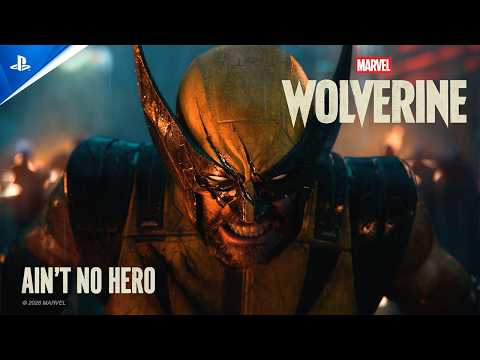
Across the following fifty years, the character will become one of the most commercially significant intellectual properties Marvel Comics has produced. He will be the breakout figure of the Chris Claremont X-Men run of 1975 to 1991. He will receive his own four-issue limited series in 1982, written by Claremont and drawn by Frank Miller, that will, on the available retrospective consensus, establish the contemporary shape of the character and the genre conventions an entire subsequent comics tradition will work inside. He will receive an ongoing series in 1988 that will run for the next twenty-five years. He will be portrayed in nine major theatrical films by the Australian actor Hugh Jackman, beginning with the 2000 X-Men adaptation and concluding with the 2024 Deadpool and Wolverine that earned roughly one and a half billion dollars at the global box office. The character will, by 2026, be the central figure of an Insomniac Games PlayStation 5 action title, Marvel's Wolverine, releasing on 15 September of that year and built on the studio's accumulated craft from the Marvel's Spider-Man series and its Ratchet and Clank lineage.
This is a People & Culture essay. Its subject is the specific cultural arc that took a minor 1974 comics character to the centre of one of the most successful entertainment franchises of the past quarter-century, the much longer cultural-political shift in what audiences are willing to accept their protagonists doing in their name that the arc maps onto, and what the 2026 Insomniac game inherits from the half-century the figure has been carrying. The argument the essay wants to commit to is direct. The Wolverine arc is not a comics story. It is the visible surface of a fifty-year cultural-political shift in the kind of protagonist a Western popular audience has been willing to identify with, and the figure happened to be in the right position at the right time to ride the shift to the centre. The shift was not about Wolverine specifically. The shift would have happened with or without him. He was the figure who ended up carrying the largest share of it because the figure was, by accident of his creators' design choices in 1974 and 1982, structurally aligned with the cultural direction the surrounding audience was about to move in.
What 1974 looked like, in the United States that produced the original Wolverine appearances, is worth being specific about because the period's cultural texture is what made the figure plausible. The Vietnam War had ended its American combat-troops phase the previous year. The Watergate scandal had been running across the front pages for eighteen months and would conclude with the resignation of Richard Nixon in August. The 1974 American audience for popular culture was, on the available historical record, an audience whose relationship to the figure of legitimate institutional authority had been substantially destabilised across the previous decade. The classic American hero of the previous generation, the rule-following protagonist whose virtue consisted in his alignment with the legitimate institutions he served, was becoming culturally implausible at a rate that the popular forms of the period had been registering since at least the late 1960s. The cinema of the period had been working the question through across films like Easy Rider (1969), Dirty Harry (1971), The Godfather (1972), Mean Streets (1973), Chinatown (1974), and the entirety of the New Hollywood movement. The television of the period was beginning the same shift. The popular novels of the period had been working it through across the rise of the police procedural with the morally compromised detective (the Ed McBain 87th Precinct novels), the new Western with the unromantic gunfighter (the Larry McMurtry tradition), and the spy novel that had moved decisively away from the Bond register toward the John le Carré register of moral exhaustion.
Wolverine, as Len Wein and Herb Trimpe assembled him in October 1974, was a comics-medium entry in the same broader cultural movement. The character had short stature (the visual contrast with the towering Hulk, whom he had no business being a match for), substantial body hair (a deliberately animal-coded surface, against the clean-cut figures the comics medium was used to producing), a Canadian government affiliation (which placed him outside the American institutional architecture his publisher's other heroes were embedded in), and visible metal claws that emerged from the backs of his hands when he activated them in combat. The claws were the signature design choice. The hero who hits people with his fists is operating inside a moral economy where the hits are absorbed and the participants walk away. The hero who hits people with claws emerging from the backs of his hands is operating in a different moral economy. The claws cut. The cuts go deep. The encounter the claws produce is not the encounter the conventional comics fight scene had been depicting for the previous forty years. The character was, from his first appearance, a piece of the medium's recognition that the audience was no longer willing to accept the pulled-punch register the form had defaulted to since the Comics Code Authority's adoption in 1954.
The character's elevation across the subsequent twenty-five years tracked, with unusual precision, the broader cultural shift. The 1975 Giant-Size X-Men #1, written by Wein and drawn by Dave Cockrum, recruited Wolverine into the relaunched X-Men title that the Marvel office had been preparing as a vehicle for the new wave of multi-ethnic, multi-national characters the period had begun to require. Chris Claremont took over the X-Men writing duties in 1975 and held them across the next sixteen years, in what the secondary literature on Marvel has come to recognise as one of the most sustained single-writer runs in the history of the medium. Claremont's specific contribution to Wolverine was the slow, patient development of the character's psychology across hundreds of issues. The 1982 Wolverine limited series with Frank Miller, in which Wolverine travelled to Japan to confront the personal history his Marvel-Universe biography had been hinting at, was the moment the character became a protagonist capable of carrying his own narrative. The 1988 ongoing series was the moment Marvel's editorial decision-making formally recognised what the readership had been signalling: this minor 1974 character had become, fifteen years after his debut, the company's most commercially significant intellectual property after Spider-Man.
The 1990s comics market that emerged across this period made the trend institutional. The decade was, in the comics medium, the decade of the antihero. The Image Comics group founded in 1992 by Rob Liefeld, Jim Lee, Todd McFarlane, and the other top-selling artists of the late-1980s Marvel office, organised itself substantially around antihero figures: Liefeld's Cable and Deadpool, Lee's WildC.A.T.s, McFarlane's Spawn. The Punisher, which had been a minor Spider-Man villain since 1974, was relaunched as an ongoing in 1986 and ran across the 1990s as one of Marvel's flagship titles. The X-Force spin-off Marvel launched in 1991 was effectively a Wolverine-coded title without the central character: a roster of morally-grey mutant operatives whose violence the readership had been trained, by Wolverine specifically, to accept as necessary rather than as compromising. The mainstream comics audience of the 1990s wanted the figures who would do the necessary violence. The publishers, having figured this out, produced what the audience wanted. The market dynamics confirmed what the cultural-political shift had been signalling for two decades.
The 2000s television environment took the shift further than any other medium had taken it. The American journalist Brett Martin's 2013 book Difficult Men, subtitled Behind the Scenes of a Creative Revolution: From The Sopranos and The Wire to Mad Men and Breaking Bad, was the consolidated treatment of what is now usually called the antihero golden age of prestige television. Martin's central thesis was that the period roughly 1999 to 2013, beginning with the premiere of The Sopranos on HBO in January 1999 and continuing through the conclusion of Breaking Bad on AMC in September 2013, represented a creative revolution in American television comparable in scale to the New Hollywood film movement of the late 1960s and early 1970s. The revolution's organising figure was the difficult man: a protagonist whose moral compromises were not the obstacle the narrative was working past but the substance the narrative was actually about. Tony Soprano. Vic Mackey. Don Draper. Walter White. Al Swearengen. Stringer Bell. Each of these figures had inherited, from the same fifty-year cultural lineage that produced Wolverine, the audience's willingness to identify with the protagonist who would do, in the audience's name, the violence the audience would no longer accept the rule-following protagonist refusing to do. The audience had been trained by the lineage. The television writers, recognising the training, made the figures the audience was now equipped to receive.
The American cultural historian Richard Slotkin's 1992 Gunfighter Nation, the final volume in his trilogy on the American frontier myth, identified the much longer pattern this fifty-year arc sits inside. Slotkin's argument across the trilogy was that American popular culture, across the entirety of its production from the captivity narratives of the seventeenth century through the contemporary action film, has been continuously organised around what he called the myth of regenerative violence: the cultural conviction that legitimate American identity is produced through the violence the protagonist commits against the figures the surrounding culture has designated as appropriate targets. The myth has, on Slotkin's reading, been continuously available across four centuries of American cultural production and has been periodically reshaped to meet the political conditions of the periods it has run through. The late-twentieth-century reshaping is the one Wolverine is the visible comics-medium instance of. The figure of the protagonist who will do the necessary violence has been a constant. The cultural authorisation of who counts as a legitimate doer of it, what counts as necessary, and what the doing produces for the doer's standing in the surrounding moral economy, have varied. The post-Vietnam, post-Watergate reshaping authorised the figure who breaks the rules on the audience's behalf, against institutions the audience had stopped trusting, in service of moral claims the official institutions could no longer credibly carry. The figure has remained authorised. The post-9/11 period intensified the authorisation. The figure has run, more or less continuously, across the half-century since.
Hugh Jackman's twenty-four-year tenure as the cinematic Wolverine, from the 2000 X-Men to the 2024 Deadpool and Wolverine, was the period during which the comics character became, in the cultural memory of a generation that had not necessarily read the comics, the figure the films had constructed. Jackman's contribution to the character was specific and was substantial. He took a character that had, in the comics, been a five-foot-three Canadian with a barely-controlled rage, and turned him into a six-foot-two Australian theatre-trained actor whose ability to carry the rage as restrained emotional weight rather than as cartoon ferocity was what made the films work. The 2017 Logan, directed by James Mangold, was the Jackman era's most accomplished film and was, on careful viewing, an explicit late-Western farewell to the character that drew openly on Shane (1953) and the broader Slotkin lineage. Jackman retired the role at the end of Logan, returned for the 2024 Deadpool and Wolverine, and has indicated that the 2024 return was a single-film exception rather than a continuation. The cinematic version of the character, as the audience that grew up with the Jackman films understands him, has effectively concluded.
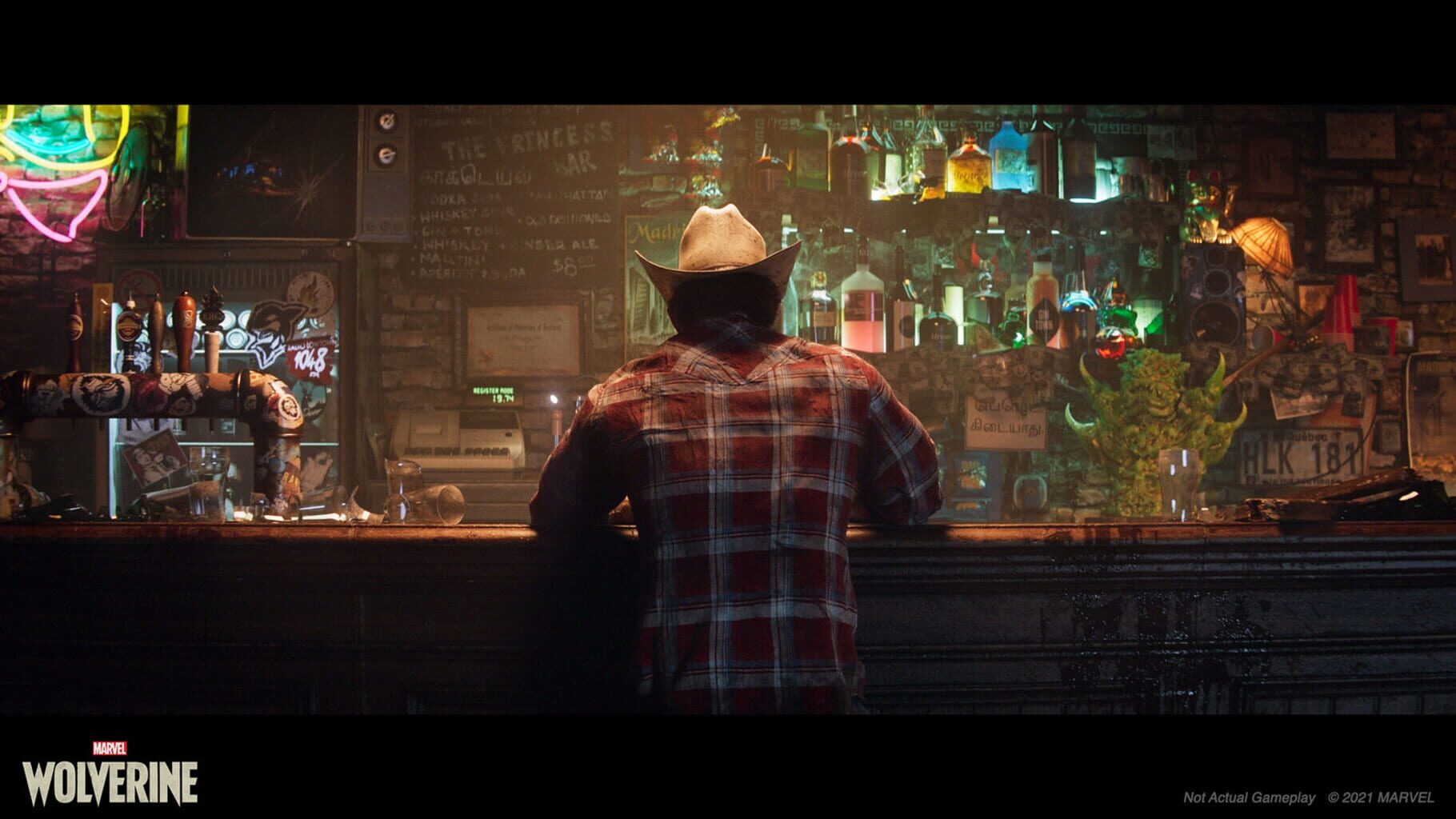
This is the cultural inheritance Insomniac Games's Wolverine arrives inside. The studio is one of Sony's most accomplished first-party developers, with a portfolio that includes the Spyro the Dragon trilogy of the late 1990s, the Ratchet and Clank series across the 2000s and 2010s, Resistance: Fall of Man at the PS3 launch, the 2018 Marvel's Spider-Man and its 2020 Miles Morales standalone and 2023 Marvel's Spider-Man 2, all of which have been substantial commercial and critical successes. The studio's specific design accomplishment across the Spider-Man series has been the construction of traversal systems that make the protagonist's physical capacities feel viscerally satisfying to operate. The web-swinging movement in the 2018 game is, on the available critical consensus, one of the most accomplished movement systems the medium has produced. The studio's Wolverine project, which was announced in September 2021 and has been in development across the subsequent five years, faces a design challenge the Spider-Man series did not have to address. Wolverine, as a character, has no web-swinging equivalent. His canonical capacity is the slow walk forward into the thing he is about to claw. The studio's design problem is therefore the problem of constructing, from a character whose physical register is fundamentally close-quarters and embodied, a play experience that the audience that has been trained on twenty-five years of Jackman-era cinematic Wolverine will recognise as the character it has been carrying.
The studio's approach, on the available marketing material, has been to lean into the close-quarters embodiment rather than away from it. The combat appears to be a slow, weighty, deliberately physical system, with extended animations on claw strikes that the player can interrupt only through specific timing windows, and a damage model that visibly accumulates on the protagonist across the encounter rather than being abstracted into a hit-point bar. The character's healing factor, which in the comics and films is a near-immediate regeneration, is on the game's design implementation a slower process the player has to actively manage across combat. The pain that Wolverine experiences, which the comics tradition has been working with since the 1982 limited series and which the Logan film made central to the character's emotional architecture, is being foregrounded in the game's systems rather than abstracted away. The studio is, on this evidence, committed to the version of the character the Jackman era and the Logan film established. The version is the difficult-man version. The version is the figure who does the necessary violence and pays the bodily cost of it. The version is the one the audience has been trained, across fifty years, to receive.
There is an obvious counter-reading and the essay has to engage it. The counter-reading is that the framework above is over-attributing cultural significance to a property whose continued commercial success is explained more simply by the comics-to-cinema-to-game pipeline Marvel has been profitably running for twenty-five years. Wolverine sells because Marvel sells, and Marvel sells because the corporate apparatus has been built to make it sell. The framework above is, on this reading, narrating a cultural-political shift around a commercial product whose existence is sufficiently explained by the marketing budgets that have been spent on it.
The objection contains real force and the response has to acknowledge it. The Marvel commercial apparatus is real. The marketing budgets have been substantial. The corporate pipeline has been efficient. The framework is not claiming that the cultural-political shift, on its own, accounts for the commercial outcome. The framework is claiming that the cultural-political shift is what made it possible for the corporate apparatus to invest in the figure at the scale it has. A minor 1974 Canadian comics character did not become a billion-dollar 2024 box office property because the Marvel marketing department willed it. The character became viable as an investment target because the surrounding audience had, across the intervening fifty years, been culturally trained to receive the figure. The Marvel apparatus detected the training and acted on it. The detection was correct. The action was profitable. The cultural training was the precondition. The corporate apparatus was the instrument. Both contributions matter. The framework's contribution is to make the cultural-training precondition visible in a conversation that has tended to credit the corporate apparatus alone.
The closing image is from a comics panel that, as far as I can determine, was not regarded as significant by anyone at the time of its publication. The Incredible Hulk #180, last page, October 1974: a small figure in a yellow-and-blue costume drops into the frame, claws extended, identifying himself to the Hulk and the Wendigo and the reader simultaneously. The artwork is by Herb Trimpe and is workmanlike rather than exceptional. The script is by Len Wein and is a routine cliffhanger. The page exists, in 1974, to sell the next issue. The character is, in 1974, a minor function of the page's commercial purpose. He has no backstory and no future. The cultural-political shift that will, across the next fifty years, take this minor figure and place him at the centre of a global entertainment franchise worth several billion dollars in cumulative revenue, has not yet visibly arrived at the editorial offices of Marvel Comics. The arrival is invisible from inside 1974. The arrival is visible from inside 2026. The Insomniac game that ships on 15 September is the latest entry in the arrival's downstream commercial expression. The figure on the last page of the 1974 issue is the same figure. The cultural conditions for him to mean what he now means have been, across the half-century, slowly arranging themselves around him. He has been waiting. The audience has been arriving.