




Three hundred and fifty-five to twenty-one. That was the margin in the United States House of Representatives, in the summer of 2005, on a resolution directing the Federal Trade Commission to investigate whether Rockstar Games had lied to a ratings board about the contents of a game about carjacking. Not a war powers vote. Not a budget. A near-unanimous chamber of the national legislature, agreeing that the most urgent available use of its floor time was a disabled sex scene in Grand Theft Auto: San Andreas that no player could reach without downloading a third-party file.
Twenty-one members voted no. It is worth pausing on how rare that kind of consensus is in American politics, and on what it was consensus about.
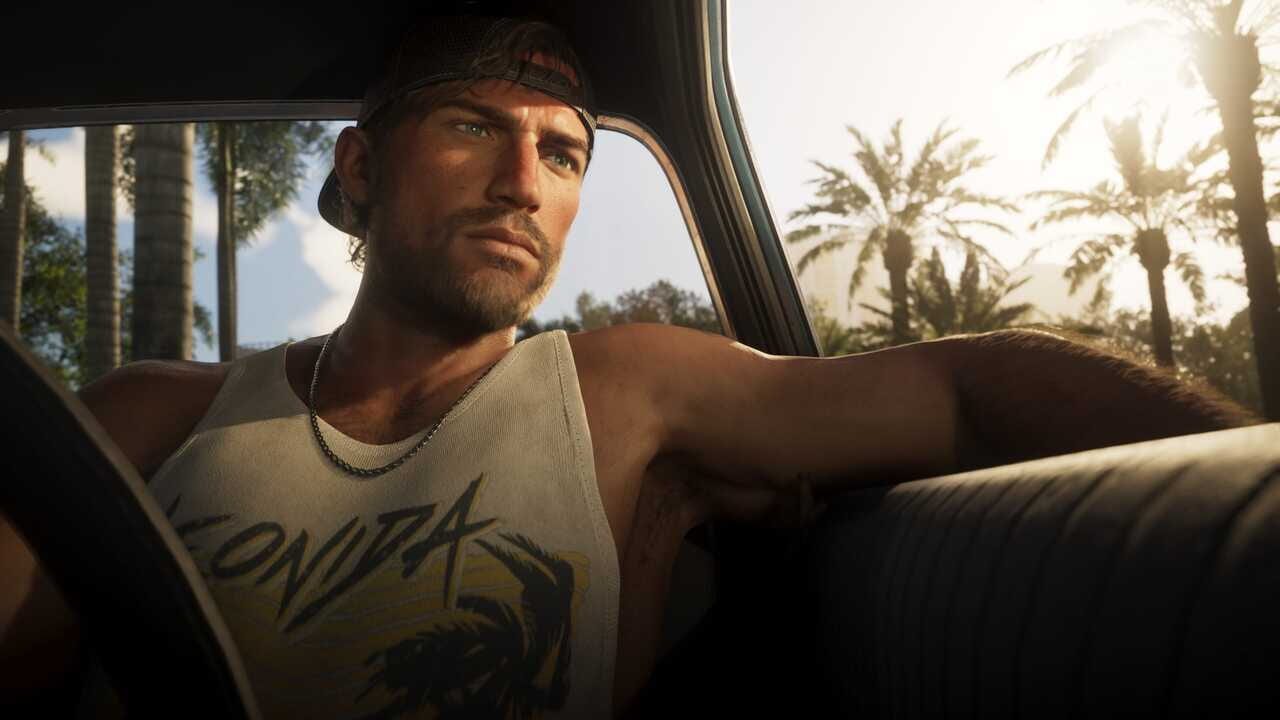
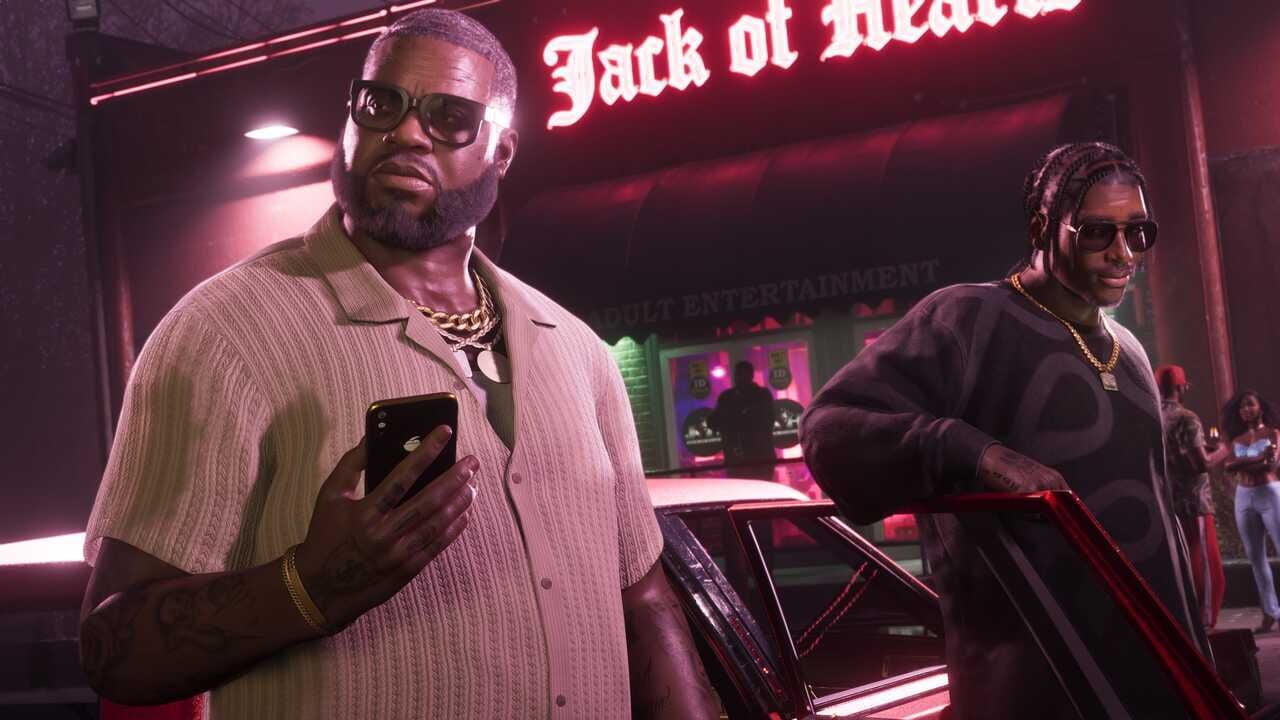
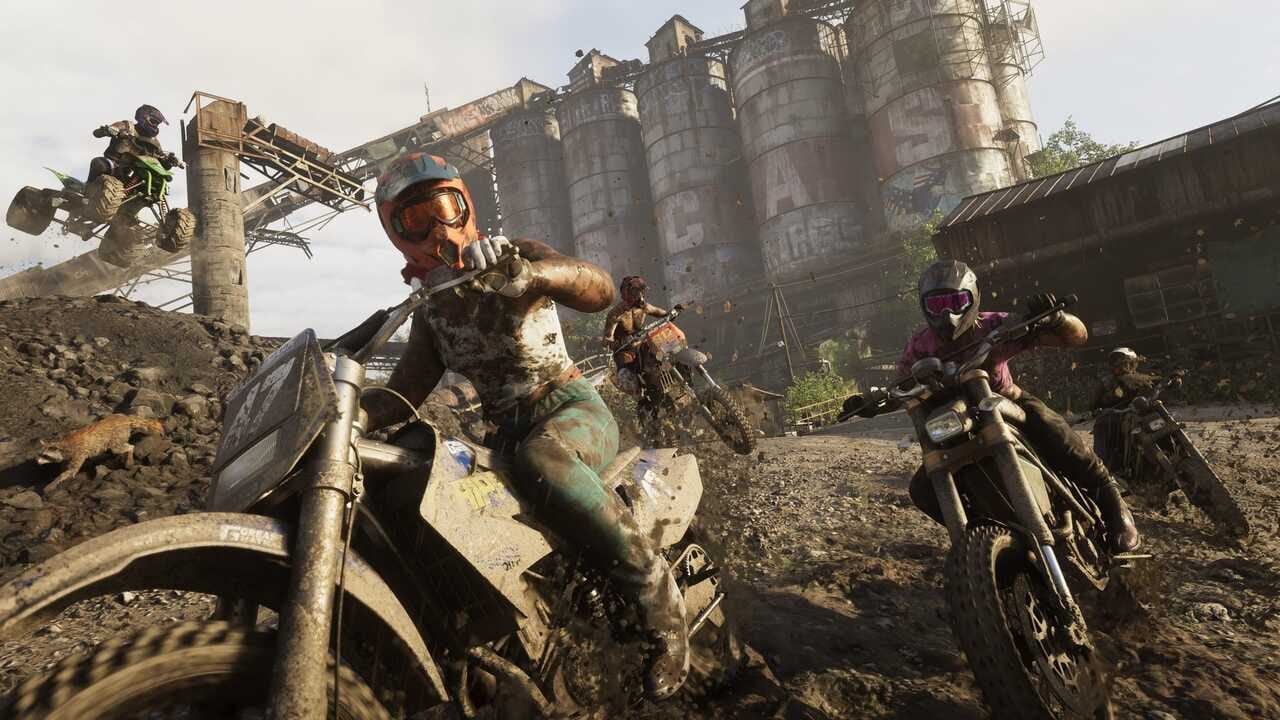
Grand Theft Auto VI arrives on November 19 into a political environment that has, by any reasonable accounting, given up. There will be no hearings. There is no bill. The last serious attempt to regulate this franchise by statute died in a Senate committee twenty years ago, and the last serious attempt to regulate the medium at all died in the Supreme Court fifteen years ago, and the people who led those attempts are not in a position to lead another one. This essay is a people-and-culture reading of that record, because the record is stranger than the standard telling of it. The standard telling is that a moral panic came, did some damage, and receded. What actually happened is that the campaigns against this specific franchise generated, as their direct legal residue, the constitutional protection that now covers every game made in the United States. The panic set a precedent and held up the thing it was trying to pull down.
Start with the fact that the outrage was invited.
When the first Grand Theft Auto shipped in 1997, its British publisher retained Max Clifford, a publicist whose professional method was the manufacture of tabloid controversy, and the resulting condemnation from British politicians was not a misfortune that befell the game. It was the marketing plan, executed on schedule. Whatever else can be said about the twenty-five years of argument that followed, it began with a studio correctly identifying that being denounced by a member of parliament was worth more than an advertising budget it did not have. Every subsequent participant in the argument was, to some degree, working inside a frame that the publisher had set first.
The frame held because the games kept supplying material and because there was, by the early 2000s, a genuinely organised opposition. Its most visible figure was Jack Thompson, a Coral Gables attorney who in 2003 filed suit in connection with a shooting on Interstate 40 in Tennessee, in which two stepbrothers fired rifles at passing cars, killing one driver and wounding a passenger, and afterwards referred to Grand Theft Auto III. Thompson's theory was product liability: the game had caused the shooting, and Take-Two, Rockstar, Sony and Wal-Mart were therefore liable for the deaths. The suit went nowhere, as every suit of its kind has gone nowhere, because the causal claim was not one any court was prepared to entertain and because the First Amendment stood between the plaintiff and the remedy. But the theory was never really addressed to a court. It was addressed to legislators, and legislators listened.
Then came the summer of 2005, which is the hinge.
A modification called Hot Coffee, circulated in June, re-enabled a sexual mini-game that Rockstar had disabled but not removed from Grand Theft Auto: San Andreas. On July 20, the Entertainment Software Rating Board concluded its investigation and revoked the game's M rating, re-rating it AO, Adults Only, for blood and gore, intense violence, strong language, strong sexual content and use of drugs. Major retailers do not stock AO product. Take-Two suspended production, pulled stock, and eventually shipped a patched edition to get the M rating back. The financial damage was real and immediate.
Five months later, on December 16, Senator Hillary Rodham Clinton introduced the Family Entertainment Protection Act, co-sponsored by Joseph Lieberman, Evan Bayh and Tim Johnson. The bill would have made it a federal matter to sell or rent an M, AO or Rating Pending game to anyone under seventeen, with civil penalties of up to a thousand dollars for a first violation and five thousand for each one after. It was read twice, referred to the Committee on Commerce, Science, and Transportation, and never emerged. In the same period California enacted Assembly Bill 1179, authored by state senator Leland Yee and signed by Governor Arnold Schwarzenegger, which did substantially the same thing at state level with criminal-adjacent enforcement attached.
The California law never took effect. It was enjoined, litigated for six years, and on June 27, 2011, struck down.
Brown v. Entertainment Merchants Association is the case, and it is worth reading rather than summarising, because the summary undersells what the Court did. Justice Antonin Scalia wrote for the majority, joined by Ginsburg, Kennedy, Sotomayor and Kagan, with Alito and Roberts concurring in the judgment on narrower grounds and Thomas and Breyer dissenting separately: seven to two on the outcome. California had argued that violent games could be treated as a category of speech unprotected for minors, on the model of obscenity. Scalia refused the analogy and then went further than refusal. "Like the protected books, plays, and movies that preceded them," he wrote, "video games communicate ideas, and even social messages, through many familiar literary devices (such as characters, dialogue, plot, and music) and through features distinctive to the medium (such as the player's interaction with the virtual world). That suffices to confer First Amendment protection."
That sentence did something no amount of advocacy from the medium's defenders had managed. It settled the question of whether games are speech, at the highest available level, in a way that binds every state legislature in the country. It did so in a case that existed only because a California legislator had written a law aimed at a genre that Grand Theft Auto had defined. The protection is the residue of the attack.
The mechanism by which this happened is not mysterious once it is stated plainly, and it operates one level below the litigation.
The Entertainment Software Rating Board did not exist before the medium was attacked. It was created in 1994, in the immediate aftermath of Senate hearings in December 1993 chaired by Lieberman and Herb Kohl, which had put Mortal Kombat and Night Trap on the record and made clear that if publishers did not rate their own products, Congress would consider doing it for them.
The two exhibits at those hearings are worth naming precisely, because the gap between the exhibits and the alarm is the whole pattern in miniature. Mortal Kombat had shipped to homes in two versions: Sega's Genesis port restored the arcade blood through a code, and Nintendo's Super NES port replaced it with grey sweat. The difference between the two was the entire content dispute, and it had already been resolved by two companies making opposite commercial bets about their own audiences, without a single senator involved. Night Trap was a Sega CD title built from live-action video of a slumber party menaced by hooded figures, a game whose actual failure was that it was almost impossible to play. Both were described in the chamber as something close to a public safety matter. Neither could survive the description. The hearings produced a rating board within a year, which is a fast institutional response by any standard, and the board was staffed and funded by the companies it rated.
The board was a defensive structure built under threat, and its entire strategic value depends on being visibly willing to punish its own members. Which is what the AO re-rating in July 2005 was. Read as consumer protection it is a curiosity, since the content in question was unreachable without a downloaded file. Read as institutional politics it is the ESRB spending Rockstar's revenue to buy the medium another decade of self-regulation, at exactly the moment a federal bill was being drafted. The board demonstrated teeth, and a demonstration of teeth is the strongest argument available against statutory intervention. Congress does not regulate industries that appear to be regulating themselves.
So the sequence runs: threat produces self-regulation; self-regulation is tested by a scandal; the test is passed conspicuously; the legislative alternative loses its justification; the one jurisdiction that legislates anyway hands the medium a Supreme Court ruling. Each stage of the opposition's escalation strengthened the position it was attacking.
There is a second thing the record shows, running underneath the legislative one, and it is the evidentiary question that every participant claimed to be arguing about.
The campaigns of the 2000s were conducted in the register of established fact. Games caused violence; the research showed it; the only remaining question was what to do. The research did not show it, and by the time the argument reached the Supreme Court the gap had become a problem for the state. California's brief leaned on psychological studies of aggression, and Scalia's opinion took them apart in a few paragraphs, observing that they did not prove that violent games cause minors to act aggressively, that the effects they found were small, and that the same effects appeared in studies of children exposed to cartoons and other media the state had no intention of regulating. That is a judge doing methodological criticism from the bench, which is unusual, and it happened because the state's case required the science to be stronger than it was.
The discipline itself has since moved in the same direction, slowly and with visible discomfort. The American Psychological Association's 2015 resolution on violent video games did affirm a link to increased aggression as a laboratory measure, while stating plainly that the research had not adequately examined whether that link extended to criminal violence. Five years later the association issued a further statement warning against attributing violent crime to games at all, and specifically against politicians doing so after mass shootings. That is a professional body asking to be stopped from being cited. The distance between "measurable increase in aggressive affect in an undergraduate sample" and "a nineteen-year-old shot a driver on Interstate 40" was never closed by anyone, and the campaigns had spent twenty years asserting it was closed.
None of which is a defence of the games. It is a description of the argument's condition. An opposition that has staked its case on an empirical claim it cannot support will lose eventually, and will lose in the venue with the strictest evidentiary standards, which is a courtroom.
The individual ledger is harder to write about without sounding pleased, and there is nothing to be pleased about. Thompson was permanently disbarred by the Supreme Court of Florida in 2008, on a record of professional misconduct that had accumulated over years and had very little to do with games. Yee, the author of the struck-down California statute, pleaded guilty to racketeering conspiracy in 2015 in a federal case involving political corruption and firearms trafficking, and was sentenced in February 2016 to five years. Clinton's bill expired in committee and she has not returned to the subject. These are three unrelated endings, and it would be a cheap essay that treated them as a single moral. The relevant observation is narrower and colder: the franchise outlasted every individual who built a public position against it, and it outlasted them without modifying itself in any way that a player would notice.
The obvious counter-reading is that this is too tidy, and it deserves a real answer rather than a rhetorical one.
They did not lose everything. Retail enforcement genuinely tightened after 2005, and the FTC's subsequent secret-shopper surveys recorded substantial drops in the rate at which minors could buy M-rated games unaccompanied. That is the specific outcome the Family Entertainment Protection Act was written to produce, and it was produced, without the statute, because the threat of the statute was sufficient. On that measure Clinton won the policy argument and lost only the vote. Take-Two's shareholders absorbed a real loss in 2005. In December 2014 Target and Kmart withdrew Grand Theft Auto V from sale in Australia after a petition organised by former sex workers objecting to the treatment of women in the game, which is a form of pressure that operates entirely outside legislatures and worked immediately. And Rockstar's own content has moved, in ways the studio has never announced and would probably deny: the specific register of the mid-2000s games, the one that produced the Hot Coffee scene in the first place, is not the register of anything the studio has shipped since Grand Theft Auto V.
The American framing also flatters itself by treating the First Amendment as the general case. Outside the United States the record is different, and in places the opposition simply won. Brazil banned Rockstar's Bully outright in 2008 on a judge's order. Thailand pulled Grand Theft Auto IV from sale the same year after a teenager killed a taxi driver and told police he had been imitating the game. Australia had no adults-only classification for games at all until 2013, which meant that for two decades the practical choice facing a publisher there was to cut the game or not sell it, and several chose to cut. A constitutional protection is a local fact. Rockstar has spent its whole existence shipping into jurisdictions that do not have one.
So the claim needs narrowing to survive, and narrowed it still holds. What failed was the attempt, in the United States, to place this material outside the protection given to books and films by act of legislature. That attempt failed completely, and its failure is now precedent.
One question the record never asks about itself is why this franchise. It was not, on any measurable axis, the most violent thing available. Through the entire period of the panic, the best-selling games in the United States were military shooters in which the player killed vastly more people than any Grand Theft Auto protagonist manages, at longer range, with better weapons, and with the assistance of a briefing officer. Nobody introduced a bill about those. The Modern Warfare games sold in numbers that dwarfed San Andreas and were, if the objection were really about depicted killing, a far larger target.
The distinction that mattered was tone. Military shooters depict sanctioned violence, performed by a protagonist the state would recognise as its own, against enemies the fiction has already convicted. That is a form the culture has been metabolising since the invention of the war film, and it arrives pre-approved. Grand Theft Auto depicts unsanctioned violence, performed by a criminal, against civilians and police, inside a satire that finds the whole arrangement funny. It is the comedy that made it legible as a target, not the body count. A game that kills a hundred soldiers with a straight face is patriotic. A game that runs over a pedestrian while a radio advertisement for a fictional energy drink plays over the crash is contemptuous, and contempt is the thing legislatures notice.
This is worth stating because it explains the shape of the whole campaign, including its failure. An objection to sanctioned violence would have had to argue about violence, which is hard. An objection to contempt has to argue about taste, which is exactly the argument the First Amendment exists to foreclose. The opposition picked, out of everything on the shelf, the one target whose offence was expressive rather than behavioural, and then went to court claiming the offence was behavioural. Scalia's opinion is in some ways just a long note on the mismatch.
Which leaves the question of what the new game is actually walking into.
The interesting fact about November 2026 is not that the opposition lost. It is that the terrain moved out from under the argument entirely. The pressure now falling on games from legislatures on both sides of the Atlantic is not about depicted violence at all. It is about loot boxes and their relationship to gambling law, about the design of systems that extract money from minors, about data collected from children, about age assurance, about the mechanics of engagement rather than the content of representation. Belgium acted on loot boxes. The United Kingdom's Online Safety Act reaches games. The Federal Trade Commission's action against Epic Games over children's privacy and dark patterns, settled in 2022 for a sum unprecedented in the sector, was about interface design and consent, not about what anyone was shooting.
This is a more serious body of regulation than anything the moral panic produced, and it exists because it targets conduct rather than expression, which is the one door Brown v. EMA left open. Scalia's opinion protects what a game depicts. It says nothing about what a game does to a wallet.
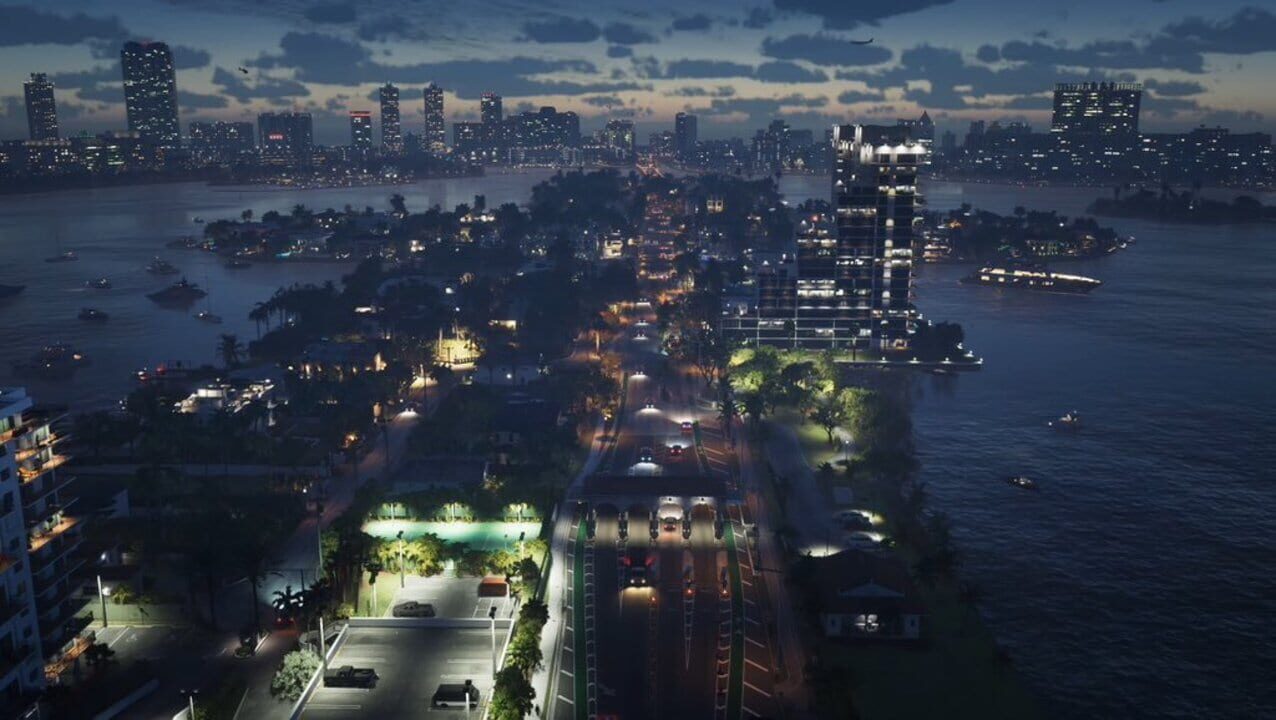
Grand Theft Auto V's online mode has, over more than a decade, been one of the most effective monetised systems in the history of the medium, built on a currency purchasable with real money. Whatever Grand Theft Auto VI does with that model will be the part of it that regulators anywhere are equipped to think about. The state of Leonida can contain whatever it likes.
The Family Entertainment Protection Act is still in the Congressional record, a short bill about selling and renting, penalties enumerated to the dollar, sponsors listed in order. It was read twice and referred, and that is the last event in its history. Anyone can pull the text down in a few seconds. It reads like a document from a country that believed the dangerous thing about a game was what could be seen on the screen.