


In 1975, three editors at a Tokyo publishing house set out to describe the United States to readers who had never been there and mostly never would be. The book they produced, Made in U.S.A. Catalog, moved through the material surface of American life: its clothing, its tools, its ordinary manufactured goods, gathered on a trip across the country and arranged on the page like specimens. Yoshihisa Kinameri, Jiro Ishikawa, and Yasuhiko Kobayashi built the project, by the most repeated account of its origin, out of a single irritation: someone noticed the words Made in USA stitched into the collar of a jacket Ishikawa was wearing, and the phrase would not let go of him. Modeled openly on Stewart Brand's Whole Earth Catalog, the book was less a shopping guide than an act of reconstruction, American consumer culture taken apart on the road and reassembled for an audience that would receive the country only through the reassembly. None of it needed to be accurate. It needed only to be wanted badly enough that a reader in Osaka could hold the book and feel he had been handed the country itself, pre-sorted down to its most legible, most desirable parts. What the book actually preserves, a half-century later, is not a picture of America. It is a record of what one culture chose to notice about another, and what it chose to leave out, which is the more useful inheritance from an object like this than any of its individual facts.
The hunger the catalog was feeding was already three decades old by 1975. It went back to the American occupation that followed August 1945, when General Headquarters administered defeated Japan directly and American servicemen, stationed at bases running from Yokosuka to Okinawa, brought with them post exchange stores stocked with blue jeans, chewing gum, and tinned goods a rationed economy could not otherwise produce. Levi's first reached Japanese hands that way, as military surplus and black-market goods traded outside the base fences, a full generation before Kinameri's team thought to catalog the country that had produced them on purpose. What began as scarcity turned, across three decades of rising income, into a considered aesthetic. By 1975 the hunger no longer needed a soldier's duffel bag to travel. It needed only a magazine.
The catalog worked. A year later its team helped launch Popeye, a magazine that turned California's denim-and-surfboard informality into a vocabulary Japanese menswear is still speaking, and the style that vocabulary named, amekaji, American casual, has outlived the decade that produced it by fifty years. The devotion eventually outran its own supply: by the 1970s authentic vintage American denim was harder to find than the demand for it, and Japanese manufacturers filled the gap by reverse-engineering the antique selvedge looms that American mills were themselves abandoning across the following decade. Five companies out of Kansai, remembered collectively as the Osaka Five, spent the 1980s producing a more faithful version of old American workwear than America was still making. Showa American Story asks the same question of a later, further relay. It is an alternate-history role-playing game from the Chinese studio Nekcom that is not really a game about America, or even about Japan, so much as it is a fresh specimen of the process that produced the catalog and the denim both: a country assembled from the outside, decades after the assembling started, by people further from the source than Kinameri's team was in 1975. The Showa era those editors were living through when they made their book ran from December 1926 to January 1989, and its final decade is the one Japan now remembers with the most concentrated nostalgia, not coincidentally the decade in which the country's bubble economy made nearly anything seem purchasable: a Japanese insurance company paid 39.9 million dollars for a single Van Gogh in 1987, and by the time the Nikkei peaked near 38,915 at the end of 1989 the yen could apparently buy whatever the national imagination pointed it at, including, eventually, the idea of America itself.
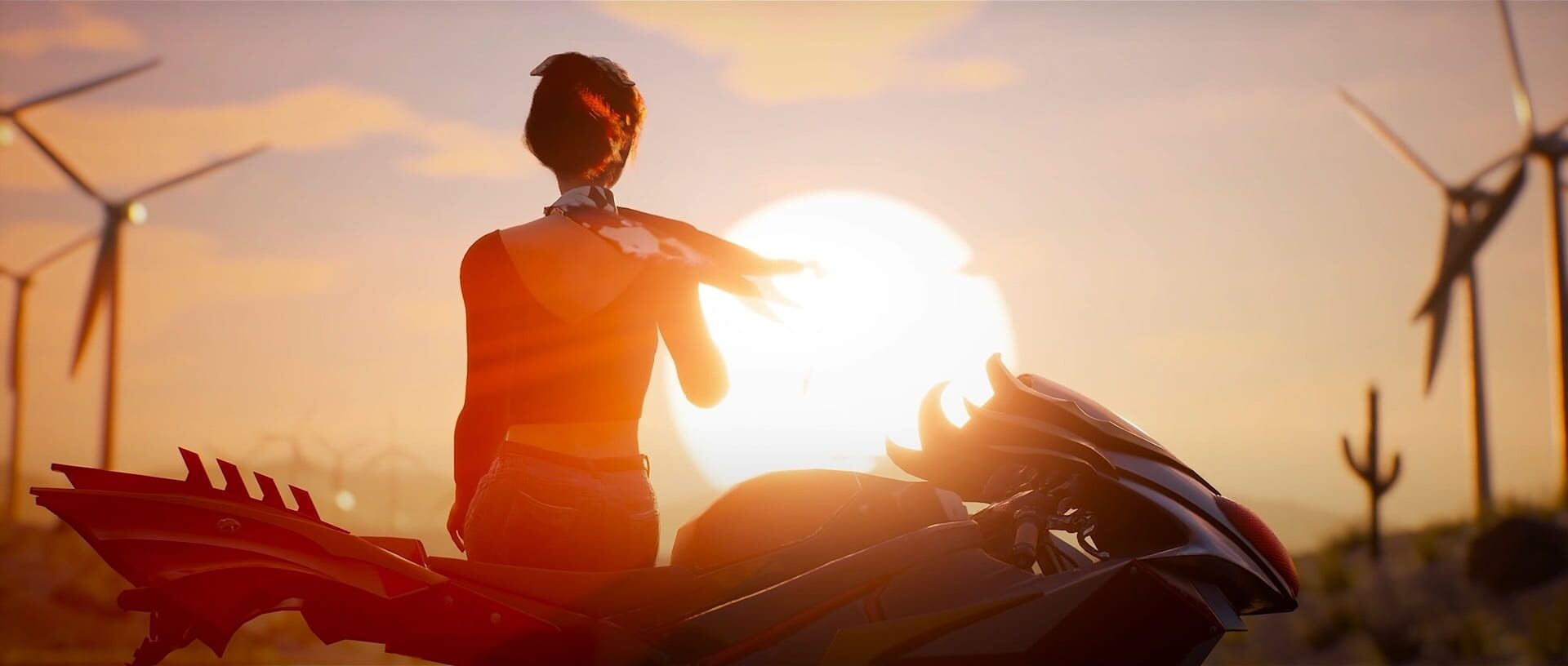
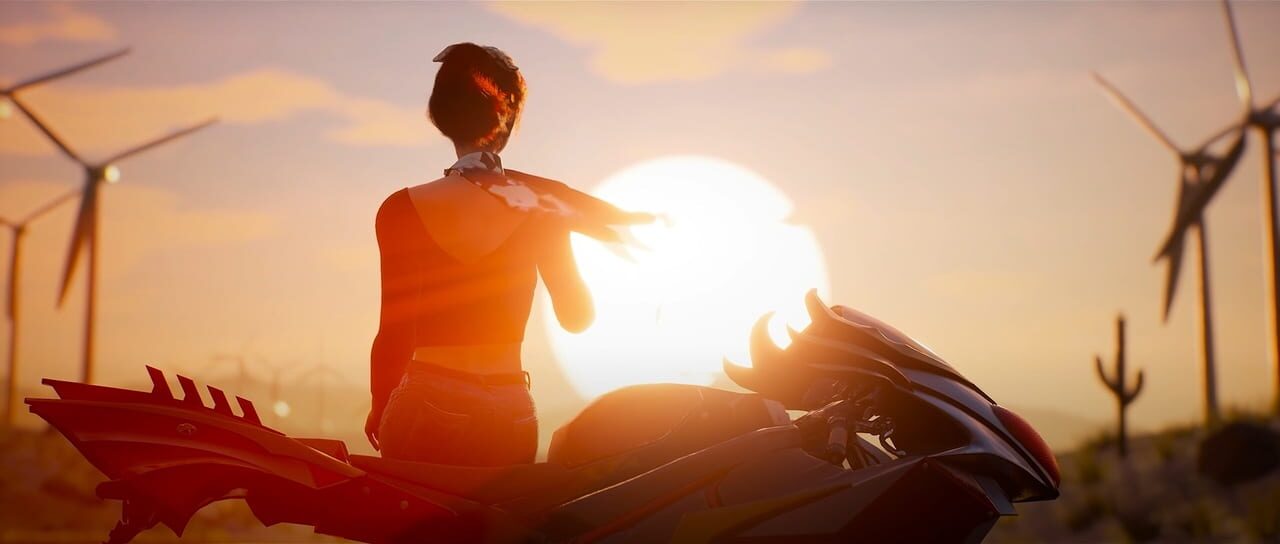
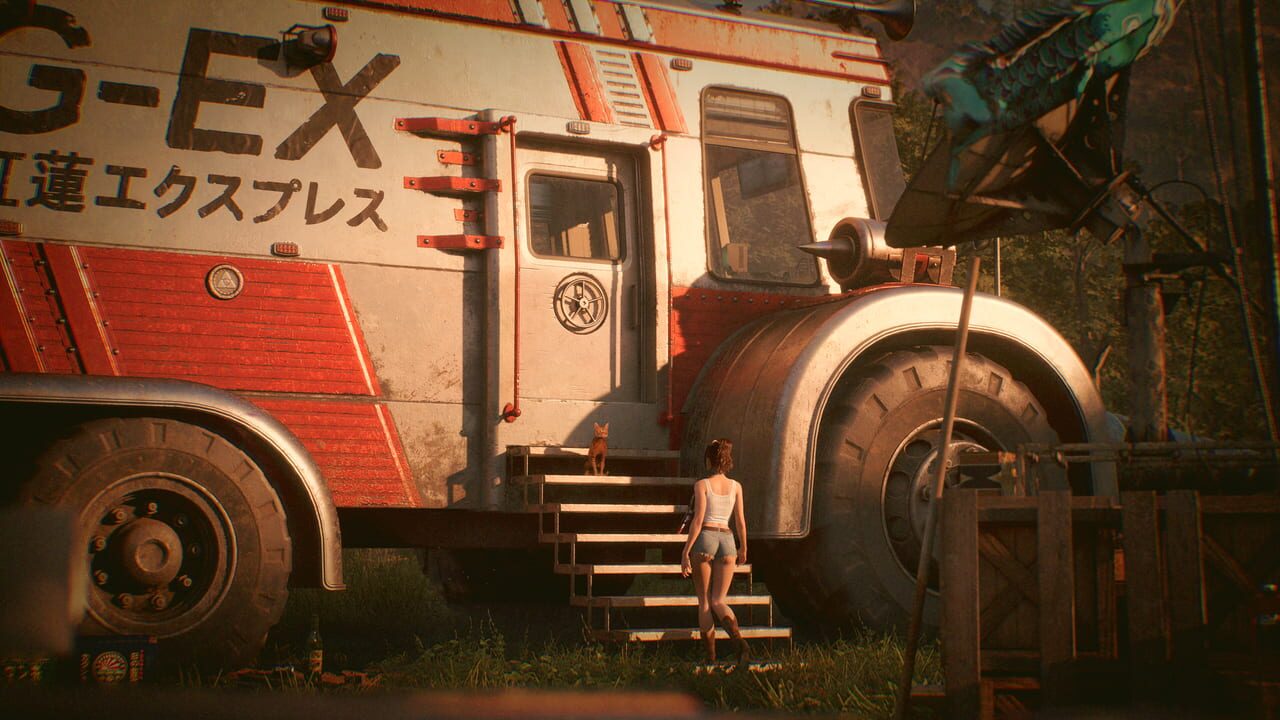
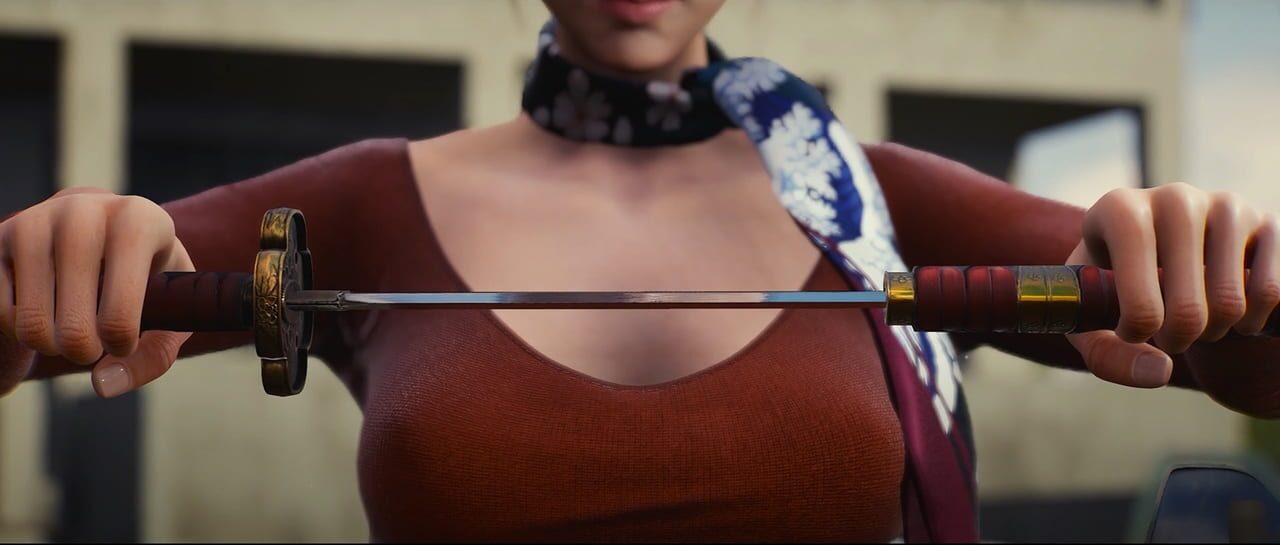
Nekcom is based in Wuhan, founded in 2011, previously known for the virtual-reality horror titles Dying: Reborn and Dying: 1983. Showa American Story imagines a version of Japan's bubble economy that never popped: outward investment kept climbing until much of the United States had been absorbed into what the game's own synopsis calls "an economic and cultural colony" of Japan. The game follows Chigusa Choko, a nineteen-year-old stuntwoman who travels with her younger sister Aya to Neo Yokohama, the renamed Los Angeles, for a film audition, is killed by men who abduct Aya, and wakes from the dead into a country now overrun by the undead as well as by the occupying culture. The project runs on Unreal Engine, originally version 4 before Nekcom moved it to version 5, and is planned for PlayStation 5 and Windows. Nekcom first showed it in January 2022 and then largely went quiet until October 2024, when IGN carried an exclusive trailer confirming a 2025 release window and a road trip through a reimagined San Francisco, Las Vegas, and a rebuilt Austin renamed Neo Tokyo-4, before the studio announced on November 12, 2025, that it needed more time and pushed the release into 2026. The in-game calendar marks its present as the sixty-sixth year of Showa, which by the era's own arithmetic is 1991, a year the actual Showa calendar did not live to see: Hirohito died in January 1989, and the era carrying his reign's name ended with him. The fiction is precise about a date its own source material overshot by two years, which is a strange kind of rigor for a country that does not exist.
This is close to what the anthropologist Arjun Appadurai meant by a mediascape, in Modernity at Large (1996): not a mirror held up to a place of origin, but the total supply of images, narrative fragments, and consumer imagery that circulates beyond a culture's borders and becomes, for the people on the receiving end, raw material rather than reportage. Appadurai's claim was that audiences do not consume these fragments as information about a real elsewhere. They use them to build what he called imagined worlds, scripts for lives that might be lived, assembled from pieces that were never intended to fit together into an accurate picture of anything. The Made in U.S.A. Catalog is that process caught in the act, its method visible on the page: three editors driving through a country, selecting only the objects that could be photographed, captioned, and made to mean something to a reader who would never check the photograph against the place. Showa American Story runs the identical process forward two more relays. Its America is built the way the catalog's was, out of what could be gathered and made desirable rather than out of what was representative, except that the gathering has now happened at second or third hand, from other media rather than from a road trip, and the resulting country answers to nobody's memory of a real place, because by this point there is no one left in the chain who has one.
This is not only how the game's eventual audience will receive it. It is close to how Japan currently receives its own past. Showa Retro has become a genuine consumer trend among young Japanese people who did not live through the era they are nostalgic for, decorating cafes, product packaging, and social media accounts with a Showa aesthetic built from photographs, reruns, and other people's memories rather than from any recollection of their own. A twenty-something in present-day Tokyo missing a decade she never experienced, and a studio built inside a country whose own opening to foreign media arrived as one compressed decade rather than a lived memory, are doing structurally the same thing: building what Appadurai called an imagined world out of inherited fragments rather than out of lived time. The game is simply the version of that operation built to be sold.
Culture that survives this many relays usually does so by losing whatever made it identifiably local along the way. The media scholar Koichi Iwabuchi has a name for the result, coined to describe Japan's own pop-culture exports in Recentering Globalization (2002): mukokuseki, culturally odorless, stripped of the markers that would let a foreign audience place its country of origin. Iwabuchi pairs the term against what he calls cultural odor, the trace of a country of origin that clings to a product and gets marketed as part of its appeal, the way a French phrase clings to a bottle of perfume. His actual subject was the reverse direction of traffic, Japanese animation and pop music moving through Taiwan, Hong Kong, and Singapore precisely because so little in them read as specifically Japanese. But the mechanism travels better than the case study. Whatever America meant to the readers of the Made in U.S.A. Catalog, by the time it reaches a role-playing game made in Wuhan it has been deodorized twice over: first by a Japanese editorial process that kept the denim and the diners and discarded the politics and the regional particularity, then by a Chinese studio working from Japan's already-deodorized version rather than from any direct contact with the original. What is left standing in Neo Yokohama belongs to neither country any longer, legible instead to almost anyone who has consumed enough transnational pop culture to recognize a mullet, a katana, and a diner sign without needing to know which country any of them belongs to. The numeral in Neo Tokyo-4, the renamed Austin, implies at least three other such districts on the same reimagined map that the marketing has never bothered to explain, on the reasonable assumption that an audience fluent in this kind of pastiche does not need the other three accounted for.
There is a version of this argument that stops there, satisfied with three relays and a tidy chain of custody running from America to Japan to China to the screen. It is worth pausing on why that chain understates the case. Nekcom's own country spent the final years of the Showa period undergoing an opening of its own, considerably more abrupt than Japan's postwar one: Deng Xiaoping's Reform and Opening-Up policy, launched in 1978, ended decades of near-total insulation from foreign consumer culture and let American, Japanese, and everything-else media arrive within the same handful of years rather than the same handful of decades. Videotape itself, as a physical format, reached Chinese cities within roughly that same window, which means the generation old enough to have founded a studio by 2011 is among the last that can remember foreign film and television arriving specifically as tape: an object, copied and recopied, its image degrading a little further with each pass through another machine before it ever reached a screen. That is not an incidental detail for a studio whose current project is itself a copy of a copy. It is closer to a working method. A Chinese studio inheriting Japan's fantasy of America is therefore not simply one more step down a single line. It is working from inside its own separate and much more compressed experience of the same basic hunger, one in which foreign arrived as a single undifferentiated category rather than as two countries with two different relationships to the United States. Showa American Story asks to be read as a Japanese fantasy of America, because that is the fantasy its premise stages. What it is more likely to actually be, structurally, is a Chinese fantasy of a Japanese fantasy of America, filtered through a studio whose own formative relationship to foreign imagery was never sorted by country as neatly as the finished premise pretends.
None of this makes the game a worse historical document. It makes it a better one than a straight period piece could be, because the distortions are not noise sitting on top of the signal. They are the signal. A studio that set out to faithfully reconstruct Reagan-era California would be judged by how well it suppressed its own fingerprints, how invisibly it disappeared into research. Showa American Story cannot do that and does not try to: its fingerprints are the entire visible surface of the thing, from a calendar that outlived its own emperor by two years to a Los Angeles that goes by a Japanese port city's name for reasons the plot does not need to explain, because the audience already accepts it as a genre convention rather than a claim. Those errors are dated, the way an ice core is dated. They mark, more precisely than an accurate simulation ever could, exactly where the chain of transmission stopped checking itself against the world and started reproducing only its own most recent copy. A historian trying to reconstruct what America meant, as an idea, to a specific cohort of media consumers in Wuhan or Osaka would learn more from Neo Yokohama's specific wrongness than from a documentary's specific rightness, the same way a mistranslation sometimes discloses more about a translator's assumptions than a correct translation ever could.
None of that settles what the game actually does with the opportunity, and the honest answer, based on what Nekcom has shown so far, is: unevenly. This is also the studio's first major departure from the head-mounted-display horror that built its reputation, a jump in scale and genre its marketing has had to justify almost as often as its premise, which may be part of why the world and the plot riding on top of it are not yet operating at the same level of ambition. A pastiche aware that it is pastiche can use that awareness as a real method, the way the catalog and the calendar detail suggest this game might. It can also use the awareness as a blanket exemption from having to be about anything, a permission slip a great deal of B-movie-flavored media cashes without ever spending it on an actual observation. The world-building clears the higher bar. A colonized Los Angeles renamed for a Japanese port, a calendar that overshoots its own source material, a bubble economy imagined as permanent: these are specific enough to be arguments, not merely set dressing. The plot apparatus wrapped around that world, on the evidence of what has actually been announced, clears a much lower one. A resurrected stuntwoman hunting the men who took her sister is a serviceable engine for a role-playing game, no more specific to this premise than to any of the last decade's revenge plots, and the marketing's own description of the project as a "post-apocalyptic romance" sits oddly next to zombies, an assassination, and a kidnapping, the way a hotel calls a windowless room cozy. The setting is doing historiographic work. The story riding on top of it, so far, does what any zombie game's story does.
The obvious objection has a name critics reach for by reflex: orientalism in reverse, a Chinese studio essentializing a Japan that is itself essentializing America, exoticism laundered through one extra country and therefore somehow cleaner. The objection deserves a real answer rather than a dismissal. What it misses is the specific kind of claim orientalism, in its classical sense, was actually making: a body of administrative and scholarly knowledge, backed by real political and military power, presenting itself as accurate expertise about a subordinate culture in order to help govern it. Nothing in this chain is presenting itself as expertise. The catalog admitted it was assembling desire, not ethnography. The game announces its own impossibility in its first premise, an alternate history that requires an emperor to have lived past his own recorded death, and asks to be read as fantasy from the opening frame rather than as a claim about how Japan or America actually work. A catalog compiled by curious editors and a game built by an entertainment studio are both acts of consumption dressed up, at most, as acts of description, and consumption is a different transaction than administration, however much the two can end up producing similarly flattened pictures of a place. That does not make the flattening costless. Mukokuseki culture earns its wide circulation precisely by sanding off the features that would let anyone object to its account of a place, a real cost paid by both of the cultures being rendered here, just not the cost, or the direction of power, the term was originally coined to describe.
The second objection is more deflating and, in its way, easier to grant: that reading a zombie role-playing game as a document of cultural transmission overreads a product built to sell copies, not to make an argument. Some version of that is true of almost everything a publication like this one examines, and it is worth granting outright rather than arguing around it. But the objection assumes the wrong kind of evidence would be more convincing, not less. A documentary explicitly about Japan's fascination with America, made by someone setting out to illustrate Appadurai's argument, would be worse evidence for it, not better, because its self-awareness would launder out the very distortions that make the argument visible in the first place. Nekcom did not need to have read a page of anthropology to reproduce, in a commercial product built primarily to be entertaining, exactly the process Appadurai described ordinary media consumers performing without theorizing it. The Made in U.S.A. Catalog is, again, the clearer precedent: its editors were not commissioned by a university, they were building a product for a magazine market, using the same unglamorous, half-conscious method, and no one has ever suggested their catalog is weaker evidence of a mediascape at work for having been commercial rather than scholarly. That the game was not designed as an illustration of the theory is the reason it illustrates the theory so well.
Somewhere in the uncatalogued archive of Showa-era Japanese broadcasting sits the raw material this whole relay actually runs on: hours of American genre film, dubbed into Japanese, aired late into the night to a country that was not checking the footage against the place. Nobody watching needed the films to be accurate. They needed only to be on, flickering in a dim room, doing at night what the catalog did in daylight: handing over a country nobody present had visited, already cut into shapes a Japanese living room could use. Showa American Story continues that screen rather than departing from it, the same transmission decades later, run through two more countries and a game engine, still showing a version of America that was never footage of anywhere in particular. Whoever eventually sits down to play it will be looking at the fourth or fifth generation of a copy nobody involved ever intended to be a copy. The tape wore out long ago. The picture it left behind is still running.