In December 1963, Scientific American published a short paper by the physiologist Per Scholander under a title that undersold nothing: "The Master Switch of Life." The switch in question is a reflex, not a metaphor. The moment a mammal's face meets cold water, particularly with the breath already held, nerve endings around the eyes and nose report the contact to the brainstem, and two branches of the autonomic nervous system fire together, a combination the body otherwise almost never attempts: the vagus nerve slows the heart, sometimes by half within the first ten to fifteen seconds, while a separate sympathetic signal clamps shut the blood vessels of the arms and legs, shunting what oxygen remains toward the heart and the brain and away from everywhere else. It is not a response to fear. It does not consult the subject's opinion of the water. It is present in the newborn and in the seasoned freediver, in the seal and in the diving duck, because it is older than any of the four, a hydraulic reflex for a hydraulic problem: how to keep a brain alive on a fixed and shrinking budget of air.
Clinicians still use a version of this reflex on purpose. A patient whose heart is racing dangerously fast, in a rhythm called supraventricular tachycardia, can sometimes be brought back to a normal rate with nothing more sophisticated than a bag of ice water pressed briefly against the face, a maneuver taught in emergency medicine precisely because it recruits the same nerve pathway Scholander described rather than any drug. The reflex is also, less obviously, a livelihood. The haenyeo of Korea and the ama of Japan, women who have free-dived for shellfish and pearls without tanks for at least four centuries and who still work into their sixties and seventies, were studied by the physiologists Suk Ki Hong and Hermann Rahn in the 1960s partly because their bodies ran this reflex so efficiently, doing for a living, dive after dive, what Scholander's lab subjects did once, lying down. What a bag of ice water does in a few seconds of contact, full submersion does completely and continuously, for as long as the head stays under.
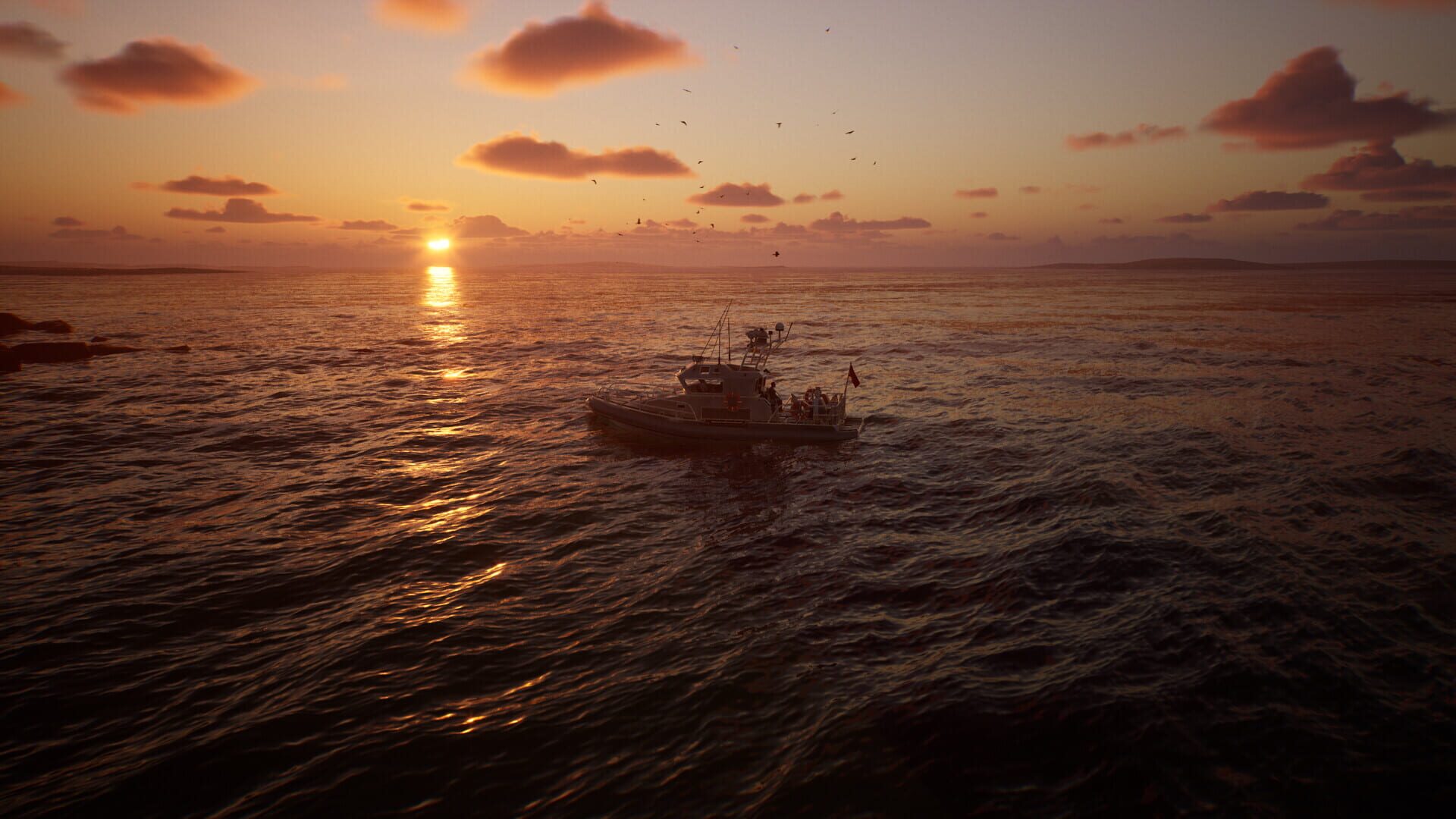
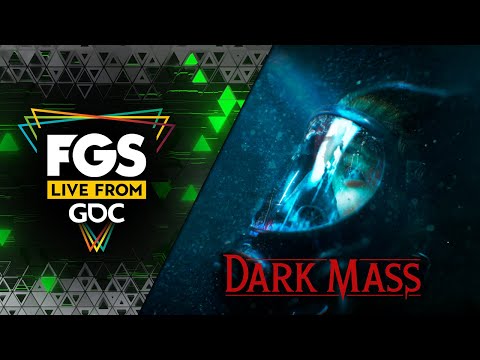
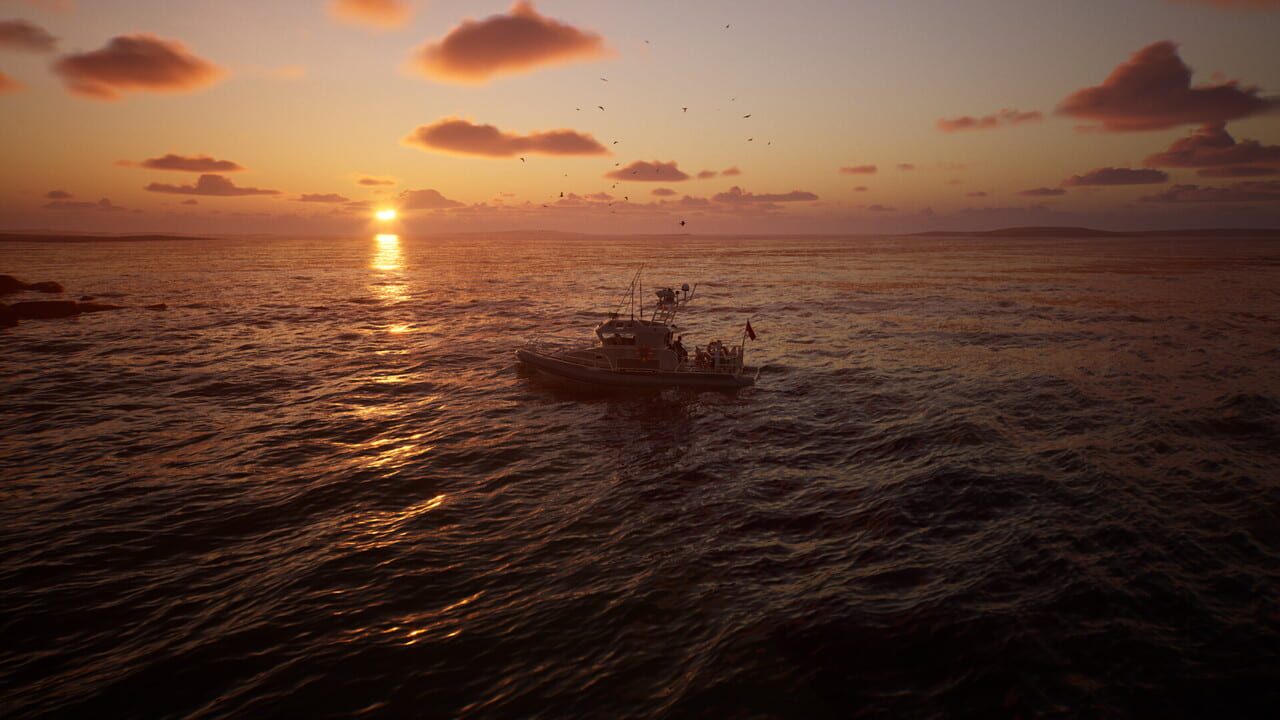
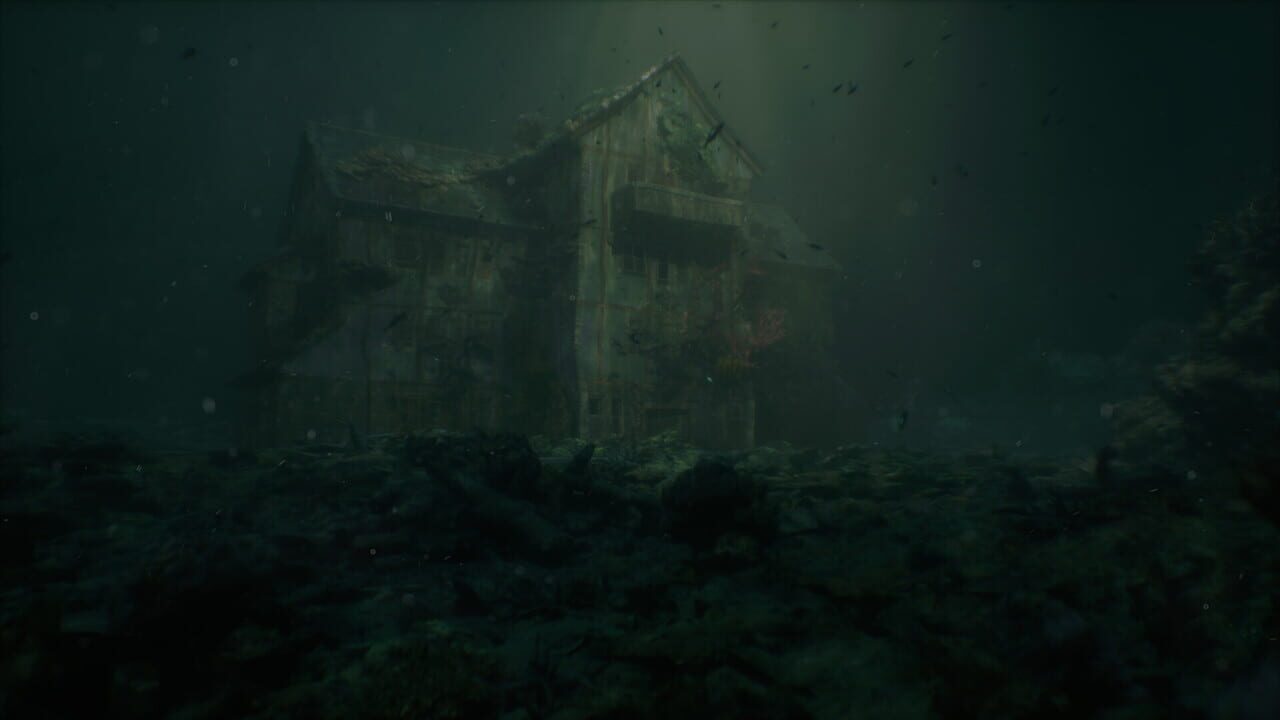
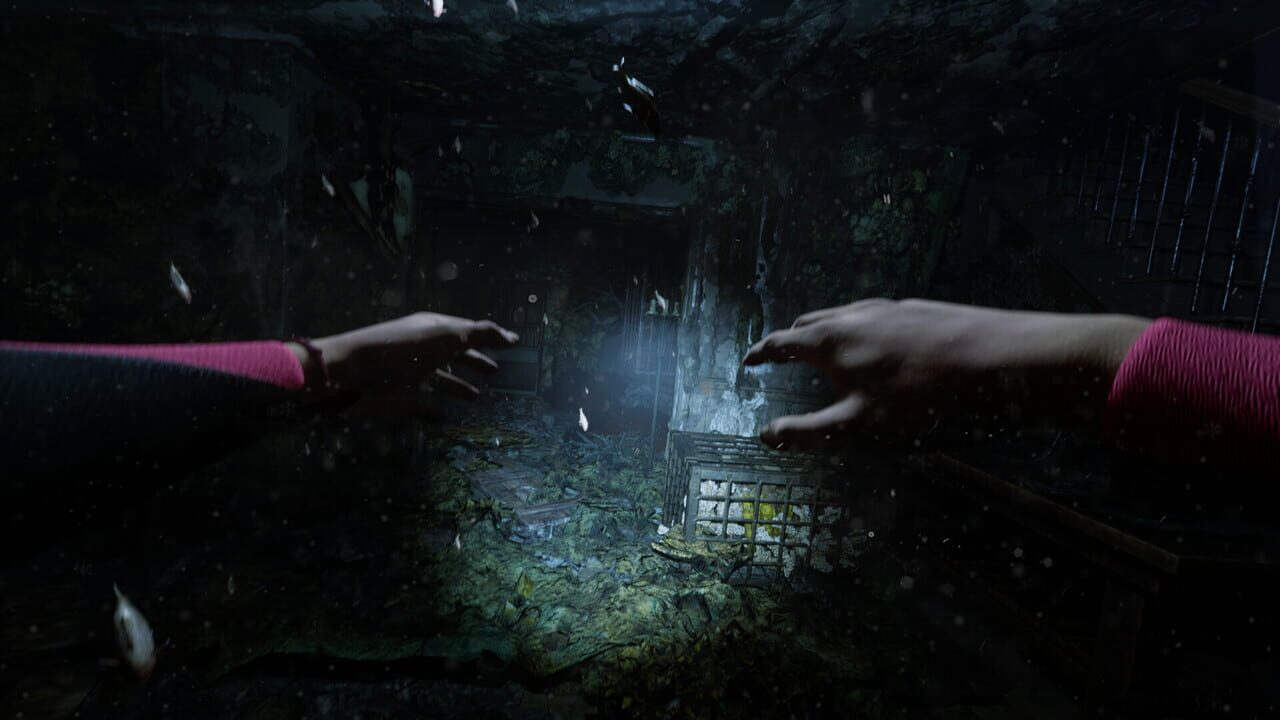
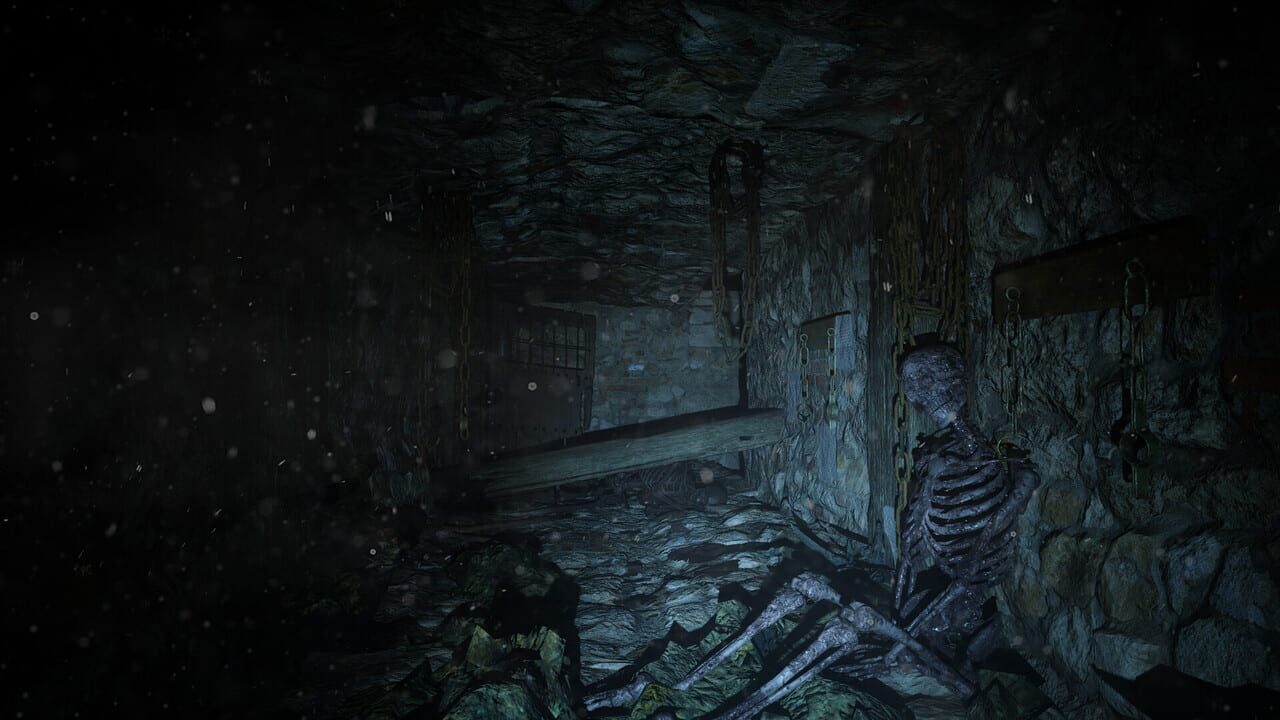
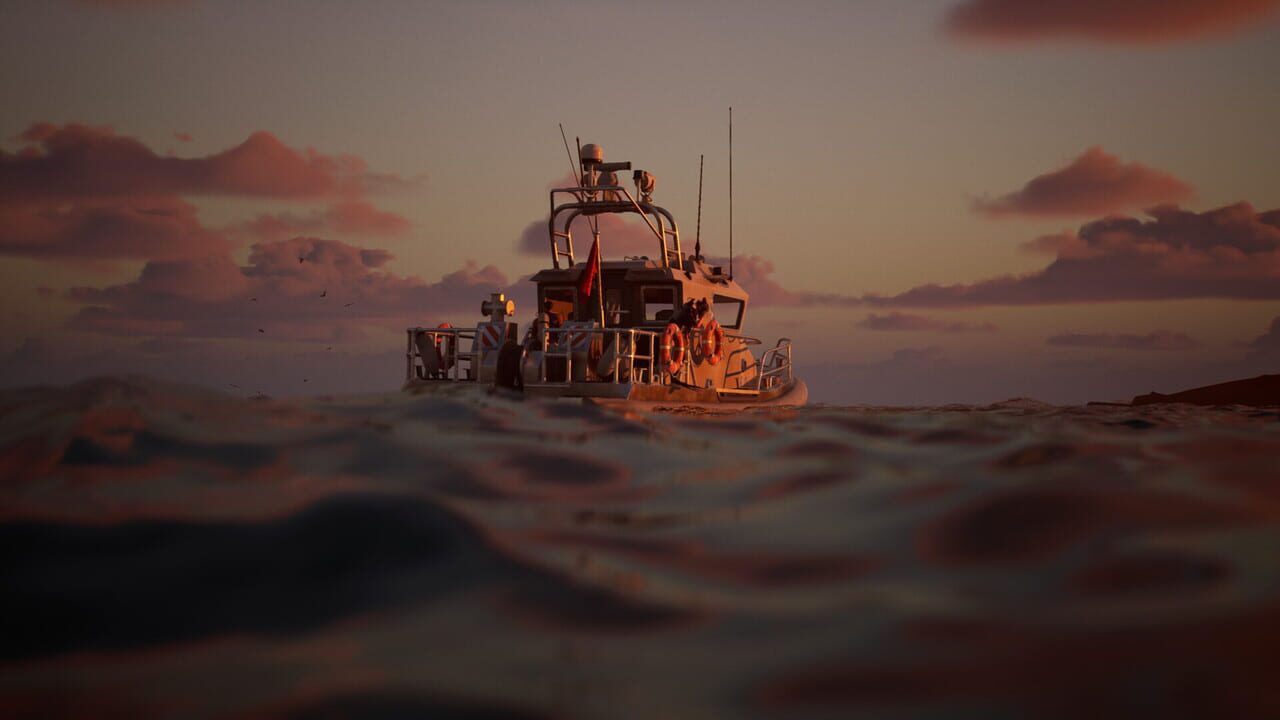
A game that places a player's body underwater for its entire runtime, rather than for one drowning-timer set piece bolted onto an otherwise dry adventure, is therefore not simply choosing a setting. It is choosing which nervous system to borrow for the duration. Dark Mass, the horror game Path Games has due on PlayStation 5, Xbox, and PC in the last quarter of 2026, commits to that borrowing more completely than most. Its entire span is spent inside the wreck of a drowned manor, stalked by a curse the game frames as having waited there for centuries, with the player's own choices deciding whether the body being steered gets out or joins the manor's existing population, a fate the game names, simply, becoming one of the drowned.
That framing volunteers most of this essay's argument before a single mechanic has to enforce it. Dark Mass does not describe failure as death in the generic sense a horror game usually reaches for. It describes failure as joining a specific population already resident in the water, which means the game's entire loss condition is written in the vocabulary of breath before the interface does anything at all. A player does not need an oxygen gauge counting down in the corner of the screen to feel the weight of that vocabulary, because the body supplies its own gauge. The urge to breathe is not, in the main, a response to falling oxygen; it is driven by rising carbon dioxide, detected by chemoreceptors that start signalling distress long before oxygen debt becomes dangerous, which is why the panic of a held breath arrives so much earlier than any real physiological emergency does. That clock runs whether or not a designer puts a bar on the screen for it. A story that promises the player will either leave or become one of the drowned has already conscripted the clock into the plot before the manor's water has done anything else.
Most horror design ages because it is built from things a culture agrees, for a while, to find frightening: a mask, a synthesizer cue, a framing borrowed from one decade of film. The agreement lapses. The mask becomes a costume worn unironically at a party, and the game that once relied on it plays like a museum piece rather than a threat. A body's response to submersion is not an agreement of that kind. Nobody voted for the trigeminal nerve to fire on contact with cold water, and no marketing cycle can retire it. That is the case for underwater horror as a design choice rather than a theme: it works on levers a culture cannot vote out of relevance, because the levers were never a matter of culture to begin with. It is also, on inspection, a harder case to make than it sounds, because the same levers that supply the dread are fully capable of wrecking the game built around them, and a designer who reaches for all of them at once is at least as likely to produce a controller set down in frustration as a chill down anyone's spine.
The lever most likely to do that wrecking is orientation. The human sense of which way is down comes from three overlapping systems that normally agree with each other closely enough that nobody notices the negotiation taking place. The eyes report a horizon. The skin and joints report where the ground is pushing back against the body's weight. And deep in the temporal bone, the vestibular system, the semicircular canals for rotation and the otolith organs for straight-line acceleration, reports the pull of gravity on a small mass of crystalline particles resting on a bed of hair cells. On land these three systems are redundant on purpose, a backup for the backup. In water, the second one disappears outright: there is no ground pushing back on a buoyant body, no floor to rest the rest of the system's arithmetic on. In poor visibility the first system goes quiet as well, leaving the vestibular system alone to answer a question it was never built to answer by itself. This is not a hypothetical weakness. It is reliable enough to be useful: NASA has trained astronauts for spacewalks since the 1990s inside the Neutral Buoyancy Laboratory at the Johnson Space Center, a pool large enough to submerge full-scale mockups of space station modules, precisely because suspending a body in water strips away enough of the usual gravitational bookkeeping to approximate weightlessness for training purposes, even though gravity is still, strictly speaking, acting on everyone involved. If a swimming pool can be made to feel enough like orbit to train a professional astronaut, it can certainly be made to feel like nowhere at all to a player exploring a flooded house.
Working divers are trained for exactly this failure. The standard advice, taught in open-water certification long before anyone reaches technical diving, is that if orientation is ever seriously in doubt, the reliable fallback is to exhale gently and watch which way the bubbles travel, because bubbles are the one thing in the water guaranteed to rise regardless of how thoroughly the diver's own inner ear has been fooled. That such a low-technology workaround is standard training rather than a novelty is itself evidence for how completely the vestibular system can fail to solve this problem alone. Game design has its own long, informal record of the same failure. The Water Temple in The Legend of Zelda: Ocarina of Time has spent more than two decades as shorthand, across hundreds of retrospectives, for a beloved series' least-loved level, and the folk explanation offered for it is always some version of the same complaint: a player stops adventuring and starts flailing the moment the camera and the controls stop agreeing with the water about which way the player is even facing. Total disorientation does not produce more fear. It produces a different activity, closer to being lost in a stairwell with the lights off, which can be many things but is rarely the specific thing a horror game is trying to sell.
Unlike orientation, the third lever does not wait for a design decision at all. Sunlight entering water is absorbed unevenly across the visible spectrum, and the absorption follows wavelength with the reliability of a physical constant, because it is one. Red light, at the long end of the spectrum, is the first to go, absorbed within the first several meters of clear water regardless of what a game, or a diver, would prefer. Orange follows within the next few meters, then yellow, until only blue and green survive to any meaningful depth, which is why photographs taken more than a few meters down default to a blue-green cast even in bright water on a cloudless afternoon, and why a cut that would look red at the surface reads as a dark, bruised green twenty meters down. The oceanographer N. G. Jerlov spent much of the mid-twentieth century measuring this attenuation curve across different water types, and the reference volume he produced, Marine Optics, remains the field's baseline account of how light dies underwater. A studio rendering a sunken manor with any fidelity to that curve is not making an artistic decision when the reds disappear first. It is copying an answer that was fixed before the studio existed, in the same way a studio rendering a sunset is copying the physics of atmospheric scattering whether or not anyone on the art team could name it. The murk is not mood lighting. It is arithmetic.
The fourth lever works on the ear the way the third works on the eye, by changing a constant the nervous system was never built to expect. Sound travels through water at roughly 1,500 meters per second, more than four times its speed in air, and human directional hearing depends on a timing difference so small it only works because a dedicated piece of brainstem circuitry exists to sort it. In 1948 the psychologist Lloyd Jeffress proposed the model still used to describe that circuitry: neurons acting as coincidence detectors, each tuned to fire hardest when a signal from the left ear and a signal from the right ear arrive with one particular, tiny delay between them, so that an entire population of these detectors, tuned across the whole range of possible delays, can read direction directly off of time. That range is calibrated to a human head's width and to the speed of sound in air. Underwater, sound arrives so much faster that the delay between two ears a few centimeters apart compresses toward the edge of what the detector population can resolve, while the skull itself begins conducting sound directly into both inner ears at once, further scrambling whatever timing information survived. Divers describe the result consistently: not silence, and not confusion exactly, but a sound that is unmistakably present and impossible to place, coming from everywhere and from no particular direction. This matters specifically for horror design, which has spent decades building its scares out of directional sound: a creak from behind, footsteps closing from the left, a door easing shut somewhere down a hallway the player cannot see. Nearly all of that toolkit depends on the same interaural timing system Jeffress described, and nearly all of it stops working, or starts working differently, once that timing system is compressed past the point of resolution. What a design team gets instead, whether it plans for this or discovers it in the first playtest, is a different instrument entirely: not the jump scare's precise, locatable threat, but the older, vaguer unease of knowing something is close without being able to point at it, which is arguably the harder feeling to sustain across a whole game and the harder one to fake.
None of these four levers is optional once a game commits to full submersion, and none of them fails the same way when pushed to an extreme, which is the actual design problem sitting underneath all the marketing language about immersion. Breath pushed to its limit produces panic, and panic is close enough to fear that a design team can lean on it directly; a badly paced countdown feels unfair, which is a familiar complaint and a survivable one. Light pushed all the way to black produces blindness, and blindness is answerable within the fiction, with a flare, a lantern, a glow the curse itself gives off, so the player keeps moving even while seeing less. Sound pushed all the way to undirected produces dread at no cost to function at all, since a player who cannot tell which wall a noise came from can still tell the floor from the ceiling. Only the loss of a stable sense of orientation produces something categorically different from fear. It produces a player who can no longer perform the game's most basic verb, which is to travel somewhere on purpose, and a body that cannot do that stops being frightened and starts being merely stuck. The 1993 paper that gave flight-simulator designers their standard measurement tool, Robert Kennedy and his co-authors' Simulator Sickness Questionnaire, exists because this specific failure is measurable, not merely unpleasant: a mismatch between what the eyes report and what the inner ear expects produces symptoms, nausea foremost among them, in a large enough fraction of subjects that simulator programs still screen new users for susceptibility to it. A horror game that disorients its player past the point the vestibular system can recover from is not making that player more afraid. It is making a meaningful fraction of them sick, in the clinical sense, which is an unusual way to lose a customer.
The competent version of this design, on the evidence of the games that have already tried it, spends breath, light, and sound close to their full physiological cost and protects orientation instead. Frictional Games' Soma, in its later sections, strands its player on the sea floor in a diving suit, stalked by a creature that hunts toward light, and the tactic players converge on almost immediately is to cut the beam and hold still, trading sight for safety. That trade only works, and only stays frightening rather than becomes hopeless, because the corridors it happens in are linear enough that losing sight does not also cost the sense of which way the path continues: a floor underfoot, a wall within reach, a memory of the last turn taken. It is the diver's bubble trick again, in different clothes. Give up as many senses as a scene can afford to take, but leave exactly one honest witness to which way is forward. That is the shape of the trade a designer actually has available. Realism is not really the currency being spent, since every one of the four levers described here is equally real and equally available to dial up or down. What is actually being decided is which single sense gets to keep telling the player the truth. The other three are free to lie.
The obvious objection to all of this is that the dread is not physiological at all, or not mainly, and that the argument mistakes a learned cultural reflex for a bodily one. On this reading, audiences were taught, quite recently and by identifiable works, to find dark water frightening in the first place, the way audiences were taught that a particular chord progression means danger. Steven Spielberg's Jaws, in 1975, is routinely credited with reshaping an entire public's relationship to open water more or less on its own, converting ordinary swimming beaches into sites of a specific, media-manufactured anxiety that had not existed at the same pitch before the film. Everything since has built on that foundation rather than discovered its own: Irrational Games' Bioshock, in 2007, wrapped its entire setting in the vocabulary of drowning, portholes straining against black water, without ever once asking its player to hold a breath, since Rapture's corridors are dry and its ocean stays on the far side of the glass. If the fear these games trade in were really about the trigeminal nerve and the vestibular system, the objection runs, Bioshock's players would have felt none of it, since nobody in Rapture ever gets wet. That they plainly did feel something suggests the something in question is learned convention wearing a physiology costume, not physiology itself.
The objection is right about more than it needs to concede, and answering it means being precise about which claim is actually being made. Which specific fear a body of water is asked to hold, a shark, a drowned duchess, a curse with a name, is exactly as cultural as the objection says, and dates on exactly the same schedule as any other fashion in monsters; the curse waiting in Dark Mass's manor will look as period-specific in thirty years as any other decade's antagonist does now. Bioshock's achievement, in fact, confirms the distinction rather than undermining it: a game can borrow the vocabulary of drowning, the pressure, the portholes, the water pressing on glass, entirely at the level of image and reference, precisely because that vocabulary has become culturally legible, and legible vocabulary is the whole of the objection's point. But vocabulary is not the claim this essay is making. The trigeminal nerve fires on contact with cold water in a duck and in a newborn, neither of which owns a ticket stub. The vestibular system does not check a viewing history before failing to locate a horizon in a body of water with no visible bottom. The ear does not consult a filmography before mistiming a sound that has arrived four times faster than the circuitry evolved to expect. What the five decades since Jaws actually supplied was not the fear, which the nervous system was already fully equipped to produce on its own, but a shared vocabulary for aiming that fear at a specific screen, on a specific evening, on purpose. A game that only borrows the vocabulary, the way Bioshock does, gets a real and legitimate effect built on convention. A game that puts the whole apparatus of breath, balance, light, and hearing under actual physiological load, the way a fully submerged game must, is drawing on something the vocabulary was only ever describing from the outside.
What a designer building Dark Mass's manor cannot avoid, whatever gets decided about breath timers or orientation cues, is the arithmetic of light, because that lever asks nothing of the design at all. At a depth of somewhere between five and ten meters in reasonably clear water, red stops arriving. It is not filtered by the manor, or by the curse, or by an art director reaching for a mood. The wavelength is absorbed by the water itself, converted to a trace of heat, spent before it reaches whatever is left down there to see it. A drowned room lit only by a flashlight at that depth can show a visitor gold banister rail, pale stone, a stretch of green-black water, but it cannot show red, because by the time the beam has traveled down and the reflection has traveled back up, the red has already been paid for twice over. If something is bleeding in that room, centuries dead or otherwise, the color of it will not be blood-colored. It will be the color of everything else down there: the one color the water was never going to let through.