In 1981, in any arcade in America, death had an exact price. The ship dissolved at the bottom of the Galaga cabinet, the screen asked for another credit, and a twelve-year-old did the math against the change in his pocket. A quarter bought three lives. A careless afternoon cost two dollars. The kid with one quarter left played differently than the kid with a fresh roll: he hung at the bottom of the screen, took the safe shots, let the bonus stage go rather than risk the run. Nobody taught him this. The pricing did.
The arcade was the first and last era in which video games charged real money for dying, and the economics shaped everything about how those games felt. Cabinet operators wanted short sessions and steady coin drop, so the games were tuned to kill. Designers spoke openly about difficulty as a revenue lever. The result was a generation of players for whom caution was not a temperament but a budget line, and for whom the phrase one life left carried a small, real dread that arrived in the chest before it arrived in thought. The body learned the price of the quarter and played accordingly.
The pricing was, literally, a dial. Arcade boards shipped with operator-adjustable settings, small banks of DIP switches inside the cabinet that set the number of lives per credit, the score threshold for an extra ship, the global difficulty. A machine earning too little could be made deadlier with a screwdriver. Mortality was a business parameter, tuned per location, and the players adapted to each cabinet's economy the way commuters adapt to a toll road. The instructive part is what the punitive pricing did to demand. Defender, by reputation the most merciless cabinet of 1981, was also among the most profitable. The lesson sat there for forty years, mostly unlearned: scarcity was not the obstacle to the pleasure. It was what the pleasure stood on.
Then the price began to fall, and it fell for four decades. The home console unbundled death from money: dying in a living room cost a reload, then a checkpoint, then less than a checkpoint. The online shooter finished the job. By the time Call of Duty 4 standardized the formula in 2007, death cost roughly five seconds and a replay of the mistake, and the design language of the era said the quiet part plainly: get back in the action. Death stopped being a loss and became a pause. The respawn timer is a metronome, not a consequence.
Free death produced a recognizable style of play, visible in any multiplayer lobby of the last two decades. Players sprint into open ground because the cost of being wrong is a brief intermission. They trade deaths the way commuters trade lane changes, without ceremony. None of this is a design failure. Frictionless death keeps players in the loop, and the loop is the product. But something specific was removed along the way, an entire emotion the medium once produced reliably for twenty-five cents, and the games that have spent the last decade trying to reinstall it have become their own genre.
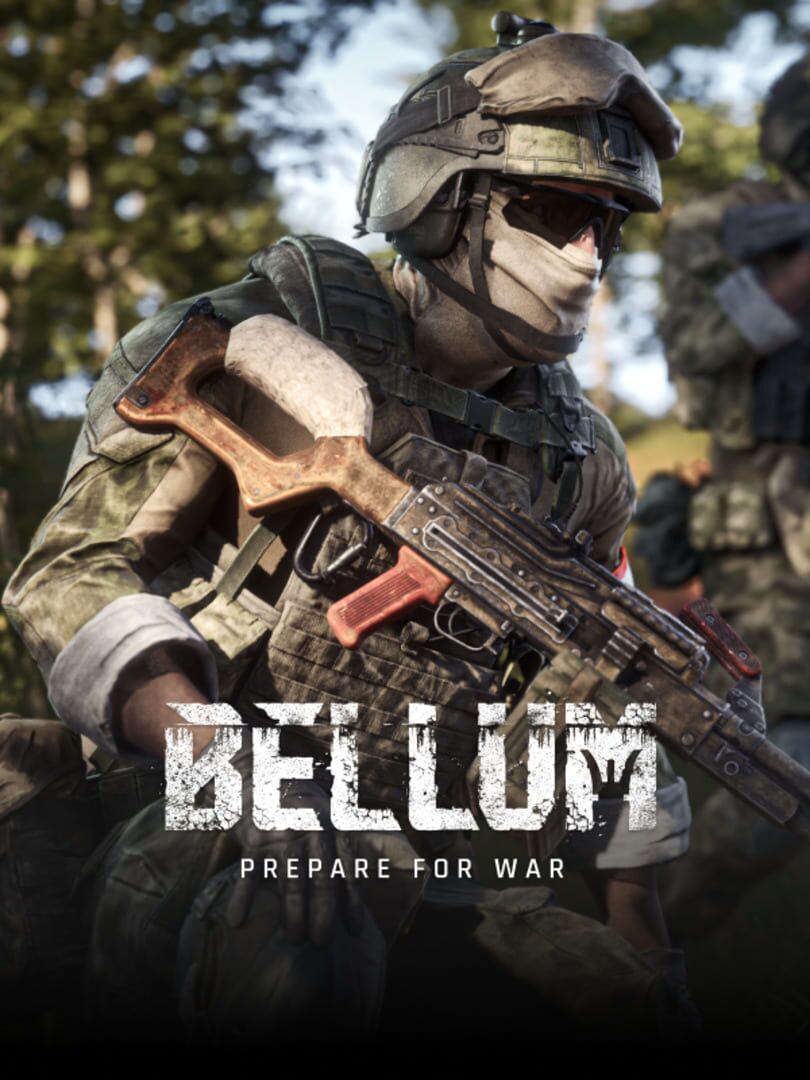
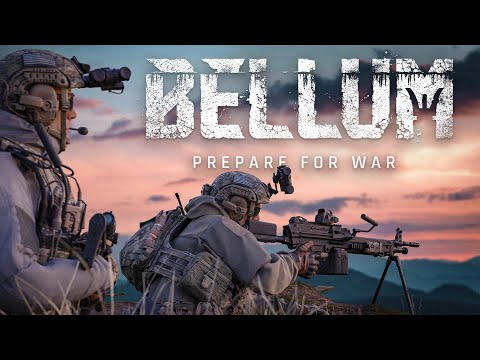
Bellum is the newest and most deliberate of them. It is a platoon-scale tactical shooter from Astarte Industries, a studio assembled around Karmakut, a YouTuber who built an audience of milsim players on Squad and Arma operations and who now carries the title of project lead, with developers drawn from Arma, Squad, Ready or Not, and Ground Branch. The game is PC-only, built in Unreal Engine 5, and sold directly from the studio's own site rather than on Steam; studio head Ryan Yuan has said the thirty percent platform cut is better spent on development and marketing. It stages a fictional proxy war in the Sahel of the 2030s among three factions: a US Ranger Regiment, a Russian-coded private military company called SATYR, and a local militia called Al-Zalaam. Eighty players fight across maps four kilometers on a side. An alpha ran in March, a closed beta opened on April 10, and the full release is scheduled for later this year. The studio's copy calls it the next evolution of platoon-scale tactical shooters, shaped by die-hard fans who demanded more from the genre. The game is called Bellum, which is Latin for war, which is the kind of name a project takes when it intends to be the genre's last word.
Under the ballistics modeling and the Nanite vegetation and the consultation with combat veterans, the design carries one decision that matters more than the rest of the feature list combined. Lives in Bellum are limited. Not discouraged, not taxed with a long respawn walk, but counted, the way the Galaga cabinet counted them. The studio's own description says the limited-life system exists to recreate the stress, stakes, and decision-making of platoon operations, and for once the marketing copy is a fair summary of the mechanism. A platoon's manpower is a budget. When it is spent, it is spent. This essay is a Brain & Body reading of that single decision: what it does to the nervous system of the person holding the rifle, and why the genre's word for the result, realism, names the effect while misplacing the cause.
The relevant science is older than the genre. In 1979, in a paper in Econometrica that would eventually win Kahneman a Nobel Prize, Daniel Kahneman and Amos Tversky showed that people do not weigh gains and losses on the same scale. A loss hurts roughly twice as much as an equivalent gain pleases. Finding twenty dollars on the sidewalk improves a morning; losing twenty dollars ruins the afternoon. The asymmetry is not a character flaw, it is the operating curve of human decision-making, and it bends every choice made under risk. Prospect theory's second insight matters just as much here: the curve is anchored to a reference point. People do not evaluate outcomes in absolutes. They evaluate departures from what they already count as theirs.
Read the respawn shooter through that lens and its emotional flatness stops being mysterious. A game with infinite respawns sets the reference point of death at zero. No life is ever owned, so no life is ever lost; dying subtracts nothing from the ledger because the ledger never registered a balance. The killcam plays, the timer runs, the player returns. The killcam itself is a tell: it exists to replay the death as a highlight, framed from the killer's side, because in this economy a death is content for the living rather than a loss for the dead. Whatever the on-screen fiction claims about mortality, the accounting says reset, and the body believes the accounting. Bellum moves the reference point. A counted life is an endowment, a thing held, and the moment something is held the loss curve activates. The player who knows the platoon has finitely many lives, and that one of them is currently walking around in his boots, is a different animal from the player who knows the timer is five seconds. Prospect theory predicts the rest of the behavior change too: under the loss frame, people overweight small probabilities of disaster, which is the clinical description of a man spending eleven seconds checking a corner that almost certainly holds nothing. Same rifle, same savanna, different brain.
The genre has been running this experiment for twenty-five years, and the results have always pointed the same way. Counter-Strike began pricing death in 1999: one life per round, and the dead spectate, watching teammates carry on without them, which is its own quiet lesson in what a death costs other people. From that single scarcity an entire economy grew, none of it imposed by rule. Players invented the eco round and the save, learned that rushing is a decision someone has to own. The most enduringly competitive shooter on earth is built on the oldest pricing model in the medium, and its tactical depth is not adjacent to the pricing. It is the pricing.
The spectacle economy that grew around Counter-Strike confirms it from the spectator's side. The most rewatched moments in shooter esports are clutches, the one-against-three scenarios where a team's entire round rests on its last living player, and arenas full of people hold their breath over them precisely because the scarcity is legible from the stands. Nobody has ever clipped a respawn. The genre's twenty-five-year highlight reel is, almost without exception, a catalog of moments when somebody was down to one counted life and everyone watching knew it. The audience's nervous system runs the same loss arithmetic the player's does, at one remove, which is why priced death produces drama and free death produces footage.
Escape from Tarkov, in 2017, found the next denomination: property. A Tarkov player carries his gear into the raid and leaves it on his corpse, which is the endowment effect weaponized, since the rifle lost was not abstract loadout but a thing owned, upgraded, and named in the player's own stash an hour earlier. The community's term for the resulting adrenal state is the Tarkov shakes, hands trembling on the mouse during a fight whose only real-world consequence is inventory. Battlestate even sells insurance, an actual hedging product against grief. A game that can produce shaking hands and an insurance market has demonstrated something about the brain that no graphics benchmark ever will.
The milsims that Bellum descends from have mostly priced death in time and distance. Squad and Hell Let Loose make the dead wait for a respawn wave and then walk, sometimes for several minutes, across terrain that exists largely to make the walk long; the ticket systems bleed a team's pool with every casualty. Arma communities go further and house-rule single-life operations, where a death at minute six means spectating until minute ninety. The liturgy of the genre, the slow trudge back from spawn, is a pricing mechanism wearing a backpack. What Bellum changes is candor. It makes the price explicit and finite, a number the platoon can see, so that death stops being a private tax on the individual and becomes a withdrawal from a shared account.
Once death is priced, mechanics that are inert elsewhere begin to work. Squad's suppression system blurs and sways the screen when rounds pass close, a standardized debuff that, on paper, any shooter could copy. Ported into a free-death arena it would be an annoyance players sprint through, because being shot at does not matter where dying does not. In a priced-death game the same effect lands like weather, since every near miss is a preview of a real withdrawal, and players go to ground, and firefights acquire the strange, durable shape that milsim players describe as feeling real even though nothing about a blur filter is realistic. Mechanics borrow their meaning from the price of death. Suppression is denominated in lives, and in a game where lives are free it is a currency from a country that no longer exists.
The sociologist Erving Goffman had a name for what these games are selling. In a 1967 essay called Where the Action Is, he examined the settings people seek out when ordinary life has been engineered into safety: casinos, racetracks, cliff faces, combat. Action, in his sense, is activity that is consequential, uncertain, and entered voluntarily, and its scarcity in managed modern life is why people pay to find it. Character, Goffman argued, shows itself where something is genuinely at stake, in front of witnesses, and almost nowhere else. The Friday-night platoon is a Goffman scene with voice chat: forty adults who spent the week in meetings, voluntarily submitting to scarcity, each one's composure under fire made legible to thirty-nine others precisely because everyone knows the lives are counted. A squad under counted lives is an audience as much as a unit.
The display has a sound. Milsim communities run their voice channels on borrowed radio discipline, procedure words and contact reports and the studied flatness of a voice describing a machine-gun position as if reading a parts list, and the community's highest compliment, good comms, is awarded for composure rather than for marksmanship. The convention only makes sense under scarcity. Where death is free there is nothing for the flat voice to be flat about; the calm is theater without an occasion. Where lives are counted, a steady contact report delivered while rounds chew the wall is exactly the character display Goffman was describing, performed for an audience that can hear the difference between steady and pretending, because every one of them has been the voice that cracked.
Bellum understands this audience with unusual precision, because the audience built the studio. Karmakut's qualification for the project-lead chair is a decade of broadcasting platoon operations to the people who now hold pre-orders, which means the game is being designed backward from a community's existing Friday-night practice rather than forward from a publisher's market survey. The customers already had the liturgy: the briefings, the radio voices, the after-action arguments. What they lacked was a game whose accounting agreed with their seriousness, and they have now commissioned one from the man who spent ten years filming them at their most serious. There are worse ways to design a game than knowing, by name, the exact feeling the audience keeps trying to purchase.
Astarte Industries understands the witness economy well enough to monetize it. The pre-order tiers run from $35.99 to a $299.99 Founder Edition that includes three game keys and, among other physical goods, faction-inspired challenge coins. Challenge coins are the military's memory objects, tokens that commemorate shared consequence, carried by people who went through something together. Selling them in advance, for a war that has not happened, in a game that has not shipped, is either a category error or a precise reading of the customer, and the second is more likely. The milsim audience is buying membership in consequence, and the coin is the receipt.
Priced death does one more thing, and it may be the most important: it makes other people valuable. Bellum's medical system is built around buddy aid, which means a downed player's remaining life is partly in his teammates' hands, and the act of dragging a body behind a wall under fire is the mechanical sentence your death costs us, conjugated in real time. Leadership becomes real for the same reason. In a respawn shooter, a squad leader is a man with a slightly different icon; in Bellum, the operations layer tracks manpower, influence, and resources across a campaign, which means someone has to decide what a building is worth in lives, and own the arithmetic afterward. Free death makes cooperation a courtesy. Priced death makes it an economy, and economies are what produce behavior that looks, from the outside, like discipline.
The obvious counter-reading deserves its hearing: that what this genre sells is fidelity, and the fear is downstream of the simulation. Bellum advertises detailed ballistic modeling, penetration physics, environmental effects on the bullet's path, mechanics checked against the judgment of combat veterans. All of that is real work and the audience genuinely prizes it. But fidelity cannot be the active ingredient, because the medium has already run the control condition. Call of Duty's rifles are museum-accurate, scanned and licensed and animated to the millimeter, and nobody playing it is afraid. Arma has simulated bullet drop for two decades, and its communities still felt compelled to invent one-life rules to get the feeling fidelity alone never produced. Run the subtraction in the other direction and the case closes: give Bellum infinite respawns, change nothing else, and the savanna becomes a very large, very pretty map in which careful movement is a hobby rather than a necessity. The fear does not live in the ballistics. Realism was never in the rifles. It is in what dying costs.
The setting earns one movement of its own, because it serves the same design. Bellum's war is invented, a 2030s Sahel conflict with the names filed off, fought by recognizable shapes: a Ranger regiment, a Russian-coded PMC, a local militia. The pattern it borrows is not fiction, since the actual Sahel hosts the actual proxy war the premise is modeled on, but the specific conflict does not exist, and that absence is functional. A real war arrives with the bill already paid by other people. It has veterans, graves, anniversaries, sides a player belongs to before the match starts. An invented war is an empty theater of consequence, a place where the only history is the one the platoon writes in spent lives, which is exactly what a design built on loss accounting wants. Whether a war that real people are currently dying in ought to be anyone's empty theater is a fair question, and a different essay. This one only notes that the choice is not an accident. Nothing about this project is.
What makes the whole apparatus interesting, rather than merely intense, is that the brain is only partly fooled, and partly is enough. Nobody bleeds in Bellum. The losses are denominated in rank, in standing before thirty-nine witnesses, in the platoon's dwindling counter, in the long silence of spectating while the operation continues without its machine gunner. These are small currencies. But Kahneman and Tversky's curve does not ask what the currency is. It asks only whether something held has been taken, and it answers with the same chemistry whether the stake is a retirement account, a Tarkov rifle, or the last counted life in a fictional country. Loss is loss to the ledger-keeping parts of the mind. The arcade knew this and charged a quarter. Bellum knows it and charges everything except money.
Somewhere in the autumn, a brass coin will arrive in a padded envelope at the house of a man who paid three hundred dollars for it, commemorating a unit that does not exist, in a war that never happened, and he will set it on the desk beside the monitor where, some Friday night soon after, he will hold a digital ridgeline with his platoon's last lives and feel his pulse climb past anything his actual week is allowed to do to him, because the oldest pricing model in games has finally been restored to full strength, and his brain, which never once believed the war was real, has always believed in the bill.