At 5:12 in the morning on April 18, 1906, the ground under San Francisco moved, and by the time the fires it started had finally burned out four days later, somewhere between 227,000 and 300,000 people, more than half the city's population, had nowhere to sleep. Golden Gate Park filled with tents. So did the Presidio, the Panhandle, and the beaches. Communal soup kitchens opened within days and stayed open for weeks, running on bread that came in by rail from states that had never seen the city. Mayor Eugene Schmitz had a proclamation printed and nailed up around the ruins, authorizing the police, the federal troops that General Frederick Funston had marched into the city on his own authority, and any citizen the police cared to deputize, to "kill any and all persons found engaged in Looting or in the Commission of Any Other Crime." How many people were shot under that order, and how many of them were actually looting, historians still argue about. What is not in dispute is that the order, and the killing it authorized, came from an assumption about what a crowd of frightened, homeless people would do to each other, an assumption the crowd itself had given the authorities no evidence for.
Eight-year-old Dorothy Day was living across the bay in Oakland when it happened, and she remembered, forty-six years later in her memoir The Long Loneliness, watching refugees come off the ferries into her family's working-class neighborhood and watching her neighbors take them in, feed them, and share what little the neighborhood itself had left. "While the crisis lasted," she wrote, "people loved each other." She spent the rest of her life trying to reconstruct outside of a disaster what she had only ever seen inside one, founding the Catholic Worker movement with Peter Maurin in 1933 on something close to that premise: that ordinary people, given the chance, will run a soup kitchen for strangers without being told to. Day's memory is not an anecdote standing alone. It is one data point in what has become, over a century of fieldwork by sociologists studying earthquakes, floods, bombings, and fires, one of the more settled findings in the discipline: catastrophe does not usually produce the war of all against all that popular imagination assigns to it. It tends to produce the opposite, and the fear that it will not is itself the more dangerous variable in the room.
The finding has a specific, dateable history behind it. Charles Fritz spent the Second World War studying what German civilian morale did under Allied bombing for the United States Strategic Bombing Survey, then carried the same question into peacetime fieldwork on plane crashes, fires, and earthquakes as associate director of the National Opinion Research Center's disaster project, and in 1961 gave the recurring pattern he kept finding a name, disaster utopia: an unstructured situation in which old inequities go briefly slack and people discover, urgently and without being asked, that they are responsible for each other. In 1963, out of the same postwar momentum, the sociologists Enrico Quarantelli, Russell Dynes, and Eugene Haas founded the Disaster Research Center at Ohio State University, the first center anywhere devoted to the social rather than the physical study of catastrophe. It moved to the University of Delaware in 1985 and is still there, still fielding teams to disasters. Quarantelli had already done the harder, less flattering work of specifying when the opposite happens: real panic, he found in 1954, requires a specific combination of a perceived chance of being trapped, a felt collective powerlessness, and a private sense of being cut off from everyone else. Take any one of those three conditions away and the crowd authorities fear tends not to show up.
This is close to what happened in San Francisco, and sociologists eventually gave the mechanism a name. Elite panic, a term the Rutgers researchers Lee Clarke and Caron Chess coined in a 2008 paper, describes officials who, believing the public is one crisis away from a mob, respond to disaster by protecting property and asserting control rather than distributing aid, and in doing so produce a version of the disorder they were afraid of in the first place. Schmitz and Funston fit the pattern almost too neatly: neither had evidence that San Francisco's newly homeless were about to turn on each other, and both acted as though they did. Katrina supplied the same pattern in miniature nine decades later, when officials and reporters repeated unverified accounts of snipers firing on rescue helicopters and organized violence inside the Superdome, accounts a state task force and later reporting found little to support, while the people actually trapped there spent the same days running food lines and carrying the sick toward the one generator still working. The writer Rebecca Solnit gathered a century of these cases, from the San Francisco earthquake through the 1917 Halifax harbor explosion, the 1985 Mexico City earthquake, the September 11 attacks in New York, and Hurricane Katrina in New Orleans, into A Paradise Built in Hell, published in 2009, and the pattern repeating across all five is the one Day described from Oakland: strangers organizing kitchens, clearing rubble, and sheltering each other well before any official response arrived, followed, in several of the five cases, by an official response that treated the survivors as the danger.
None of this means the record is uniform, and the fair version of the argument has to hold the complication rather than skip past it. Solnit's own tradition contains a landmark case that comes out the other way. In February 1972, a coal-slurry dam owned by the Pittston Coal Company collapsed above Buffalo Creek, West Virginia, killing 125 people in a single morning and destroying the string of small towns below it. The sociologist Kai Erikson interviewed survivors for years afterward, and his 1976 book Everything in Its Path found not a disaster utopia but a community whose trust in itself never recovered, a difference he traced to the disaster's cause, corporate negligence rather than an act of nature, and to the way the flood had scattered a settlement pattern that had carried the community's relationships for generations. Quarantelli's own 1954 conditions predict a case like this rather than ruling it out. The finding was never that people are reliably good in a crisis. It is that they are reliably social, and what they do with that sociability depends on specific, identifiable conditions rather than on some fixed fact about human nature that a catastrophe simply switches on.
Solnit's book has taken some fair criticism on exactly this point since it appeared. Reviewing it in September 2009, the critic Matthew Jakubowski praised the thesis as "astute and original" while faulting Solnit's prose for occasionally overreaching into an unrestrained leap toward what he called "a vague, poetic notion," treating disaster's temporary solidarity as though it were always available for the asking rather than the specific, hard-won, and sometimes absent thing the underlying fieldwork shows it to be. There is a second, more structural limit worth naming, because it matters more for what follows. Every one of Solnit's cases, and Erikson's counter-case too, is a bounded event. San Francisco burned for four days before the fires ran out of city to consume. The Halifax explosion brought a relief train from Boston within days, loaded with doctors and blankets, a debt Nova Scotia still repays every December with a Christmas tree shipped back to Boston Common. The bombing raids Fritz studied ended, on a schedule the Allied command controlled. Even Katrina's failures, catastrophic as they were, took place inside a country that still had functioning hospitals a few hundred miles up the interstate. A century of disaster sociology is really a science of what people do when catastrophe has an outside, a place relief comes from and a future the survivors can eventually return to. Almost none of it has had occasion to study what happens when the disaster is the new and permanent condition, when there is no outside left to send help. That is not a case the field has been able to study very often in the world as it actually is. It is, however, exactly the premise a certain kind of fiction has spent decades running as a thought experiment, and it has, with very few exceptions, gotten the answer wrong.
The thought experiment is old enough to predate video games by centuries. What philosophy has long called the war of all against all, the idea that a state of pure survival strips away convention and leaves only self-interest, has supplied the premise for most modern disaster and apocalypse fiction: the zombie genre's fences and rationed bullets, the unnamed man and boy of Cormac McCarthy's The Road hiding their fire from other travelers, a hundred television series in which the greatest threat in the finale is always a rival camp rather than the plague or the weather. Multiplayer survival games did not invent this assumption. They industrialized it. DayZ began in 2012 as a mod for the military simulator ARMA II, built by the designer Dean Hall around a single decision: strip out the zombie apocalypse's usual safety rails and let other players kill each other for supplies, with no penalty and no appeal. It went standalone under Bohemia Interactive in 2013 and has sold in the tens of millions since, and its imitators kept the same premise. Rust, released the same year by Facepunch Studios, stripped the fiction down further and left almost nothing between spawning naked on a beach and being killed by the nearest other player for the clothes on his back. Escape from Tarkov, in 2017, made the premise literal by letting the dead player's entire inventory become the killer's reward. In each case the zombies, or the radiation, or the cold, are set dressing, and the other person crossing the tree line is the actual game. This is not a mistaken reading of human behavior so much as an efficient one. A hostile stranger requires no writing budget, generates a story every time two players meet, and never runs out of new things to do, which is a better description of why the convention has lasted than any claim about what catastrophe supposedly does to people. No artificial intelligence budget can produce the specific, personal sting of a stranger deciding, in real time, to shoot the player he spent twenty minutes helping build a fire, and the genre learned that lesson long before it had any sociology to check itself against. The genre kept the premise because the premise is profitable content, and let the profitable content borrow the authority of a truth about human nature that the people who study human nature under catastrophe for a living do not support.
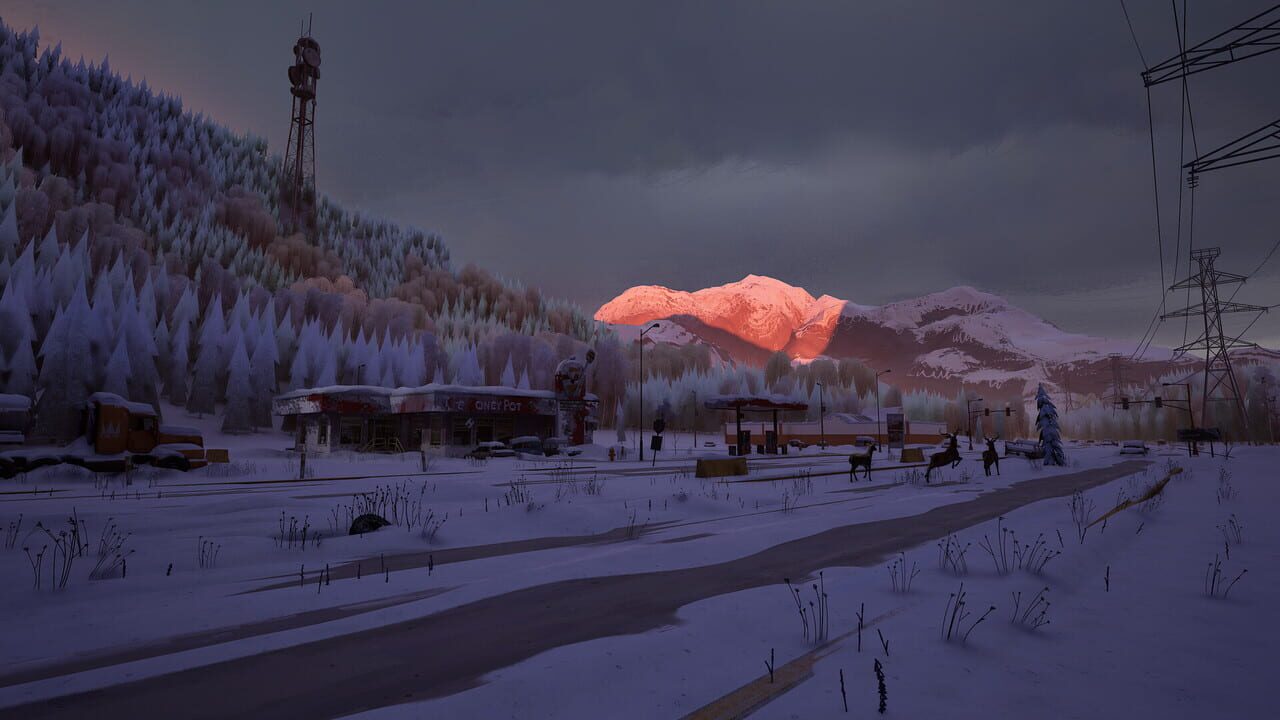
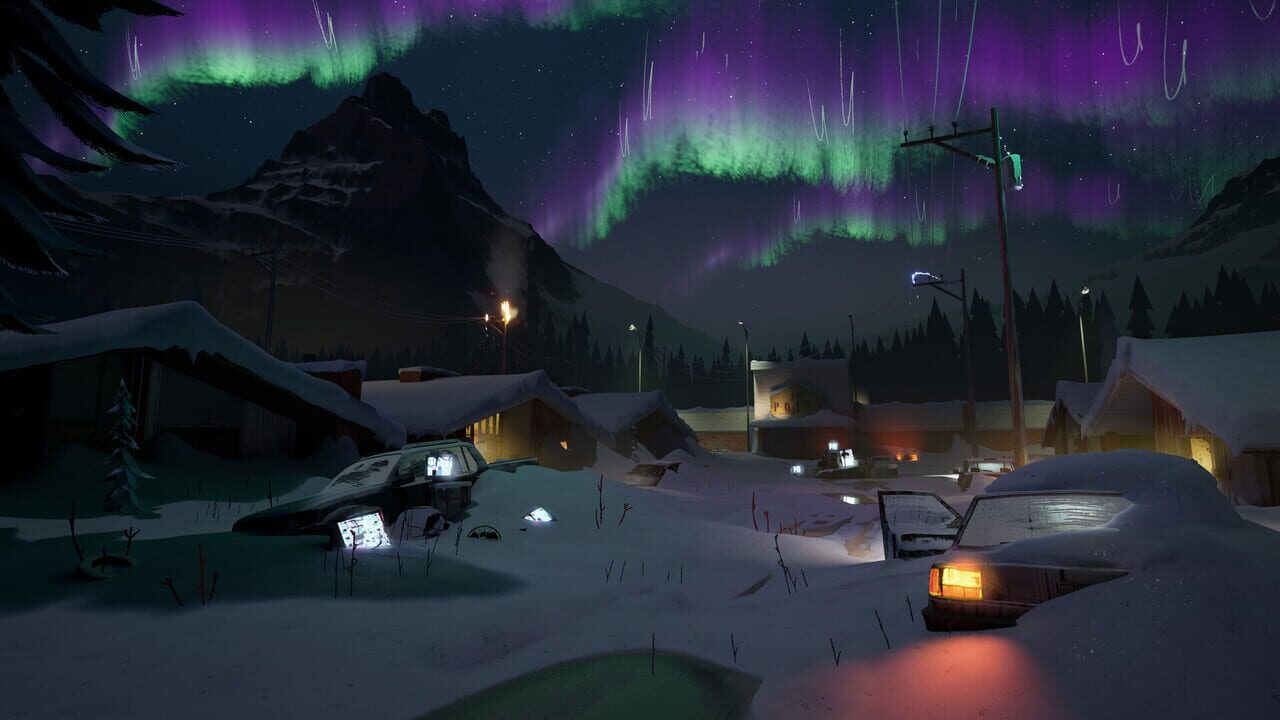
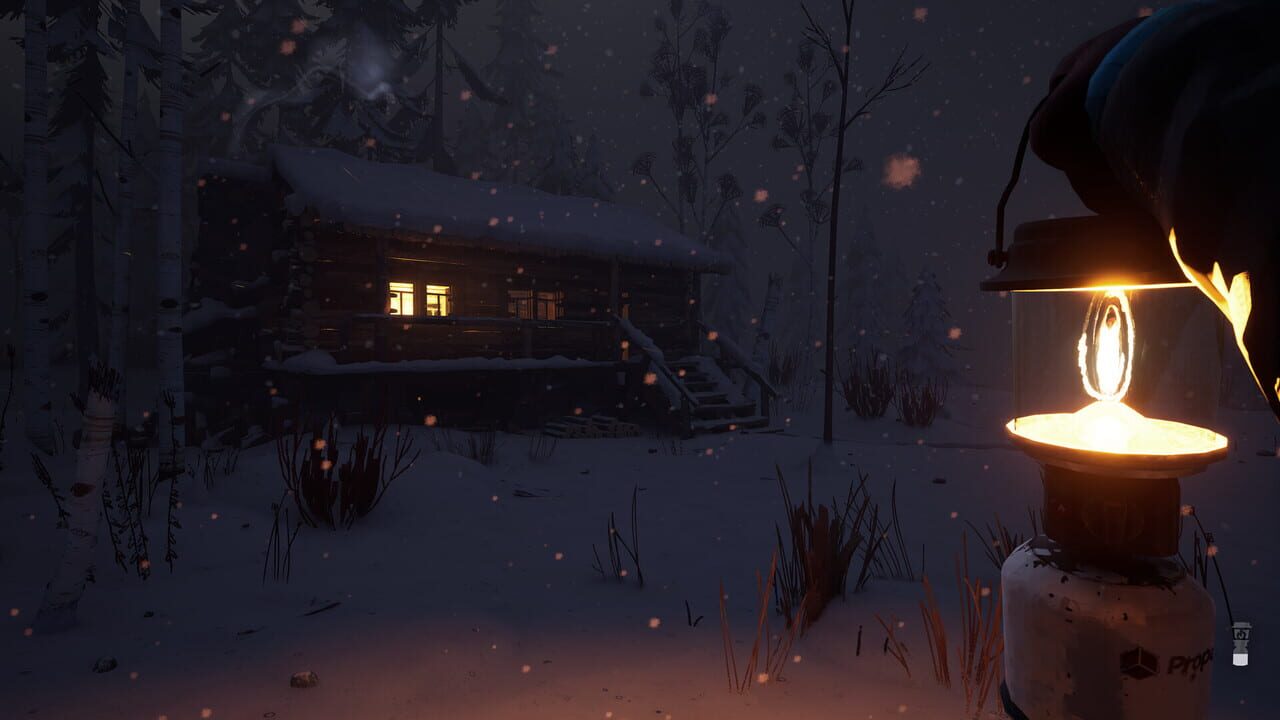
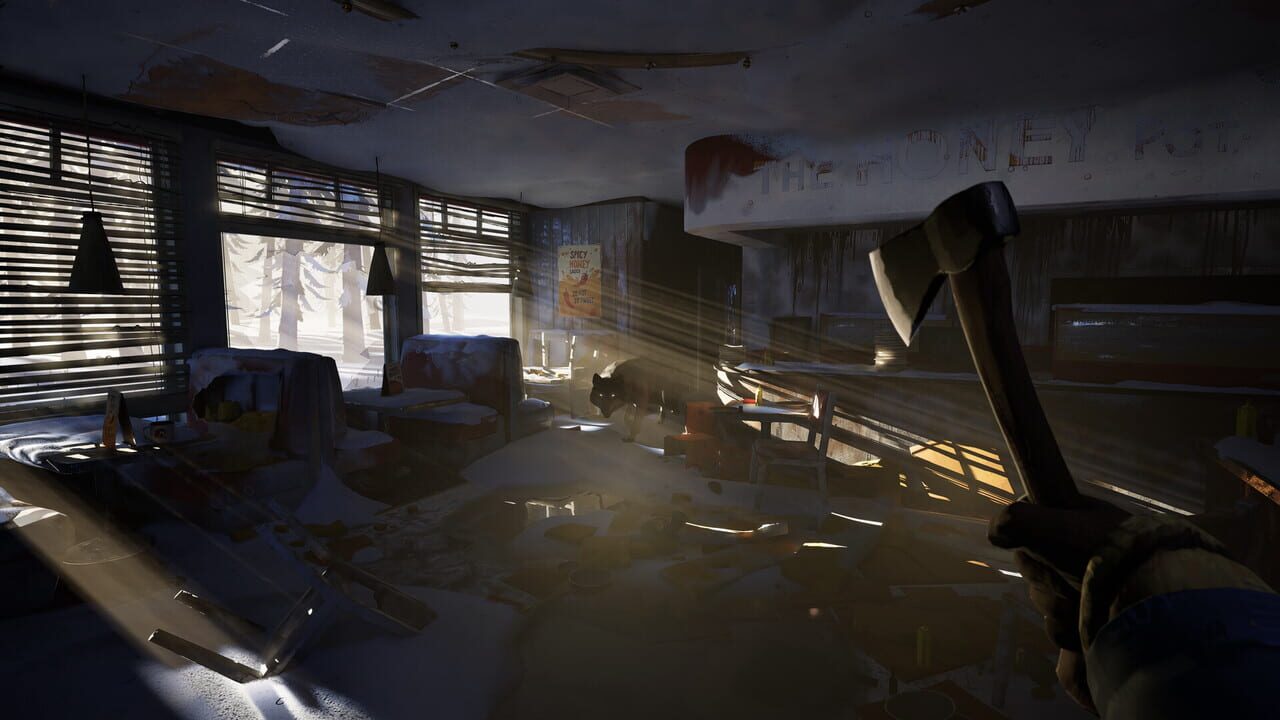
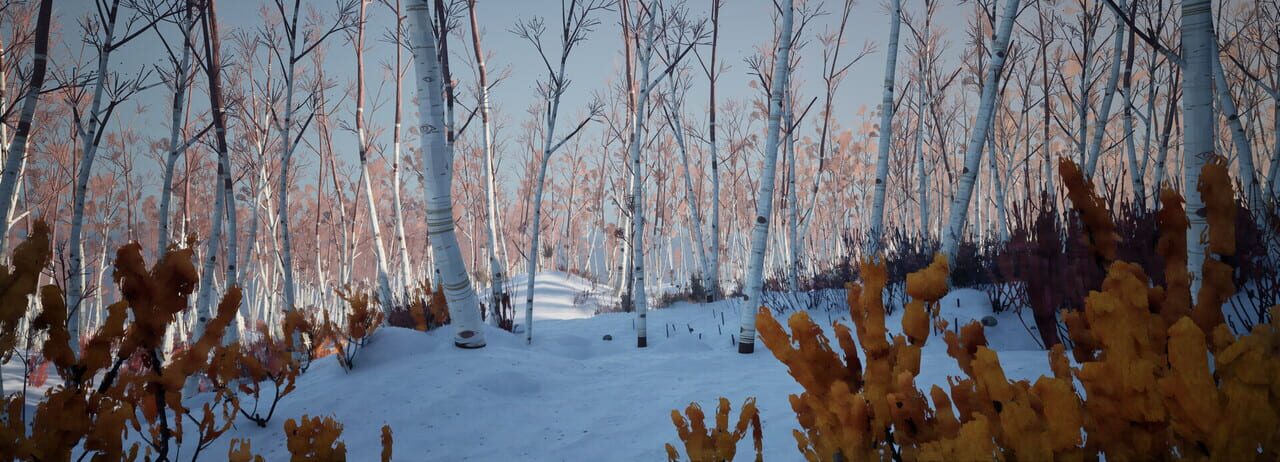
One game in the genre took the opposite approach, and it is worth being precise about what made the choice unusual. The Long Dark, first released into Steam early access by the Vancouver studio Hinterland in September 2014, left early access in August 2017 with its survival mode complete and the opening chapters of its story mode, Wintermute, in place. It strands a bush pilot in the Canadian wilderness after a geomagnetic event called the Aurora burns out every electrical device on the planet. There are wolves, moose, and the occasional scripted survivor met inside the story missions. There is no other living person to fight, betray, or steal from, and no mechanism by which one could. Hinterland's founder and creative director, Raphael van Lierop, has said the choice was never really about wilderness survival at all. "I'm really interested in how dependent we are on technology, especially for things like community," he told the games writer Leigh Alexander in 2013, before the game had even left early access. Asked years later what actually threatens the player, van Lierop did not mention other people, because the game does not have any. "The main thing that The Long Dark does," he told Kotaku in 2019, "is it makes time and movement through space the main antagonists." Every minute that passes brings the character slowly closer to death, he said, and moving through the snow exposes a survivor only to weather, animals, and the clock, never to another person's decision to take what he is carrying.
What The Long Dark withholds turns out to matter more than what it withholds it for. A game that populates its apocalypse with hostile strangers is making an empirical claim, whether or not its designers would defend it as one: that human beings, stripped of policing and property law, default to predation. Nothing in a century of disaster fieldwork, from Fritz's interviews to Quarantelli's conditions to Solnit's five case studies, supports that claim, and the games that make it are drawing not on research into catastrophe but on other fiction that made the same unexamined assumption first. The Long Dark's isolation is not an argument that other survivors would be dangerous. It is the absence of an argument, an author's refusal to guess, and the refusal is the more honest position of the two, because it is the only one of the genre's options that does not misrepresent what is actually known. Van Lierop did not need to be right about human nature under catastrophe. He only needed to decline to be wrong about it, and for seven years, that was the whole and sufficient answer.
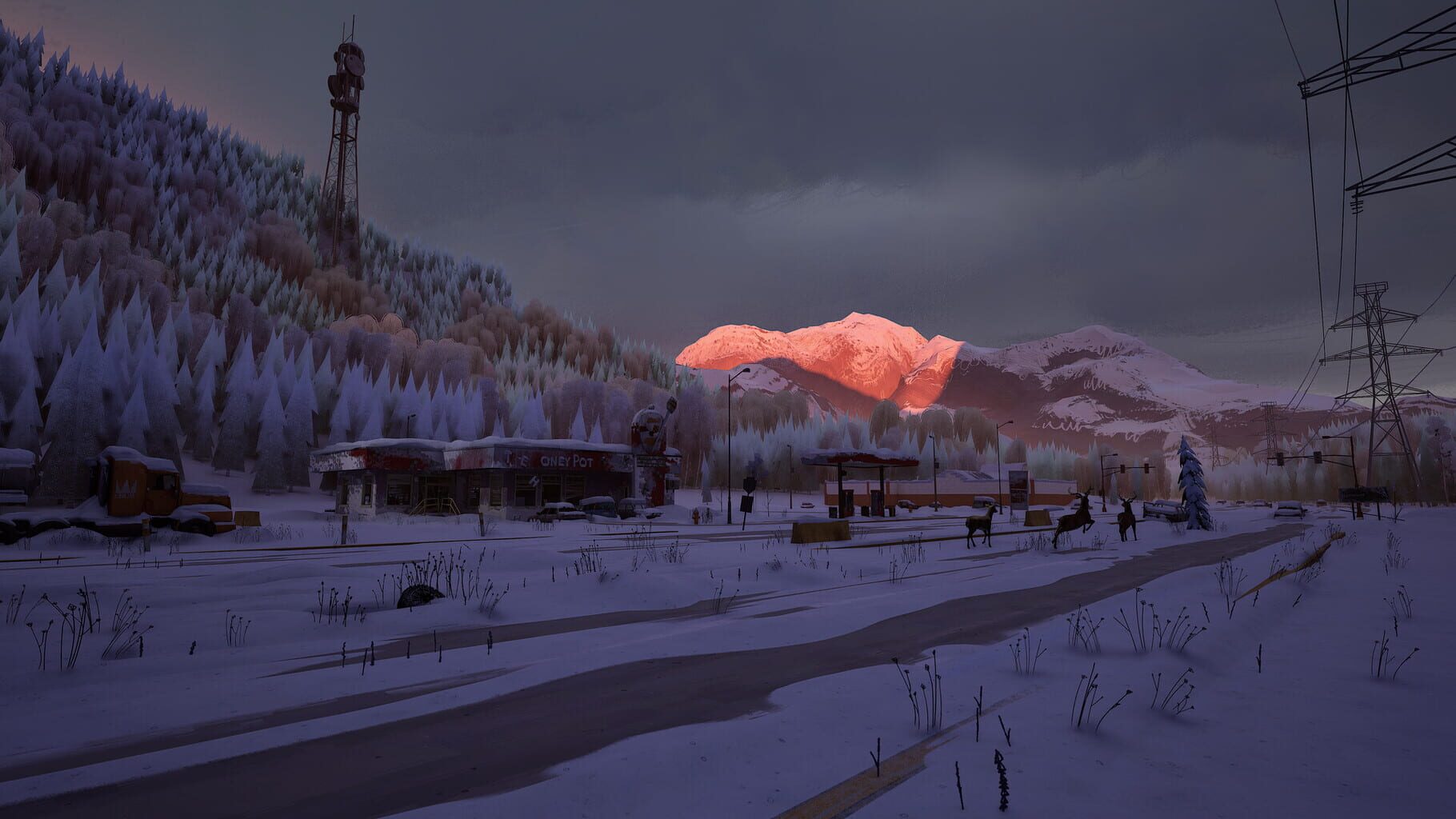
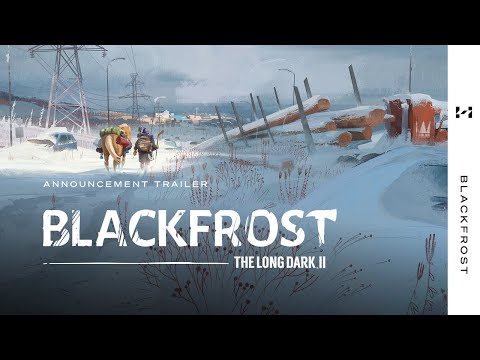
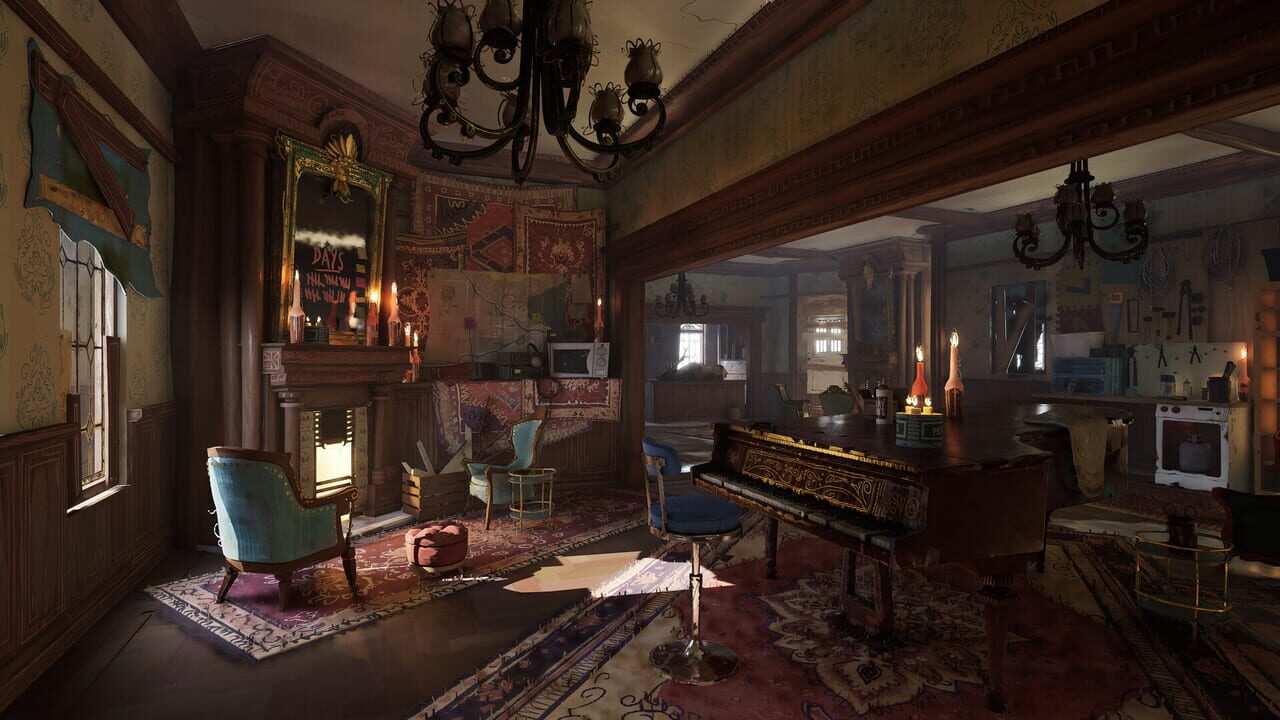
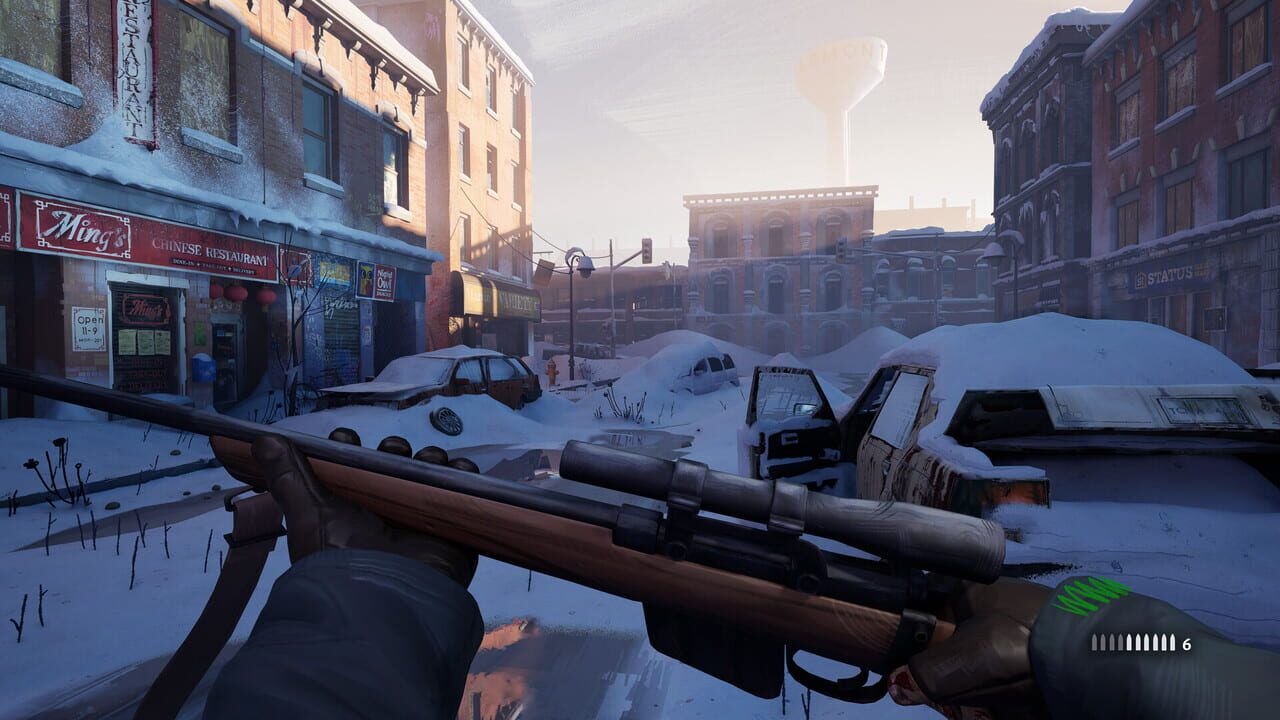
That answer expired on December 12, 2024, when Hinterland announced Blackfrost: The Long Dark 2 and confirmed what a year of rumor had suspected: the sequel would let survivors play together. The setting moves the clock forward roughly a year from the first Aurora event, into the industrial city of Harmont and the wilderness around it, a period Hinterland's own marketing calls the Quiet Apocalypse, complicated by a new hazard, a radioactive contamination called Blackfrost leaking from a damaged reactor inside the city. None of that is the risk. Snow, wolves, and a new coat of environmental hazard are the genre doing what it already does well. The risk is the sentence in Hinterland's own announcement post, written by van Lierop himself, asking how far a player will go to survive for others, and the cooperative mode built to answer it. Harmont, according to Hinterland's own description, will hold not only other players but non-player communities hiding out from the cold and the radiation in whatever shelter they have found. For the first time in the series, the wilderness will be full of other people, playable and not, and Hinterland has to decide, mechanically rather than rhetorically, what kind of people they are: the kind Schmitz assumed, or the kind Day watched come off the ferries.
Hinterland has been careful, in its own framing, not to present the sequel as a correction. The announcement describes the two games as sharing what van Lierop calls a distinct point of view on the Quiet Apocalypse while remaining, in his word, complementary, which is a careful way of saying that solitude was never the mistake and company is not offered as the fix. Read that way, Blackfrost continues an experiment rather than repairing one: the first game spent seven years isolating what a person owes to time and weather, and the second isolates what a person owes to the people standing nearby.
Van Lierop has since said the studio nearly answered that question badly by accident. "We started with a concept for Blackfrost that was co-op only," he told the Vancouver outlet MobileSyrup in April 2026, "and worked on that for a while. Then we felt we'd strayed too far from the [Long Dark] formula and realized we needed to retain the solo heart of the game but also needed co-op to evolve the experience." Read against the genre's actual history, that is a studio catching itself at the exact fork where a hundred other survival games went the wrong way, and turning around before shipping. A co-op-only Blackfrost would have had to build systems for what happens when two players want the same can of beans, and every existing template for that system, from DayZ onward, resolves the competition through violence, because violence is the cheapest mechanic available and the genre has spent a decade treating it as realism rather than as a shortcut. Retaining what van Lierop calls the solo heart, the private hunger meter, the private cold, the private clock that answered only to weather and distance in the original game, is what keeps that shortcut from becoming the sequel's default answer before the studio has had to think about it.
The clearest evidence of which way Hinterland is leaning is not anything van Lierop has said in an interview but a system Blackfrost's own store page describes: Will to Live, a new layer of what the game calls psychological survival, running alongside and distinct from the physical Condition meter the original game tracked. The marketing copy puts the point plainly: survival, it says, is as much about what is in a survivor's head as what is in the pack. A meter like that cannot be shared, borrowed, or handed to a teammate the way a can of beans can. It is built to be an individual ledger inside a multiplayer game, a strange thing to spend engineering time on unless the studio intends companionship to change how the ledger fills without pretending it can be zeroed out by a friend standing nearby. That is a mechanical bet on the harder and more accurate version of what the sociology found: other people make catastrophe more survivable, not because they cancel its cost, but because they change what a person is able to do with the cost while still carrying it.
The four words Hinterland chose to put above all of it deserve one last close reading. "Live together. Die alone." is not phrased as a threat, though it would have been easy to punctuate it as one. "Live together, or die alone," with a comma and a conjunction, would turn cooperation into a warning aimed at players who refuse to team up, which is roughly how a hundred other multiplayer games would have shipped the same four words. Hinterland's version has no comma and no or. It is two separate declarative sentences, and a sentence that ends in a period states a fact instead of issuing a warning. Read that way, the tagline does not tell a player what will happen if they play alone. It tells every player, solo or in a full camp, what is true regardless of which they choose. People will live together, in Harmont as in Oakland in 1906, sharing shelter and the last of the antibiotics and the walk back from a hunting blind in the dark, because that is what a century of fieldwork says people actually do once the systems that used to do their surviving for them stop working. And every one of them will still die alone, not because the others fail them, but because a body's cold is not transferable and a mind's fraying will to continue is not either, no matter how many people are standing in the same room when it happens. That is a harder and more accurate sentence than the genre it belongs to usually bothers to write, and Hinterland has not yet shipped the game that has to be held to it.