
Somewhere in Gloucester, in a story Beatrix Potter set deliberately outside living memory, amid swords and periwigs and gold-laced waistcoats, an old tailor falls sick two days before Christmas with a coat still unfinished on his cutting table, no ordinary coat but cherry-colored corded silk, embroidered with poppies and forget-me-nots, commissioned by the Mayor of Gloucester for his wedding morning. It needs twenty-one buttonholes worked by a hand that can no longer sit up, on a commission the tailor, a poor man, badly needs to keep. Before the fever takes him, the tailor does one small, unremarked thing: passing his cat Simpkin's dishes on his way out into the snow, he notices three teacups set upside down on the hearth, lifts them, and finds a live mouse trapped under each one, which he sets loose over Simpkin's furious objections when the cat comes home to a missing dinner. That night, delirious, the tailor hears what he takes for a dream, a tapping and rustling from the dark shop below, and wakes only enough to mutter the phrase that will not leave him: no more twist. He has, in fact, run out of the cherry-colored silk his commission requires, and by his own reckoning the coat, the fee, and possibly the shop are lost. On Christmas morning he finds they are not. The coat is finished, every seam and buttonhole worked in stitches so fine he does not believe they are his own, except for a single buttonhole left undone, a scrap of paper pinned where the stitches should be, the words on it written almost too small to read: No More Twist.
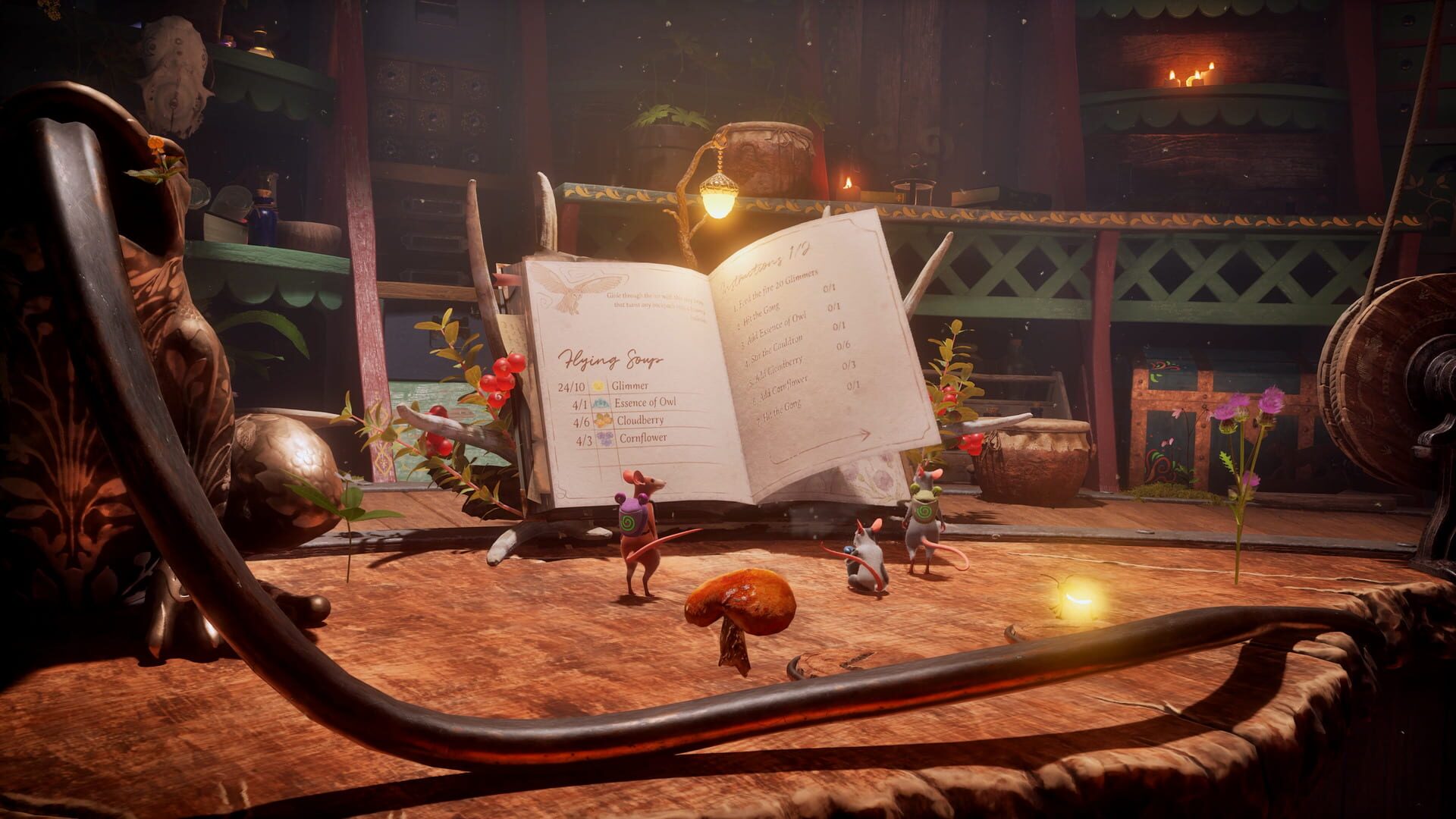
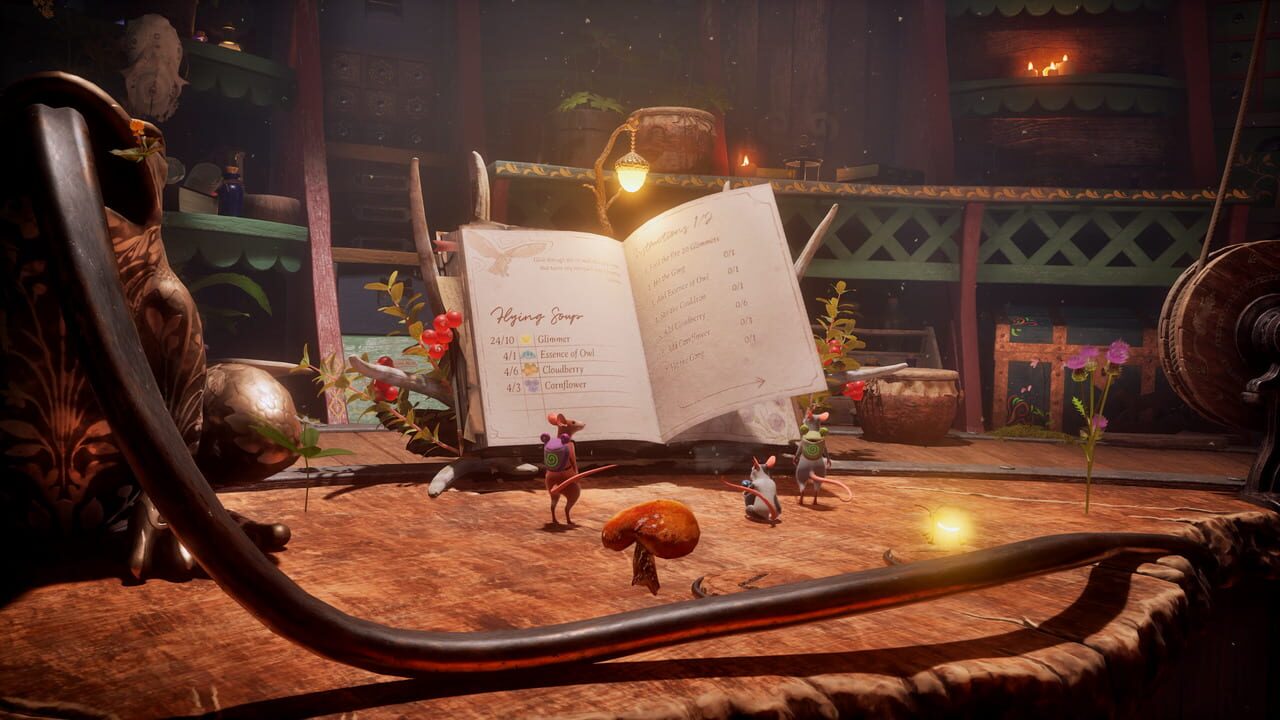
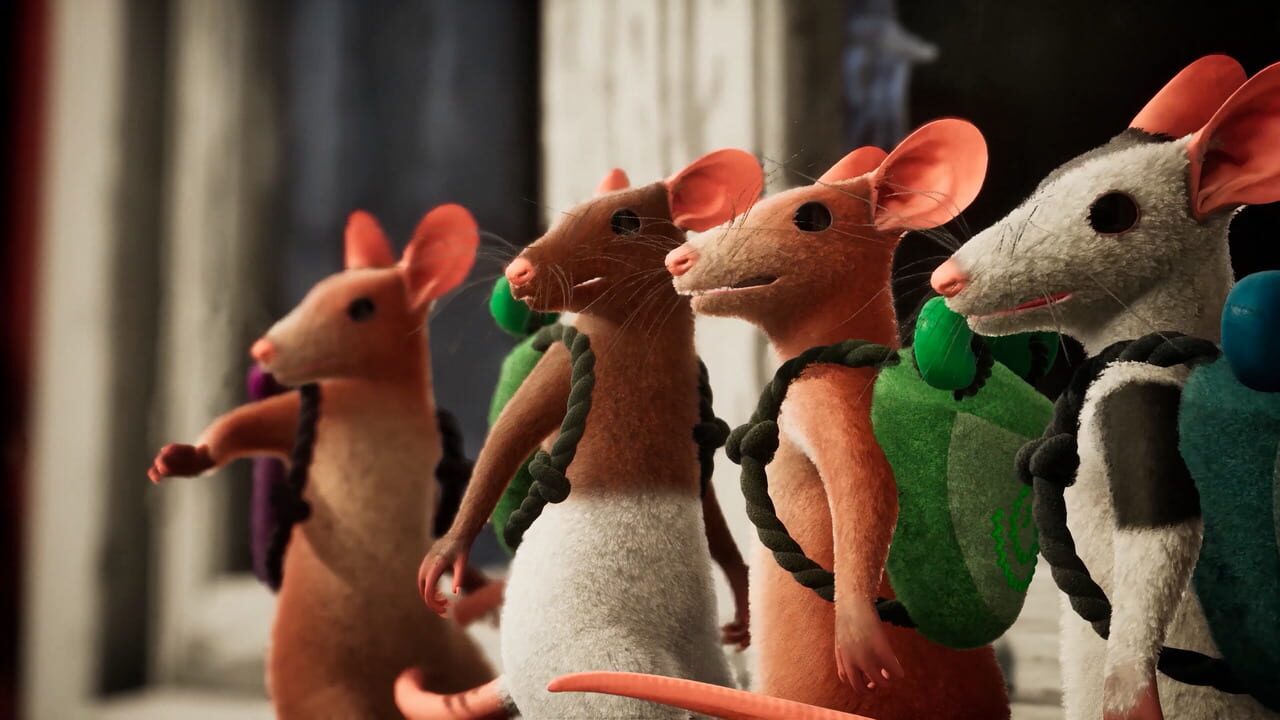
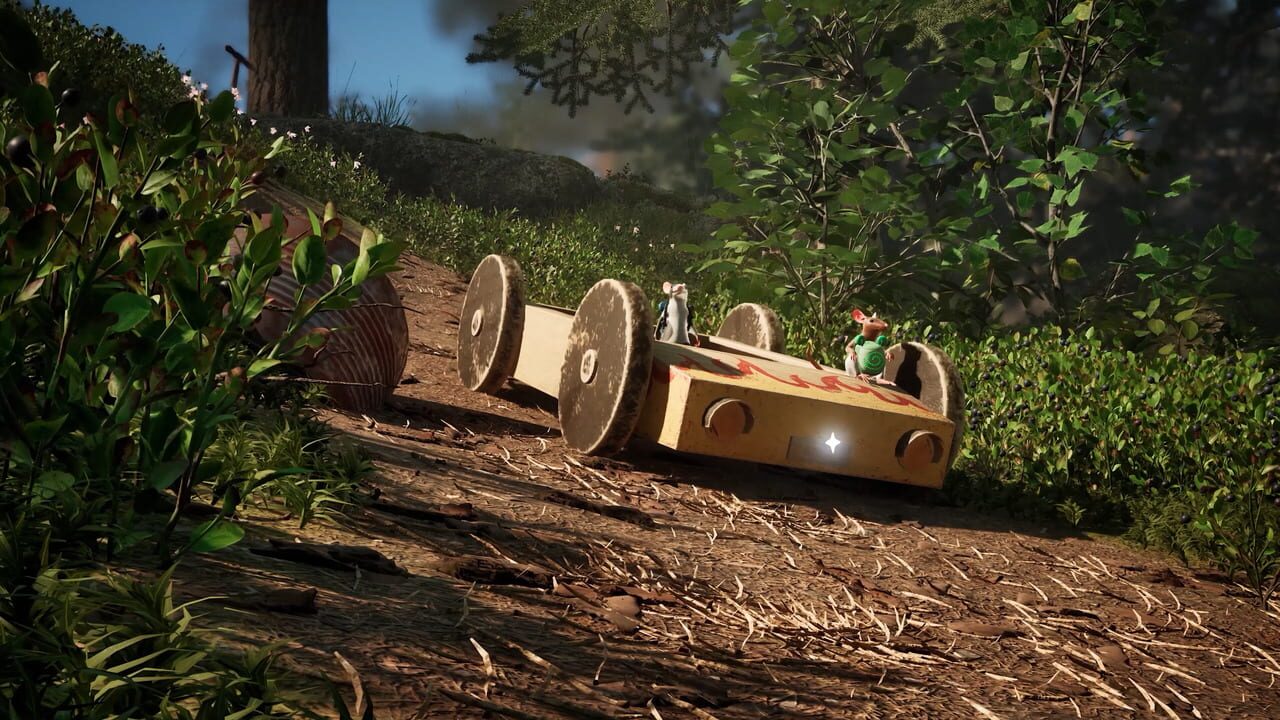
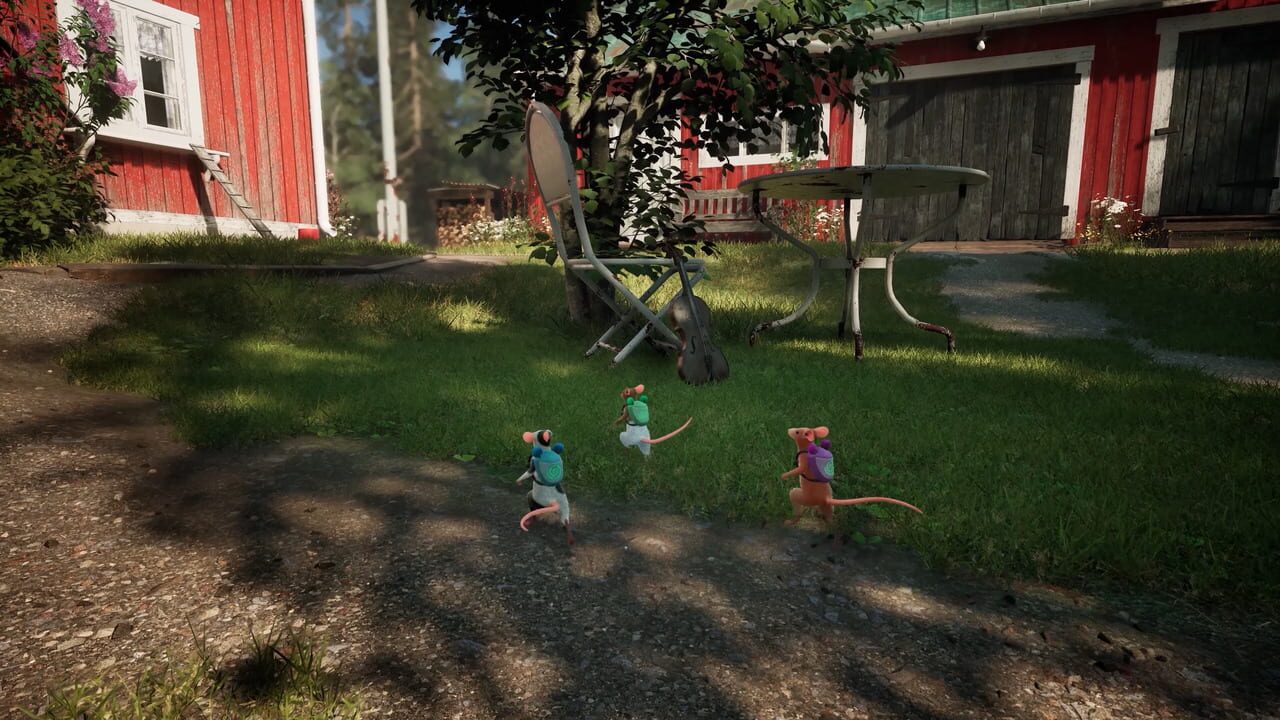
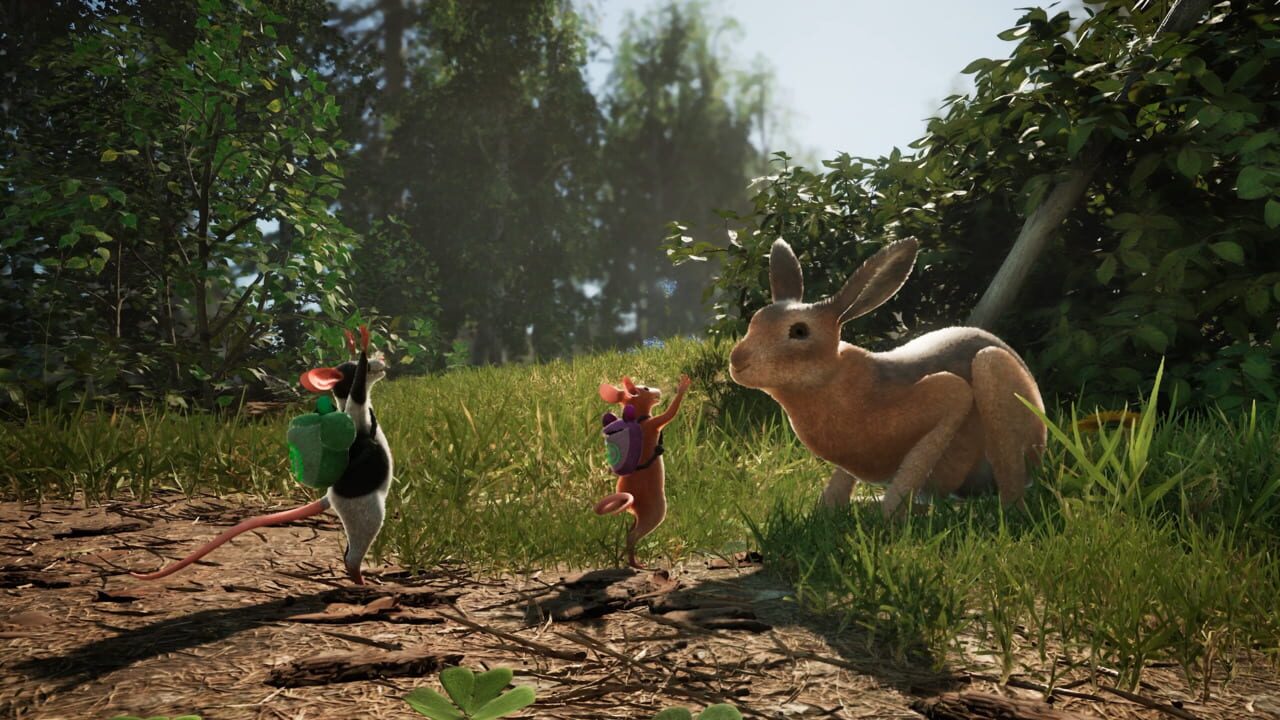
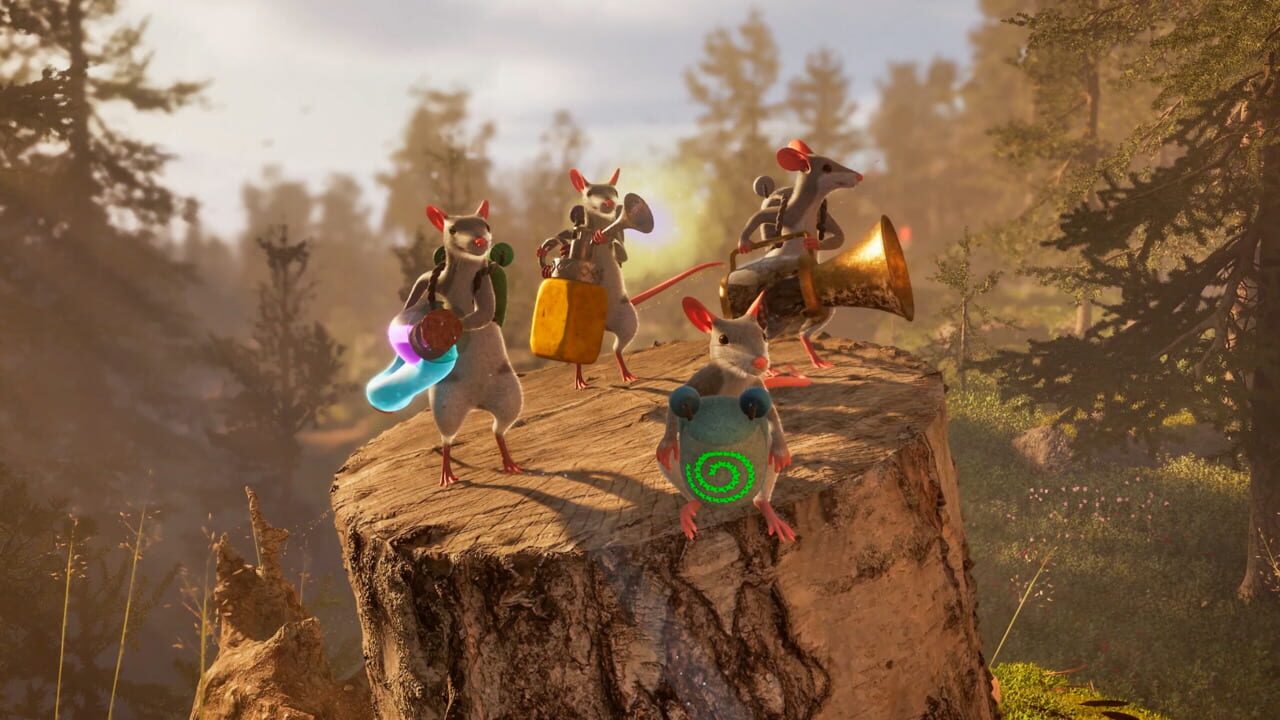
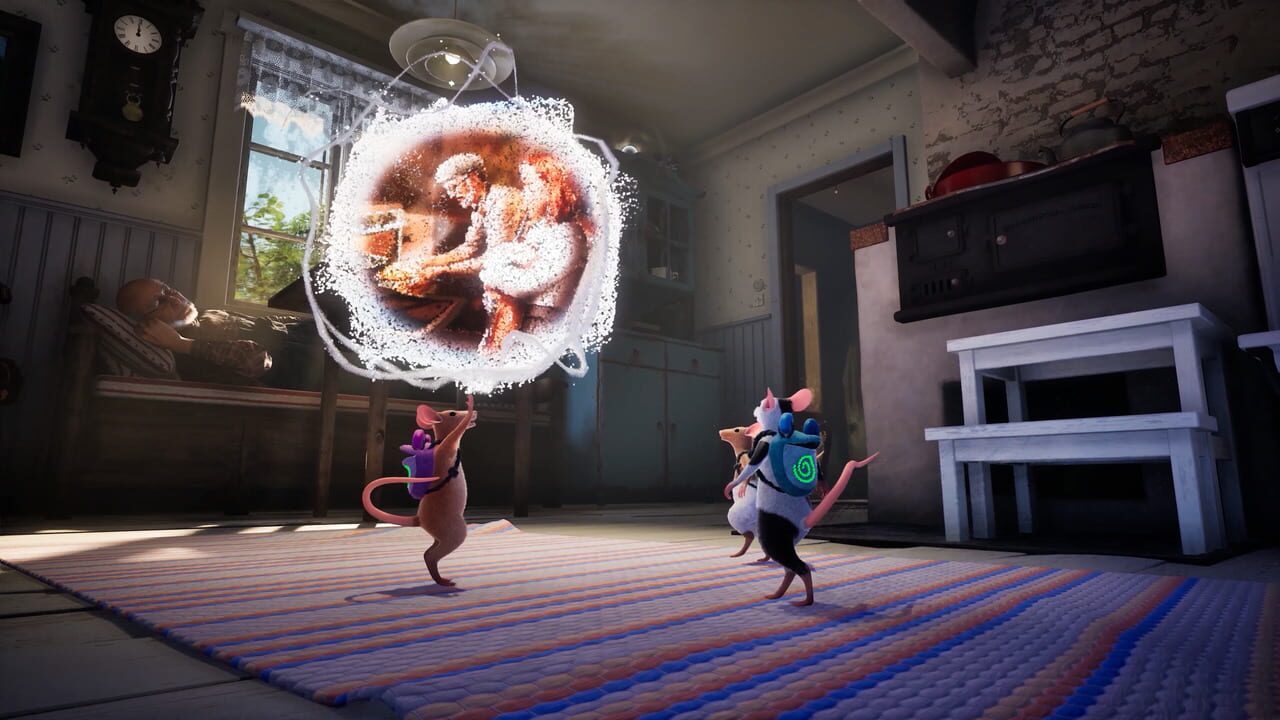
Potter never shows the sewing. The mice who save the tailor's commission, and with it his livelihood, work only while he sleeps and vanish the moment anyone might catch them at it, a detail the story treats as too obvious to explain: of course they hide, they are mice, and the whole understanding between the tailor's world and theirs depends on his never being quite sure what he saw. That understanding, a small competent creature laboring unseen inside a body a dropped teacup could kill, has outlasted one Gloucester story by a considerable margin. A specific line of children's literature has run the same understanding for the better part of two centuries, from the fable of the town mouse and the country mouse that was standard nursery reading before Victoria took the throne, through Potter's tailor's mice in 1902, E. B. White's Stuart Little in 1945, Margery Sharp's Miss Bianca in 1959, Robert C. O'Brien's Mrs. Frisby in 1971, and Brian Jacques's Redwall in 1986, to Windup Games, a studio in Umeå, in the far north of Sweden, founded by veterans of the Unravel games and currently finishing a co-op title called Hela: Of Mice & Magic for the publisher Knights Peak, in which the player takes the shape of one of a witch's mouse familiars, sees a Scandinavian forest at a mouse's own height, and can bring a second mouse, and a second person, along for the whole errand. What that convention is actually doing, across two centuries of authors who were mostly not reading one another, deserves to be asked plainly, because the honest answer has very little to do with cuteness, and because a co-op game reviving the convention for a screen shared by two players is proposing to change the terms it has run on since the tailor's coat got finished.
Start with what changing a protagonist's size actually buys a writer, because it is a more specific gift than a general sense of wonder. A mouse converts the built environment into terrain without anyone having to invent a landscape. White needs no new geography for Stuart Little's most sustained sequence of danger: a bathroom sink will do, a wedding ring rolling toward the drain becomes a boulder rolling toward a canyon, and the family cat, Snowbell, technically forbidden from eating a member of the household he is also built by instinct to stalk, supplies a predator White does not otherwise have to invent. A doll's house does the same work for Potter's other pair of mice, Tom Thumb and Hunca Munca: it is a full-sized home to ransack, complete with a painted plaster ham the two of them attack with tongs and a shovel, banging and smashing, before working out that the whole spread on the table is paint over plaster and cannot be eaten at all. Jacques never has to explain why Redwall Abbey's outer wall matters so much to the mice sheltering behind it, because at mouse height a garden wall is already a fortress rampart, which is exactly what it becomes once Cluny the Scourge, a one-eyed rat warlord, arrives at the gate with a battering ram and a siege tower. The siege runs the length of the book, room by room and wall by wall, because Jacques trusts his readers to sit through a real war fought at the height of a hedgerow. None of this counts as set dressing: it is the mechanism doing its first job, converting the ordinary furniture of an adult's kitchen, nursery, or field into a landscape with real stakes, so that a story no longer needs an invented monster. The monster is generally already in the house. It is a cat, or a drain, or, in Cluny's case, a rat considerably larger and better armed than the mice he intends to conquer.
The mechanism's second job is the one that actually explains the durability, and it has nothing to do with terrain. A mouse protagonist has no institutional standing whatsoever: no size advantage, no legal recourse, no vote, no capacity to simply overpower the adult, animal, or machine currently deciding its fate. O'Brien builds an entire novel on the precision of that condition. Mrs. Frisby is a widow before the story starts, her husband Jonathan killed by the farm cat Dragon while trying to drug him for an earlier rescue the reader never sees. Her son Timothy has pneumonia. Mr. Fitzgibbon's spring plowing, a piece of routine farm equipment that means nothing to the humans operating it, will destroy her home within days, and she has no way to move a sick child in time. O'Brien's solution to her problem is not to make Mrs. Frisby stronger but to introduce a second population of mice, the escaped laboratory rats of NIMH, who have been experimentally uplifted to read, wire electricity, and run an elevator, and who could solve her problem instantly with their new institutional power. They have wired their own colony for power and built machinery to move through it, a scale of collective leverage no single ordinary mouse reaches by trying harder. O'Brien keeps Mrs. Frisby herself a mouse anyway, ordinary and unenhanced, dependent on asking, because an uplifted Mrs. Frisby would be a different and much less useful book. The condition the novel needs is not cleverness under pressure in the abstract but cleverness under pressure exercised by someone who cannot, by design, ever out-power the threat, only out-think, out-wait, or out-ask it. This is not a metaphor a child needs decoded. Structural powerlessness, being small in a world sized and scheduled by other people, unable to out-argue or outlast the adult who has already decided the plow starts Tuesday, is close to a literal description of what being a child is.
Notice how often the responsible adult is removed from the board entirely before the mouse is allowed to act, a pattern consistent enough to be a rule rather than a coincidence. Mrs. Frisby's husband is already dead. The Tailor of Gloucester is not merely absent but incapacitated, feverish and unconscious exactly when the coat most needs finishing. Hela, due on PlayStation 5, Xbox, Switch 2, and PC in the fourth quarter of this year, runs the identical move in different dress: a kindly witch, for years the one competent authority tending the land and its people, falls ill, and it is left to her mouse familiars, the marketing's own phrase, to gather ingredients, brew a cure, and keep what one press description calls "the witch business" running in her place, a phrase that makes centuries of hedge magic sound remarkably like a temp covering a shift. A witch's familiar is itself an old figure, a small animal bound to a magic-user's service, and handing that figure the job of covering for its incapacitated employer is a tidy, almost unconscious inheritance of a device children's fiction has used for a long time: get the powerful protector off the board, cleanly and without villainy, so the small ones have to act on their own account.
Kenneth Grahame's The Wind in the Willows makes a useful counter-case, because it looks similar and is not. Grahame also shrinks his cast to a hedgerow's scale, and it is not a mouse book, pointedly: its four leads are a water vole misnamed Rat, a mole, a badger, and a toad, and its handful of actual field mice appear once, as a chorus of carolers at Mole's door, comic and incidental, fed and sent back into the night by Rat and Mole, who are the ones with a larder to open. That is the position actual mice occupy in this particular book: guests to be given charity, not protagonists asked to supply their own. The substitution matters because Grahame's animals are not powerless in any sense that would produce the mouse-story's effect. Toad owns a hall and a fortune and is never in real danger of losing either, prison sentence and jailbreak notwithstanding. Rat has a boat, a private income, and the leisure to write river poetry. Badger holds an entire manor of tunnels under the Wild Wood and is treated, by every other animal, the way a village treats a respected, faintly reclusive squire. These are small bodies carrying an adult's full complement of property, leisure, and standing. What Grahame wrote is a pastoral comedy of manners among bachelor gentlemen who happen to be riverbank animals, charming and genuinely funny, and its charm depends on none of its leads ever being structurally at anyone's mercy. Scale alone does not produce Mrs. Frisby's book or the tailor's; producing either takes scale plus the removal of power, together, and Grahame supplies the clean case of one without the other.
Bruno Bettelheim's one durable contribution to the study of fairy tales, in The Uses of Enchantment, was the idea that a story does its work on a child by giving a real, otherwise unmanageable fear a shape small enough to face and, eventually, master. The claim would carry more weight here if its author were more reliable. Bettelheim's scholarly reputation did not survive him: the folklorist Alan Dundes, writing in the Journal of American Folklore in 1991, laid out a detailed case that whole sections of The Uses of Enchantment had been lifted, without credit, from Julius Heuscher's 1963 study of fairy tales, and that Bettelheim's own academic credentials were considerably thinner than he had allowed people to assume. The book had already won the National Book Award and the National Book Critics Circle Award by then, which is part of what made the fall notable: a generation of parents, teachers, and librarians had taken its authority for granted. Worse, Richard Pollak's 1997 biography, drawing on interviews with former residents of the Orthogenic School Bettelheim ran for three decades, documented a pattern of the director's own physical and emotional abuse of the children in his care, the very authority his theory of fairy tales had asked readers to trust. None of that makes the specific idea about fear and scale wrong, only unfit to rest on Bettelheim's word, and it does not have to: the evidence for it is already sitting in the five books above, doing the work he only described from the outside. The tailor's mice matter because Simpkin is a real threat and the buttonhole is genuinely at risk of staying undone. Mrs. Frisby's courage matters because Dragon already killed her husband and could plainly do the same to her. That fear does real work in every one of these books; it gives the courage something to cost.
What none of these books had, and could not have, is a second reader occupying the story from the inside at the same time as the first. That is the specific thing a co-op game changes. Paired mice are not new: Potter's Tom Thumb and Hunca Munca work as a married unit, and Sharp's Miss Bianca recruits a besotted pantry mouse named Bernard, a medal-holder for bravery around cats, to help her cross the Black Castle and free a Norwegian poet under the nose of the jailer's cat, Mamelouk. What is new is who decides what happens next. Bianca and Bernard are two characters controlled by one author who has already decided, several drafts earlier, that both of them survive into the next book of the series. Two players sharing Hela's split screen, or up to four scattered across an online session, have no such guarantee written into anyone's outline. If one player wanders off a ledge, or fumbles the half of a two-mouse puzzle only the other one can see, the second mouse is properly stuck, waiting on a decision made in real time by a person occupying the identical structural position it does, which Bernard, protected by an author's outline, never had to do. Hela's own design seems to understand this is the point rather than an inconvenience: the game's answer to a solo player is not solitude but a magical duplicate of themselves, spun up by what Windup calls the Shade System, so that puzzles built for two mice can still be solved by one person and an echo of that person. The tasks two mice actually perform together, by the studio's own account, are domestic rather than martial: gathering roots and mushrooms into an enchanted backpack named Froggy, hauling a weight neither mouse could shift alone, timing a jump so a bent branch holds for both of them in turn. None of it is combat. All of it fails the moment one player stops paying attention to the other. Even the concession made to playing alone assumes company is the load the mechanism runs on. Two children on a couch, or a parent and a child, each responsible for a body no bigger than a house key, in a forest built at boulder-and-cliff scale, are not reading about someone else's shared vulnerability, the way Bianca's readers were. They are distributing it between two actual, differently fallible people, live, which is a different transaction than any book here could offer, and arguably a more honest rehearsal of what shared vulnerability with a sibling or a friend actually feels like at age eight.
The risk sits in what the studio is choosing to say about all this before anyone has played it. Windup Games' own language for Hela runs to "heartwarming storytelling" and "small acts of kindness," and, from studio head Alexander Benitez, a wish to return players to the feeling of childhood play in the woods, spontaneous, joyful, and full of curiosity. Every noun in that pitch is true to something real about childhood in a forest, and none of it mentions fear. Set that last phrase, small acts of kindness, against what a small act of kindness actually costs elsewhere in this tradition. Even Potter's naughtiest mice earn their tenderness rather than being issued it for free: after a full rampage through the dollhouse, Tom Thumb and Hunca Munca pay for what they broke with a crooked sixpence left in a stocking, and Hunca Munca returns every morning afterward to sweep the dollhouse floor with a proper dustpan and brush. The kindness that closes The Tale of Two Bad Mice costs something and follows something, a real theft, a real mess, a debt the mice chose to keep paying.
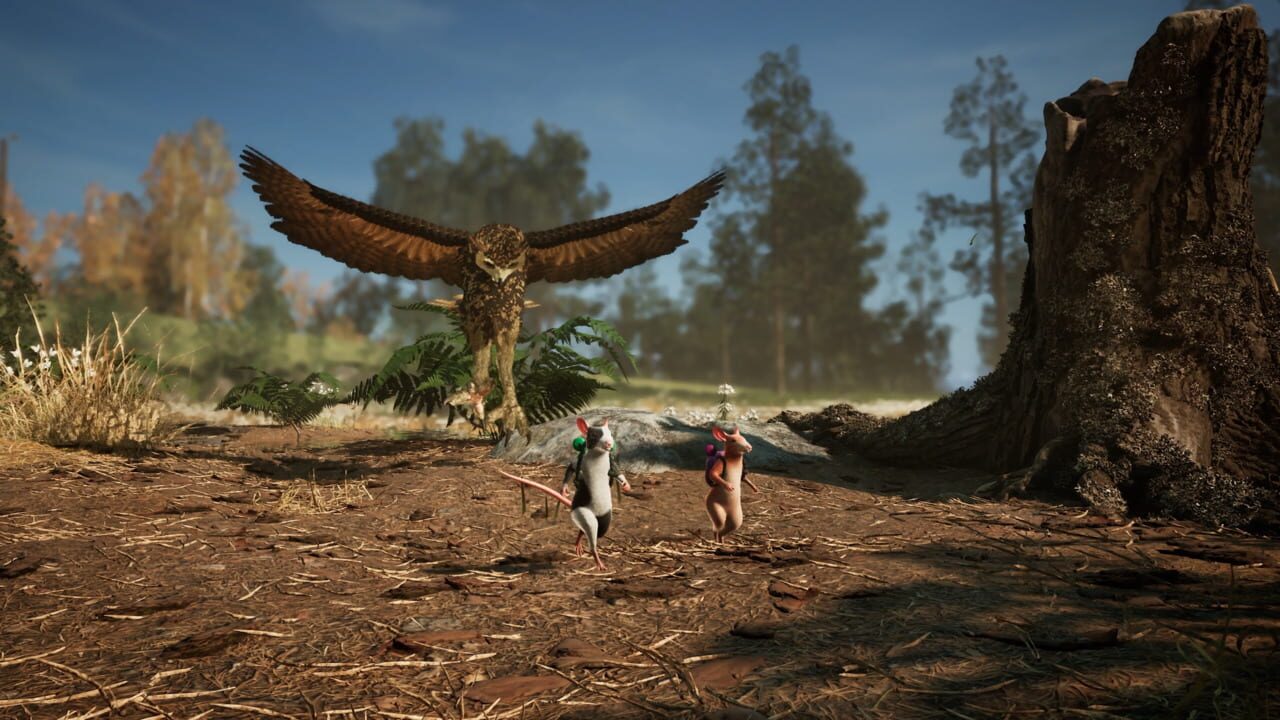
No predator turns up by name in any of the marketing copy, developer interviews, or store description gathered here to generate a debt of that kind. The closest thing to an antagonist in the entire premise is a witch's illness, a plot problem rather than a body chasing another body through a landscape. That is not a small distinction. A puzzle can be failed and retried without dread, because a physics problem has no appetite; a predator changes the register the moment it enters, because Simpkin and Snowbell and Dragon and Cluny the Scourge all want something from the mouse in front of them, specifically, right now. Cluny does not stay a rumor at the gate: he sends a battering ram against Redwall's wall, kills the Abbot with a poisoned tail, and is stopped only when Matthias drops the Abbey's own bell on him. The Rescuers does not spare its prisoner a real cell either: the Norwegian poet held in the Black Castle is found sick, emaciated, and at first unable to believe two mice are actually talking to him. Two children's books, decades apart, both trusted a young reader with genuine jeopardy and a body count. It is possible the finished game holds real teeth its marketing has simply not shown yet, and the honest counter-argument deserves to be stated as strongly as that: demonstrating danger in a trailer is bad marketing practice regardless of how much danger a game actually contains, so an absence in the press kit proves very little about the build. But a studio's chosen vocabulary is still a decision about what an audience should expect walking in, and this particular vocabulary, gathered from every source currently available, describes curiosity, warmth, and kindness with real consistency, and does not describe being hunted even once. If that emphasis holds all the way into the shipped game, Hela will keep the furniture of a two-century-old form, the mouse's-eye view, the oversized fern, the borrowed backpack, without the one ingredient that made the furniture worth building in the first place. Take the appetite out of every creature in that forest, and what remains for the mouse is a very pleasant, very small walk, low-stakes in exactly the way the tailor's Christmas Eve was not.
What the split screen actually shows, when two people sit down to it, is simpler than either argument. One television, divided by a thin black seam into two identical-looking forests, a fern the size of a house filling one half of the frame and, filling the other, the same fern seen from four feet to the left, with a second mouse standing under it, waiting to see whether the first one steps onto the branch before deciding if it will hold their weight too. Neither of them can see the rest of the tree from where they are standing, and neither one is going to find out alone.