



Ray Oldenburg spent the 1980s making an argument that sounded quaint at the time and has aged into something closer to a diagnosis. His book, published in 1989, was about the places that are neither home nor work: the cafe, the pub, the barber shop, the general store with chairs in it, the beauty parlour, the corner where people stand. He called them third places, and his claim was that they held a society up.
The features he identified are worth listing, because they are more specific than the nostalgia the phrase now attracts. A third place is neutral ground, which means nobody hosts and nobody is a guest. It is a leveller, in that outside status does not travel into it. Its main activity is conversation. It is accessible, meaning a person can turn up without arranging anything. It has regulars, who set the tone and who make it a third place rather than a room. And the mood is playful, which is Oldenburg's way of saying that nothing important is at stake, and that this is the point rather than a limitation.
His argument was that American postwar development had systematically removed these, by zoning residence away from commerce, by replacing the walkable settlement with the car-dependent one, and by building suburbs whose only available social units were the household and the workplace. He wrote before the internet, before the smartphone, and before the specific late acceleration in which the remaining physical third places, high-street shops, local pubs, community halls, closed at a rate that has been documented country by country and is not seriously disputed.
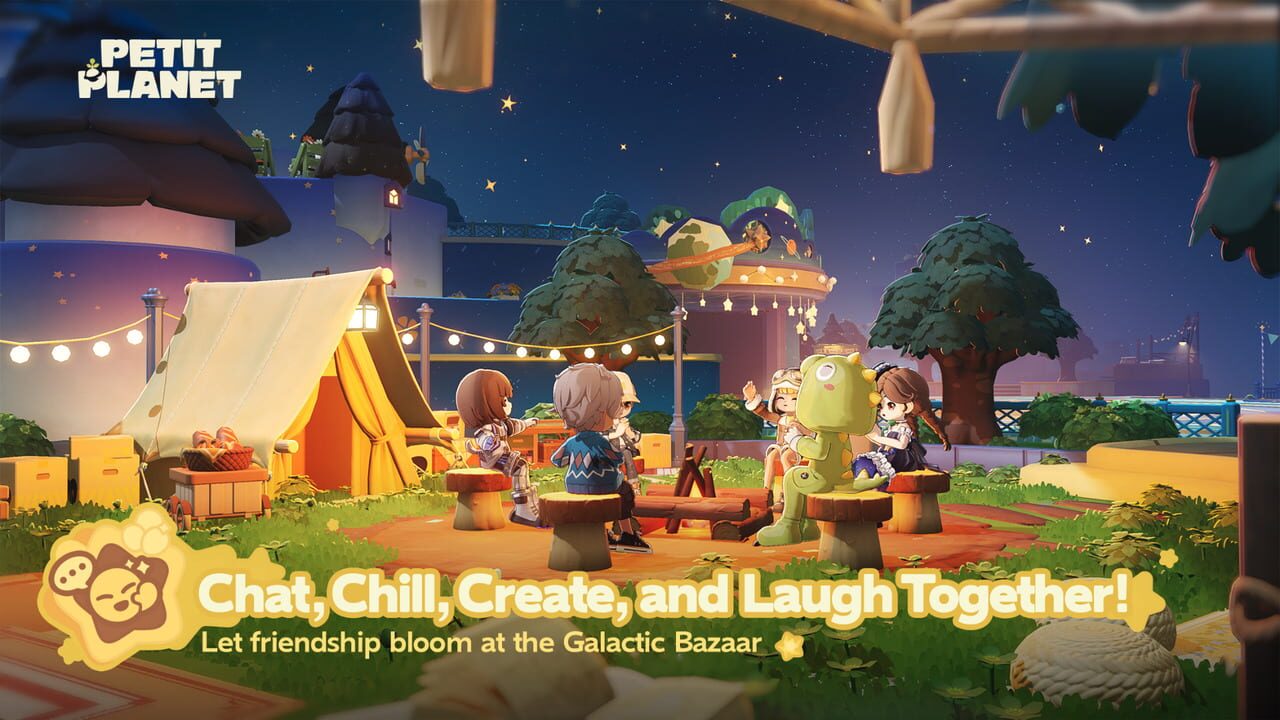
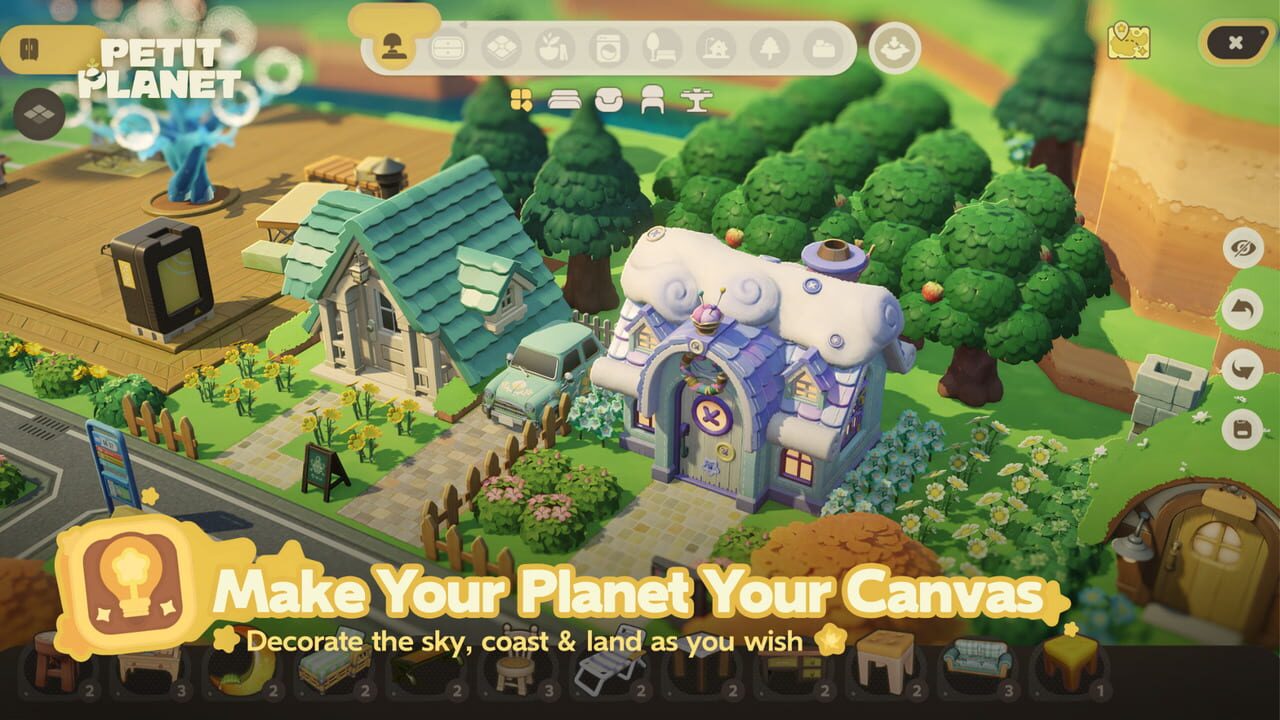
Petit Planet, from miHoYo and published by HoYoverse, is a free-to-play cosmic life simulator in which the player builds a home and lives alongside animal neighbours on a small planet. It is arriving into one of the most crowded categories in games, and this is a people-and-culture reading of why that category filled up, because the usual explanation is not good enough.
The usual explanation is comfort. The world is difficult, so people want a gentle game. This is true in the way that all statements at that altitude are true, and it explains nothing, because it does not say why comfort should take this specific form. A gentle game could be a puzzle game, a walking game, a game about arranging shapes. Comfort does not by itself require a village with named residents who have opinions about the player's fence.
The more specific account is that these games reproduce Oldenburg's list almost item by item, and that the item they reproduce most reliably is the one modern life has been worst at supplying.
Consider what actually happens in a session of Animal Crossing, which sold in extraordinary numbers when it arrived in March 2020 and remains the category's reference point. A player logs in. The same twelve or so residents are present. They are in roughly the places they usually are. One of them is standing outside the museum, as they were yesterday, and says something that has little to do with anything. A conversation occurs that advances no plot, resolves no problem, and produces no reward the player needed.
Nothing in that description is a gameplay loop. It is a description of running into someone.
That is the mechanism, and its distinguishing feature is that the relationship accumulates without ever having to be negotiated. A friendship in adult life requires arrangement: a message sent, a date proposed, a diary consulted, a location agreed, and a mutual acknowledgement that both parties are choosing this. That negotiation is a real cost, it rises steeply with age, and it is the reason adult friendships thin out even between people who like each other. The regulars in a third place cost nothing, because nobody arranged anything. They were going to be there anyway.
A village simulator manufactures that condition. The neighbours are present whether or not the player wants them, they expect nothing, they cannot be offended into leaving in any serious way, and the accumulated familiarity of forty encounters is available to a person who never once had to send a message proposing an encounter.
This also explains a pattern the category's own players describe constantly and treat as a curiosity: the fact that they keep playing long after the game has stopped offering them anything new. There is nothing to do in Animal Crossing after a certain point, and people continue to log in daily for years. Read as a game that is a failure of design. Read as a third place it is the expected behaviour, since nobody goes to a pub because the pub has added content.
Which brings us to the specific and genuinely interesting thing about Petit Planet, which is not the game but the company.
HoYoverse is, by a considerable margin, the most sophisticated builder of character-acquisition systems in the world. Genshin Impact, Honkai: Star Rail and Zenless Zone Zero are all organised around the same core: a rotating set of characters, available for a limited window, obtained through a randomised draw, with the odds and the pity thresholds published and studied by the audience in enormous detail. The studio's entire commercial competence is the manufacture of desire for a specific character at a specific time, and the conversion of that desire into a purchase.
Now set that next to the mechanism described above, because the two are in direct contradiction and the contradiction is not subtle.
The value of a third place is that its regulars are unremarkable and reliably present. The value of a gacha character is that they are remarkable and might not be obtainable. One system's whole point is that the same faces are there for free; the other's whole point is that the desirable faces are scarce and cost money. A game that runs both is a game whose neighbours are simultaneously the thing that must be freely available and the thing that must be sold.
It is worth being precise rather than cynical about how this could go, because there is a version that works and a version that does not, and the difference is a design decision the studio has presumably already made.
The version that works monetises the house. Furniture, decoration, architecture, clothing, land, seeds, tools, the appearance of a place rather than the population of it. This is what Animal Crossing does with its paid expansion, what almost every successful cosy game does, and it is compatible with the mechanism, because a player who buys a nicer roof has not altered who is standing outside the museum.
The version that does not work monetises the neighbours. A limited-time resident. A banner of animals with a rate-up. A roster in which the residents a player has an accumulated history with are the ones they paid for, and the ones they did not pay for are placeholders. That design would take the single property that makes the form function, the unearned reliable presence of ordinary people, and price it, and the result would be a game that produces the feeling of a third place for exactly as long as the player keeps paying for the regulars.
The tell will be visible within a week of launch and it is a simple one: are the neighbours acquired, or are they simply there.
There is one detail in the announced framing that is easy to skip past and is doing more work than the rest of it, which is that the neighbours are animals.
This is the category's default and it is not decorative. An animal neighbour discharges a set of social obligations that a human one would incur. It cannot be disappointed in a way that requires repair. It does not ask what the player has been doing, does not notice an absence of three weeks in a manner that demands accounting, and cannot form an opinion about the player's life outside the game. It supplies presence without reciprocity, which is precisely the combination that adult friendship cannot offer and that Oldenburg's regulars could, because a regular in a pub has no standing to ask where anyone has been.
The animal form also solves a representational problem. A human neighbour rendered at cartoon fidelity, saying pleasant nothings on a loop, reads as thin, because the viewer measures them against people. The same behaviour attached to a bear in dungarees reads as complete, because nobody expects more from a bear. The design gets to deliver a very small amount of characterisation and have it land as sufficient.
That is a real craft achievement and it also marks the limit of the whole form. What is being supplied is the shape of company with the demands removed, and the demands are not incidental to what company is. A relationship in which nothing can be owed is a relationship in which nothing can be given, and a player who spends a year with a village of animals has had a genuinely pleasant year and has not been known by anybody.
The counter-reading deserves a fair hearing, and there are two versions of it worth taking seriously.
The first is that the assumption underneath all of this, that free-to-play monetisation degrades a cosy game, is an assumption rather than an argument. There are free-to-play games with warm, stable communities and generous economies, and there are premium-priced games with hostile design. Genshin Impact itself is the strongest evidence: its enormous open world, its exploration, its story and its music are all available without payment, and the monetisation is concentrated on combat characters, which a player who is mainly exploring can substantially ignore. That is a studio that has already demonstrated it can wall off the monetised layer from the layer people actually spend their time in.
The second is more pointed. It says that the third-place analysis flatters the games and the players alike, and that what is really being sold is a simulation of low-effort sociability to people who have concluded that the real thing is not worth the arrangement cost. On this reading the village sim is not compensating for a lost institution. It is a substitute good that makes the loss easier to tolerate, and its commercial success is a symptom rather than a service.
That second objection is the serious one and it cannot be fully answered, because it is partly correct. A game cannot supply what Oldenburg was describing. His third places were public, physically shared, and populated by people who had their own reasons for being there, which is precisely what makes a regular's presence meaningful: they came for themselves and encountered the reader by accident. A game's neighbours came for the player and have no other business.
What can be said in reply is narrower. The category's audience is not, on the available evidence, substituting these games for social contact they would otherwise have. They are mostly filling a slot in the day that has no alternative occupant: the twenty minutes before bed, the interval after work and before dinner, the parts of a week where a person is neither working nor with anyone and would previously have been somewhere with chairs in it. That slot exists because the places that used to fill it closed. Whether a game filling it is a service or a sedative depends on the case, and probably on the player, and a critic who claims to know which from the outside is guessing.
The second objection has a sharper edge than it first shows, and it is worth pressing rather than leaving as a concession.
The defence offered above, that these games occupy a slot nothing else is filling, assumes the slot was empty and the game arrived. The alternative order is that the game arrived and the slot formed around it. Daily-login design, which every game in this category uses, is engineered to establish precisely the habit that later gets described as a need: the small task that resets overnight, the visitor who appears only today, the crop that will be ready in the morning. A player who reports that the twenty minutes before bed would otherwise be empty may be describing an emptiness the previous eleven months of daily logins created.
That is a real mechanism and it is not answered by pointing at the closure of pubs. Both things can be true, and the honest position is that the category is simultaneously serving a genuine deficit and manufacturing a version of the same deficit for its own purposes, with no reliable way from outside to say which is operating in a given case.
There is one further thing worth noticing about Petit Planet specifically, and it is in the framing rather than the systems.
The setting is a small planet, which is a scale decision with a consequence. Animal Crossing's island and Stardew's valley are both bounded, and the bounding is doing quiet work: a place a player can hold entirely in their head is a place they can be a regular in. HoYoverse's other games are large. Genshin's world has expanded continuously for six years, and its pleasure is that there is always somewhere further. That is an excellent design for an exploration game and it is corrosive to this form, because a settlement that keeps growing has no regulars, only a widening cast.
A studio whose institutional instinct is expansion has chosen a form whose value depends on staying small. That is a harder discipline than the monetisation question and it will be tested later, in the second year, when the pressure to add a continent arrives.
There is a category-level problem underneath all of this that no individual game can solve, and it follows directly from the third-place account.
Oldenburg's regulars work because there is one place. The pub on the corner works precisely because it is the pub on the corner, and a person who divides their evenings among six pubs is a regular in none of them, because being a regular is a function of concentration rather than of frequency. The mechanism requires exclusivity in the way that a habit requires it.
The life-simulation category is now large and getting larger, and every entrant is asking for the same thing: daily attention, indefinitely, on the strength of accumulated familiarity. Those requests are not additive. A player running four village games has four sets of neighbours none of whom they will ever know in the way a single set would have been known, and the specific pleasure the whole form is built to deliver degrades as the category grows.
Which makes this a market that will consolidate hard, and consolidate around whichever product a player installed first and has the most history in. That is an unusually brutal competitive structure for a genre whose defining quality is that nothing in it is competitive, and it is the real reason a studio of HoYoverse's size is entering: this is a category where the winner takes almost everything, and where the prize is a daily habit lasting years.
Somewhere on that planet there will be a doorway with somebody standing near it who is always standing near it. They will say something inconsequential about the weather, or about a fish, and they will say a version of it again next week, and the week after that. A player will come back for eleven months, and at some point in the eighth or ninth they will notice they have started looking for that particular doorway first.