
In the late 1970s the developmental psychologist Judy Dunn began doing something that sounds obvious and was not being done. Instead of bringing children into a laboratory and giving them a task, she went into their houses and watched them with their brothers and sisters, for hours, over months, recording what actually happened.
What she found reorganised a field. The prevailing view held that young children were largely incapable of understanding another person's mental states until around the age of four, because that was the age at which they passed the tests administered in laboratories. Dunn's families showed something different. Two-year-olds were teasing their older siblings in ways precisely calibrated to that particular sibling's known sensitivities. They were deliberately breaking rules they understood, in front of a parent, at moments chosen for effect. They were comforting, negotiating, deceiving, and forming alliances. The social understanding the laboratory could not find was fully operational at home, and it was operating in the one relationship where a small child had both the motivation and the volume of practice to develop it.
The conflict rates Dunn recorded were extraordinary. Sibling disputes among young children occurred at intervals measured in minutes rather than days, and they persisted at that intensity for years. The finding that mattered was not the volume, though. It was the interpretation. Dunn argued that this conflict was not a failure of the relationship or a symptom of poor parenting. It was one of the relationship's normal operating modes, and it was the engine of the children's social development, because a person who has to negotiate daily with someone who knows exactly where their weaknesses are learns faster than a person who does not.
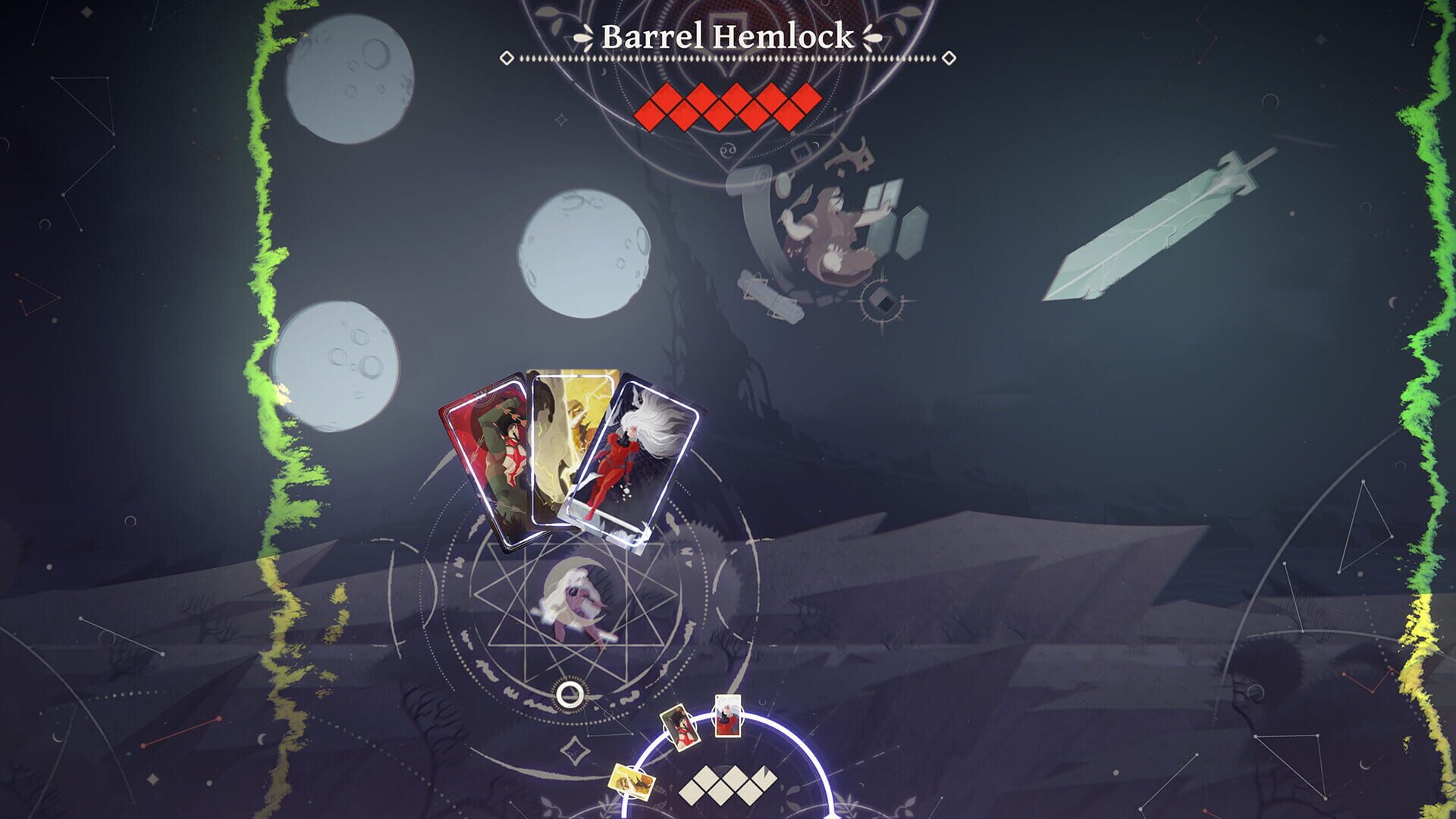
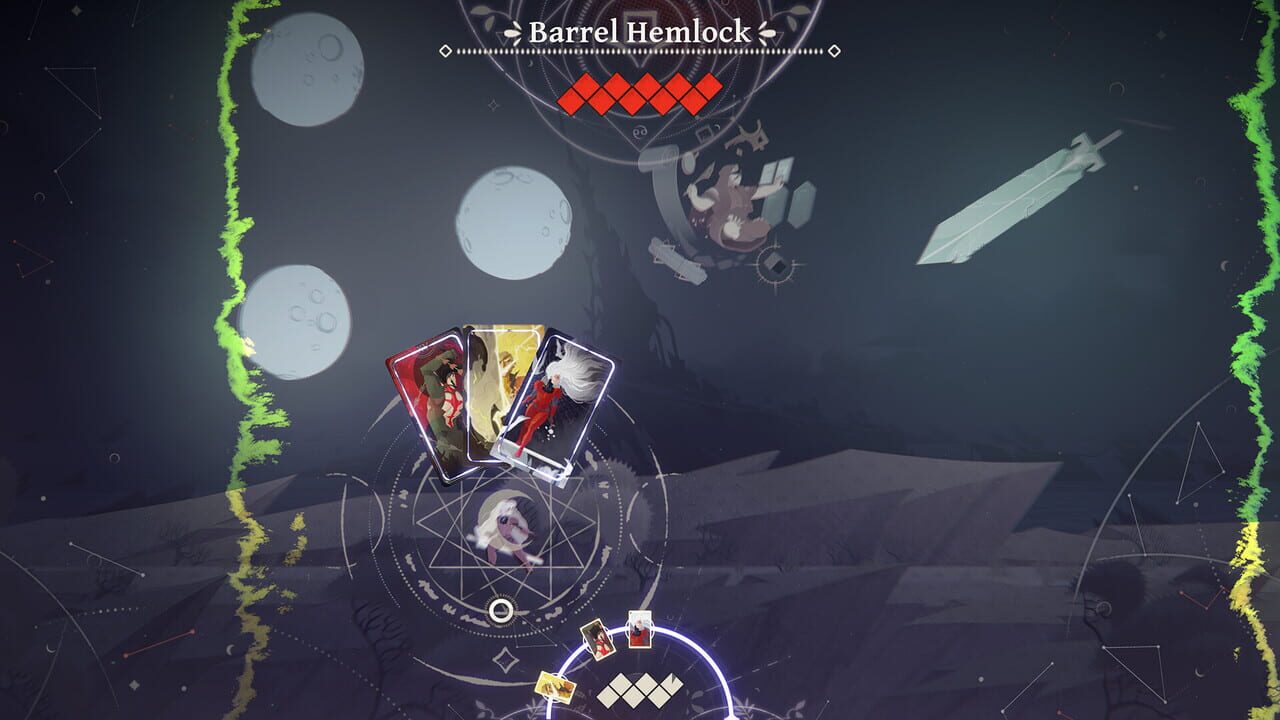
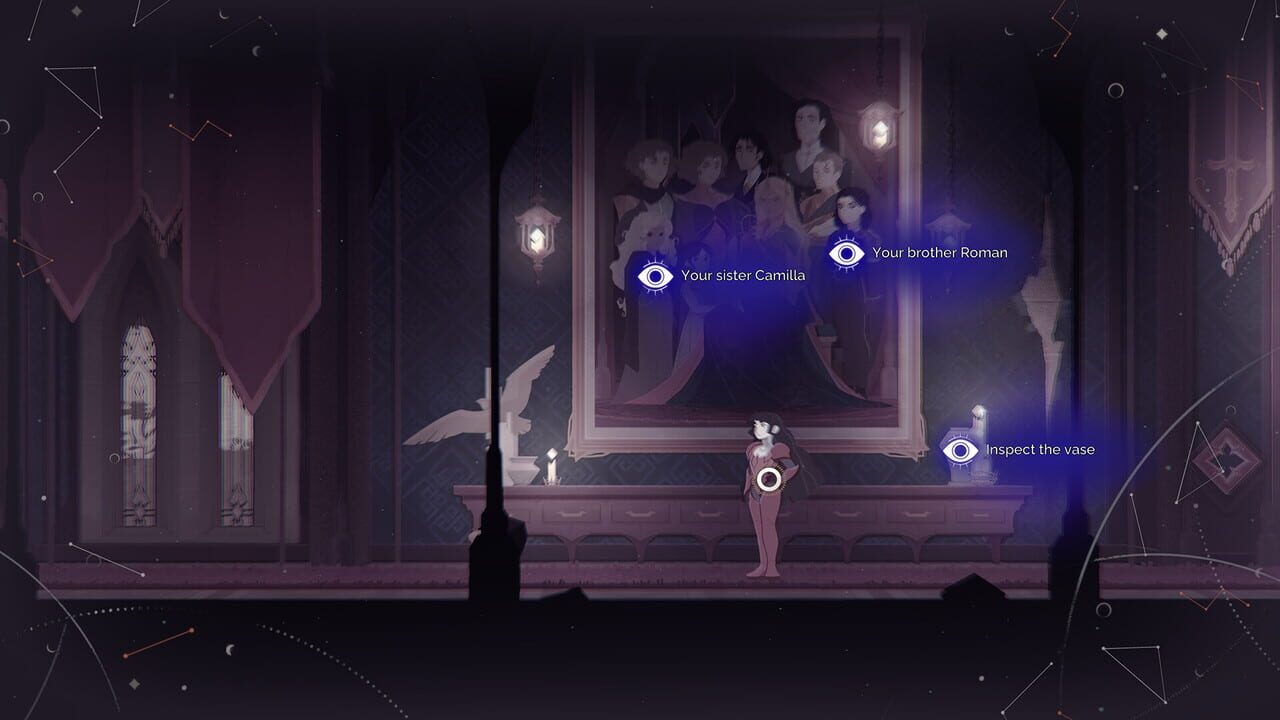
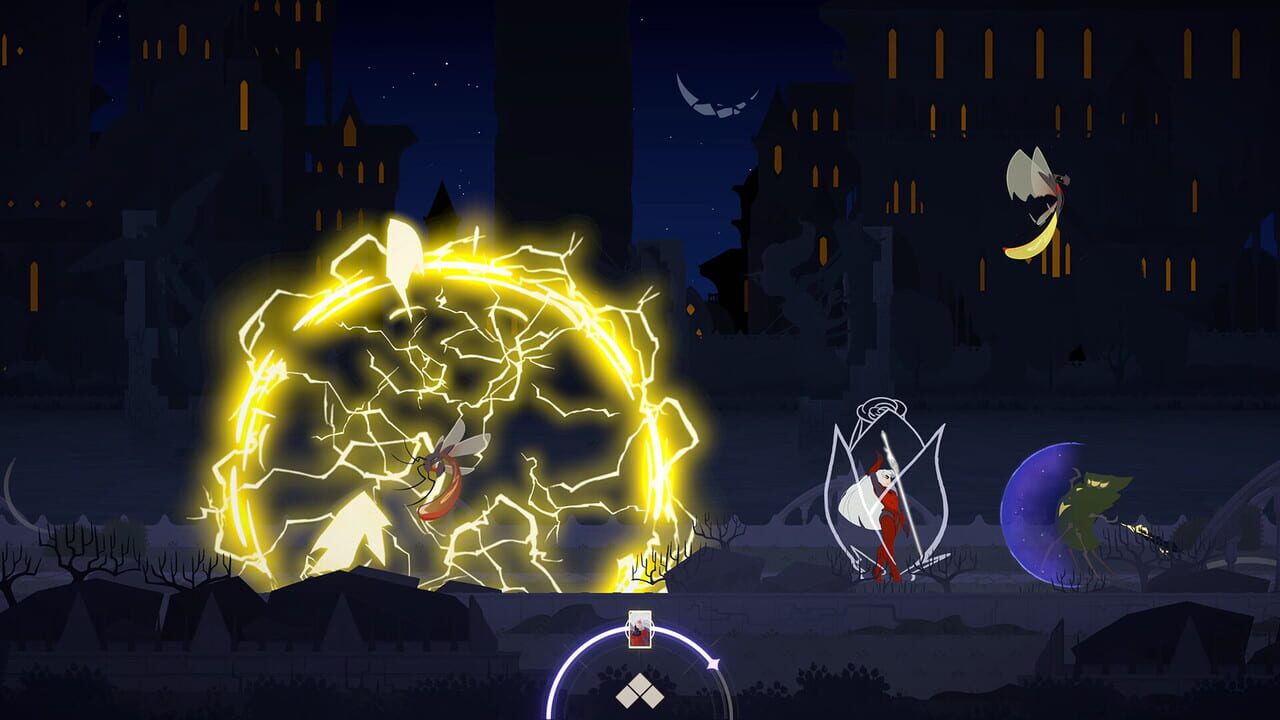
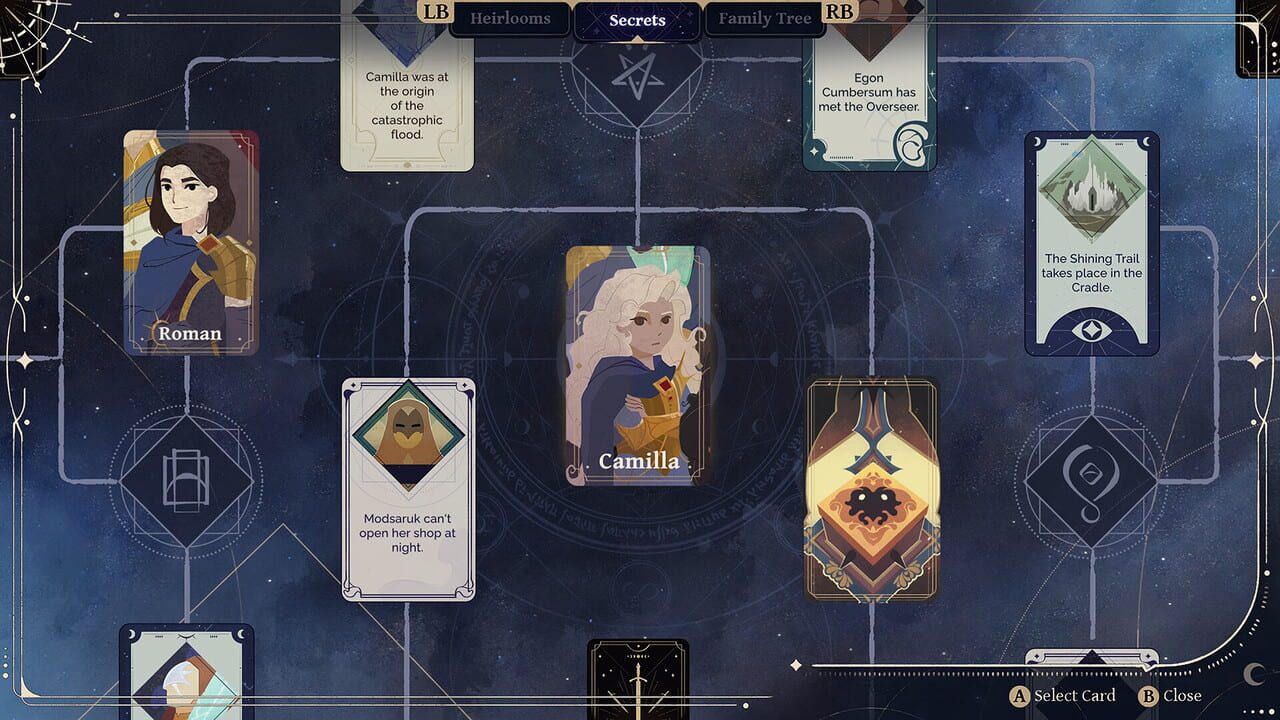
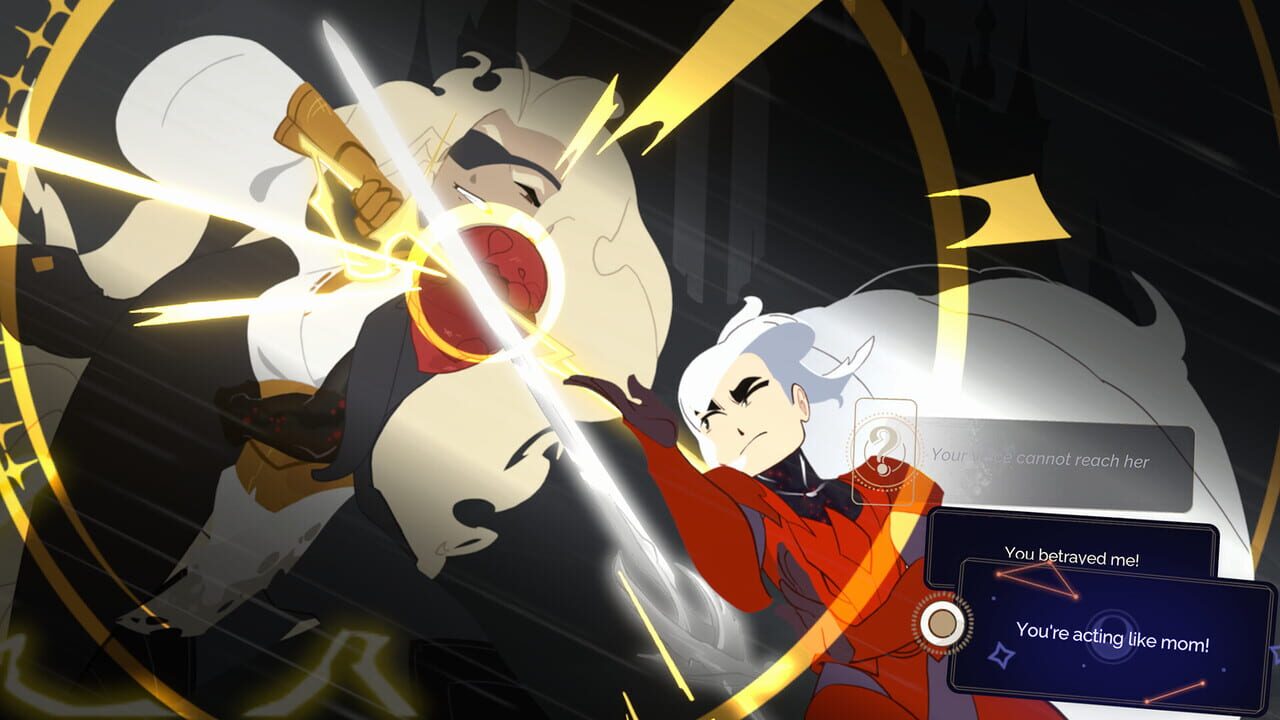
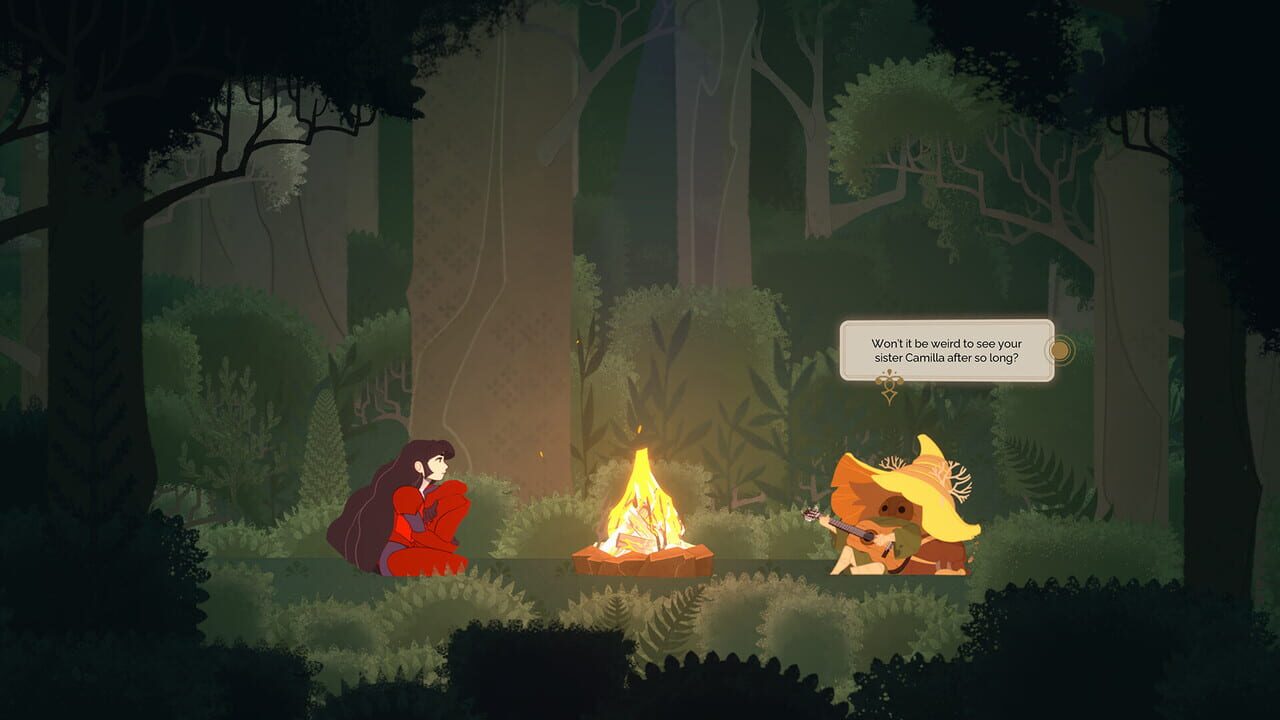
At Fate's End, from the Montreal studio Thunder Lotus, is an action-adventure in which the player duels their estranged siblings for the fate of a family, and whose central design conceit is that the skill tree is the family tree. This is a people-and-culture reading of that premise, because the premise is doing something structurally unusual, and because the relationship it is built on is the one the medium has consistently failed to notice.
Consider how games actually handle families, because there are only two modes and both are evasions.
The first is family as motivation, which almost always means family as corpse. A wife, a daughter, a father, a brother, killed before the game begins or during its first hour, converting a person into a reason. The relationship is not depicted, it is invoked, and its entire function is to authorise what the player is about to spend forty hours doing. This is efficient and it is why so many protagonists are widowers.
The second is family as burden, which means family as the thing escaped. A stifling household, an inheritance refused, a father whose expectations must be defied. Here the relationship does get depicted, but only in the aspect that makes leaving it correct, and the arc terminates in departure.
Both modes share a property: they treat family as something that resolves. It gets avenged or it gets left, and either way the story is over.
The sibling relationship refuses both, and that refusal is the reason it is interesting.
Victor Cicirelli, whose work on siblings across the lifespan is the standard synthesis of the field, made the arithmetic point that most people know and rarely think about. The relationship with a sibling typically begins before either party can remember, and it continues, in some form, until one of them dies. It outlasts the relationship with parents by two or three decades. It predates every friendship. It usually predates and often outlasts a marriage. Nobody chooses it, nobody applies for it, and its termination is not available on request. A person can be estranged from a sibling for thirty years and still have a sibling.
That is a relationship shape with no equivalent anywhere else in a human life, and it produces a specific kind of antagonist that fiction of all kinds has found difficult.
The antagonist in most games is one of two things. Either they are alien, meaning that their reasoning is unavailable and the player is not asked to model it, which is what a monster is for. Or they are a mirror, meaning that they are what the protagonist would have become under slightly different pressure, which is the most-used serious villain structure in the medium and has been since the 1990s.
A sibling is neither. A sibling was formed by the same conditions, in the same house, by the same parents, with access to the same information, and reached a different conclusion. That is not a mirror, because the reflection does not match. It is not alien, because the reasoning is entirely available and the protagonist has been listening to it since childhood. It is the specific and uncomfortable case of a person who had the same evidence and decided otherwise, which is the hardest antagonist to dismiss and the only one who cannot be explained by circumstance.
Dunn's research supplies the mechanism for why this is so charged. Siblings are the people who developed their social understanding on each other. The specific, surgical accuracy of a sibling's insult at forty is a skill acquired at four, through thousands of repetitions, against the same target. Nobody else has that training data.
There is a second finding in the sibling literature that bears directly on the premise, and it is the one that makes the different-conclusions claim more than a figure of speech.
Siblings raised in the same household are, on the measures psychologists use, remarkably unalike. This surprised the field when it was established and it has held up: the shared environment accounts for far less of the variation between two children than anybody expected, and two people who grew up in the same rooms with the same parents frequently resemble each other no more closely than they resemble strangers. Part of the explanation is that the environment is not actually shared. A first child and a third child are raised by different parents in every sense but the legal one: different ages, different incomes, different marriages, different levels of exhaustion.
The other part is more interesting and is called de-identification. Siblings actively differentiate. When one child occupies a role, the academic one, the funny one, the difficult one, the others tend to move away from it rather than compete for it, and the differentiation is strongest between children closest in age, who have the most to gain from not being compared. The family does not produce variation by accident. It produces variation as a solution to a crowding problem.
Which means the antagonist described above is not merely a person who happened to conclude differently. They are a person who concluded differently in part because the protagonist got there first. That is a considerably sharper dramatic situation than most fiction about brothers has attempted, and a game whose progression system is literally the family tree has an unusually direct way of staging it: a branch the player takes is a branch a sibling did not.
So the premise is strong. The question is what the design does with it, and here the announced conceit is worth taking more seriously than a slogan usually deserves.
The skill tree as family tree is either a very good idea or a menu with faces on it, and the distinction is not a matter of execution quality. It is a matter of whether the two structures are actually the same object or merely drawn to look alike.
A skill tree is a directed graph with prerequisites. Nodes unlock other nodes. Investment in one branch forecloses investment in another, and the character that emerges is the record of those exclusions. A family tree is also a graph, but its relationships are not prerequisites, and nothing in a family is foreclosed by anything else.
Superimposing them means one of two things. In the weak version, defeating a sibling grants a set of abilities associated with that sibling, and the tree is a delivery mechanism for a moveset with a thematic label attached. That is fine and it is not new. In the strong version, the exclusions are real: capability taken from one sibling is capability that cannot be taken from another, so the player's growing power is a record of which relationships they pursued and which they abandoned, and the ending is reached by a character whose abilities are legible as a set of choices about family rather than as a build.
The second version would be genuinely unusual, and it would be doing something with progression that almost nothing does, which is to make power carry a cost that is not resource-shaped. A player who is strong in this game would be strong because of a specific and irreversible set of family decisions, and would arrive at the ending unable to pretend otherwise.
Thunder Lotus has a history that makes both readings plausible, and the honest counter-reading starts here.
The studio's reputation rests on Spiritfarer, released in 2020, which is a management game about ferrying the dead and is one of very few games in the medium's history to handle grief without either flinching or wallowing. Its achievement was tonal and structural: it gave the player a daily loop of cooking, building and sailing, and then made the loop's purpose the accompaniment of specific characters toward the end of their lives, so that the player's competence at the game and their attachment to the passengers grew on the same curve. It is very good, and the source of its quality is writing, art direction and pacing.
What Thunder Lotus is not known for is combat systems. Jotun, in 2015, was a boss-rush built on large slow attacks and a great deal of running, admired for its hand-drawn animation and criticised for the feel of its fighting. Sundered, in 2017, was more mechanically ambitious and more divisive. Neither established the studio as a house that builds duels people want to keep having.
At Fate's End puts the entire argument through duels. If the sibling confrontation is the game's central statement, then the quality of the confrontation is the quality of the statement, and a game whose emotional climax is a fight that does not feel good to fight has undercut itself in the one place it cannot afford to. That is a real risk and it is not answered by the studio's back catalogue.
There is a second counter-reading, less about execution and more about the premise, and it deserves a hearing because it is the objection a thoughtful reader would raise first.
The objection is that a duel between siblings is not a treatment of the sibling relationship at all. It is a fantasy convention, in which family members are given powers and set against each other, and the family framing supplies emotional stakes on credit without the game having to earn them. Fiction does this constantly. Naming a combatant as a brother is cheaper than establishing why the fight matters, and a great many stories have used the label to skip the work.
The reply is that the label is cheap only when the fight resolves the relationship, and the sibling relationship is the one that cannot be resolved by a fight. A duel with a rival ends the rivalry. A duel with a sibling ends nothing, because the loser is still a sibling on the following morning and so is the winner. The premise's phrase, deciding the family's fate, therefore contains a small structural problem that is also its best opportunity: whatever is decided, the family persists, and any ending in which one sibling has simply defeated the others will read as false to anyone who has one.
The interesting version of this game is one in which winning does not settle the question. Which is a hard thing to build, and it is precisely the kind of hard thing this particular studio has built before.
It is worth adding that the estrangement in the premise is doing something the fantasy setting will otherwise obscure. Estrangement between adult siblings is common, it is rarely dramatic in origin, and it almost never has the single identifiable cause that fiction supplies. It accumulates. Somebody did not come to something. Somebody said a thing about a partner. A parent's estate was divided in a way one party found revealing. None of these would survive being written down as a grievance, which is exactly why they are so durable: a wound with no describable cause cannot be addressed, only carried.
A game whose siblings are estranged over a magical succession has taken the fantasy exit. A game whose siblings are estranged over something small, and which lets the player discover that the small thing was small, would be doing the harder and better version.
There is one more thing worth naming, because it is the reason the material is under-used and it is not a failure of imagination on anyone's part.
Sibling stories are difficult to write because they have no natural climax. A romance has a proposal, a rivalry has a decisive contest, a parent-child story has a death or a reconciliation that carries the weight of the whole preceding structure. The sibling relationship offers none of these. Its characteristic events are small, repeated, and unresolved: a Christmas that goes badly, a phone call not returned, a slow accumulation of specific unforgiven remarks stretching back to a childhood neither party can independently verify. That is real and it is almost impossible to shape into three acts, which is why the literature of siblings is so much thinner than the literature of lovers and parents, and why the versions that exist tend to be about a death that forces the survivors into a room together.
A game has one advantage over a novel here, and it is the same advantage Spiritfarer used. A game can make a relationship a routine rather than a plot. It can put the same person in front of the player forty times across thirty hours, in slightly different conditions, with the accumulated history of the previous thirty-nine encounters attached, which is a considerably better model of how a sibling relationship actually works than any narrative arc.
Spiritfarer is the proof that this studio can do it, and the technique is transferable. That game's passengers were not characters the player completed. They were characters the player kept feeding, and the accumulation of hundreds of small unremarkable services over dozens of hours is what made their departures land. Nothing dramatic was required, because the relationship had been built out of repetition rather than out of scenes.
Applied here, the equivalent would be a sibling the player fights more than once, at intervals, under changing conditions, with nothing resolved in between. That is a harder structure to sell in a trailer than a single climactic duel and it is a considerably better model of the thing being depicted.
Somewhere in a house there are two people in their sixties who have not spoken properly in eleven years, over a thing that happened at a funeral, which was itself about a thing that happened in 1974, which was about who was allowed to use the bicycle. Both of them could recite the whole sequence. Neither of them would recognise the other's version. They will be at the same table again in April.