In 1938 Harry Goulding drove from his trading post on the Arizona-Utah border to Hollywood, carrying a portfolio of photographs, many of them taken by the photographer Josef Muench, of the sandstone buttes and open ground of Monument Valley. Goulding traded with the Navajo families who lived on that land, and the Depression had cut deep enough into the reservation economy that he wanted an industry, any industry, to notice the place. United Artists noticed. John Ford noticed. What Ford shot there the following year, Stagecoach, was the first of what became nine features he made in the valley over the next quarter century, and it taught the genre that followed him what an American wilderness was supposed to look like on screen: wide, level, lit by direct sun, and empty.
The emptiness was a choice before it was an image. Stagecoach needed a threat to send its coach through Apache country under a deadline, so Ford hired Navajo men off the reservation, the same reservation Goulding's post served, and dressed them as Apache raiders in a plot keyed to a Geronimo breakout, a leader whose actual band operated several hundred miles south, in country the Navajo had no historical claim to and the film never asks its audience to notice. One named, particular people stood in for another, on land that belonged to neither the way the story needed it to, and the substitution passed as documentary because the landscape behind it was real and the sunlight on it was real and a 1939 audience had no reason to doubt a camera pointed at an actual place. That is the question this essay is built around: what a genre owes the historical record it keeps pointing a camera at, and what happens when a new entry in that genre organizes itself, unusually, around putting a people's memory back rather than subtracting it. The western's classical period built its entire moral architecture on a frontier that had to be empty to be tamed, and it kept that frontier empty by the simple, repeatable trick of not filming the people already living on it, or filming other people instead and calling them by the same name.
None of this makes Ford a simple villain in the story, and the complication is worth sitting with rather than resolving too quickly. Ford paid his Navajo crews fairly for the period, hired from the same handful of families across three decades, and was, by several accounts, given an honorary name by the tribe for it. Personal regard and formal erasure ran side by side without apparently troubling anyone financing the pictures. A Navajo extra could be liked, paid on time, and remembered fondly by a director, and still be handed, on screen, someone else's tribal name and someone else's war. The subtraction this essay is describing was built into the shape of the story the classical western needed to tell, not into any individual's bad faith, which is exactly why changing the story, and not merely the people employed to make it, was always going to be the harder job.
Ford returned to the same convenient valley for a quarter century after Stagecoach and used it for whatever the script required. My Darling Clementine sets it in Arizona, which is at least accurate. The Searchers sets it in Texas, a state with no landscape resembling Monument Valley in any particular, and nobody watching in 1956 seemed to mind, because the valley was never meant to be a specific place. It was meant to look like the West in general, and a general West only works if it stays empty enough to be general. The moral logic of the classical picture depends on that emptiness completely. A frontier can be tamed, in the sense the genre means by taming, only if taming it is the first thing anyone has done to it. Put a prior claimant back into the frame, a people with towns, agriculture, and law already established before the wagon arrives, and taming becomes a worse word for what is happening on screen. Shane, George Stevens's picture from 1953, makes the logic explicit: homesteaders and a cattle baron fight over a Wyoming valley with no prior claimant considered at all, because the film has arranged for none to exist. The classical western's confidence that its violence is regeneration rather than conquest survives exactly as long as the frame stays empty.
Richard Slotkin spent three books tracing this arrangement under its proper name: the frontier myth, a story of regeneration through violence that he followed from Puritan captivity narratives through the dime novel to twentieth-century film and politics. The third of those books, Gunfighter Nation, published in 1992, concerns the myth's life after the frontier had officially closed, and it reduces, for this essay's purposes, to one working claim. The frontier myth does not record what a nation did so much as license it, retroactively, by telling the story in a shape where the outcome was owed. A story where the land was empty is a story where settling it was completion rather than conquest. The classical western did not invent this license. It inherited it from the dime novel and the Wild West show and passed it forward to television and eventually to the videogame, and it needed, at every stage, an empty frontier to make the shape hold. That is what Goulding's photographs were actually selling in 1938, whether he knew it or not. Not scenery. A frontier with nobody standing on it yet.
The license needed a specific kind of image to work, and this is where the classical western's visual habits stop being a style and start being an argument. André Bazin, writing about the genre in the early 1950s, kept returning to what he considered cinema's founding trick: a photograph does not appear to argue anything, because a camera does not appear to hold opinions. It records light bouncing off a real place, and the resulting image carries the authority of a trace rather than the authority of a claim. Bazin's essays on the western, collected with the rest of his criticism in What Is Cinema?, treat the genre as the clearest case of that trick put to ideological use. Ford's wide, deep-focus shots of Monument Valley, framed in direct sun with the horizon held level and the geology legible from foreground to background, do not say the frontier was empty. They show it, and showing carries more weight than saying, because showing does not admit to being a decision. A painting of an empty valley is obviously somebody's choice. A photograph of an empty valley looks like the valley's own account of itself. The classical western's moral architecture and its visual grammar are the same operation described twice, once as story and once as image, and neither functions without the other.
Ford's own filmography complicates any clean before-and-after story about when the genre started to doubt itself. The Man Who Shot Liberty Valance, his picture from 1962, ends with a newspaper editor delivering the line it is now best remembered for, once he learns the wrong man has spent his life credited with a killing he did not commit: "When the legend becomes fact, print the legend." The line mattered enough to how later critics read Ford's career that his biographer, Scott Eyman, used it as the title of his own book on the director. Two years after making it, Ford tried to correct one specific legend rather than simply naming the habit. Cheyenne Autumn, released in 1964, adapted Mari Sandoz's account of the Northern Cheyenne's forced march to Oklahoma and their attempt to walk home, telling the story with the Cheyenne as its subject rather than its obstacle. The picture is not especially good, and Ford still shot it in Monument Valley standing in for Oklahoma and Wyoming both, the same convenient wilderness doing the same work of geographic substitution even in a film trying to do the opposite kind of moral work. Between them, Liberty Valance and Cheyenne Autumn establish that confidence in the genre's own record did not survive intact even inside the career of the director who did the most to build it, years before film history's more famous break.
That break is usually dated to 1969, and it happened at the level of story before it happened at the level of image. A run of westerns had decided the frontier was not empty and never had been, and that the violence required to empty it deserved to be shown as what it was. Sam Peckinpah's The Wild Bunch, released that year, stretched its gun violence into slow motion long enough that an audience had time to register the human cost of each shot instead of absorbing it as spectacle. Little Big Man, Arthur Penn's 1970 adaptation of Thomas Berger's novel, went further and staged a cavalry massacre of a peaceful Cheyenne village at length and without ambiguity, built to recall Sand Creek and the Washita for an audience watching newsreel footage of My Lai in the same season. Both films kept the classical genre's basic tools, a camera on real landscape, actors on real horses, and used those tools to argue the opposite of what Ford had argued with them. The frontier had people on it. The people had been killed on camera and off it, methodically, and calling the result regeneration was a story rather than a report.
The most interesting of the revisionist pictures revised the image itself, beyond the story riding on top of it, though even here the revision stopped short of a full break. Robert Altman's McCabe & Mrs. Miller, from 1971, is shot through with fog, rain, and interiors lit by oil lamp, its cinematographer Vilmos Zsigmond flashing the negative, deliberately exposing it to light before development, to mute the color and flatten the contrast until the picture looked less like a movie and more like an old, sun-faded photograph. Altman wanted the Pacific Northwest weather he actually shot in, not the desert light Ford had trained audiences to expect, and Zsigmond's technique pushed the image further still, toward something closer to a memory of a photograph than to the photograph itself. That is a real formal argument, not decoration. If the classical western's authority came from looking like an unmediated record, McCabe & Mrs. Miller's authority comes from looking like a record that has already started to fade, worn by the same decades separating Altman's audience from the events his genre claims to depict. But the picture is still, underneath the flashing and the weather, an indexical photograph of an actual place. It revised what the record said. It did not revise the record's claim to be one.
This is where the obvious objection to everything that follows has to be named plainly. Revisionism is not new. The Wild Bunch is fifty-seven years old this year, and the mode it opened has had two full generations to become exactly the kind of convention it once punctured. Unforgiven, in 1992, gave the form an Academy Award. Dances with Wolves gave it one two years earlier. Deadwood ran the mode as prestige television from 2004 to 2006, profanity and mud standing in for the earlier generation's slow motion. Red Dead Redemption, in 2010, and its sequel in 2018, brought the entire revisionist package into games specifically: doomed outlaws, a closing frontier, institutions more crooked than the men they hunt, rendered at enormous expense and to enormous commercial success. A new western cannot claim novelty by being sad about the frontier myth or skeptical of its heroes. That argument has been available, and has won awards, for more than half a century. Whatever case this essay is going to make for Blighted, it cannot rest on reclaiming memory or refusing prettiness being new moves. They are not.
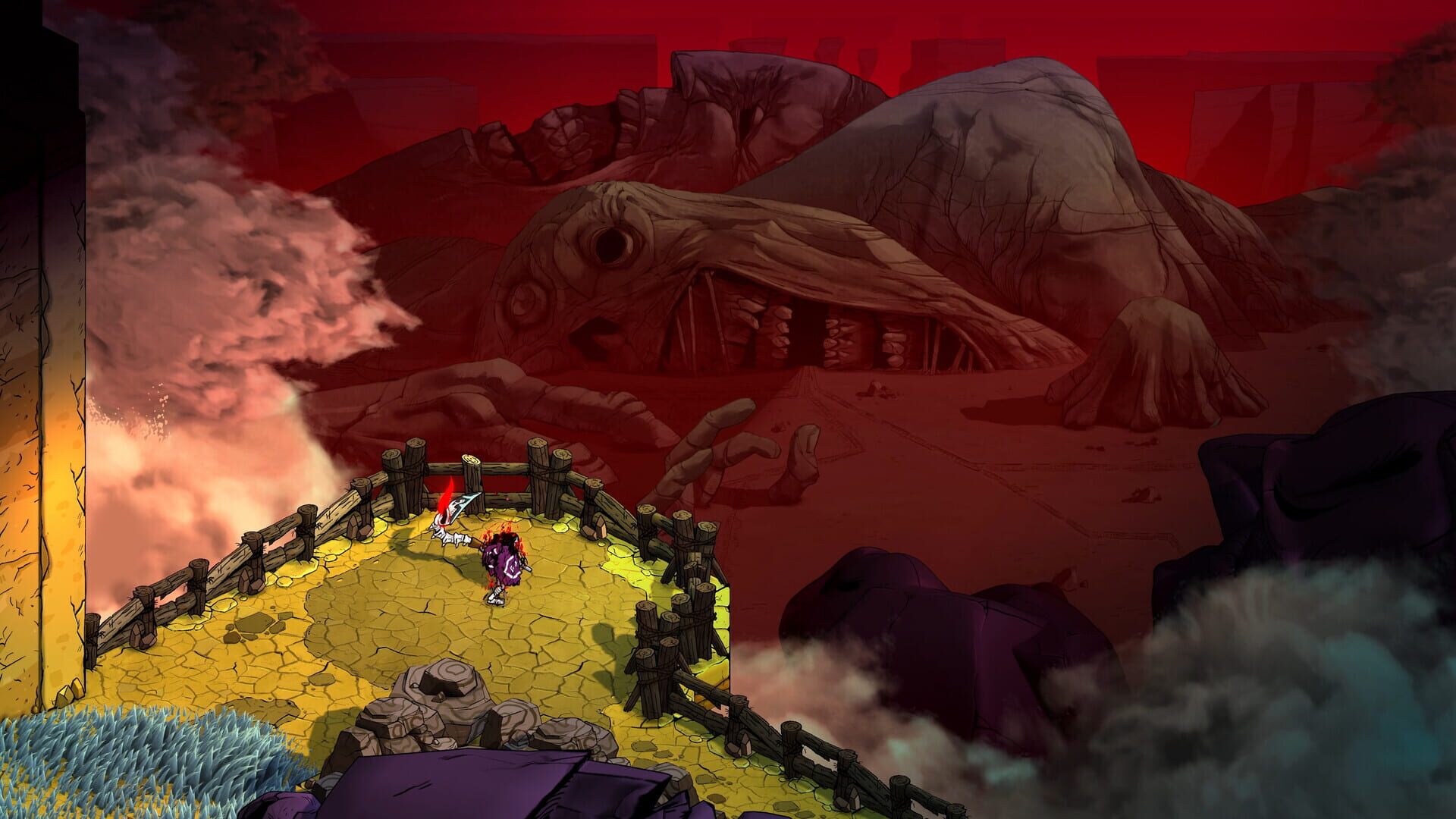
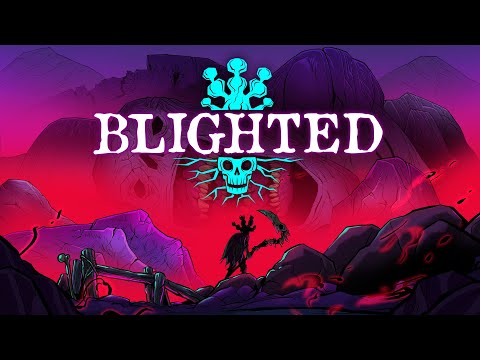
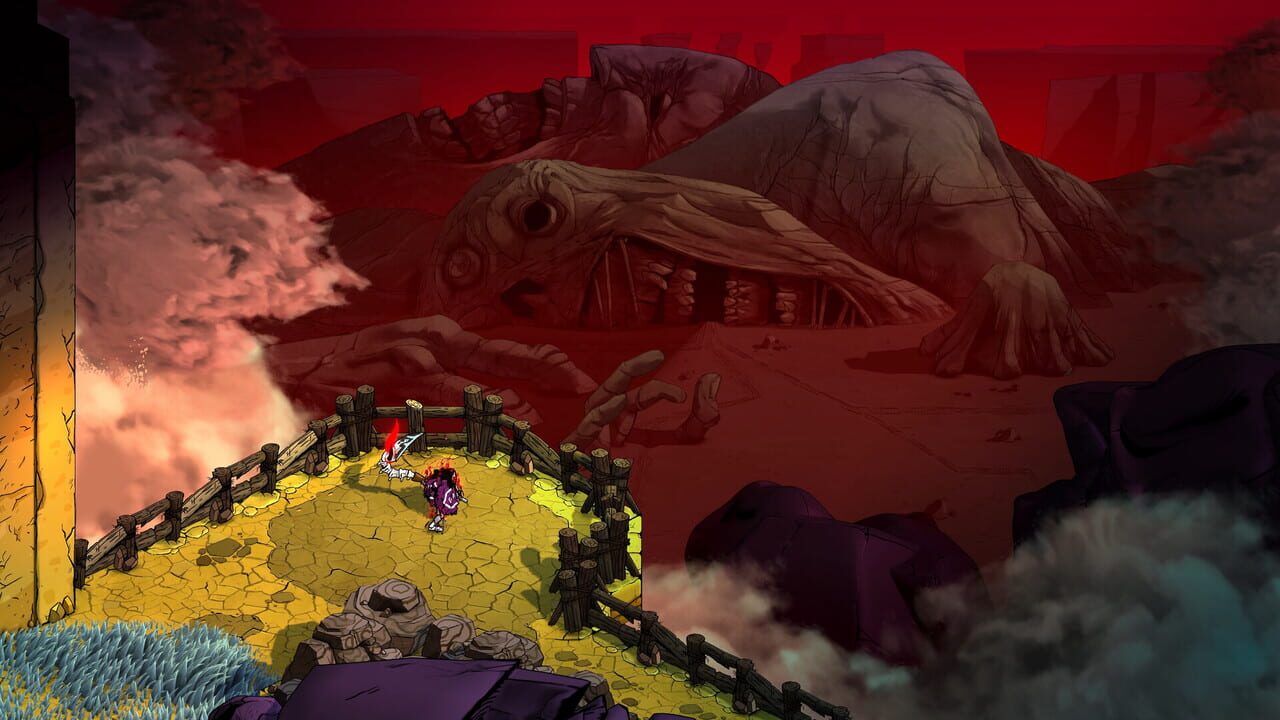
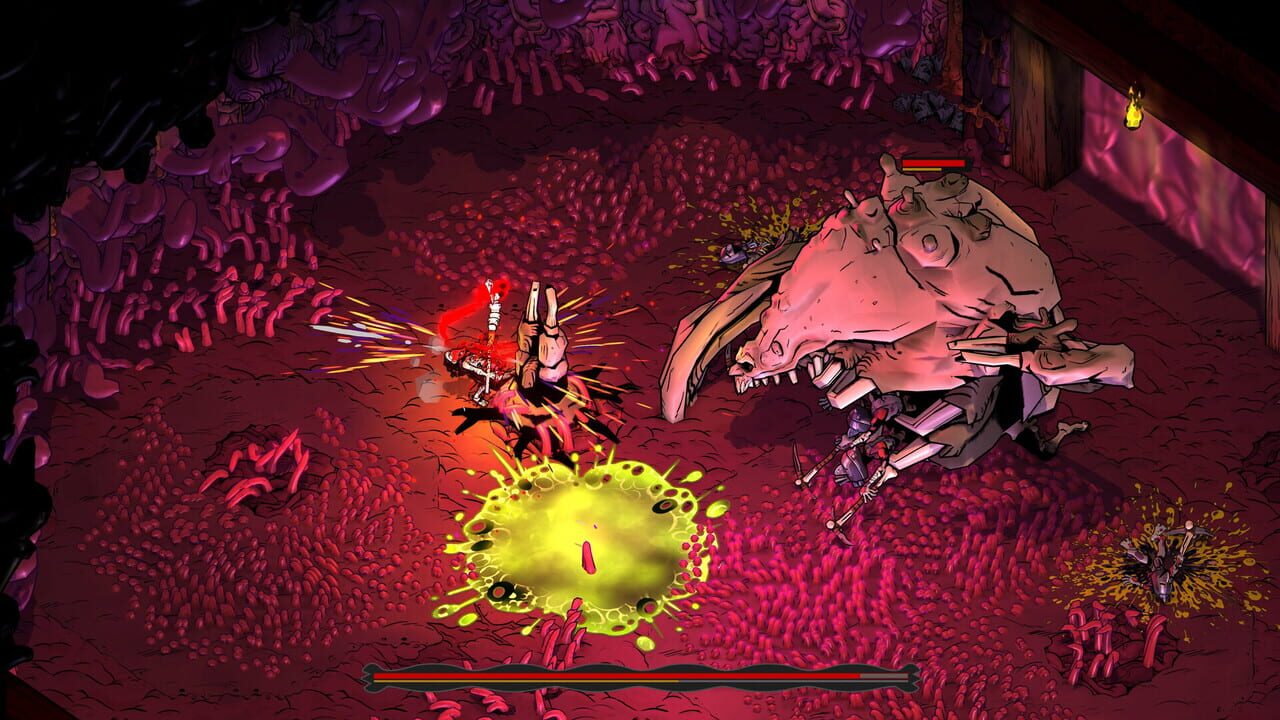
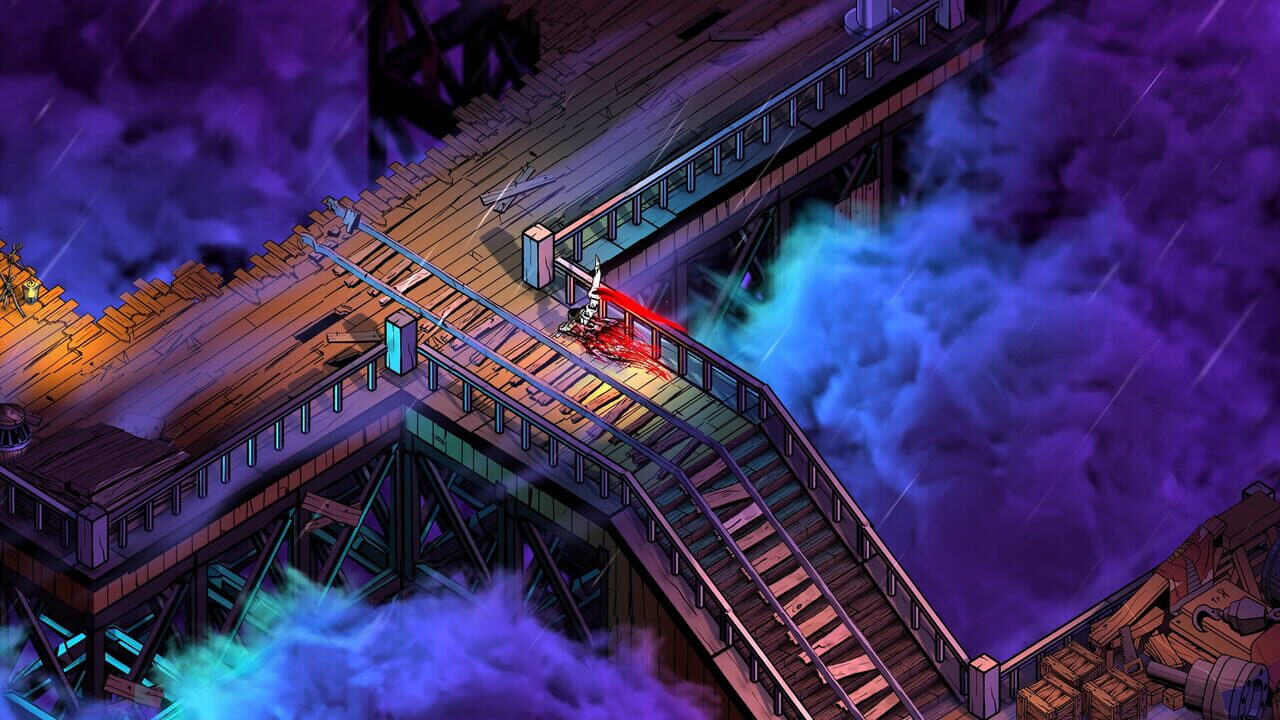
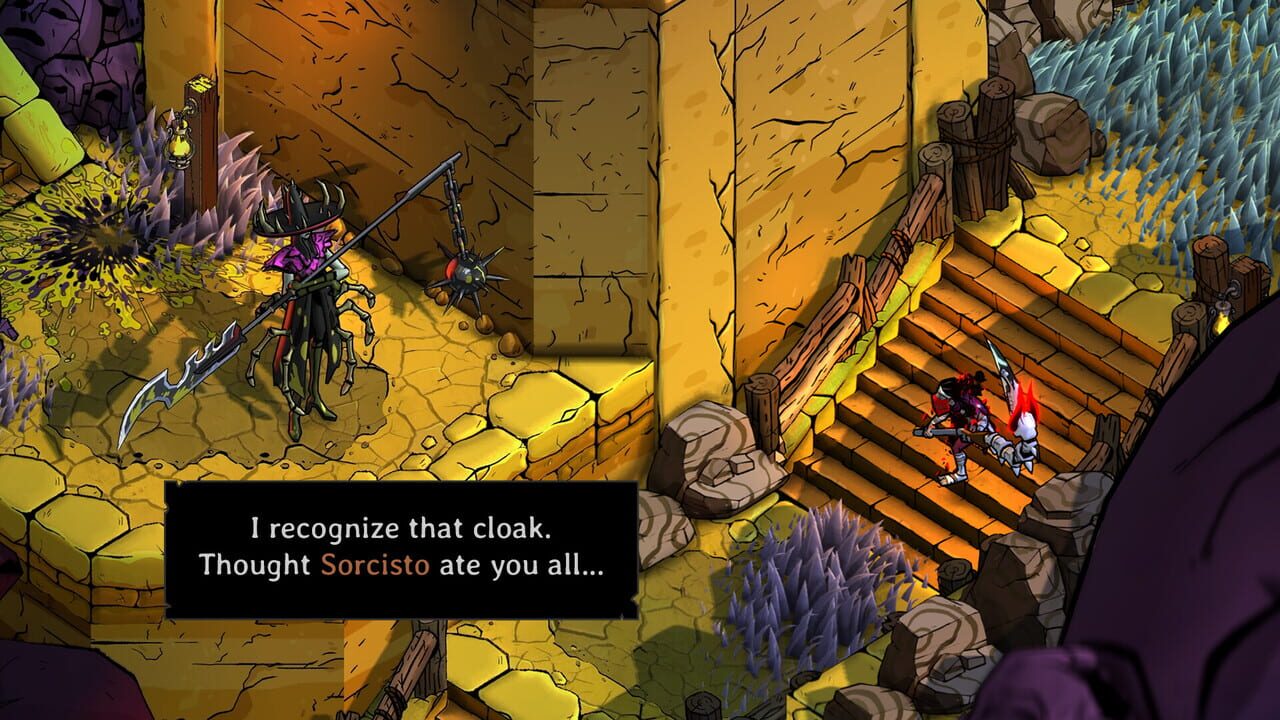
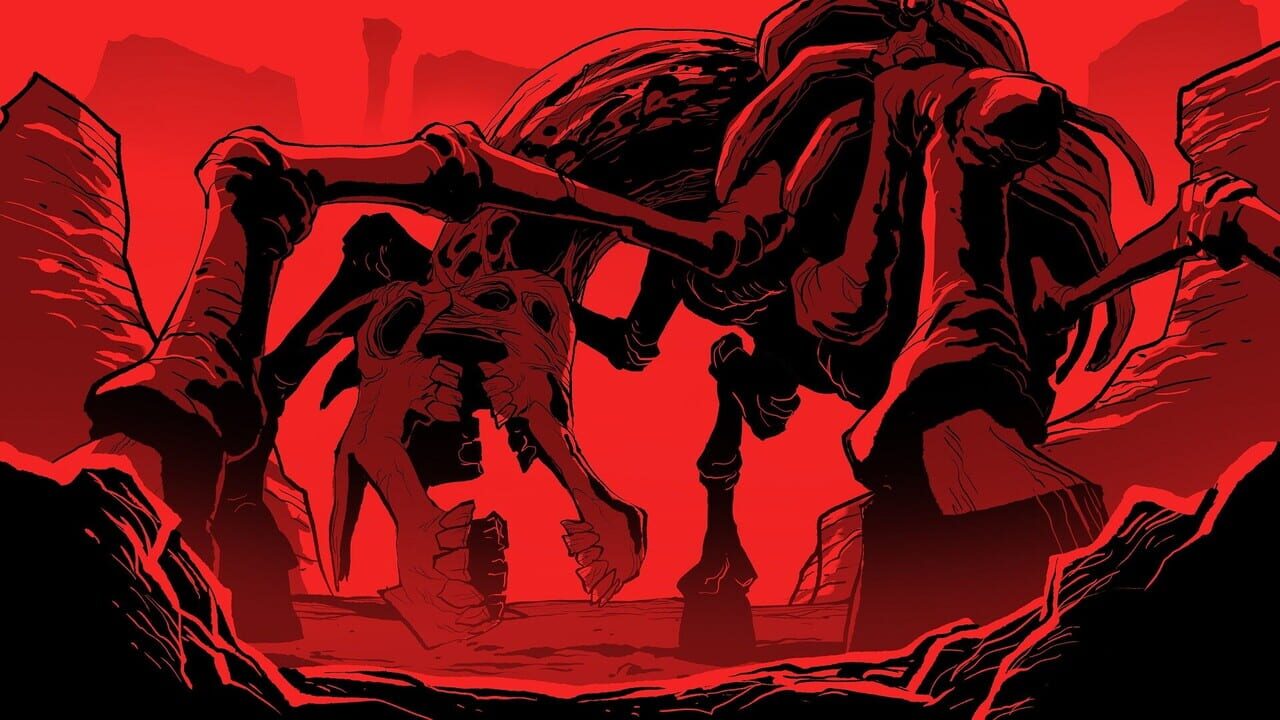
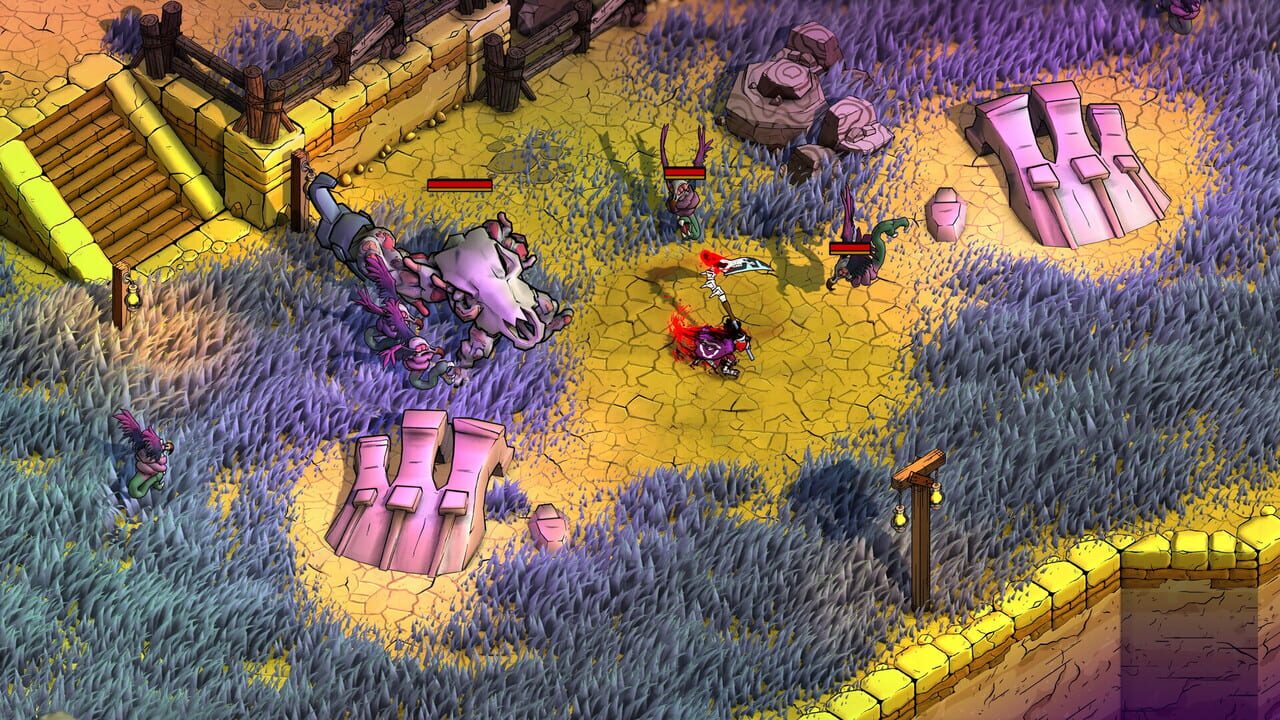
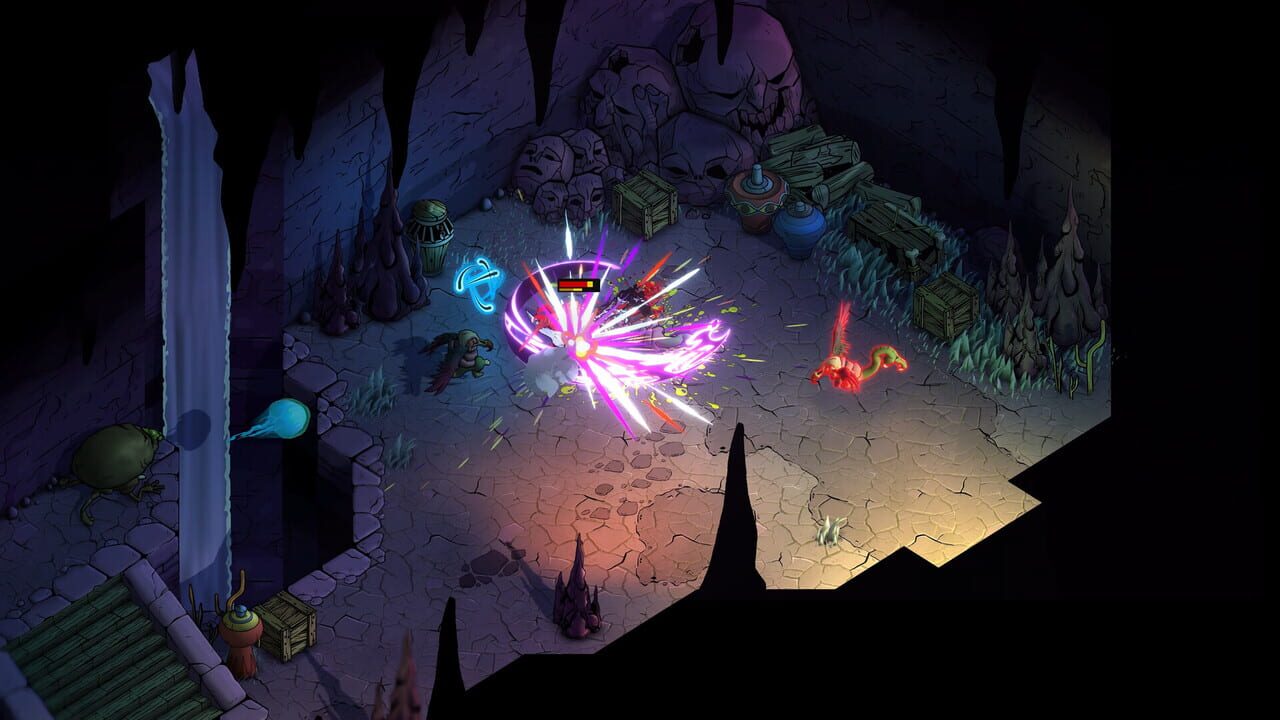
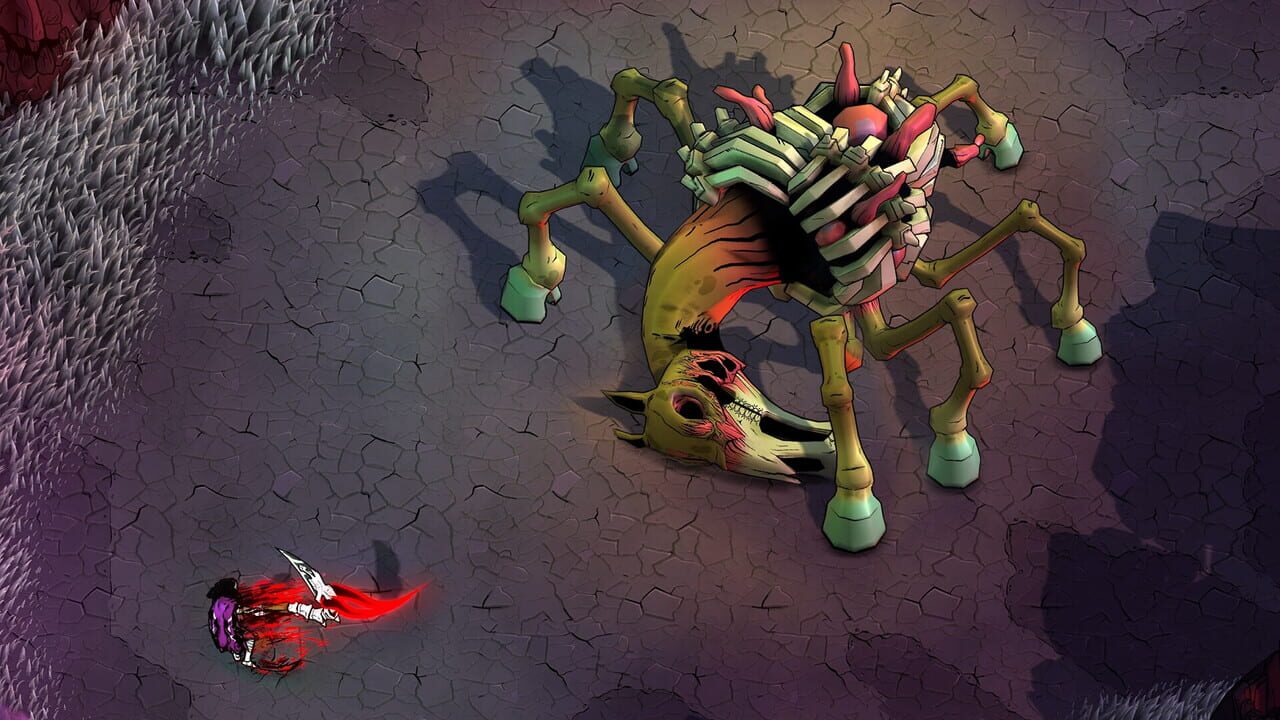
Blighted, the co-op action role-playing game Drinkbox Studios has announced for Switch and PC, releasing in the fourth quarter of 2026, is a western in the sense that matters here: a frontier, a threat to the land, a player armed against it. On the evidence available now, it is also doing two things at once that the 1969-to-2018 run of revisionist westerns did not combine. The premise reaches past moral complication of the frontier myth's content toward memory reclamation: the player harnesses a reality-altering force called the Blight and works to recover the memories of a people the frontier evidently cost something to. The register, in turn, reaches past Zsigmond's flashing or Altman's weather: the premise casts Blighted as a psychedelic western nightmare, its visual language distorting, saturating, and hallucinating rather than muting and fading. Taken separately, either choice would be a genre update. Taken together, they make a more specific argument than the revisionist western ever mounted, and it is worth being precise about what that argument is, because precision is exactly what a premise like this risks losing if the studio does not follow through on it.
Start with the image, since it is the more radical of the two choices. Zsigmond's flashed negative and Altman's overcast weather revised what the classical western's photograph said while leaving its status as a photograph untouched. Fog is still light hitting film. A faded palette is still an index of an actual place a crew actually stood in. Distortion, saturation pushed past any available light, and hallucination as a stated visual principle are a different order of refusal. They decline to offer a record at all, rather than a sadder or more honest one, and in doing so they withdraw the specific authority Bazin identified in the classical picture, the authority of an image that does not look like it is arguing anything. A hallucinatory frame announces its own construction on sight. Nobody mistakes it for a trace of an actual place, the way a 1939 audience could mistake Monument Valley standing in for Texas as simple documentary fact. If the classical western's trick was to make an argument disguised as a record, and the revisionist western's trick was to make a sadder argument in the same disguise, a game willing to abandon the disguise is not a louder version of either. It is refusing the specific mechanism this essay opened by describing: the mechanism that let Stagecoach's audience believe they were watching a place rather than a decision about one.
The content works the same seam from the other direction. The licensing function Slotkin traced depends on the myth functioning as settled history, a story that does not need to be checked against anyone's memory because the people who might hold a competing memory have already been written out of the frame. Revisionist westerns complicated the story without necessarily restoring anyone's memory to it. The Wild Bunch's outlaws and Deadwood's prospectors are still, for the most part, white men reconsidering what their own violence cost them, a genuinely different and genuinely smaller project than recovering what a dispossessed people themselves lost and remember losing. A game organized explicitly around reclaiming a people's memory is attempting the second project, not the first. Memory reclamation as a stated mechanic, whatever the Blight turns out to mean in practice, puts the game in the business of restoration rather than complication, which is close to the inverse of the operation this essay opened with a specific instance of. Ford's Navajo extras had their specific history subtracted so a generic threat could stand in its place. A game whose premise is putting a specific memory back into a frontier the genre has spent a century keeping empty is, at minimum, aimed at the correct problem.
Put the two together and the more interesting claim comes into view. Memory behaves as a reconstructive object, partial, contested, revisited and altered by the act of revisiting it, a fact cognitive psychology has established about individual memory and cultural historians have established about collective memory in roughly equal measure. A visual register that distorts, saturates, and hallucinates is a more honest formal match for that subject than a visual register that holds steady and records, however sadly, could ever be. Photographic clarity, even the aged, faded clarity Zsigmond built for Altman, is a poor tool for depicting memory, because clarity is precisely the quality memory does not have. A psychedelic western organized around reclaiming a people's memory is therefore a structurally coherent object rather than a themed reskin of an existing revisionist move dressed in brighter colors: the form does real argumentative work here, the only visual register among the three the genre has now tried, documentary clarity, faded documentary clarity, and hallucination, that does not misrepresent what remembering a stolen history actually feels like from the inside.
None of this is a guarantee, and the studio attempting it is a real reason for caution rather than confidence. Drinkbox, based in Toronto, is best known for Guacamelee, a Metroidvania built from Mexican lucha libre and Day of the Dead iconography, and for Nobody Saves the World, a shapeshifting action game with no particular culture's material at stake at all. Guacamelee is a joyful game, and its joy depends on treating its source material as an already-globalized visual idiom, bright and playful, largely stripped of the specific grief Día de los Muertos iconography carries inside Mexican Catholic practice, in favor of a version that travels well as a platformer's art style. That is a defensible choice for a comic game about a luchador punching skeletons. It is a different order of task from a story about a specific people's dispossession and the work of reclaiming their memory, and nothing in what Drinkbox has announced demonstrates yet that the studio can do the second kind of work rather than the first kind in a heavier coat. What would make it work is specificity: the Blight and the people it costs their memory to given the same evidentiary weight Slotkin's own scholarship insists the historical record deserves, rather than functioning as an efficient, morally pre-cleared resource the player spends without asking what it costs anyone else. What would make it a costume is the opposite: a frontier repopulated with a generic, unnamed grief the same way Ford's frontier was depopulated of a specific one, dispossession purchased as mood rather than earned as history.
There is a version of Blighted that clears this bar without much difficulty, and naming it keeps the standard from sounding impossible. Clearing that bar does not require staging a specific historical massacre the way Little Big Man did, or naming a specific historical nation the way a documentary would have to, only that the memory the player reclaims behave, mechanically and narratively, like something that was actually lost and is actually being recovered, with costs attached and gaps that do not fully close, rather than like a resource bar that refills. A curse that resolves cleanly by the credits is a costume. A memory that comes back partial, contradictory, and expensive is closer to what memory, personal or collective, actually does.
One structural choice remains an open question rather than a settled one. Blighted ships as a co-op game, its memory reclaimed by two players rather than one, in a design lineage, Drinkbox's own Guacamelee included, built around two-player brawling for its own sake. Whether the co-op frame is a considered position on memory as something held jointly and passed between people rather than owned privately by a single protagonist, or simply the studio's established format carried over because it worked before, is not something the announced material resolves. It is worth watching for on release, because the difference between those two explanations is close to the difference between the specificity this essay has been asking for and the costume it has been warning against.
The valley Goulding sold to Hollywood in 1938 is still there, and it is no longer his to sell. In 1958 the Navajo Nation designated Monument Valley a tribal park. The permits that once ran through a trader and a studio now run through the Navajo Nation itself, which decides, camera by camera, which crews may set up against which particular butte and on what terms. The rock has not moved. The signature on the permit has, and that signature, not the light or the color grading, is the difference between a photograph of somebody's home and a photograph of nobody's land.