In 1953, a surgeon in Hartford named William Scoville cut the medial temporal lobes out of both sides of a young patient's brain, an operation of last resort against epileptic seizures that had already defeated every other treatment available to medicine at the time. The seizures stopped. So, almost completely, did the patient's ability to hold on to a new fact for longer than about thirty seconds. He would be known in the scientific literature for the next seven decades only by his initials, H.M., a discretion that held until his death in 2008 revealed him as Henry Molaison.
On three consecutive days not long afterward, researchers sat him down with a five-pointed star drawn on a card, a pencil, and a mirror, and asked him to trace the star's outline while watching only its reflection, a task that reverses the ordinary relationship between the eye and the hand and defeats nearly everyone on the first attempt. Each morning he reported, accurately, that he had never seen the apparatus before in his life. He had no memory of the previous day's session, no memory of the researcher's face, no memory of ever having held the pencil. And each day his line strayed from the star's outline a little less than it had strayed the day before, improving at close to the rate an ordinary volunteer's line would have improved. The mirror-tracing result was not a fluke of one strange task, either. Researchers later ran him through a second, unrelated test, tracking a moving target with a hand-held stylus on a rotating turntable, a skill called rotary pursuit that has nothing in common with tracing a star except that it, too, has to be learned by the hand. He improved on that one across sessions he could not recall taking. Something in him was practicing. Nothing in him knew it.
The finding, published by Suzanne Corkin in 1968 and building on Brenda Milner's earlier work with the same patient, became one of the founding facts of modern memory science: that the capacity to improve at a physical task and the capacity to remember improving at it are different systems, running on different tissue, and one can be destroyed while the other keeps working exactly as designed. H.M.'s hippocampus was gone, and with it the machinery that lays down the kind of memory that can be put into a sentence. His cerebellum, his basal ganglia, the motor circuits that had nothing to do with the operation, were untouched, and they kept doing what such tissue does regardless of whether anyone is watching: absorbing repetition and getting better at it.
Nobody else has quite so clean a version of the split, since everybody else also keeps some explicit memory of practicing alongside the physical improvement. But the architecture H.M. exposed by having half of it surgically removed is not a special case invented by his surgery. It is the ordinary machinery of motor learning, the same machinery running in every nervous system that has ever gotten better at a physical task, with both systems intact and usually updating closely enough in step that nobody notices there are two of them at all.
In 1967, the psychologists Paul Fitts and Michael Posner gave that machinery a map, in a textbook called Human Performance that has stayed on skill-acquisition syllabi ever since. They described motor learning as a passage through three distinct stages, and the boundaries between the stages matter more than the stages themselves. In the cognitive stage, a learner is working out what to do at all: attention is fully committed, performance is slow and wildly inconsistent, and the learner typically narrates the task in something close to words, wait for the arm to drop, now step left. In the associative stage, the broad shape of the skill is in place and practice is spent trimming it: errors shrink, timing tightens, the internal narration quiets, but the task still owns the learner's attention completely and nothing else can be asked of the mind at the same time. In the autonomous stage, the skill runs without supervision. It can be executed while attention is occupied elsewhere, it resists being disrupted by a stray noise or a wandering thought, and it stops producing the kind of moment-to-moment information that could be reported on afterward, because nothing was watching it closely enough to write the report. Neuroimaging work on motor sequence learning describes roughly the same handoff at the level of tissue: practice shifts a movement's burden away from the prefrontal and associative regions that support deliberate, effortful control and toward the basal ganglia and cerebellar circuits that run well-learned sequences with little executive oversight, which is a way of saying, in blood flow, what Fitts and Posner said in behavior four decades earlier, before anyone could watch a living brain do it.
The third stage is the one that explains why skilled adults are such unreliable narrators of their own competence. Ask an experienced driver to describe, in order, the muscular sequence involved in a hill start on a manual transmission, the exact biting point of the clutch, the precise rotation of the wrist bringing the handbrake down, the timing of the release against the rising engine note, and most will produce a halting, partial account, or stall the car by trying to perform the sequence with the same conscious attention they are being asked to describe it with. The same blindness shows up in a fluent touch typist asked, away from the keyboard, which finger strikes a specific letter: many cannot answer quickly or correctly despite typing that letter correctly hundreds of times a day, because the answer was never stored as an answer. It was stored as a movement. The account is not missing because the skill is simple. It is missing because the skill has been promoted out of the part of the mind that keeps accounts. That is not a gap in the driver's self-knowledge, or the typist's. It is the design specification of the autonomous stage, which exists specifically to stop consuming the attention that a conscious report requires. A skill a person can fully narrate while performing it is, by definition, a skill still running on associative-stage supervision.
Video games did not invent this architecture. Starting in the early 2010s, one genre built itself around making the architecture visible from the inside, which is a different achievement. The soulslike, named for Dark Souls, the FromSoftware game that fixed its conventions in 2011, rests on one structural decision: death is frequent, cheap in narrative terms, and expensive in the specific currency of having to make the same approach again. Dying in Dark Souls returns the player to the last lit bonfire, not to a menu, and the ground between the bonfire and whatever killed them has to be crossed again, past the same enemies, into the same room, against the same antagonist, as many times as it takes. The game does not present this as a mercy or a punishment. It simply repeats the same fixed problem until the problem stops being the same experience for the person solving it.
A boss fight of this kind is, from a laboratory's point of view, an unusually generous dataset. Researchers studying a task like dart-throwing or mirror tracing are lucky to get a few dozen trials out of a volunteer before boredom, fatigue, or the end of a funded hour intervenes. A player working through a difficult soulslike encounter will supply, without being paid or asked, one or two hundred trials against a single, fixed, repeatable task, each one ended by an identical death screen, each one run under conditions that are otherwise unchanged down to the position of every enemy in the room. Nobody would run that study in a university on ethical or financial grounds. Millions of players run it on themselves, for free, most evenings of the week, and the soulslike is, among other things, the accidental discovery that people will supply this kind of data voluntarily if the fiction wrapped around it is good enough.
Take the fight the genre's own players still cite as its signature ordeal: Ornstein and Smough, the paired bosses guarding Anor Londo's cathedral in that original Dark Souls, a fast spear-wielding knight and a slow armored executioner sharing one arena, the survivor gaining the fallen one's power if either dies first. A player's first dozen attempts sit squarely in the cognitive stage, working out which one is closer, which animation belongs to which attack, which way the camera needs dragging before the hammer lands. Attention is total and performance is still bad, because there is more happening than one nervous system can consciously track at once. Attempts twenty through sixty are associative: the player has stopped consciously identifying the knight's stance and started reacting to it, spacing tightens, deaths move later into the fight, but the fight still demands every scrap of attention on offer and gives nothing back for it. Then, at some attempt that is never the same number twice and cannot be predicted in advance, something changes that the player did not do on purpose. The dodge happens before the decision to dodge finishes forming. The room that was a wall for two straight evenings is, without one identifiable moment of insight, a corridor.
What makes that feeling worth an essay rather than a shrug is where the player locates the change. Almost nobody reports the discovery as I got better. The overwhelming, nearly universal report is that the fight got easier, as though the game had turned a dial while its back was turned. That report is the only one the autonomous stage makes available, not modesty on the player's part, for the same reason the hill start makes so little available to the driver being interviewed about it. The transition from associative to autonomous processing is, by the definition of the third stage, a withdrawal of the very attention that would have had to be present to notice a transition happening. The self that would file the report I am now different was, at the moment of becoming different, off duty. What is left to report on is only the outcome: the room used to kill and now it does not. The world gets blamed for a change that happened entirely in the tissue of the person doing the blaming, because the tissue that changed is precisely the tissue that would otherwise have filed the report.
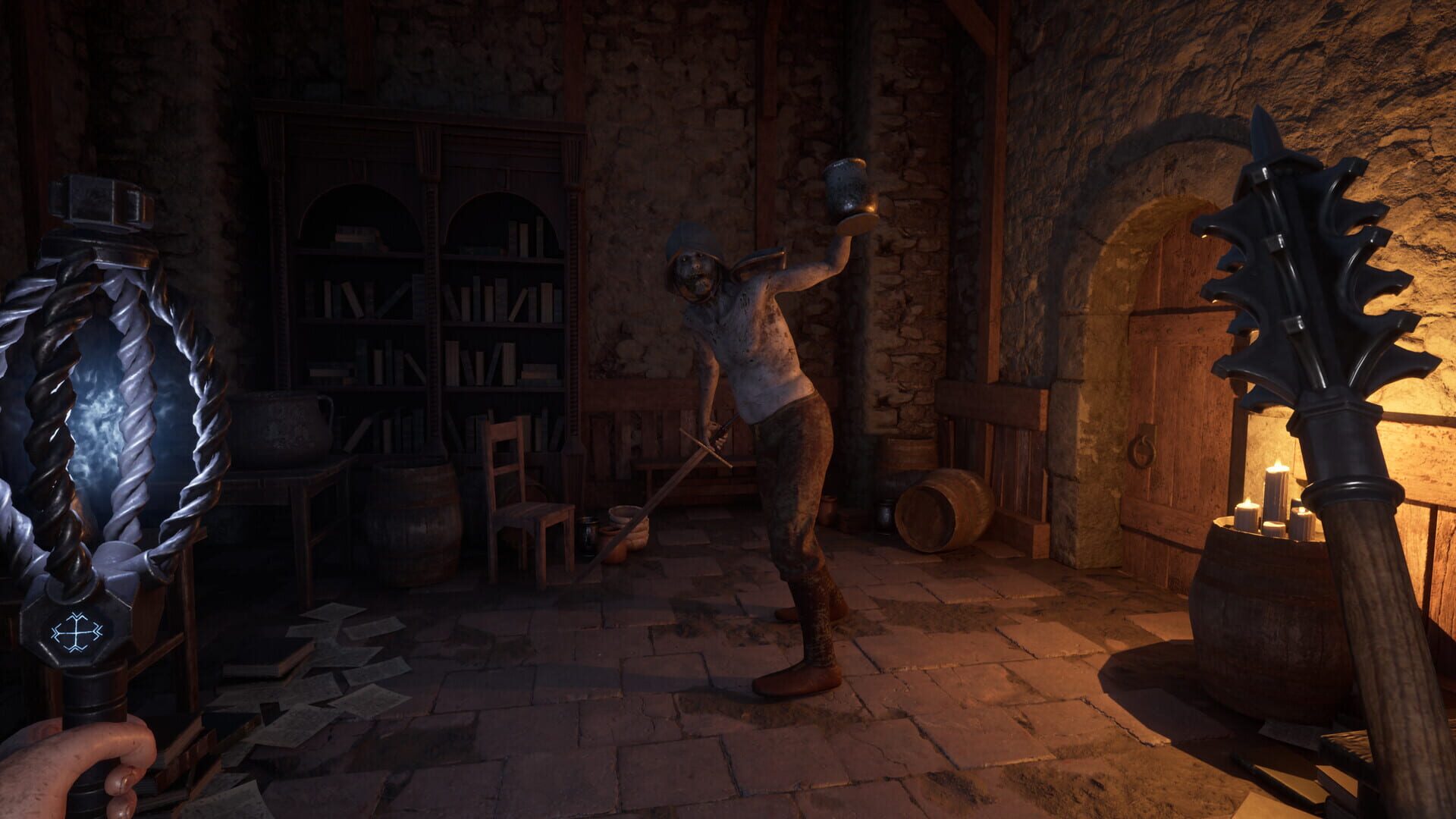
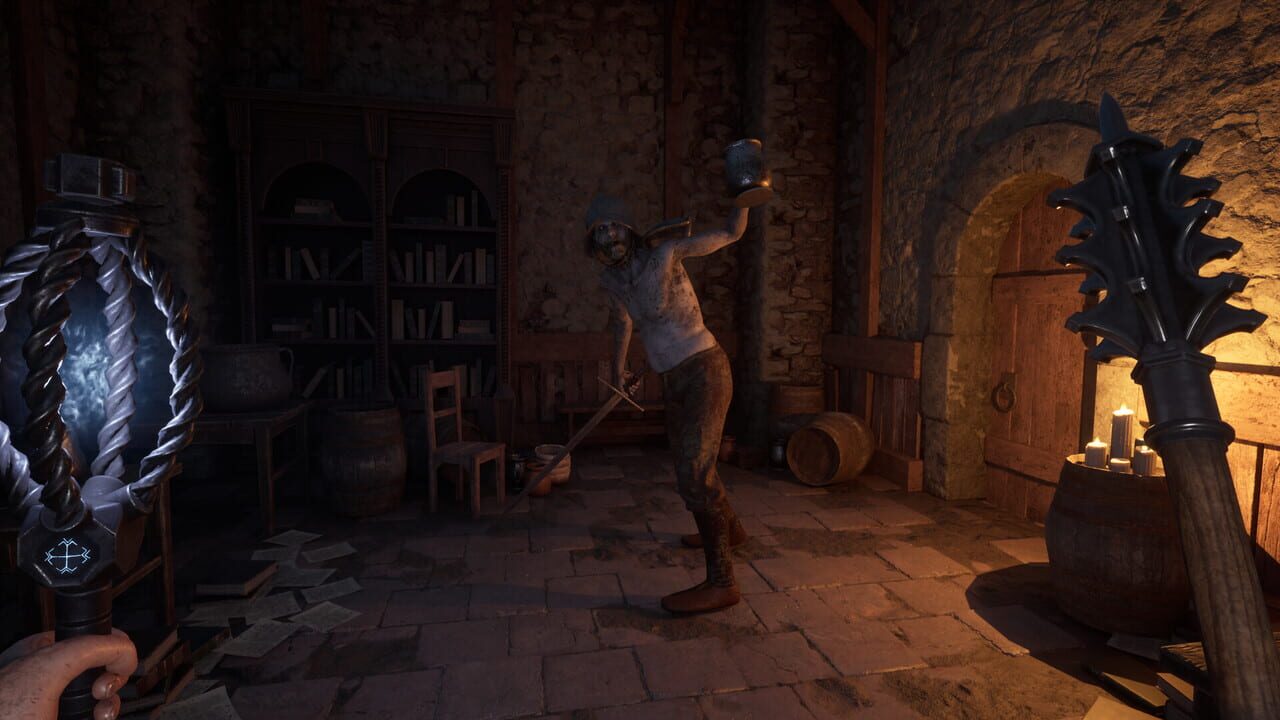
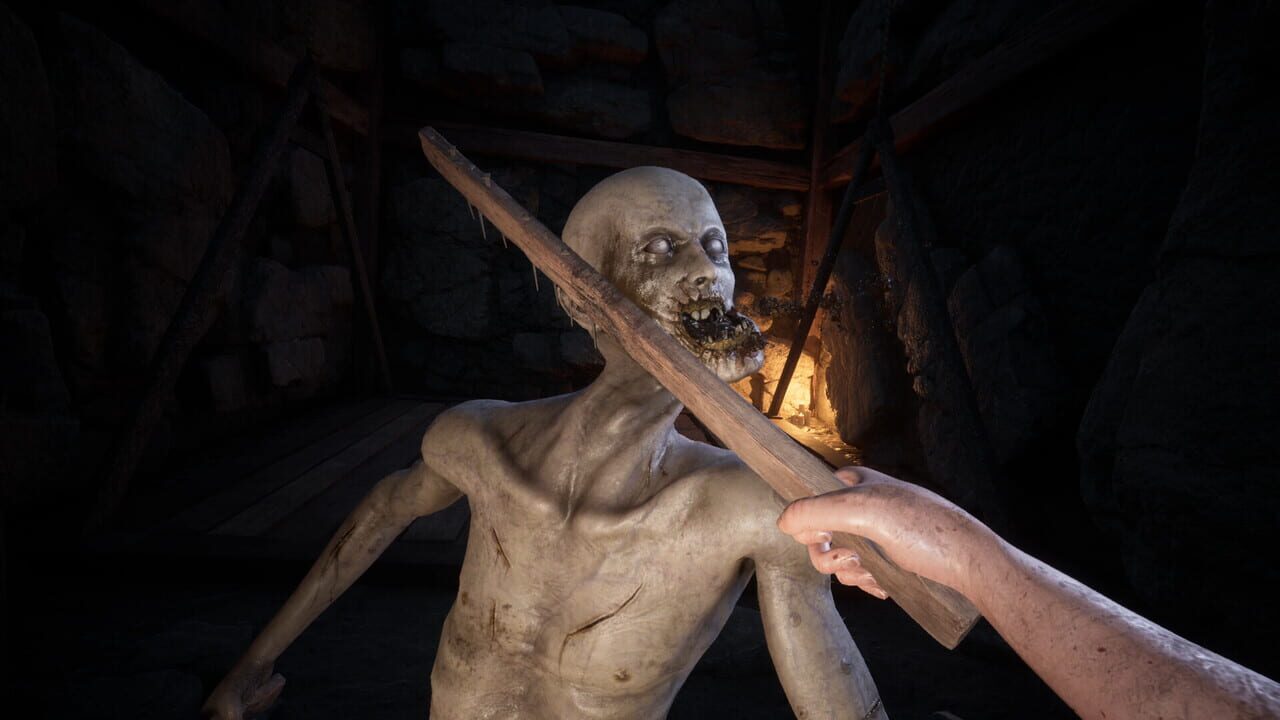
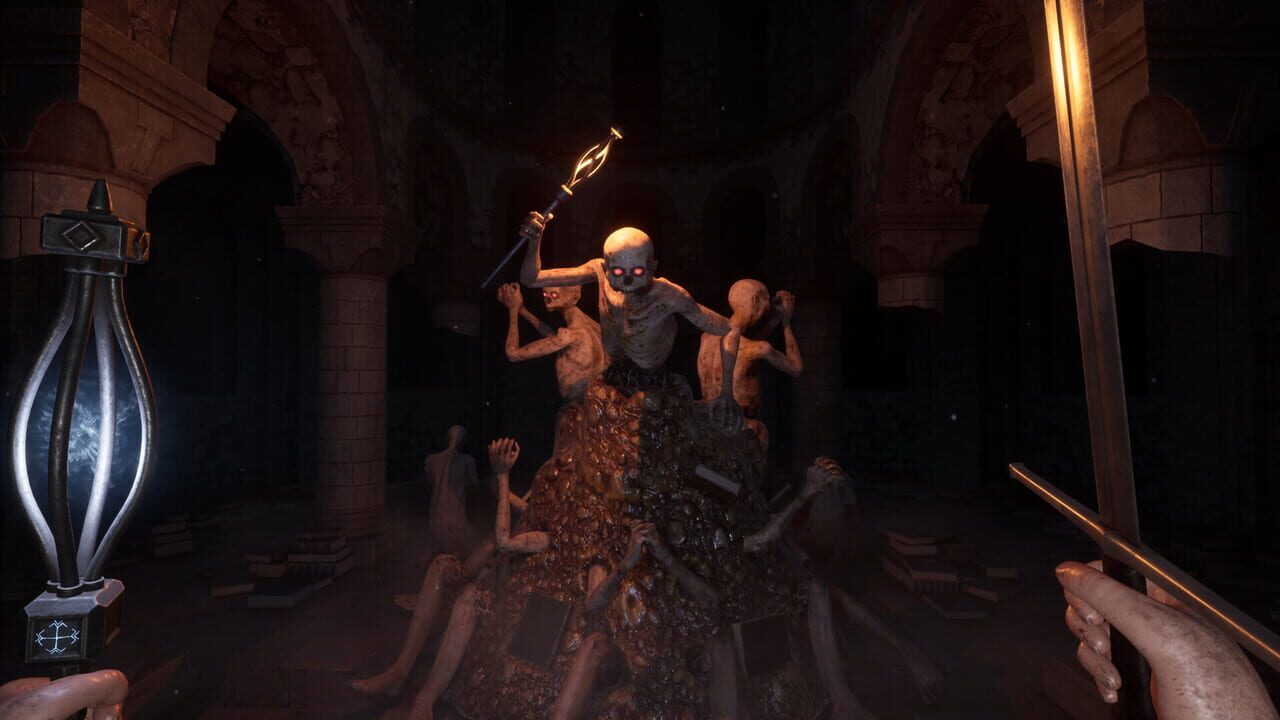
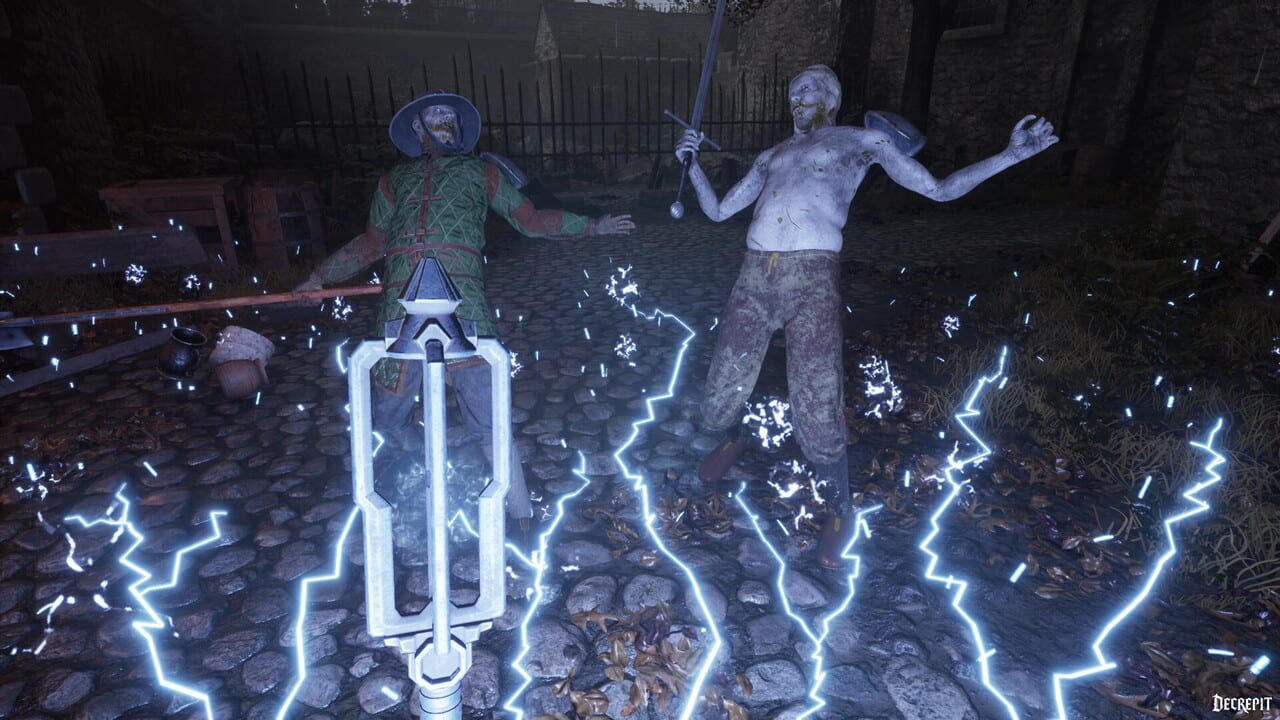
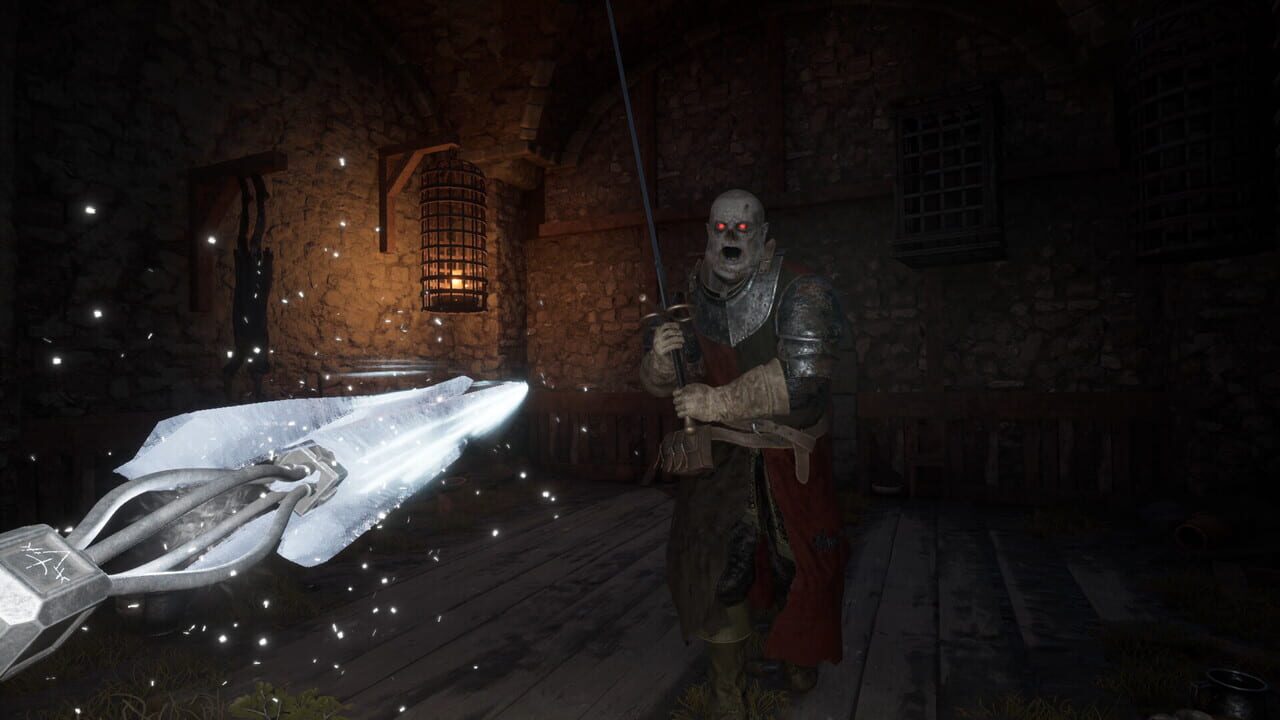
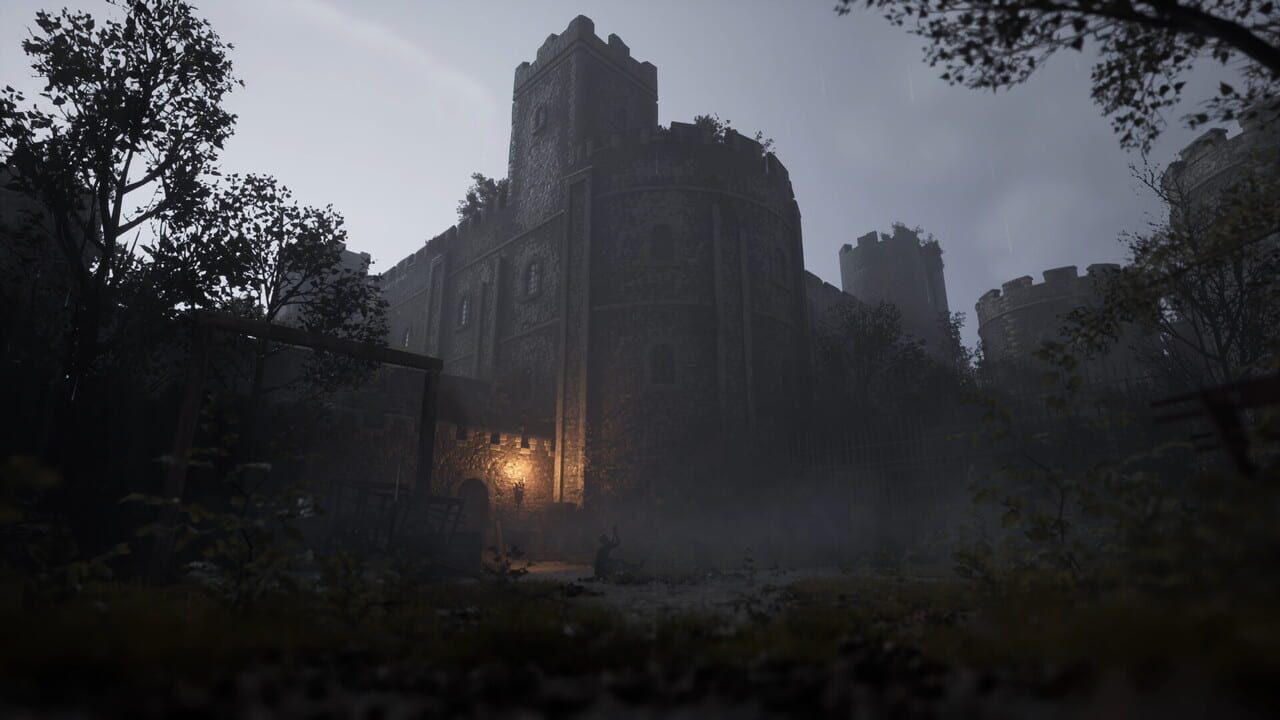
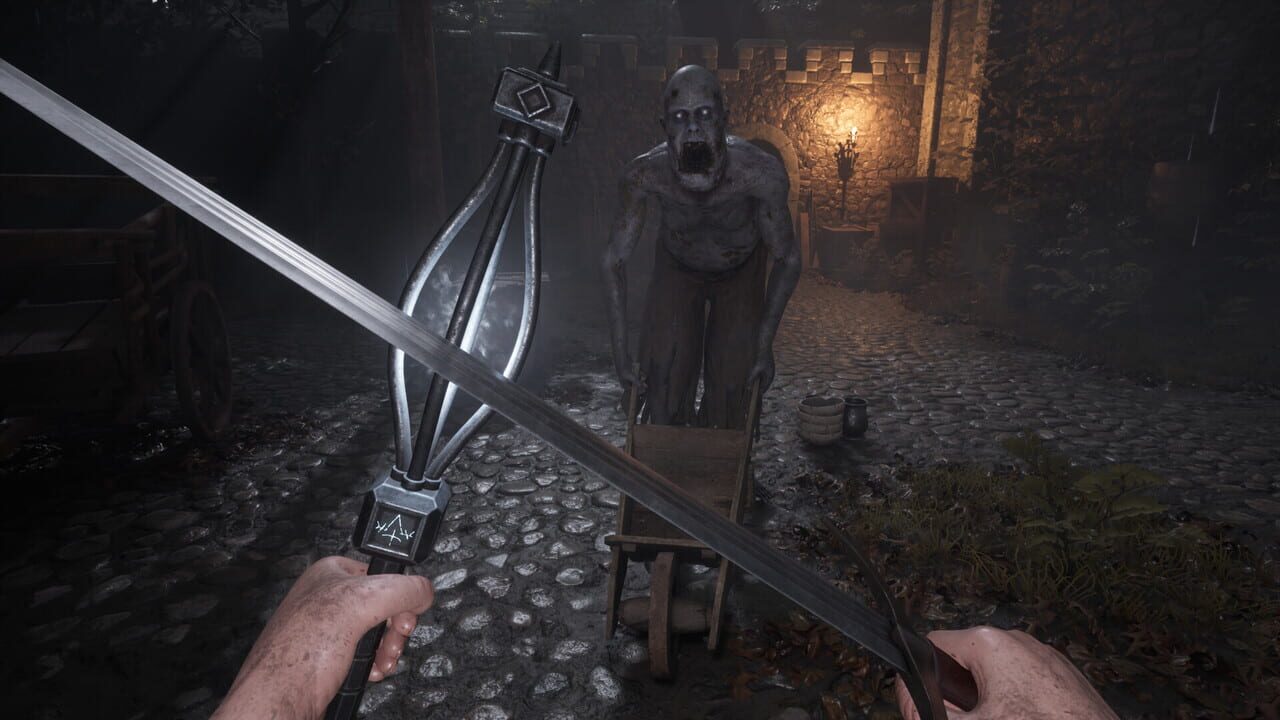
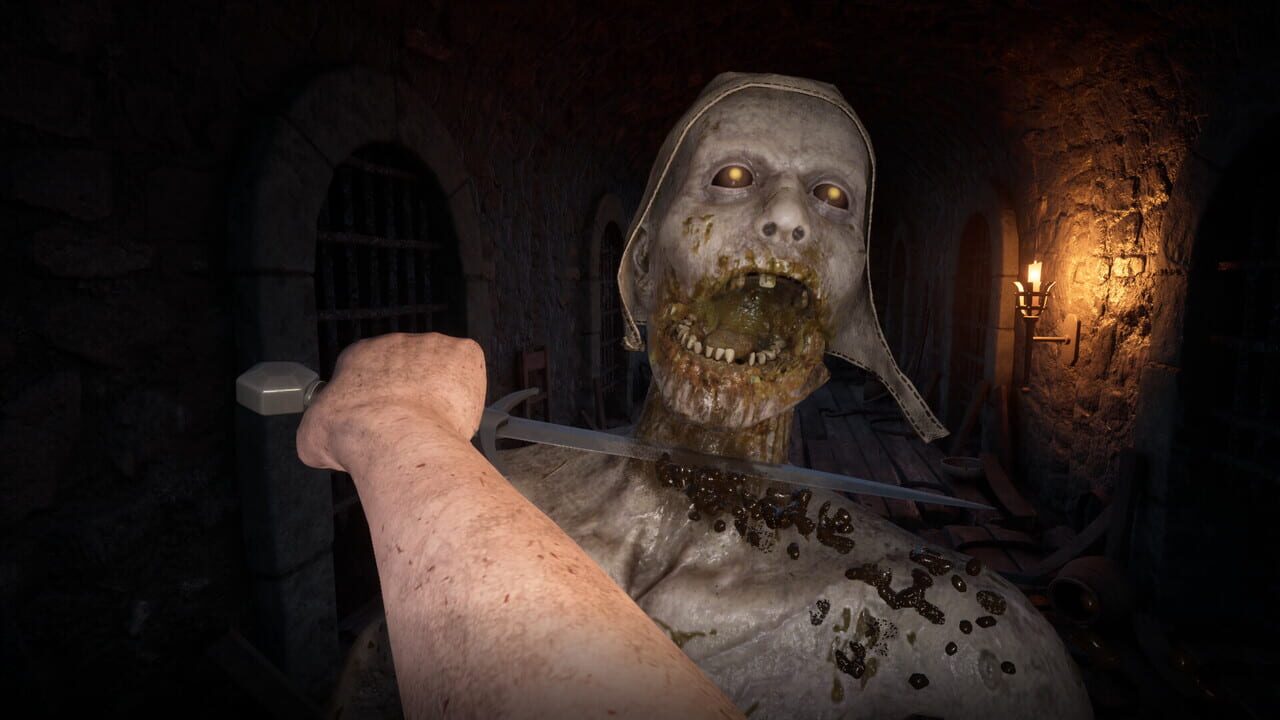
Decrepit, a first-person action game built on this same architecture and due on PC sometime in 2026, stakes its whole premise on that misattribution. Its forsaken castle is unusually blunt, for the genre, about the mechanism underneath the fiction: every death sends the player back down to the depths to begin the climb again, and the design is framed openly around learning the dungeon, mastering the combat, and finding a way out, three verbs that describe, without much disguise, the cognitive, associative, and autonomous stages in sequence. The first-person camera sharpens the effect rather than merely dressing it up. A third-person soulslike lets a player watch a character's body absorb the improvement, at one remove, as someone else's competence. A first-person one puts the transition directly behind the player's own eyes, in the same visual field used for every other task in the player's life, so that a stone corridor rendered at the same height, under the same light, on the two-hundredth attempt as on the first, is doing the outside world's part of the trick perfectly. Nothing in the room has moved. The depths the castle keeps returning the player to do not forget a single death, and neither, it turns out, does the hand on the controls, which is the one part of the arrangement keeping a ledger that nobody consulted.
Decrepit's own description separates learning the dungeon from mastering the combat, and the separation is more precise than a marketing sentence usually manages to be by accident. They are not the same kind of learning. Finding a shorter route between two points in a repeated space, remembering which door leads to a dead end, recognizing a junction by the shape of its shadows, draws on spatial and episodic memory systems that survive even in patients whose motor learning is otherwise unremarkable, and that can, unlike the motor case, often be described afterward in a sentence: turn left at the broken window. Learning to beat whatever is guarding the junction cannot be recited in the same way, for the reasons already given. A castle that asks a player to do both at once is asking two different memory systems to run on two different schedules, one of them narratable and one of them not, which may be part of why these dungeons tend to feel less like puzzles solved than like places that became familiar without anyone quite noticing when.
That ledger is precisely what a dynamically adjusted difficulty system would falsify, and this is where the science stops being descriptive and starts underwriting a design argument with real teeth. The three-stage model requires one structural condition to produce its characteristic discontinuity: the challenge has to hold still while the learner changes underneath it. Remove that condition and the model does not predict a gentler version of the same experience. It predicts no experience at all, because there is no longer a stable target for the associative stage to converge on. A system that widens an attack window after a player's fifteenth death, or trims a combo string once a death counter crosses some internal threshold, is not making the fight kinder. It is making the fight into a different fight on every attempt, which forecloses an associative stage ever completing its work, since there is no fixed error left to reduce. Even a subtler version, tuned only to keep a struggling player from quitting rather than to guarantee anyone's success, has the same structural defect: its entire function is to track the gap between a player's competence and a challenge's demand and hold that gap inside a comfortable range. The gap opening up, competence overtaking a challenge that never agreed to move, is not an unfortunate side effect of soulslike design. It is the whole mechanism. An adaptive difficulty system is, by design, a machine for preventing that gap from ever opening wide enough to produce a wall that becomes a corridor.
None of this indicts adaptive difficulty as a design tool in general, and the honest version of the argument has to say so plainly. Valve's Left 4 Dead, in 2008, shipped with a system the studio called the AI Director, which reads a rolling measure of how much pressure the players in a session are currently under and uses it to spawn enemies, pace the level, and time musical cues, keeping that pressure inside a designed band instead of letting it flatten into boredom or spike into panic. It is a well-regarded, carefully engineered piece of design, and it is exactly the right tool for a four-player cooperative horror game whose goal is a shared, renewable tension across dozens of replays with different people each time. It is exactly the wrong tool for a solitary combat game whose entire distinctive payoff is the private, interior sensation of one nervous system crossing a threshold it cannot see itself cross. The Director is built to keep the gap between challenge and capability from ever settling into a fixed value. The soulslike's central trick depends on nothing else.
There is an obvious way to read everything written so far as a scientific-sounding alibi for a genre that has, in its most acclaimed entries, refused for more than a decade to build in a single accommodation, and the objection deserves to be met at full strength rather than nodded at and set aside. A fixed challenge that never moves for anyone is not neutral with respect to bodies. It is calibrated, whether its designers intended the calibration or not, to a specific range of reaction time, a specific tolerance for repeated fine motor sequencing, a visual processing speed adequate to read a telegraphed attack inside a few hundred milliseconds. A player with the tremor of Parkinson's disease, or the spasticity of cerebral palsy, or the visual field loss that comes with some forms of glaucoma, or the ordinary slowing of reaction time that arrives with age in every nervous system that lives long enough, is not being offered a harder version of the game a twenty-two-year-old with unimpaired fine motor control is offered. They are being handed a different, and frequently unplayable, object. This is not the ordinary and defensible fact that not every book suits every reader. A reader who dislikes a novel's prose style still has the whole novel in front of them and can read every page of it, whether or not they enjoy the experience. A player whose hand cannot execute a sequence inside the game's one fixed timing window does not have access to the middle of the design, the ending, the rooms the studio spent years building, at all. That is a real cost, and it falls on people who did not choose their nervous systems any more than anyone else chose theirs.
The disability theorist Rosemarie Garland-Thomson has a precise name for what is happening in that gap: a misfit, her term for a mismatch produced not by a defect located inside a body but by the collision between a particular body and a world, or in this case a piece of software, built around an unstated assumption of what bodies are like. A doorway built two inches too narrow does not describe a property of the person it excludes. The same logic holds for the misfit, which names a property of a design's unexamined default rather than a property of the body meeting it. Garland-Thomson's point is that naming it this way, as a design failure rather than a personal limitation, is the harder and more accurate description, however uncomfortable it is to sit with.
The question this essay actually owes an answer to is narrower and harder than it looks: does the neuroscience of the autonomous stage give the genre cover for that exclusion, or does it give cover for something much smaller. The honest answer is the smaller one, and the reason is structural rather than diplomatic. The discontinuity described here depends on exactly one condition: a challenge that holds still, relative to a given learner, for long enough that the associative stage can finish its work and hand off to the autonomous one. Nothing about that condition specifies that the challenge has to be the same fixed target for every player, and nothing about it requires that the target be undisclosed or unchosen. A player who sets a slower game speed before starting, or widens a timing window, or remaps a two-button parry onto a single input because two simultaneous presses are not available to their hand, and then spends two hundred attempts against that self-selected, disclosed, and thereafter stable target, passes through the identical cognitive, associative, and autonomous stages described throughout this essay. The wall still becomes a corridor. It is only sized to a different body, which is the entire point of building it that way. Nothing in the model objects to a menu of stable, chosen difficulty settings. What it rules out is a target that keeps moving on its own, in response to the player, without asking and without saying so.
Celeste, the precision platformer Maddy Thorson's small team released in 2018, is the clean demonstration that these two things do not trade off against each other. It shipped at launch with an assist mode that lets a player slow the game down, grant themselves extra air dashes, or turn off fall damage, chosen from a menu before a level begins and held fixed once chosen. Slowing the game does not remove a single input from the sequence a player has to learn. It changes only how much time a particular nervous system gets to recognize and execute each one, which is a real accommodation of a real and unchosen difference between bodies, not a subtraction from the game's structure. A player using assist mode at half speed still has to discover, through repetition, the moment when a maneuver that demanded total, halting concentration on the first attempt requires no thought at all on the eightieth. Choosing the target does not erase the discontinuity. It only widens who gets to reach it.
The harder edge of the objection survives even this distinction, and it deserves acknowledgment rather than a tidy resolution. Some conditions are not well served by adjusting the size of a timing window at all, because the difficulty is not a matter of needing more time but of the specific kind of sustained, repeated fine motor sequencing the genre asks for being unavailable to a given body regardless of how generously it is timed. For a player in that position, adjusting the size of a timing window does not create a milder version of the discontinuity to choose instead of the harder one. It creates no version of it at all, unless the game also offers a route through its content that does not depend on real-time combat execution: a story mode in the fullest sense, automated combat resolution, an invincibility toggle, an assisted-completion option that trades the mechanism this essay describes for simple access to the rest of the design, the world, the writing, the castle's architecture and whatever it has to say for itself. That trade is a real loss. A player who takes it does not get the wall-to-corridor feeling this essay has spent so much effort explaining. Between a diminished version of the experience and a locked door, though, the diminished version is not a compromise of the genre's integrity so much as the genre declining to be the reason a specific body never got to see its own castle.
Measured against that distinction, the genre's real failure, where it has one, is not the refusal to soften itself that this essay has just spent several paragraphs defending. It is the widespread and largely unexamined habit of treating one undisclosed, universal calibration as though it were a law of the medium rather than what it actually is: a design decision that happens to fit a particular kind of nervous system unusually well, and that could coexist with chosen, stable alternatives at no cost to the mechanism this essay cares about. Conflating a request for an adjustable, disclosed target with a request for the secretly adaptive kind is the actual error, a failure of design vocabulary rather than a considered design philosophy. The neuroscience in this essay is a real argument against one specific thing: a system that moves the target without telling the person aiming at it. It was never an argument against letting more than one kind of body find the target in the first place.
Late on some particular night, a player of a game built this way will sit in front of a screen with a controller warm from an hour of failure, in a castle that has not changed one stone since the first attempt, and something will happen in the hand before it happens anywhere the mind can find it. The block will already be rising while the attack on screen is still only a shape beginning to form. There will be no sensation of a threshold crossed, no small internal signal marking the change, because the part of the nervous system built to register that signal is exactly the part that has just finished handing its work to a faster and quieter one. The player will notice only afterward, looking down at a hand that has already moved on without waiting for permission, faintly surprised at what it has apparently known for some time, and already reaching, without being told to, for the door the wall used to be.