

When Konami Computer Entertainment Tokyo finished Silent Hill for its release in January 1999, a fully three-dimensional town was a problem the hardware in the room could not solve honestly. The original PlayStation's graphics chip had no depth buffer worth the name, so a scene's polygons had to be sorted and drawn in the right order by hand rather than resolved automatically for what should hide what, on a working budget, in a real shipped game, of something like a few hundred to perhaps two thousand textured triangles per frame depending on everything else happening on screen, one megabyte of video memory, and two megabytes of main memory in which to hold an entire town. Textures warped visibly across those triangles because the hardware had no way to correct them for perspective, and vertices wobbled at their edges because their positions were calculated in a coordinate system too coarse to hold them perfectly still, both familiar to any owner of the console by 1999. Capcom had answered the same underlying budget three years earlier, in Resident Evil, by declining to spend on it at all: Shinji Mikami's game cut between fixed camera angles laid over still, pre-rendered backgrounds, so the console never had to compute distance in real time, only a small moving figure over a painting it did not have to generate itself. The group that would come to be called Team Silent wanted the one thing Resident Evil had specifically avoided attempting, a town a player could walk through continuously, one street opening onto the next with nothing cutting away to hide the seam. The PlayStation could not render that town at any distance worth having. So the team stopped asking it to. They set an opaque haze a short distance out from the camera, close enough that the console never had to finish drawing anything past it, and let the haze stand in for every polygon the hardware was never going to deliver in time.
The version of that decision repeated in enough retrospectives to have calcified into trivia treats the fog as an embarrassment, dressed up afterward as a mood. The record kept by the people who actually made it is less convenient than that. Director Keiichiro Toyama and sound designer Akira Yamaoka were reaching, from early in planning, for a specific psychological register that owed less to Capcom's catalogue of zombies and mansions than to Adrian Lyne's 1990 film Jacob's Ladder, all disorientation and unreliable environment, a mind supplying its own horror faster than any script could write one. That ambition and the hardware ceiling did not arrive in sequence, the second covering for the first after the fact. They arrived together and pointed at the same fix from opposite directions. A team already reaching for disorientation and a console that could not render a legible street past a short distance turned out, for once, to want exactly the same solution. What makes the fog worth returning to a quarter of a century later is not settling which motive gets to claim priority, the art or the silicon. It is that the fix outlived the problem completely, and now gets installed on purpose, at real production cost, by studios whose hardware has never so much as met the problem it was built to solve.
General histories of that console generation have made a related point about the genre more broadly: hardware budgets, more often than creative briefs, decided an unusual number of survival horror's defining choices in those years, Resident Evil's fixed cameras among them. Team Silent's fog is simply the instance that produced the most durable style out of the least cooperative hardware, which makes it worth setting beside two examples that have no console attached to them at all.
Jaws went into production in 1974 with a mechanical shark the crew nicknamed Bruce, built specifically for the film and reliably unable to perform in salt water for more than a few minutes before some seal or hydraulic line failed. Steven Spielberg has said in interview after interview that the failures were not a choice; they were closer to a small catastrophe that ate the shooting schedule and much of the budget along with it. What the failures forced was a film that spends most of its first half implying the shark rather than showing it: a fin cutting the surface, a dragged pier snapping free of its pilings, barrels bobbing and then pulling under, John Williams' two-note theme doing the work a visible animal would otherwise have to do. Spielberg has since said, more than once, that the film the malfunctioning shark forced him to make frightened audiences more effectively than the film he originally planned to shoot, in which the shark would have been on screen far earlier and far more often. The lesson did not stay confined to one production plagued by bad luck. Suggestion over display became a working method that horror and thriller directors have reached for on purpose ever since, on productions with none of Bruce's problems and effects budgets large enough to show anything they wanted. The malfunction disappeared. The method it produced did not.
A second instance predates Jaws by three decades and removes even the accident of a broken prop from the equation, since nothing broke: the money for a working prop was simply never budgeted. In the early 1940s, RKO Radio Pictures handed a small horror unit to a producer named Val Lewton, along with a stack of pre-approved lurid titles, Cat People among them, and a budget a fraction the size of what Universal was spending to dress its own contracted monsters. Lewton could not afford a convincing costume, so his unit, working with directors including Jacques Tourneur, built films in which the threat was almost never shown outright. Cat People keeps its transformed woman offscreen or folded into shadow for nearly its entire running time, and its most quoted sequence, a woman alone on a midnight street convinced something is following her, resolves the tension not with a monster but with a city bus, air brakes hissing as it pulls to the curb, a piece of stagecraft still taught in film courses under the name it earned, the Lewton bus. The unit did not have the money to show its threats convincingly, so it built an entire visual grammar around not showing them, and later horror productions with money Lewton never had kept the grammar anyway, because withholding the creature frightened audiences more reliably than any creature they could afford to build. The budget recovered. The choice it produced did not retire along with the shortage that made it.
What gets skipped, once a story like either of these has delivered its irony, either at a studio's expense or to its credit, is the question of why withholding works on a viewer at all, mechanically, rather than as a matter of taste or genre habit. The answer lives in how a visual system decides what is near and what is far, and in what it does, automatically and without waiting for permission, with whatever it cannot currently resolve.
Among the pieces of information an eye uses to sort a flat image into depth, one shape's outline broken by another sitting in front of it is among the least ambiguous available to it. Relative size can mislead when the true size of an object is not already known. Linear perspective can be faked with the right lens and the right angle. An interrupted contour, by contrast, resolves almost without deliberation: the visual system commits, in a matter of milliseconds, to reading the interrupted shape as continuing behind whatever cut it off, and the thing doing the cutting off as the nearer of the two. It is some of the cheapest, fastest spatial arithmetic the eye performs, and it does not care what kind of object is doing the occluding. A doorway, a hillside, and an even wall of haze sitting at a fixed radius all get treated as the identical class of fact: something is here, and something else, uninspected, continues on the far side of it.
What the system does immediately afterward is the half of the mechanism a foggy street benefits from most and gets the least credit for using. An object partly hidden behind a nearer surface is perceived as whole rather than as a shape with a piece missing, its hidden edge completed behind the occluder by processing that runs well beneath conscious inference. The psychologists Philip Kellman and Thomas Shipley gave this its formal account in 1991, describing how the visual system interpolates a smooth, continuous boundary across the exact gap an occluder creates, treating the hidden portion of an object as present rather than as missing information. A pole behind a passing truck does not register as two pole-fragments with a gap between them. It registers as one pole, briefly obstructed. The completion is not a considered guess reached after the fact. Kellman's earlier work with Elizabeth Spelke found the identical computation running in infants as young as four months, well before any of the reasoning a considered guess would require, watching a rod move behind a block and treating it, correctly, as a single continuing object rather than two separate ones. None of this is arbitrary machinery. An animal that treats a partly hidden shape as continuing to exist, rather than as half vanished, tracks danger more effectively than one that does not, since the branch behind the rock might be a branch, or might be the outstretched limb of something with an interest in the animal doing the looking, and the safer habit is to keep tracking the whole shape rather than write off whatever has gone out of view. The process that keeps the far side of a fogbank populated instead of empty is not a game's storytelling working on the player from outside. It is a piece of visual hardware that predates the ability to be afraid of anything on purpose.
None of this is frightening by itself. An ordinary foggy morning does not feel like Silent Hill, because an ordinary street has not spent the previous hour teaching a visual system what might be occupying the range it cannot see into. What a survival horror game supplies is context: a soundtrack of static and distant movement confirming the town is not empty, an hour of established danger, a genre contract signed at the point of purchase. Once that context exists, the completion the eye keeps performing without being asked is no longer a neutral guess about a rod or a telephone pole. It is a guess about a threat, generated at exactly the rate the player advances, built from whatever memory and dread the previous hour has already stocked the system with. Fog is also a moving occluder in a way a doorway is not, which matters more than it first appears to: it produces a boundary that travels with the viewer, continuously manufacturing a fresh edge of missing information at precisely the range where a decision would otherwise become easy to make. The gap never closes. The completion filling it never stops running either.
Edmund Burke had already named the underlying principle two centuries before anyone had a polygon budget to worry about. In his 1757 account of the sublime, Burke argued that obscurity is close to a precondition of terror, because a danger the eye can measure in full is a danger that can also be discounted, and a discounted danger stops producing the feeling he was trying to explain in the first place. He was writing about darkness, ruins, and the kind of vastness large enough to swallow a horizon, not about draw distance, but the claim carries over without needing to be adjusted for the medium. Fog is Burke's obscurity engineered into a boundary that advances with the player's own footsteps, continuously regenerating the single condition his argument says terror requires: a threat the eye is never permitted to finish measuring.
The economics of this are worth stating in plain terms, because they explain why the technique survived the hardware that produced it so completely, and so far past the point anyone needed it to. A designer who wants to frighten a player with a visible monster has to build the monster: model it, rig it, animate it, light it, and hope it still reads as dangerous on the fourth encounter, once familiarity has had time to work against it. A designer who wants to frighten a player with fog has to build thirty feet of visible street and then stop, handing the remainder of the job to the player's own visual system, which keeps supplying material for as long as the haze holds, because that material is a live process running behind the player's eyes rather than a fixed asset the studio has to keep producing at cost. The monster the fog implies costs the studio nothing to render, because the studio did not render it. The player did, using equipment installed for an entirely different purpose: judging, at dusk, whether the shape at the tree line is a branch or something that intends to move.
None of the conditions that produced the original decision survive into the current catalogue of hardware. A PlayStation 5, a current-generation Xbox, or a mid-range gaming PC in 2026 can hold an island at full daylight visibility, every rooftop and shoreline resolved out to the horizon, without strain. Solid-state storage removed the loading-driven reason to gate space into small, disconnected chunks the way even later PlayStation-era games sometimes still had to. Engines built to hold enormous, densely detailed environments in memory no longer need anything hiding a horizon line the hardware is now fully capable of drawing in full. Every technical justification available to Team Silent in 1999 has since been solved, comprehensively, by the hardware progress of the following twenty-five years. The fog did not retire along with the problem. It got more popular.
Silent Hill 2, rebuilt by Bloober Team for PlayStation 5 and PC and released in 2024, is the clearest evidence available that the aesthetic has separated completely from the excuse that produced it. Nothing about a 2024 console needed that town obscured. The choice to keep its fog dense, in places thicker than a 1999 frame budget would ever have permitted, was made by people who could have shown the whole street and judged the street worse for the showing. Twenty-five years after a development team hid a memory ceiling inside weather, a studio with no memory ceiling left to hide spent real production budget manufacturing the appearance of having one, because by 2024 the fog was no longer a workaround an audience merely tolerated. It had become the single most recognizable thing the property owned. Remove it and the game stops resembling the object people were paying to have restored to them.
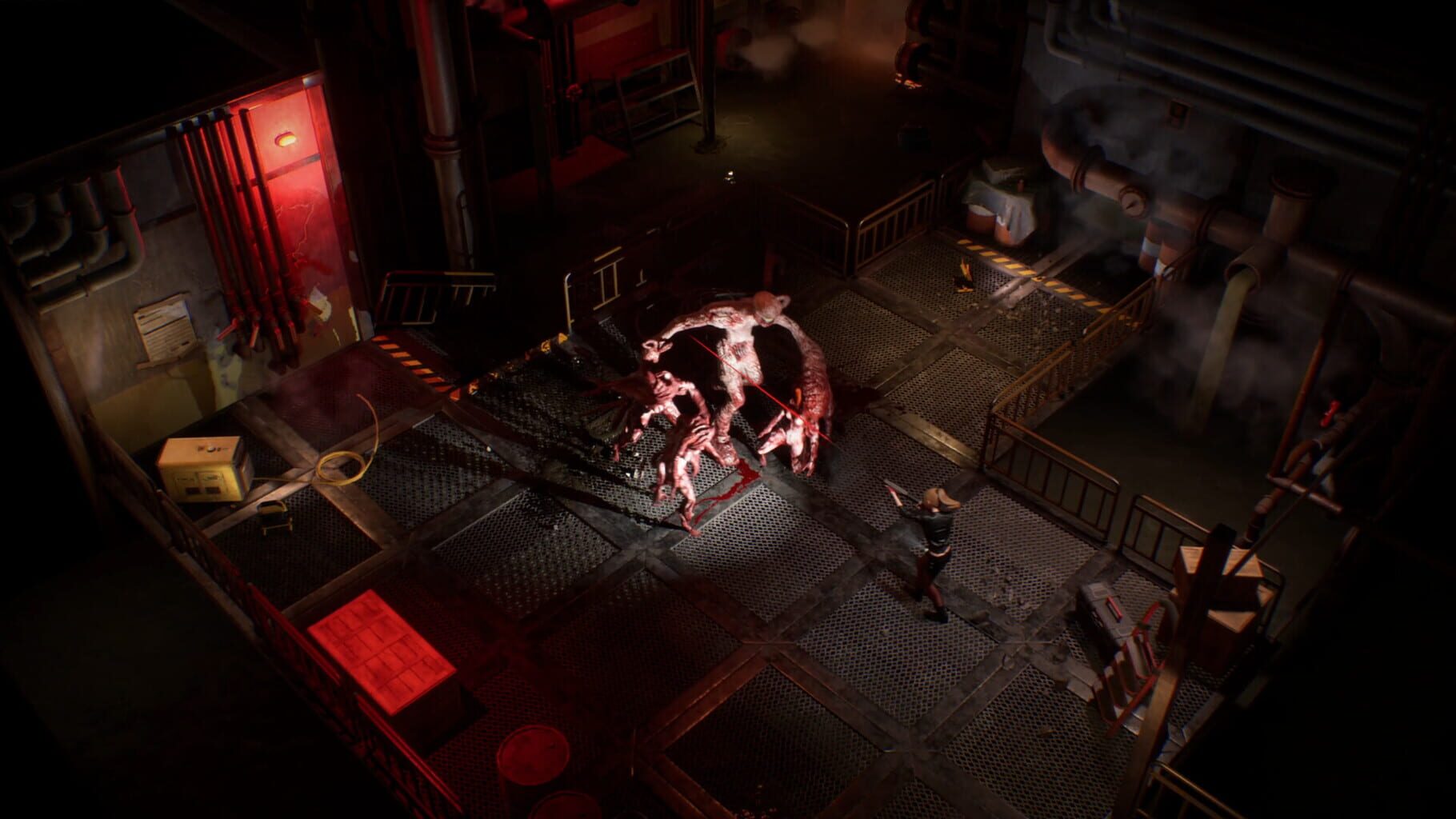
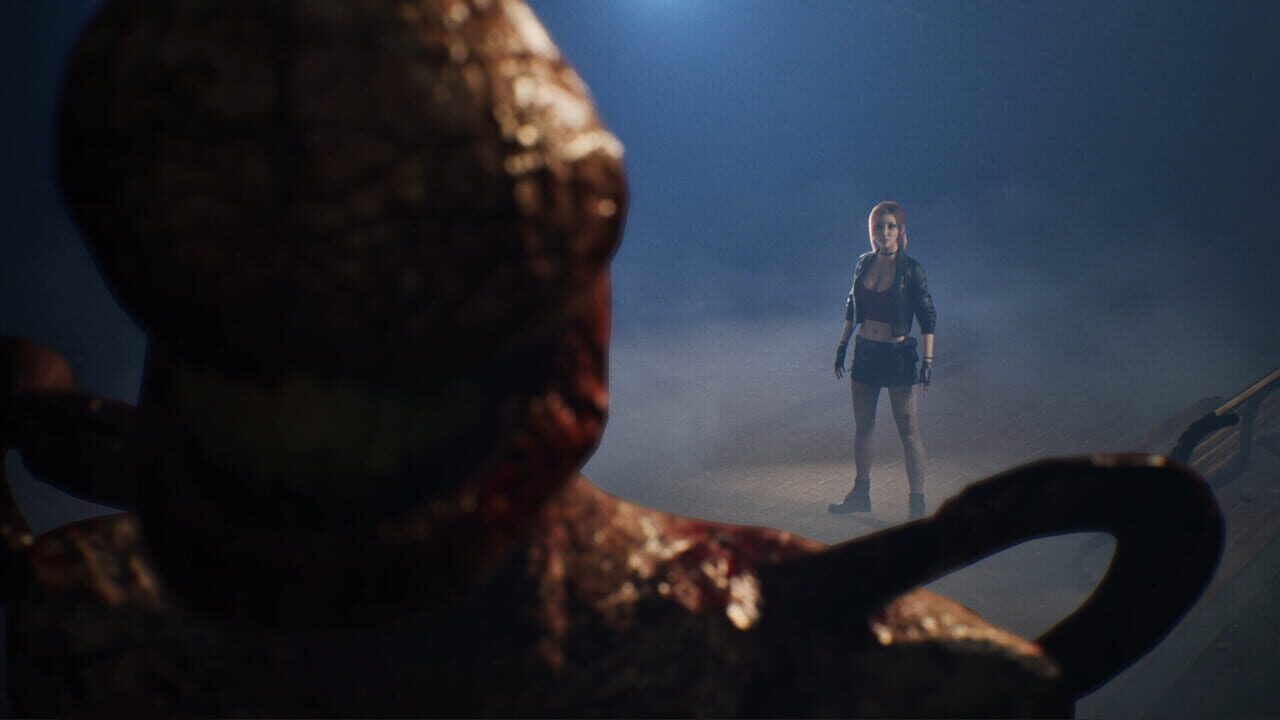
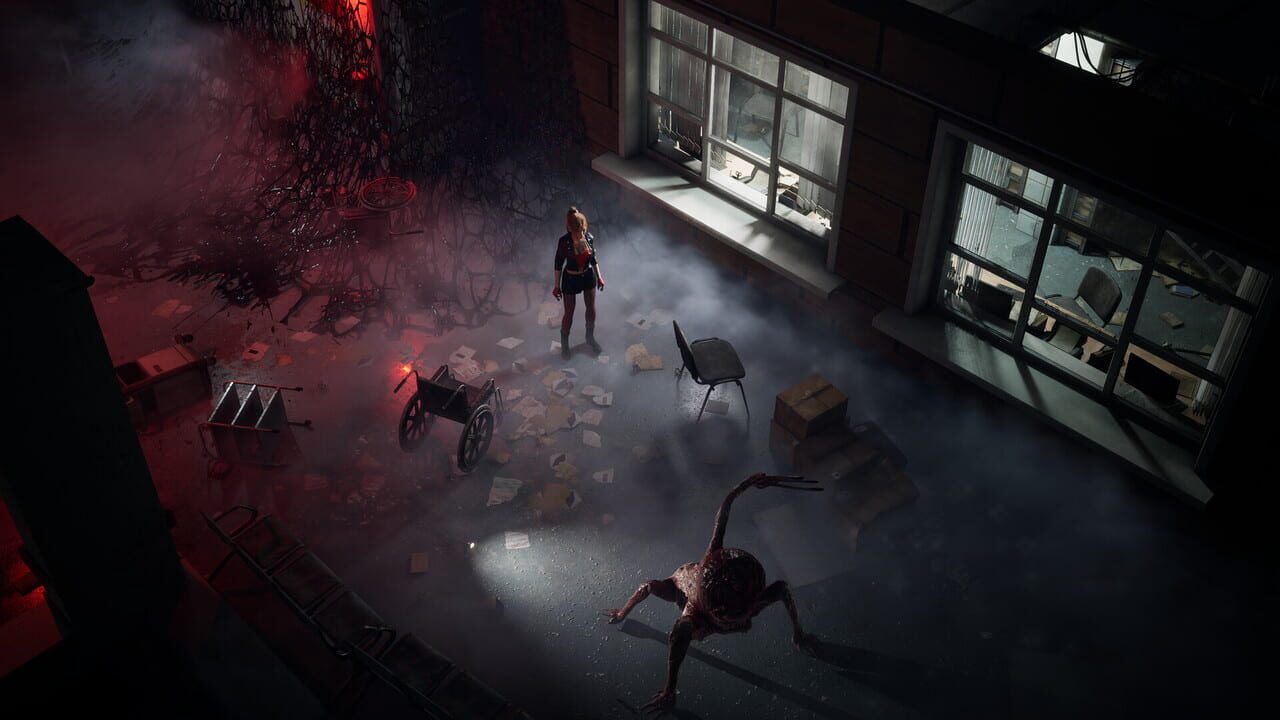
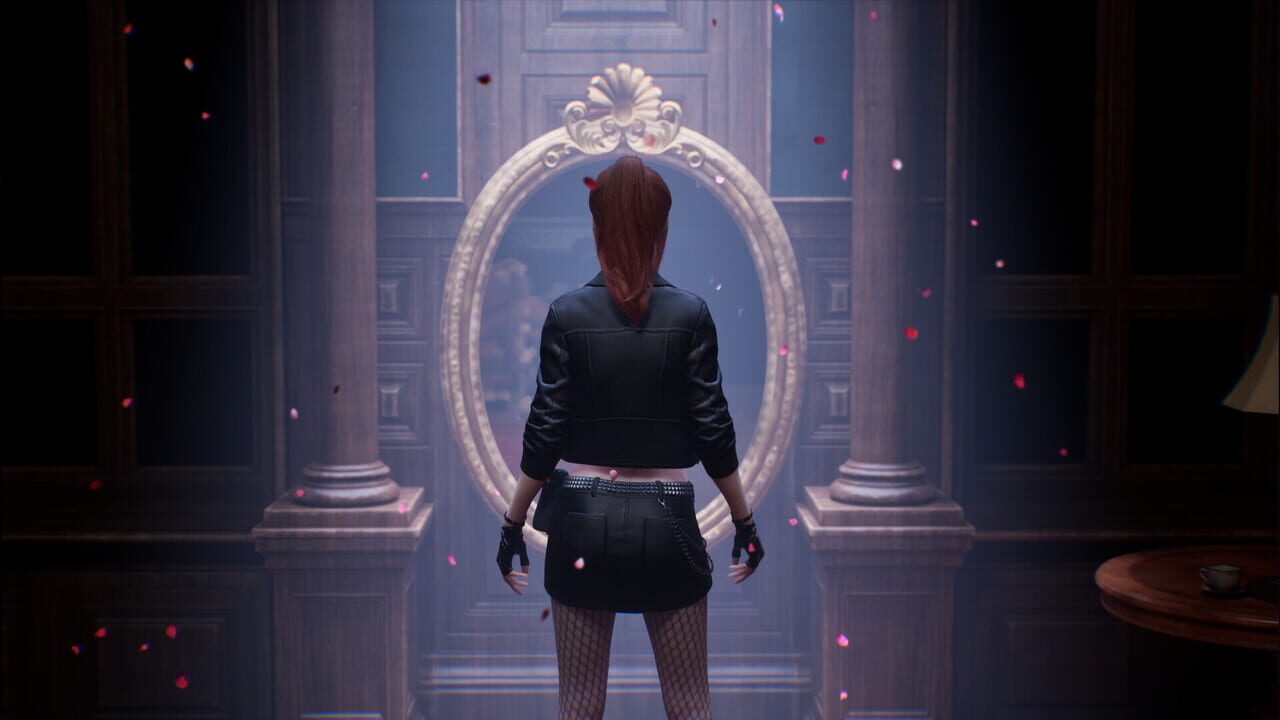
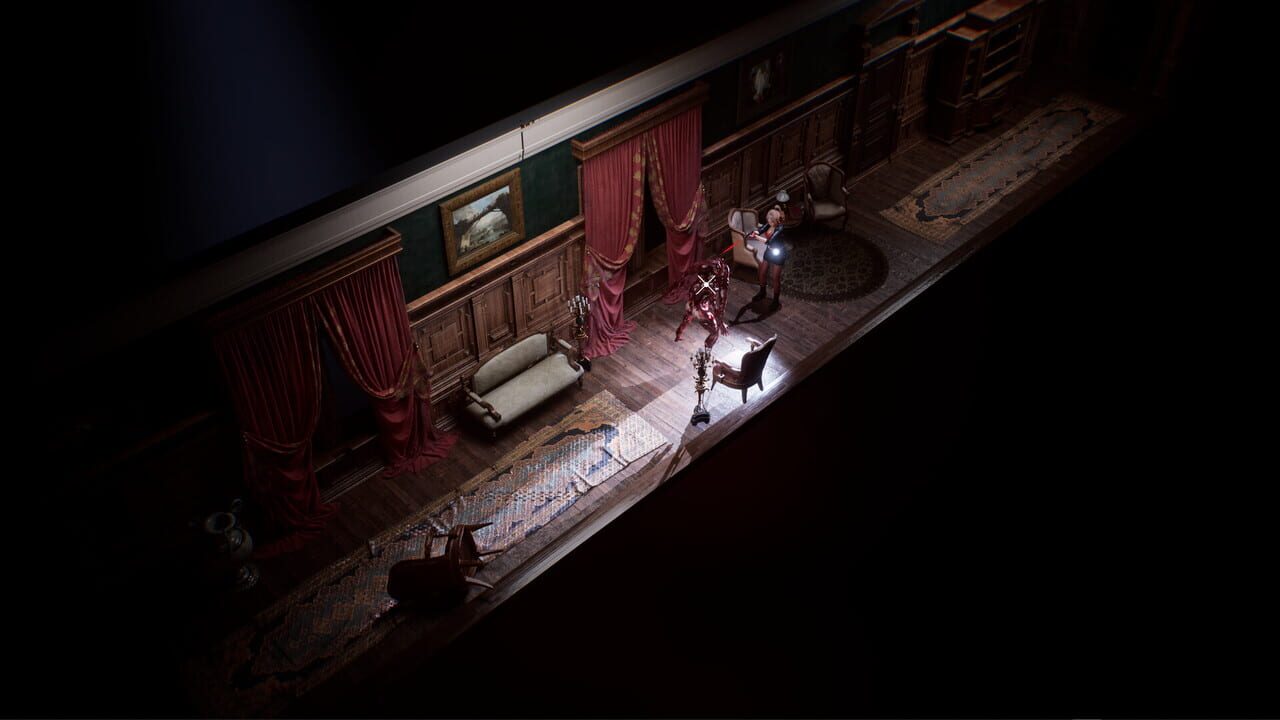
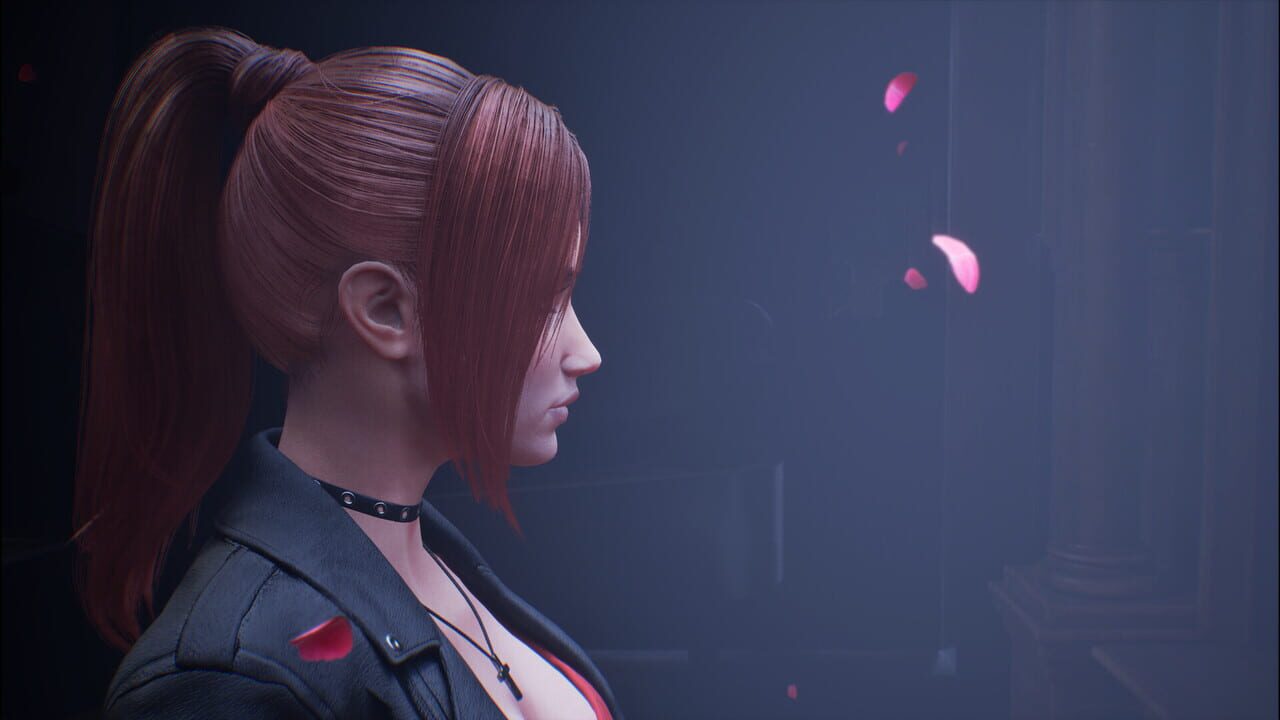
Liminal Point, HideWorks' contribution to a current wave of new survival horror explicitly built in this lineage, is made for exactly this position, whatever the studio's own intentions turn out to be once the game ships. Lyra returns to Ashen Point, an island where her band's story ended in tragedy, called back by a voicemail she cannot place, into a town described as fog-shrouded and prowled by whatever now lives there. A PlayStation 5, a current Xbox, and the PC hardware both are built against have no trouble at all rendering an island in full. Whatever haze covers Ashen Point, then, was chosen rather than conceded, and that single fact changes nothing about whether the fog will work and everything about the standard it now has to be judged against. A studio in 1999 got its fog for free by admitting a limit publicly. A studio in 2026 has to earn the identical fog through design, and design, unlike a memory budget, can be examined and found wanting.
The test is simple to state and considerably harder to pass. Fog earns its comparison to Silent Hill only if it still performs the job the original fog performed, which was never really about the picture on screen, it was about withholding a decision from the player at the exact range where the decision would otherwise be easy to make correctly. A haze laid over a fully lit, fully simulated space, one where the game's own systems already know precisely where every threat stands and would report that position without complaint given a different camera angle, sits closer to a color grade than to occlusion: it photographs like dread and behaves like weather. Fog that is actually doing the job changes what a player can act on, whether a threat has to be inferred from a sound rather than read from a sightline, whether a street can be crossed without knowing in advance if it is empty, whether the map itself, and not merely the image rendered from it, genuinely stops at the gray. A game can install every visual signature Silent Hill made famous and still fail this test outright, because the signature and the mechanism behind it were only ever the same thing by accident, in 1999, on hardware that offered its makers no other option. Fog chosen because Silent Hill had fog, rather than because the design required it, is decoration, and decoration does not frighten anyone, however much it costs to render.
Whether Ashen Point clears that bar is not knowable from outside the finished game, and a premise is not a build. The premise does supply one detail worth sitting with on its own terms: Ashen Point is an island, which means its fog has water to work with as well as streets. An island's haze does more than blur a skyline. It erases the horizon a visitor would ordinarily use to get her bearings, replacing open sea with a gray that could be forty feet of water or four hundred, a ferry dock or an empty coastline, with nothing available from where Lyra is standing to settle the difference. If the design is doing the work fog exists to do, there will be a stretch of dock ahead of her that is simply, legibly there: planking, a piling, a line dropped slack into the water, some fixed and countable number of feet, and then a boundary past which the game declines to tell her anything further. What the engine is actually rendering on the far side of that boundary, more water, more geometry, nothing at all, matters less than what is visible before it: the dock in front of her, and the plain fact that everything past it now has to be built by whoever is holding the controller, using equipment that has been reading the edges of tree lines and shorelines for a great deal longer than there have been towns, or islands, or reasons yet invented to be afraid of either.