
The cliffside scene appears in Stardew Valley's first in-game year, in the southeast corner of the map, on a rainy night in late winter. The player has, by this point, been in Pelican Town for somewhere between thirty and fifty real-world hours. The player has met the bartender Gus, the carpenter Robin, the wizard who lives in the tower, the woman named Pam who drinks at the saloon and drives the bus, and a tall, taciturn farmhand named Shane, who works at the Joja corporate convenience store down the road and shuffles to the saloon in the evenings to drink alone at the bar. Shane has been one of the more difficult villagers to befriend. He responds to gifts with hostility. He responds to small talk with longer hostility. The player, at the eight-heart friendship threshold the game's friendship system tracks across dozens of small interactions, encounters a scripted cutscene in which Shane is found at the edge of a cliff at night, drunk, considering the drop. The player intervenes. The scene moves to the hospital. Shane begins, in the subsequent in-game days, the slow process of choosing to live.
The cutscene was added by the developer Eric Barone, working alone in an apartment in Seattle, sometime during the four-year development cycle that produced the game's February 2016 release. Barone has talked, in subsequent interviews, about the deliberateness of the decision. The cozy game he was building was not going to be a game without sorrow inside it. The town the player was moving into was going to be a town that contained the specific kinds of pain that small towns actually contain. The player was going to spend hundreds of hours raising chickens and watering pumpkins and giving the right neighbour the right gift on the right birthday. The player was also going to spend, if the player engaged the game's social systems with any depth, a substantial portion of those hours inside the lives of the people the town had been carrying along its margins. Pam's drinking. Shane's depression. Sebastian's social withdrawal and the implicit suggestion that he is older than he should still be living above his mother's house at the age he is. Penny's effort to teach the town's two children while living in a trailer with an alcoholic mother. The Wizard's failed marriage and the witch who haunts him from the swamp. The slow, accumulated, hour-by-hour revelation that the apparently cozy small town the player has moved into is, on close attention, exactly the kind of complicated small town the player might have moved into in life. Stardew Valley sold roughly thirty-five million copies across its first nine years on sale. The sorrow inside it was, on Barone's design choices, an architectural commitment of the project.
This is a Form & Systems essay. Its subject is the specific design event that Stardew Valley executed in 2016, the much larger wave of cozy-farming-simulator games that followed across the next decade, the specific thing those successors did to the genre Barone had handed them, and the small commercial-cultural moment at which a game called Grave Seasons, released by the horror studio Blumhouse and the developer Perfect Garbage on 14 August 2026, is restoring to the genre what the successors had spent eight years taking out. The argument the essay wants to commit to is straightforward and slightly unkind to a generation of small developers who have been working in good faith inside a market they did not entirely design. The cozy-farming wave that Stardew Valley made commercially possible has been, across most of its post-2016 entries, an active sanitization of the source material. The sanitization is detectable in the systems, not just the surfaces. Grave Seasons is the first major commercial entry that takes the position that the sanitization was a mistake, and the game's design choices are calibrated against the specific things its closest commercial peers have been declining to do.
What Stardew Valley actually had, at the level of its systems, is worth being specific about because the surface conversation about the game has tended to obscure it. The game has two endings. The default ending is the Community Center route, in which the player restores the abandoned town meeting hall over a period of in-game seasons by completing collection bundles of crops and minerals and forest forageables. The alternate ending is the Joja Warehouse route, in which the player pays the corporate Joja Mart a five-hundred-thousand-gold subscription fee to have the same bundles fulfilled commercially. The two endings are not framed as equivalent. The Joja route produces a darker town, with the same buildings unlocked but the cultural register shifted: villagers are unhappier, the town's small economy has been visibly hollowed out, the corporate logo has replaced the community insignia. The mechanical option is a real option. The cultural verdict the game's systems deliver on the option is not subtle. The player has, in choosing Joja, chosen something the design treats as a loss.
This is not the only place the system carries judgment. The friendship-event scripts for the villagers contain a working architecture of small social tragedies the player can become implicated in. Shane's eight-heart cutscene is one of the more visible. There is an equivalent for Pam, who at sufficient friendship thresholds reveals the family-historical reasons her drinking has become what it has become, and whose redemption is conditioned on the player paying for a house repair the woman cannot afford. There is an equivalent for Penny, whose schoolteacher work and trailer-park living conditions are the daily grinding context the player has not been seeing across the cozy surface. There is an equivalent for the Wizard. There are equivalents for several of the smaller villagers the player who does not chase the friendship systems will never trigger. The architecture is deep and the architecture is consistent. The cozy small town the player has moved into has, in its systems, the same density of small unresolved pain that the realist novel has been reporting from small towns since the form was invented. Barone built the architecture into the project on purpose. The architecture is, on close reading of the game's systems, the project's central design event. The crops are the surface. The architecture is what holds the surface up.
The pastoral inheritance the game is working inside is older than the cozy-game genre and has its own scholarly tradition. The Welsh literary critic Raymond Williams's 1973 The Country and the City remains the foundational study of the pattern. Williams's argument, developed across a careful reading of English literature from the sixteenth century through to the early twentieth, was that the pastoral idealization of the countryside is not a fact about the countryside. It is a function of urban anxiety. The city, in the period of its modern industrial development, generated a sustained literary production of the countryside as the simple place, the unspoiled place, the place where the social ties were warmer and the moral architecture clearer than the city's own. The countryside the literature was describing did not exist in the way the literature described it. The actual countryside, in the same historical periods, contained the working conditions of rural labour, the closed social hierarchies of village life, the small-scale violences the rural community policed itself with, and the specific isolation of being a person who could not, in practice, leave. The pastoral was the city's myth about the country. The country, when one actually went there, was not the pastoral. Williams's case was that the literature was not lying about the country in a simple sense; it was producing an idealization that the city needed in order to bear the city's own conditions, and the production was the country's significance for the urban reader.
The cozy-farming-simulator inherits this pattern and is, in some sense, the latest entry in the tradition Williams was tracking. The player living in a small urban apartment in 2026, looking at a screen, is being offered the country the city has always offered itself. The country is simpler. The country is warmer. The country is where the player goes to repair the world that the city has not allowed the player to repair. The genre's central economic proposition runs on this. The genre's specific cultural achievement in Barone's hands, though, was to install inside the pastoral surface a working architecture of the rural reality the pastoral has always been concealing. The drinking, the depression, the corporate encroachment, the small village's actual difficulty of being a village. Barone did not erase the cozy surface. He built the harder material inside the surface so that the player who engaged the systems would have to encounter the material, and the player who only watered the crops would have the surface left for them. The design served both registers at once. The design was, on the historical record of how the pastoral has been working in literature since the sixteenth century, an unusual and specific achievement.
What the post-Stardew wave did with this inheritance is the part of the analysis that has not been written down often enough. The roughly forty cozy-farming-sim titles that have been released across 2018 to 2025, of which Coral Island, Fae Farm, Sun Haven, the various Story of Seasons revivals, and a substantial volume of smaller indie titles are the most visible, have been a category of considerable commercial productivity and considerable design timidity. Most of them have, on careful examination, taken Stardew Valley's surface (the village, the bachelors and bachelorettes, the crops, the festivals, the friendship hearts) and removed, with quiet thoroughness, the architectural commitments to small-town pain that Barone had built into the source. Pam's alcoholism is not in Coral Island. Shane's depression is not in Fae Farm. The Joja-versus-Community-Center binary is not in Sun Haven. The implicit suggestion that the village contains people who are not okay is, in most of the successor titles, missing. The villagers are uniformly pleasant. The complications are romantic-pursuit complications. The small social architecture the genre's progenitor had committed to has been replaced, across most of its commercial successors, with a flat positivity that the genre's market research has presumably determined is what the audience wants. The successors are not bad games. The successors have, on the architectural level, mostly declined to build what the founder built. The founder's architecture is the one that the genre's reputation has been carrying. The successors have been borrowing the reputation without paying the architectural cost.
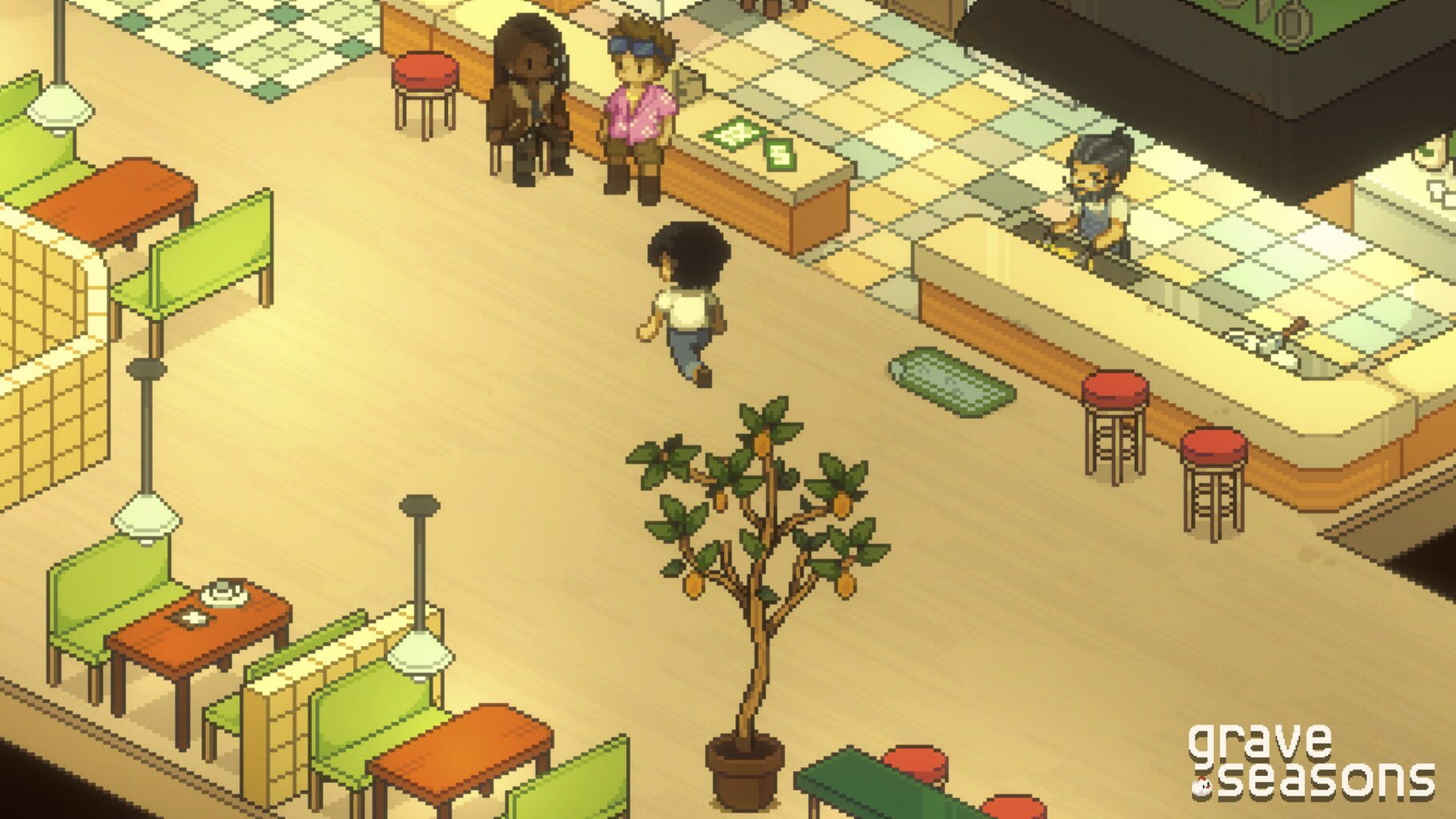
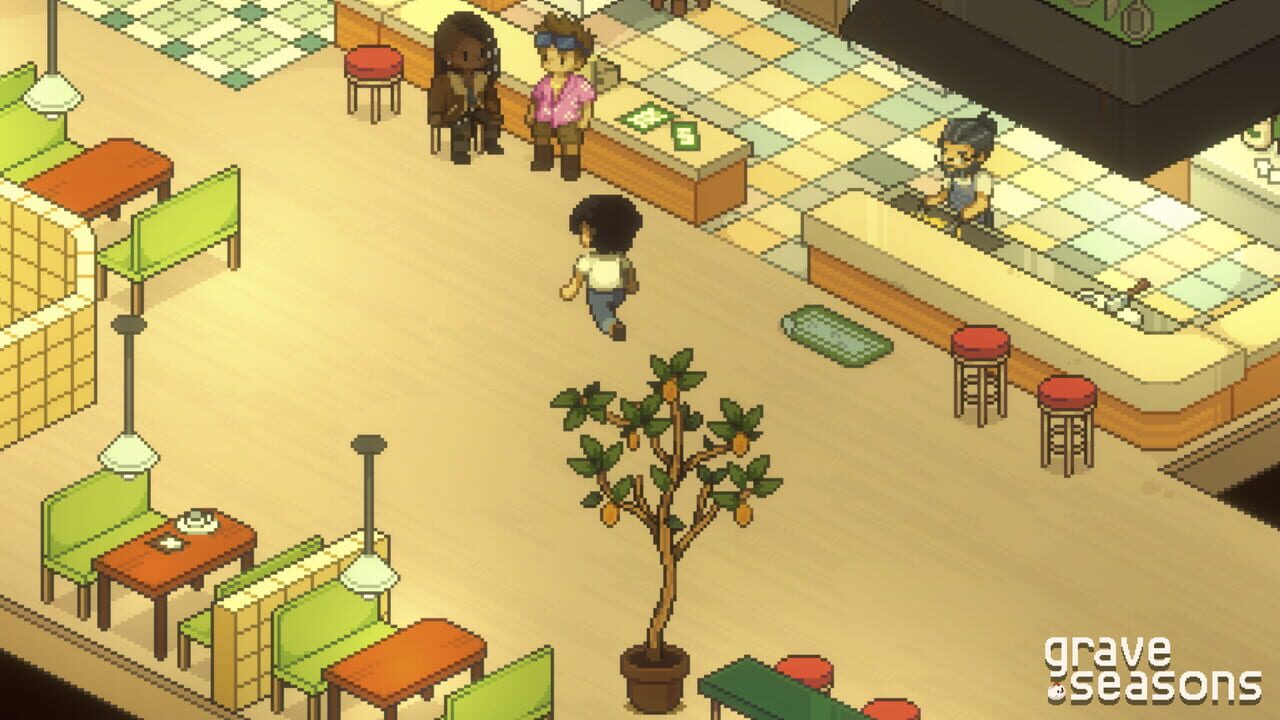
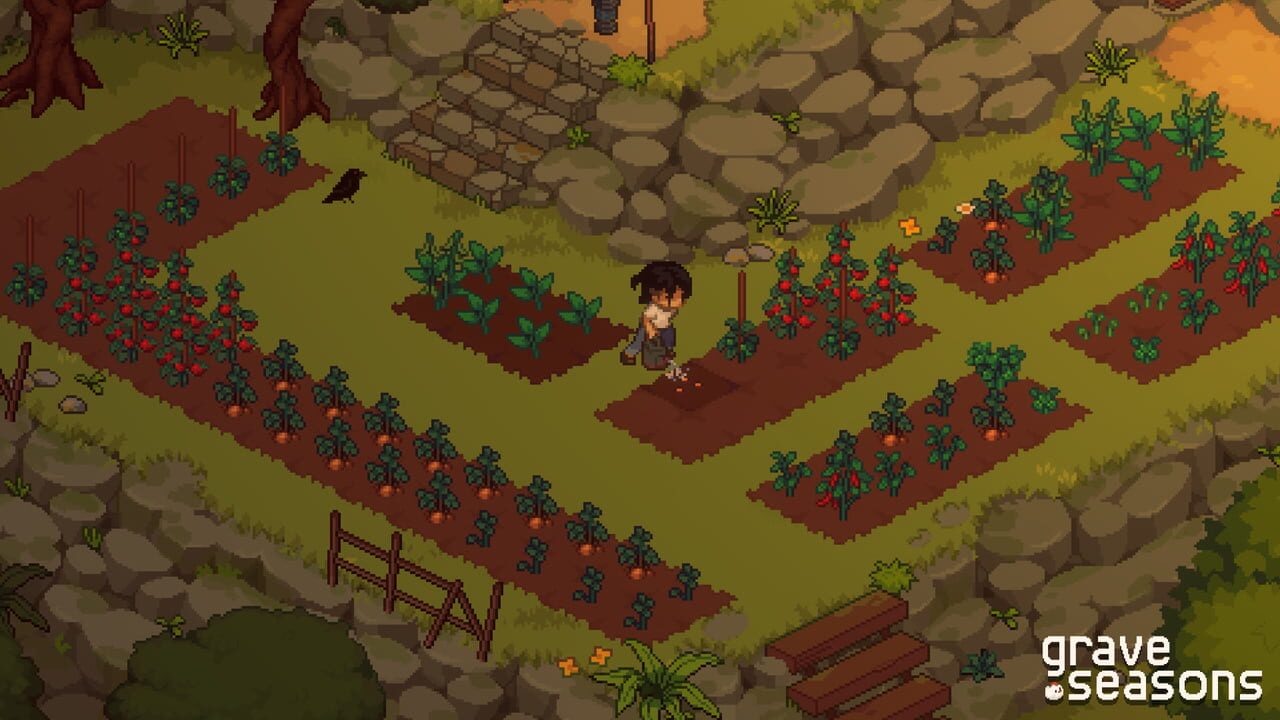
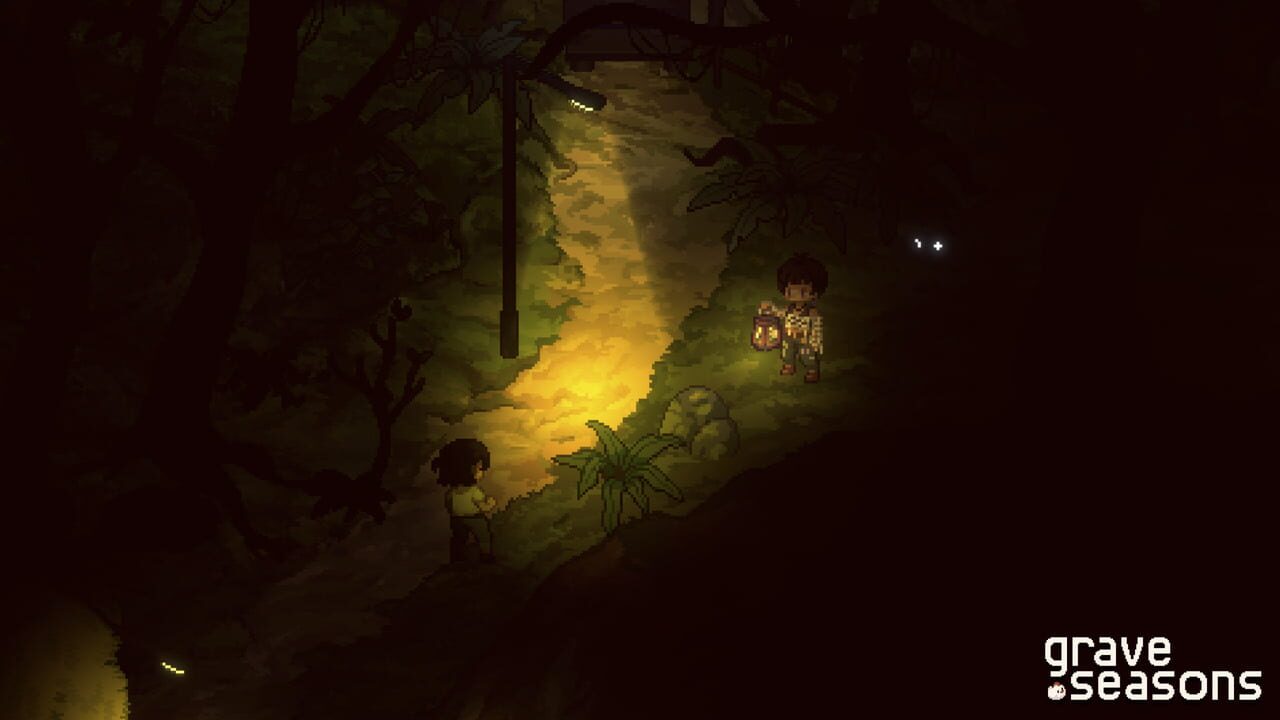
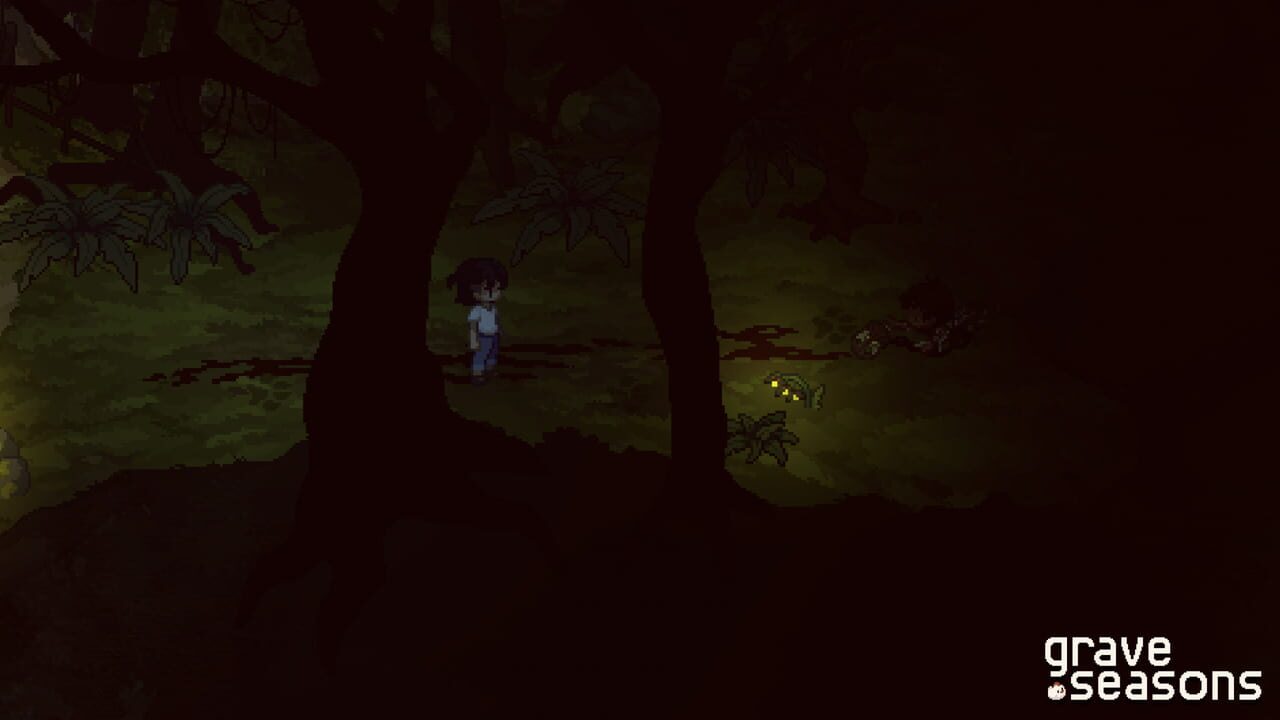
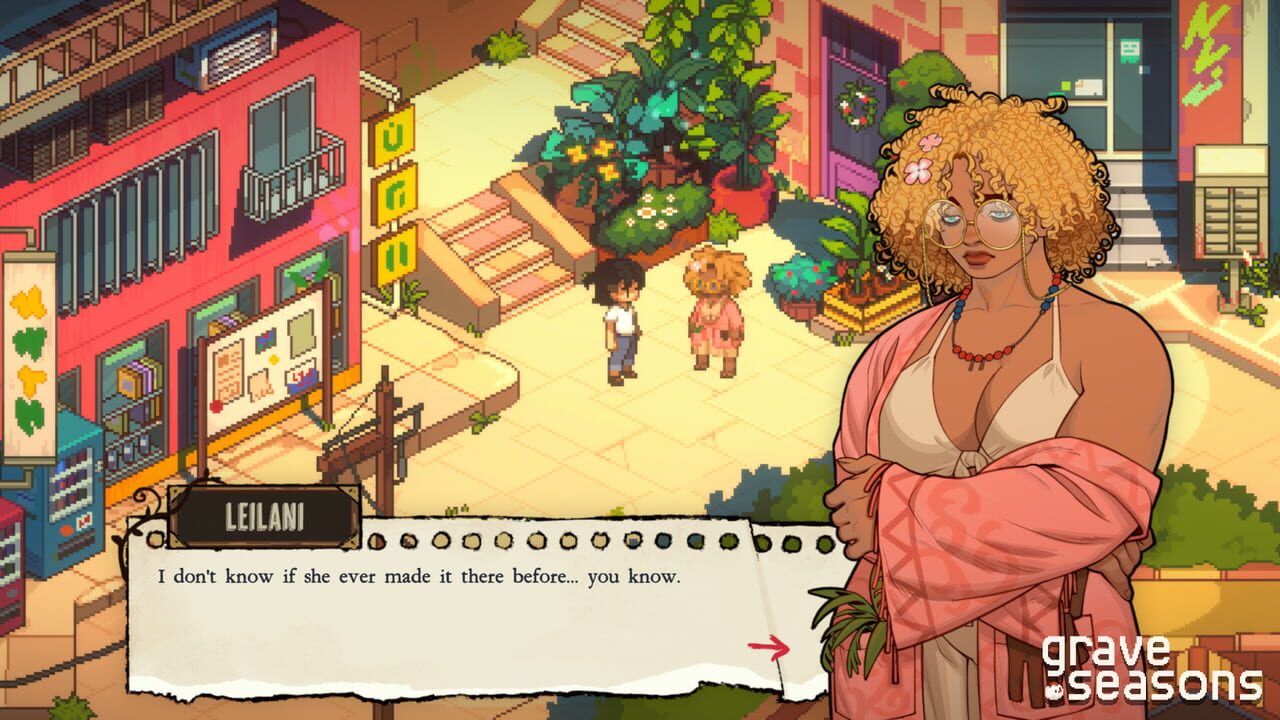
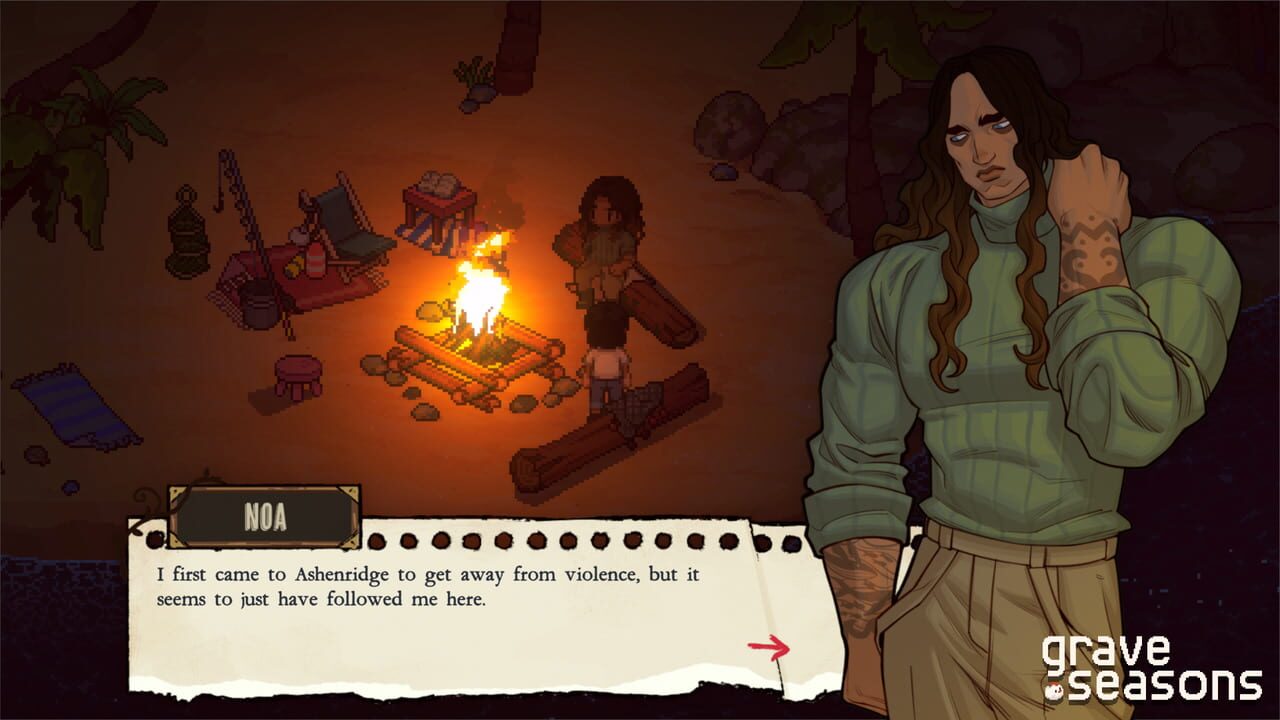
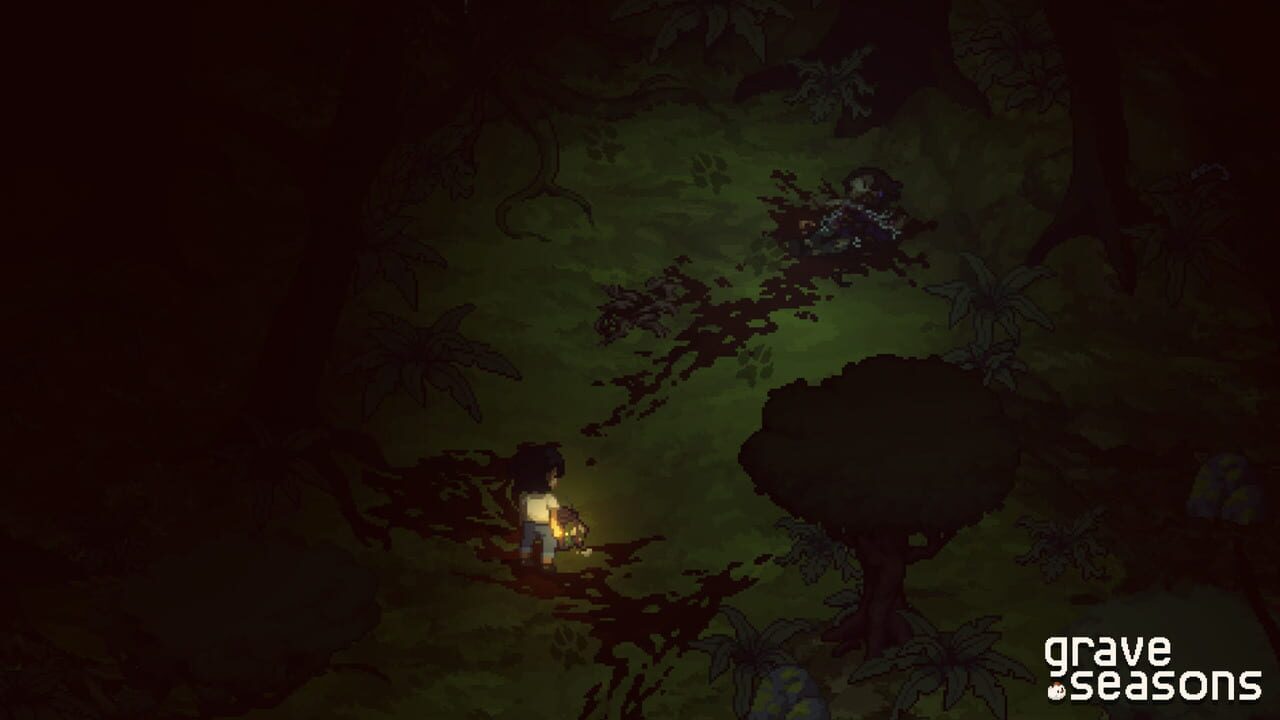
Grave Seasons is, against this background, a deliberate reversal. The game is set in a small town called Ashenridge, which the player arrives in after a treacherous jail escape, and which has the visual register and the friendship-and-crops systems of the cozy-farming-sim category in good standing. The complication is that someone in the town is a supernatural serial killer, the identity of the killer is procedurally randomized at the start of each playthrough, the killer's targets are also procedurally selected, and the player's investigation choices reshape what evidence is found, what dialogue surviving residents will provide, and what the run's resolution looks like. The design is, on first description, a hybrid of the cozy-farming sim with the closed-village murder mystery in the Agatha Christie tradition. The hybrid is unusual. The hybrid is also, on the Williams reading, an act of restoration that the genre has been overdue for.
The Christie-tradition village mystery is the form that has been doing the most honest version of the pastoral inheritance for the past hundred years. The English country-house mystery, the small-village mystery, the closed-society mystery: these forms have been working inside the pastoral surface without buying it. The reader of Christie's Murder at the Vicarage in 1930, or P. D. James's Devices and Desires in 1989, or the long television tradition the form has produced from Midsomer Murders to Broadchurch, knows that the small village is precisely the place where the social ties are tight enough that everyone is implicated in the crime, that the secrets are kept by the architecture of the village's own privacy, that the violence happens behind a closed kitchen door, and that the new arrival who walked into town three weeks ago is the only character who could plausibly have done what was done. The form has been operating on the premise that the pastoral village is a cover for the actual village. The form is consistent with the Williams reading. The form has been honest about what the village is, for ninety-five years, without breaking the pastoral surface that brings the reader in.
Grave Seasons appears, then, to be the cozy-farming genre's first sustained encounter with the Christie tradition. The systems do not appear, on the available preview material, to be making the village a darker place. The systems are explicitly making the village the darker place the village has always actually been. The serial killer is a real systemic element. The investigation is a real systemic element. The choice of whom to suspect, whom to protect, whom to allow the killer to reach next, is being built into the friendship-and-crops loop the player will be running every in-game week. The cozy surface is being preserved, but the cozy surface is being held in deliberate tension with the architectural fact that the village is, behind the surface, exactly the kind of place the village has always been. The architecture is what Stardew Valley had. The architecture is what most of the post-Stardew wave declined to keep. Grave Seasons is the first major commercial entry that returns the architecture to its foreground position, and the design choice to put the killer into the systems rather than into the cosmetic layer is the choice that makes the game an architectural successor to Stardew rather than a surface successor.
There is an obvious counter-reading and the essay has to engage it. The counter-reading is that the cozy-farming wave's sanitization was responsive to what the audience actually wanted, and the wave's commercial success across 2018 to 2025 is the empirical evidence that the audience preferred the flat-positivity version of the genre to the architecturally-darker source. The framework above is, on this reading, making an aesthetic-architectural judgment that the market has already weighed in against.
The objection is partly right and the response has to acknowledge the partial rightness. The wave was, in commercial terms, successful. The market has supported the sanitized version. The audience for the sanitized version is real and has been buying the games. The framework is not claiming the sanitized version should not exist or that it has no audience. The framework is claiming something narrower. The architectural achievement of the source has not been replicated by the surface-only successors, and the reputation the source built has been carrying the successors past the architectural absence the successors have been committing to. Stardew Valley remains, in the eleventh year after its release, the dominant cultural reference for the genre, while the cumulative commercial volume of the post-Stardew wave is several multiples of Stardew's own. The dominance is not because Stardew has better crops. The dominance is because Stardew has the architecture the wave has been declining to build. The market has supported the wave; the cultural memory has not transferred from the source to the wave. The architectural absence is the part the cultural memory has been tracking even when the commercial measurements have not. Grave Seasons is the first major commercial entry to bet that the cultural memory is the more durable signal, and the bet is the design's central commercial argument.
The closing image is from outside the cozy-farming-sim category entirely. The Christie short story, "The Listerdale Mystery," published in The Grand Magazine in 1934 and later collected, opens on a small English village in which a respectable widow is offering a furnished house at an improbably low rent. The early pages of the story are pastoral in the cleanest sense. The village is quiet. The house is charming. The garden is in flower. The reader who comes to Christie knowing the form is already three steps ahead of the surface. The reader knows the rent is improbable because something is wrong with the house, knows the village is quiet because the village contains people who are not telling each other things, and knows that the widow's calm civility is the formal language a small society uses to keep its working knowledge of the violence in it from rising to the surface. The reader is in the pastoral and is also reading through the pastoral, and the reading is the pleasure. The cozy-farming-sim has had its surface for fifty years. The architecture underneath the surface is older. Grave Seasons is the new entry that has been written by people who know the architecture and are willing to put it back.