

The dog has been lying in the dung-heap by the gate for twenty years and is alone in recognising the master who is approaching the gate. He is, in the narrator's matter-of-fact account, riddled with vermin. He cannot stand. He lifts his head and his ears as the man passes. The man does not stop. The dog watches him go and then dies. The whole exchange occupies, in the Greek of the Odyssey's seventeenth book, lines 290 to 327, perhaps three minutes of reading time, and it is the most concentrated single passage of recognition the poem contains. Odysseus has slipped through the disguise of beggar's rags that has hidden him from twenty years of his own household. The dog is not fooled. The dog has been waiting.
The passage is older than the writing of the poem, and the poem is older than most of the cultural traditions that would later quote it. The image is also, on the available archaeological and ethnographic record, a piece of human storytelling that does not appear to have been invented once and copied. It appears to have been invented several times, by populations who could not have been in contact with each other, because the figure it composes was needed.
This is a People & Culture essay. Its subject is the hero-and-dog pair as one of the more durable storytelling configurations the species has produced, the reasons for that durability that the past three decades of animal-cognition research have started to make concrete, and what it means that the contemporary action role-playing game keeps building variants of the configuration into its central design loops. The argument the essay wants to commit to is direct. The dog in the action game is not a sidekick, not a pet, not narrative décor. The dog is a piece of fifteen-thousand-year-old emotional infrastructure that the species has been building stories around since the first dog walked out of the wolf-camp and into the human one, and the contemporary medium has been re-discovering the infrastructure because the medium needs what the infrastructure provides.
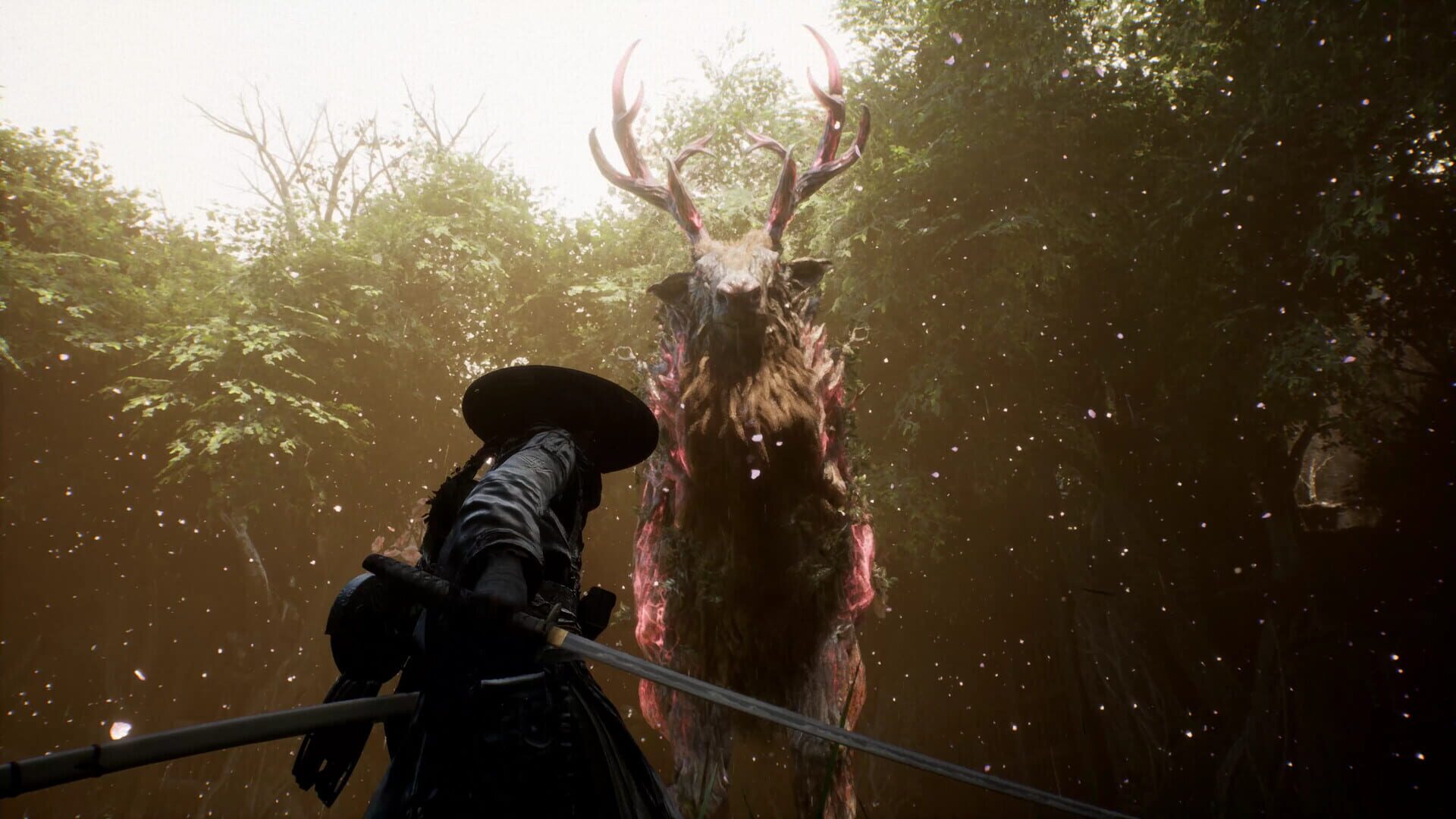
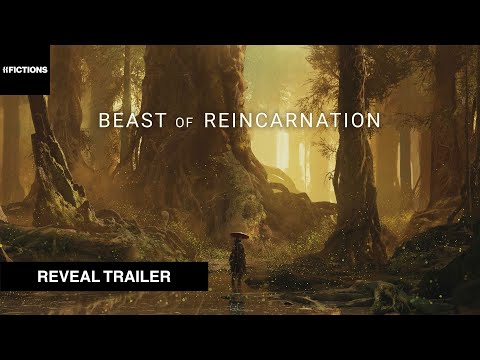
Beast of Reincarnation, the action role-playing game that the Tokyo studio Game Freak releases on 4 August 2026, is the studio's first major production outside the Pokemon franchise in roughly two decades. The protagonist is an eighteen-year-old woman named Emma. The setting is a post-apocalyptic Japan two thousand years in the future, blighted by a corrupted creature that has poisoned the natural world. Emma fights with a katana. She is accompanied, across the entire course of the game, by a stray dog named Koo, whose abilities are triggered through a command-based system the player accesses by parrying enemy attacks with Emma's katana to build a meter that Koo's actions then spend. The combat is, in the studio's own description, fast-paced for Emma's verbs and turn-based-adjacent for Koo's. The pair is, in the game's narrative material, presented as inseparable. The studio has been signalling, in interviews around the announcement, that the dog is the design's central commitment.
What that commitment is doing has a much longer history than the game's marketing materials acknowledge. The cross-cultural record of the hero-and-dog pair is unusual in its breadth. The Odyssey's Argos has its Hebrew counterpart in the Book of Tobit, a deuterocanonical text written around the second century BCE in which the young Tobias travels with his father's dog across the cities of ancient Persia in the company of the angel Raphael, and the dog is, oddly for an angel-and-mortal-quest story, mentioned by the narrator in Chapter 6 and again in Chapter 11 as if its presence were so obviously necessary that to omit it would have been the strange choice. The Egyptian Book of the Dead contains a hieroglyph of Anubis, the jackal-headed god who guides souls into the afterlife, walking with the dead the way the dog walks with the living. The Norse tradition has Garmr, the hound that guards the gates of Hel. The Welsh tradition has Gelert, the loyal hound who saves the prince's child and is killed by mistake. The Russian tradition has the figure of the dog who guards the threshold between worlds. The Japanese tradition has the Akita and the Shiba and, in twentieth-century memory, the dog Hachiko who waited at Shibuya Station every day for nine years after his owner's death, for whom a bronze statue was erected in 1934 and continues to be a meeting point for Tokyo lovers and travellers in 2026. The figure is the same figure. The configuration is the same configuration. The species has been telling itself this story across continents and across millennia, for what is now turning out to be a measurable biological reason.
The reason has, in the past decade of comparative-cognition research, been getting clearer. The 2015 paper that consolidated the framework is the one by the Azabu University team led by Miho Nagasawa, published in the journal Science under the title "Oxytocin-gaze positive loop and the co-evolution of human-dog bonds." The team measured oxytocin concentrations in the urine of dogs and their owners before and after thirty-minute sessions of mutual gazing. The result was a striking one. Sustained mutual gaze between dog and owner produced increases in oxytocin concentrations in both species, with the dog's oxytocin increase preceding the owner's by a measurable interval and the owner's oxytocin increase preceding the dog's next bout of gazing behaviour. The behavioural and hormonal loop ran in both directions. Crucially, the same experiment conducted with hand-raised wolves and their human handlers produced no oxytocin increase in either species. The loop was specific to the dog. The loop did not exist between humans and wolves, despite the wolves being genetically very close to dogs and the handlers being closely bonded to them. The loop had been built, by the process of domestication, into the dog-human bond specifically, and not into the human-wolf bond from which the dog had been drawn.
The implication of the Nagasawa finding is one the field has been working through since. The mechanism appears to be a hijacking of the mother-infant bonding system. The mutual-gaze oxytocin loop is the same mechanism that operates between human mothers and their infants, which the field has known about for considerably longer. The dog, across the roughly fifteen thousand to forty thousand years since domestication began, has evolved into the gap that loop opened. The dog has the wiring to engage the system. The wolf does not. The dog and the human, when they look at each other, run the chemistry that the human runs with their own infants. The relationship is not a metaphor for parenting. The relationship is using the same biochemical machinery.
The American anthropologist Pat Shipman's 2011 book The Animal Connection developed the broader claim the Nagasawa finding has empirically grounded. Shipman's argument is that the human-dog bond is not a peripheral evolutionary curiosity but a central one. The domestication of the dog, on her reading, was one of the formative events in human cognitive development. The dog gave the human species things the species did not have on its own: a watchful sensory perimeter that ran while the humans slept, a hunting partner whose senses extended the hunters' own, a child-substitute for individuals who could not or did not have children, an interspecies attachment that the bonding chemistry of the human brain was built to engage. Shipman's argument has not gone uncontested in its details. The broader claim has held up. Whatever the precise sequence, the dog appears to have been on the inside of human cognitive development for long enough that the species' emotional architecture has, in some real sense, become an architecture that includes the dog. The dog is in the wiring.
This is the part of the analysis that explains why the Odyssey passage works the way it works. Argos is the only character in the household who recognises Odysseus immediately, because Argos is the only character in the household whose bond to Odysseus operates through the oxytocin-gaze loop the Nagasawa team described. Penelope's recognition mechanism is cognitive: she has to be argued into seeing the man in front of her. The servants' recognition mechanism is also cognitive: they have to be told. The dog's mechanism is not cognitive in the same sense. The dog has the master's smell, the master's gait, the master's gaze, and the recognition system that processes those inputs runs below the level of the cognitive disguise the rags are providing. The dog cannot be deceived because the dog is not using the channel the deception is operating on. The Homeric tradition was working out this distinction in a vocabulary that did not have the words "oxytocin" or "olfactory recognition" or "cross-species attachment" available, but the tradition was working with the phenomenon those words now name. The dog recognises. The dog has always recognised. The species has known this about itself for as long as it has been writing.
This is also why the dog dies. The Argos passage's most-cited feature is its brevity. Three minutes of reading time, then the dog dies, and Odysseus does not stop. The harshness of the moment is sometimes read as a comment on Odysseus's hardness, on the necessity of his disguise, on the cost of vengeance, on the moral architecture of the poem. These readings are not wrong. But the harshness operates on the reader at a level the readings do not quite reach, because the reader knows, without being told and across whatever centuries separate the reader from the poem, that the dog's recognition is the event the passage turns on and the dog's death is the cost of the recognition. The dog has waited twenty years and has held inside that wait the emotional record of the bond that the household has otherwise lost. The bond is delivered, in the moment of the reunion, and then the dog dies, because the dog had been keeping it alive and now it can be put down. The reader cries because the reader's own architecture has been engaged. The architecture is the one the Nagasawa loop describes. The dog's death is the closing of a circuit that the dog had been the carrier of, and the closing is felt because the circuit is built into the species.
The video-game tradition has been working in this material with increasing confidence over the past two decades. The 2004 Fallout 3 reintroduced the post-apocalyptic dog companion, Dogmeat, which Bethesda would carry across Fallout 4 in 2015 and which had its own roots in the original Fallout's dog companion from 1997. The 2016 The Last Guardian made a quadruped creature named Trico the entire emotional architecture of the game, building a four-year design effort around the question of whether a digital animal could carry the same affective load a real dog carried. The 2018 God of War's Atreus is not a dog but is functionally a dog in many of the dramaturgical positions the game places him in. The 2022 Stray inverted the configuration by making the player the animal and the human partner a peripheral character. The 2026 Beast of Reincarnation is the next entry in this sequence, and Game Freak's design choice to make Koo's abilities the focal commitment of the combat system, rather than a peripheral aid, is the strongest commitment a game has made to the dog-as-co-protagonist position since The Last Guardian.
What the dog in the game is doing, in the cognitive register the player experiences, is loading the player's existing emotional architecture in a way that no other companion design can. The human sidekick does not run the oxytocin-gaze loop. The robot does not run it. The fantasy creature does not run it. The dog does. The species' wiring has been built around the dog specifically, and the dog in the game taps into that wiring with no translation required. The player who has had a dog, or who has had any sustained contact with a dog, knows the gaze, knows the way the dog positions itself at the master's flank during a moment of household stress, knows the small private chemistry of the human-dog look across a room. The game does not have to construct these. The game has only to gesture at them. The player's wiring does the rest.
There is an obvious counter-reading and the essay has to engage it. The counter-reading is that the framework is over-elevating what is essentially a marketing decision. Dogs in games sell, and Game Freak is putting one in the game because the studio is making a commercial calculation about emotional appeal. The framework above is, on this reading, doing the work of justifying the calculation in lab vocabulary.
The objection is partly right and the response has to acknowledge it. The studio is making a commercial calculation. The marketing department has, almost certainly, run focus groups in which the dog tested well. The dog does sell. The framework is not claiming otherwise. The framework is claiming that the reason the dog sells, the deeper reason that a marketing department cannot fully articulate even when it can detect the effect, is the species-level infrastructure the past thirty years of comparative-cognition research has been making visible. The dog sells because the wiring is there. The marketing department is detecting an effect whose mechanism the lab is independently mapping. Both are reading the same underlying fact about the human-dog bond. The framework adds to the marketing observation only the specificity of why the effect runs as deep as it runs, and why a hand-drawn fictional dog that the player has known for ten minutes can produce the same affective response as a real dog the player has known for ten years. The wiring runs on the gaze, the gesture, the position-at-the-flank, the specific recognisable behaviour of the species. The game can construct all of these in pixels. The wiring receives them.
It is worth being precise about why this matters for Beast of Reincarnation specifically, because the game is not making the dog into background. The combat system, on the studio's design materials, builds Koo's abilities into the central loop. Emma parries; Emma builds meter; the meter feeds Koo's actions; Koo's actions are what make the encounter winnable at the higher difficulty curves. The dog is not a help. The dog is necessary. The studio has bet a substantial production on the proposition that the player will accept the dog as a real co-protagonist whose abilities the player has to invest in, plan around, and rely on, and that the entire game's affective economy will rest on that acceptance. The bet is not a small one. Game Freak has not been outside the Pokemon franchise in any meaningful AAA production for nearly thirty years, and the design choice for its first major non-Pokemon project is to put a dog at the centre of the combat. The studio is, in effect, betting on the fifteen-thousand-year-old infrastructure to carry the production. The bet is more reasonable than the marketing materials make it sound. The infrastructure has been carrying productions for considerably longer than Game Freak has been making them.
The closing image is not Koo. The closing image is the moment from outside the game that the analysis has been working back toward the whole essay. The bronze statue at Shibuya Station, of the Akita dog Hachiko, was unveiled in 1934 by the man who had become Hachiko's caretaker after the dog's owner, the University of Tokyo professor Hidesaburo Ueno, had died of a cerebral haemorrhage at his office in 1925. Hachiko had been one year old. He continued to walk to Shibuya Station every afternoon for nine years afterward, waiting at the spot where Ueno had got off the train, until Hachiko himself died in 1935 at the age of eleven. The story is true. The statue is real. The meeting point at the statue is a real meeting point in the modern city. A traveller in Tokyo in 2026 can stand at it, with a phone in their hand, and the spot they are standing at is, on the historical record, the spot the dog stood at for nine years. The story has been a national story in Japan since the 1930s. The story is told to schoolchildren. The story is on commemorative stamps. The story has been the subject of multiple films, including an American remake in 2009. The reason the story has the cultural durability it has is the same reason the Argos passage has the cultural durability it has, and the same reason the dog in the action role-playing game will work the way the studio is hoping it will work. The wiring is there. The species put it in place because the species needed it. The dog has been holding the species' end of the circuit for longer than any of the cultural traditions that have written about doing so. The contemporary medium has, in the figure of Koo and the figures before her, found a way to engage the circuit at a digital scale the species had not previously thought possible. The engagement works. The work is older than the medium.