




Imagine, for a moment, an adult who has never played a stealth game. Place them in an unfamiliar warehouse at night, hand them a list of objects to retrieve, and tell them their job is to do this without being seen by the security personnel patrolling the building. The adult, with no specific training, will perform the task badly. They will stand in the wrong places, fail to notice the guard's sight cone, ignore the rhythm of the patrol pattern, walk through pools of light without registering them as exposure, and almost certainly fail.
Now place an adult who has spent two hundred hours playing the Thief games, plus the various Splinter Cells, plus Dishonored, plus Mark of the Ninja, plus a handful of other entries in the stealth tradition, in the same situation. This adult will perform measurably better. They will, without conscious deliberation, position themselves in shadow when standing still. They will notice when the guard's sightline shifts. They will time their movements against the patrol's rhythm. They will recognize the structural value of high ground, of pillars to break sightlines, of soft footwear, of crossing during ambient masking sounds. The performance gap between the two adults is not a matter of innate skill. It is the product of a specific perceptual training the second adult underwent, mostly without realizing they were undergoing it, across years of leisure time spent inside a particular genre of cooperative or solo digital sneaking.
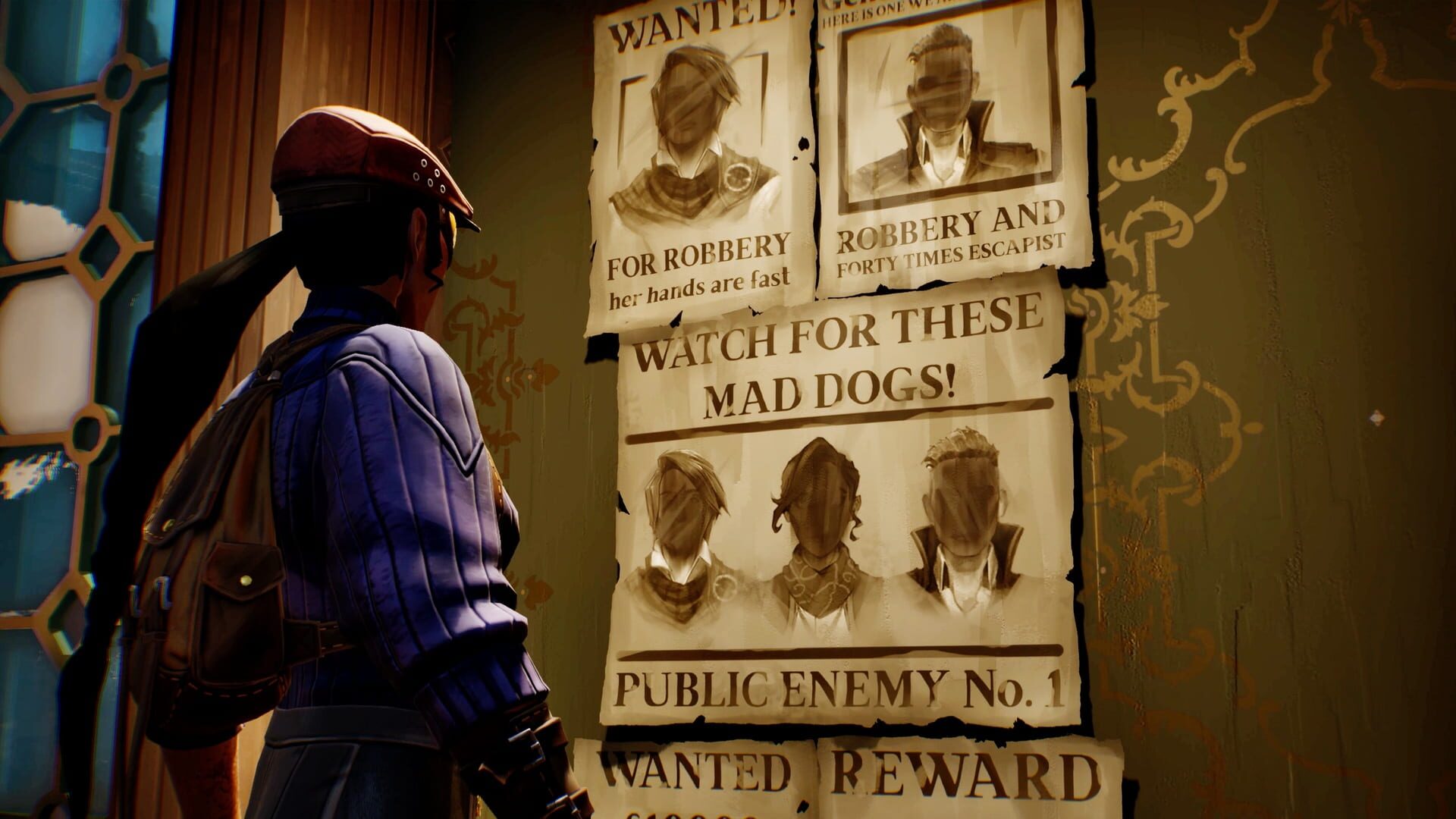
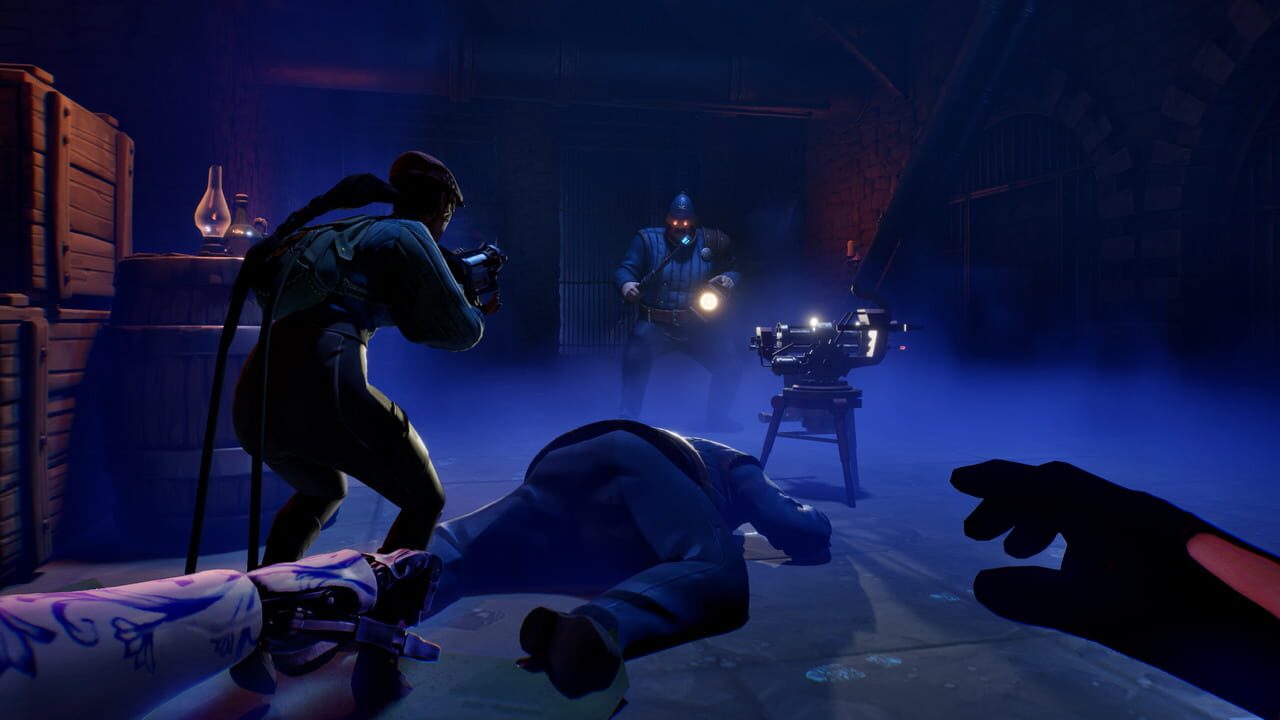
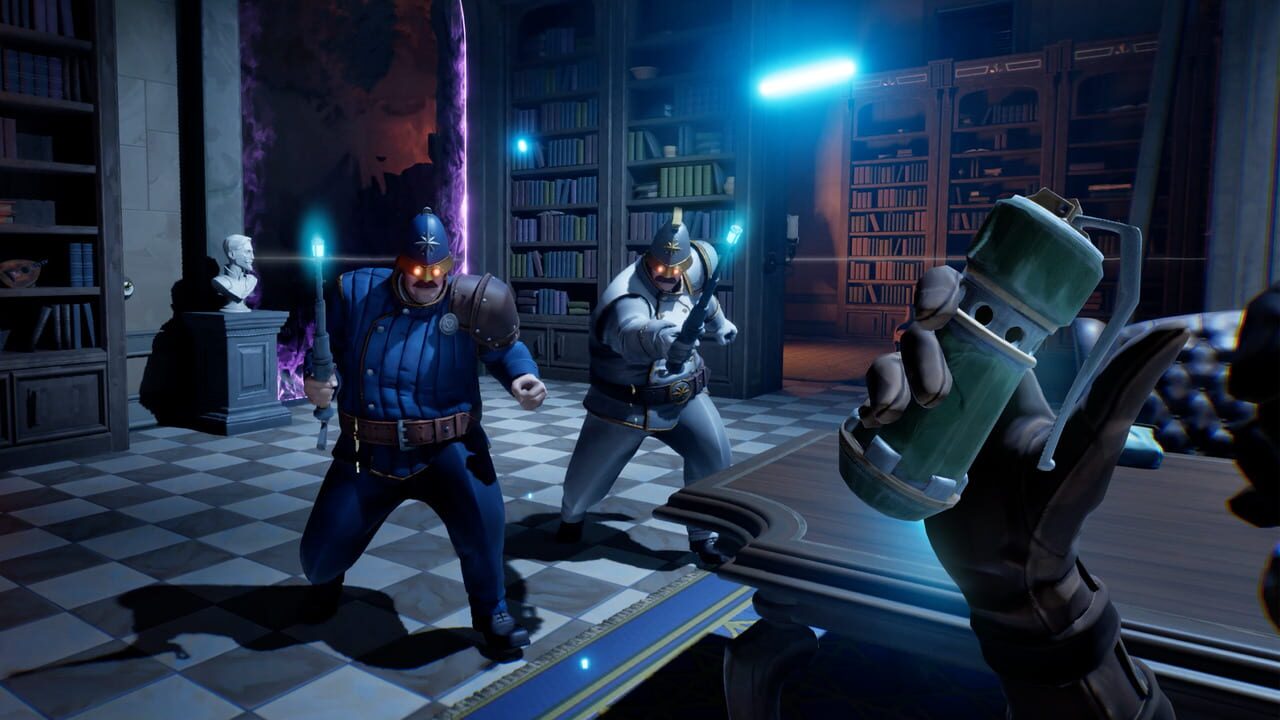
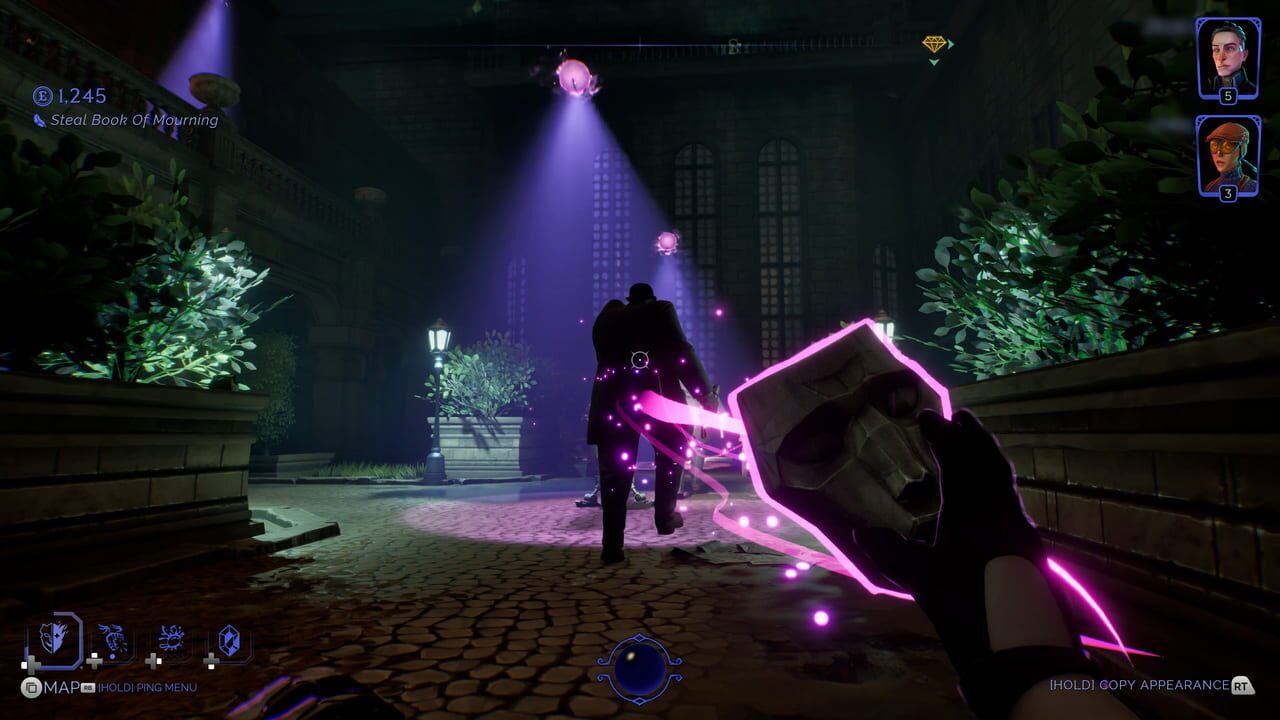
The frame this essay wants to give the reader is that this transfer is not anecdotal, not speculative, and not a marketing claim from the stealth-game subreddit. It is one of the better-documented findings in the cognitive-science literature on what video games do to perceptual systems, and it has been replicated across two decades of careful experimental work. The skill the stealth genre trains is real. It is partial. It has limits the games' marketing would not survive contact with. But it exists, it is measurable, and it has implications for how the trained player perceives the rest of their visual world. Thick As Thieves, the new multiplayer stealth project from former Looking Glass and Irrational personnel released in May 2026, is the latest entry in this tradition, and one of the first multiplayer ones whose design depends on the trained perceptual skill in question.
The foundational work in this area was done in 2003, in a paper by C. Shawn Green and Daphne Bavelier titled, with the unadorned directness of the cognitive-neuroscience literature, Action video game modifies visual selective attention. Green and Bavelier, then at the University of Rochester, ran a series of experiments comparing action-video-game players with non-players on standard tests of visual attention. The action-gamer group outperformed the non-gamer group on multiple measures: faster detection of peripheral stimuli, higher capacity for tracking multiple moving objects simultaneously, better performance on the attentional-blink task that measures how quickly the visual system can recover after processing one event before processing the next. The differences were substantial - in some measures the action-gamers were performing at levels that the perceptual-learning literature had previously associated with weeks of dedicated training on the specific test.
The natural skepticism - that perhaps the action-gamers were simply people with better visual attention to begin with, who were drawn to action games because of pre-existing aptitude - was addressed in the same paper. Green and Bavelier took non-gamer participants and randomized them into either ten hours of action-video-game training or ten hours of non-action-game training, then re-tested. The action-game-trained group improved on the attentional measures. The non-action-game-trained group did not. The effect was caused by the action games, not by selection. The finding has been replicated many times in the subsequent two decades, in labs across multiple countries, with various game genres and various perceptual tests. The pattern is robust: prolonged engagement with games that make heavy demands on visual selective attention produces measurable improvements in visual selective attention that persist outside the games.
The stealth genre is, in cognitive-science vocabulary, an unusually pure case of visual-selective-attention training. The player's primary mechanical task across most stealth games is not motor execution. It is perceptual analysis. The player has to look at a scene and identify, in real time, which features matter (the guard's facing, the patrol path, the light sources, the obstacles, the alternate routes) and which do not. The player has to maintain a working model of which features are dynamic (the patrol pattern is changing) and which are static (the door over there will always be locked). The player has to suppress attention to high-salience but low-relevance stimuli (the loud nearby alarm clock is not actually a threat) and amplify attention to low-salience but high-relevance ones (the small puddle of water on the floor is going to make a sound when stepped on). This is, in the strict vocabulary of perceptual psychology, exactly the cognitive operation that visual selective attention research has been characterizing since Anne Treisman's foundational work in the 1980s.
What the genre's most experienced players have, in the strict neurological sense, is a more efficient parser for this kind of scene. The skilled stealth player does not consciously think that guard is facing north so I should approach from the south through the shadow behind the crates. The parsing happens in something close to the time required for conscious visual processing of the scene at all. The conscious mind reports an intuition about the right move; the perceptual system has already done the computation. This is the cognitive-psychology pattern Walter Schneider and Richard Shiffrin identified in their 1977 paper distinguishing what they called controlled processing from automatic processing. Controlled processing is slow, effortful, conscious, and capacity-limited. Automatic processing is fast, effortless, unconscious, and capacity-unlimited. Skill acquisition, on the Schneider-Shiffrin model and the substantial subsequent literature, is the migration of cognitive operations from controlled to automatic processing. The skilled stealth player has migrated the perceptual analysis to automatic.
Thick As Thieves is interesting in this context because its multiplayer structure stresses the perceptual training in ways the single-player stealth tradition has not. In a single-player stealth game, the player faces a static world, populated by guards whose patrol patterns and detection cones are deterministically scripted. The skilled player learns the patterns and exploits them. The challenge is real, but the world is, in the cognitive-science sense, predictable. The perceptual training in single-player stealth is training against a stable distribution of stimuli.
A multiplayer stealth game does not give the player a stable distribution. The other thieves in the city are also stealth-skilled players, and they will be doing exactly what the player is doing: reading sightlines, hugging shadows, tracking patrols. The player's perceptual task is no longer just to read the environment for AI patterns. The player has to read the environment for other players who are themselves trying to be unread. The cognitive demand is meaningfully higher. The perceptual signature being detected is the absence-of-signature: the slight blur of an attentive figure moving through a region the player expected to be unoccupied, the small inconsistency in shadow that indicates a body is producing it.
The perceptual-learning research suggests that the multiplayer variant should produce, in players who spend substantial time with it, an even more refined version of the skill set the single-player tradition developed. Detection of subtle environmental anomaly, prediction of other agents' perceptual choices, modeling of the second-order question of what does the other player think I am perceiving - these are demanding cognitive operations the single-player genre cannot exercise, because the AI guards do not have models of the player's perception in the same way other players do. The multiplayer stealth game is, in the cognitive-science vocabulary, a more cognitively rich training environment. The transfer effects, if the research pattern holds, should be correspondingly stronger.
This brings us to the question of where the training transfers to outside the game, which is the part of the conversation the stealth-game audience has been having informally for years without much support from the marketing apparatus. The honest answer is that the transfer is real but bounded.
The 2003 Green and Bavelier finding has been refined considerably across the subsequent literature. The improvements in visual selective attention that action-game training produces have been shown to transfer to certain related cognitive tasks (the useful-field-of-view test, multiple-object-tracking, mental rotation) but not to others (working memory capacity, executive function broadly construed, attention in non-visual modalities). The transfer is to the specific cognitive operations the games exercise, not to general intelligence. The trained stealth player has a better visual parser; they do not have a better memory or a better ability to focus on a long-form document. The cognitive scientists doing this work have been careful to point out that the popular framing of "video games make you smarter" is wrong in both directions: the games do not make the player smarter in the general sense, and the games are not failing to do anything by not doing so, because they are doing something specific that is genuinely valuable in its own right.
What the trained stealth player actually has is a perceptual habit of reading visual scenes for affordances of concealment and exposure. This habit, on the available evidence, does transfer to real-world perception in small and identifiable ways. Players notice surveillance cameras and sightlines in physical spaces more readily than non-players. They identify cover and exposure in environments where these things matter (crowded streets at night, walking past lit storefronts, moving through parking lots). The transfer is small enough that the player will not become a more competent burglar through stealth gaming, but it is large enough to be detectable in standardized perceptual tests, and it persists for at least months after game play has ceased.
There is a more interesting transfer worth noting, because it concerns the contemporary surveillance environment in a way that the stealth-game tradition was developed to be philosophically opposed to. The skilled stealth player has, in some real cognitive sense, internalized the perspective of the watcher. The player's perceptual training includes learning what the guard sees, where the camera looks, what the patrol's sightline cone covers. To play stealth well is to spend hundreds of hours modeling the perceptual apparatus of surveillance from the inside. This produces a specific kind of literacy about what surveillance systems can and cannot see - what their dead zones are, what their refresh rates are, what kinds of motion they suppress and what kinds they cannot.
The cultural implications of this are unsettled. On one reading, stealth-game training equips the player to think critically about the surveillance infrastructure of their actual environment, which is a useful civic disposition in an era when that infrastructure has expanded dramatically. On another reading, the same training subtly normalizes the watcher's perspective, training the player to see public space the way a security system would see it, which has its own cognitive costs. Both readings are partly correct. The genre has not, as a category, taken much position on which reading should dominate, which is probably for the best - the genre's contribution is to provide the training, and what each player does with it is downstream.
There is one important caveat the cognitive-science research has been emphasizing more in recent years. The transfer effects from gaming to real-world perception are real but smaller than the initial 2003-era findings suggested. The replication crisis has reached the perceptual-learning literature, and several specific claims about action-game effects on cognition have failed to replicate at the strength of the original reports. The strongest contemporary consensus, from a 2018 meta-analysis by Bediou and colleagues at the University of Geneva, is that action-game training produces moderate improvements in perceptual measures and visual attention, with smaller effects on broader cognitive measures, and the effects are real but should not be oversold. The stealth genre's perceptual training is the kind of cognitive enrichment the literature supports; it is not, on the available evidence, a route to substantially higher general cognitive performance.
Thick As Thieves enters this research environment as the most cognitively demanding contemporary entry in the stealth tradition. The multiplayer structure raises the perceptual difficulty. The systems-sim heritage of the development team (former Looking Glass personnel who built the original Thief, plus Arkane and Irrational alumni from the broader immersive-sim tradition) suggests the design intentions are aligned with the genre's cognitive-perceptual roots. The early access period has produced reports from players that the game is harder than its predecessors in ways that are unusual for the medium - the difficulty is not in motor execution but in perceptual-and-strategic reading of the situation. This is exactly the cognitive register the perceptual-learning literature would predict produces the strongest training effects.
What the reader can take from this, if they have spent years in stealth games and have wondered whether the time was doing anything for them: the time was doing something. Not the something the marketing might have implied. Not a general intelligence boost. Not a real-world tactical capability. What the time has been producing is a specific perceptual-attentional refinement that is visible in laboratory tests, transfers in small ways to real-world visual environments, and represents one of the few documented cases of leisure activity producing measurable cognitive change. The cognitive science has been confirming, for over twenty years, that the audience's intuition about the genre is correct.
What the trained reader can also take is the small slightly disorienting recognition that comes when they walk through an unfamiliar building at night and notice, without meaning to, where the sightlines fall and where the shadows pool. The recognition is not a superpower. It is not particularly useful in most adult contexts. It is, however, a small enduring trace of the hundreds of hours the player spent doing what looked like leisure but was, in the cognitive-science register the marketing of the genre would never reach for, training. The trace is real, and the next stealth-game session will continue making it more real, in small increments the player can now name when they happen.