

In May 1939, in a brownstone in the Bronx that doubled as Bob Kane's studio, Kane and the writer Bill Finger sat down to produce a character for the second issue of Detective Comics whose pitch their employer needed to deliver to newsstands by the end of the month. The publisher had asked for a costumed vigilante to follow the success of Superman, who had launched the year before. Kane had drawn a sketch of a brightly-colored figure with bat-shaped wings - red tights, a wide domino mask, the wings as a pair of stiff appendages - and brought the design to Finger for collaboration. Finger, in the recollection he provided to interviewers decades later, said the design needed to be darker, scarier, more nocturnal. He suggested a cowl with pointed ears instead of the domino mask; he suggested the cape as a single flowing piece in place of the rigid wings; he suggested gray and black as the primary palette in place of the red. The figure Kane re-drew the next day, with Finger's suggestions incorporated, was approximately the figure that has been continuously remade in some form for the eighty-seven years since.
The figure has been printed in monthly comic books across that entire span, with the publication never lapsing for more than a few months. The figure has been the subject of at least thirteen feature films, several of them blockbusters, including the 1989 Tim Burton entry that established the contemporary superhero-film blueprint and the 2008 Christopher Nolan entry that has been one of the highest-grossing films ever made. The figure has been the protagonist of multiple long-running animated television series, most notably the 1992 Bruce Timm production that is widely held to be among the medium's best animated works regardless of subject. The figure has been the central character of one of commercial video gaming's most accomplished narrative trilogies (the Arkham series, 2009-2015). The figure has been adapted into ballets, into theme-park attractions, into legitimate stage productions, into LEGO sets, into Halloween costumes, into action figures, into a children's animated series featuring brave-and-bold versions of himself paired with obscure DC characters, into a parodic LEGO film franchise that produced one of the better animated films of the 2010s, and now into another LEGO game whose specific premise is the entire eighty-seven-year publication history compressed into a single playable retelling.
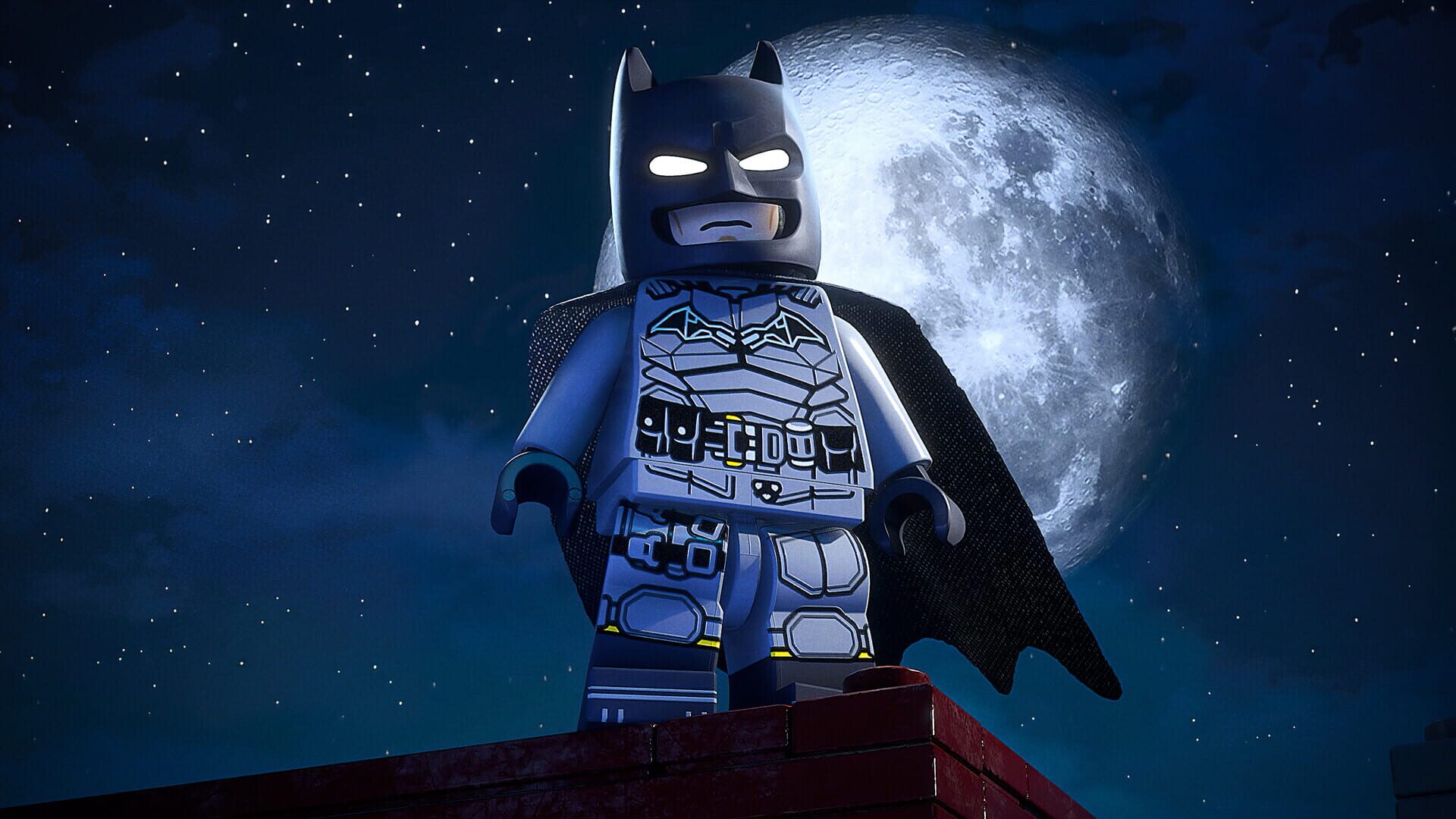
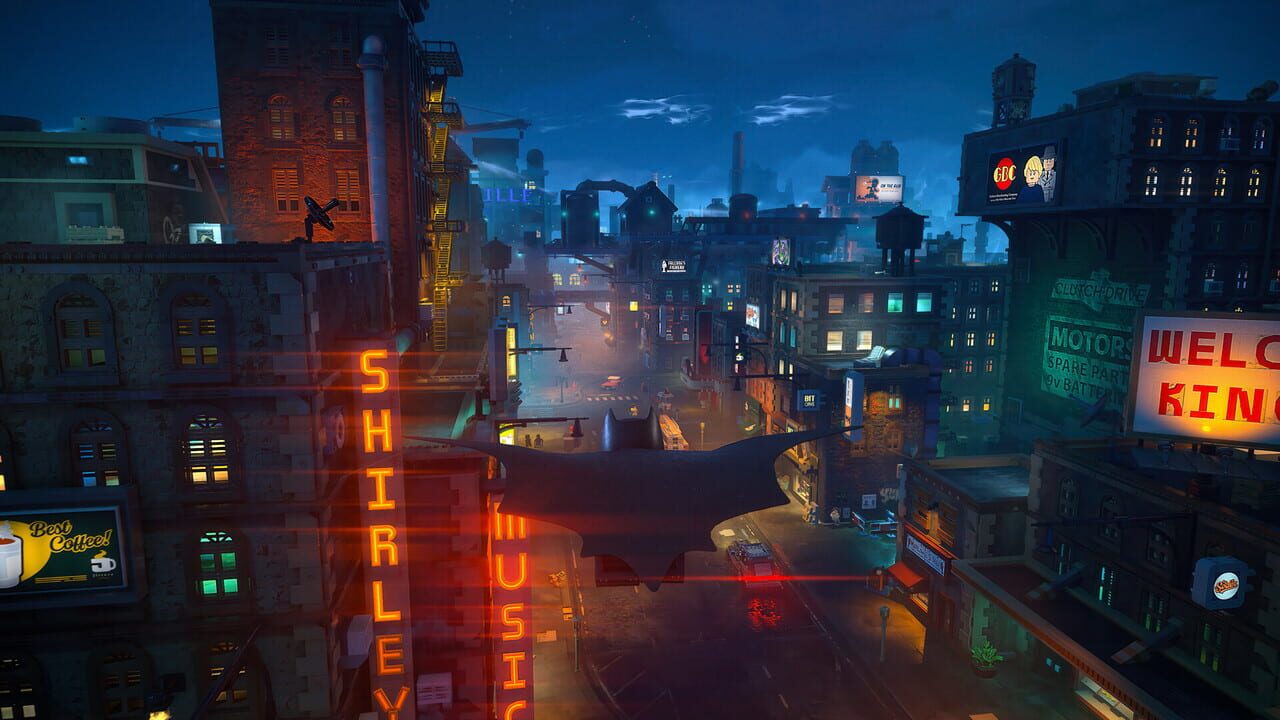
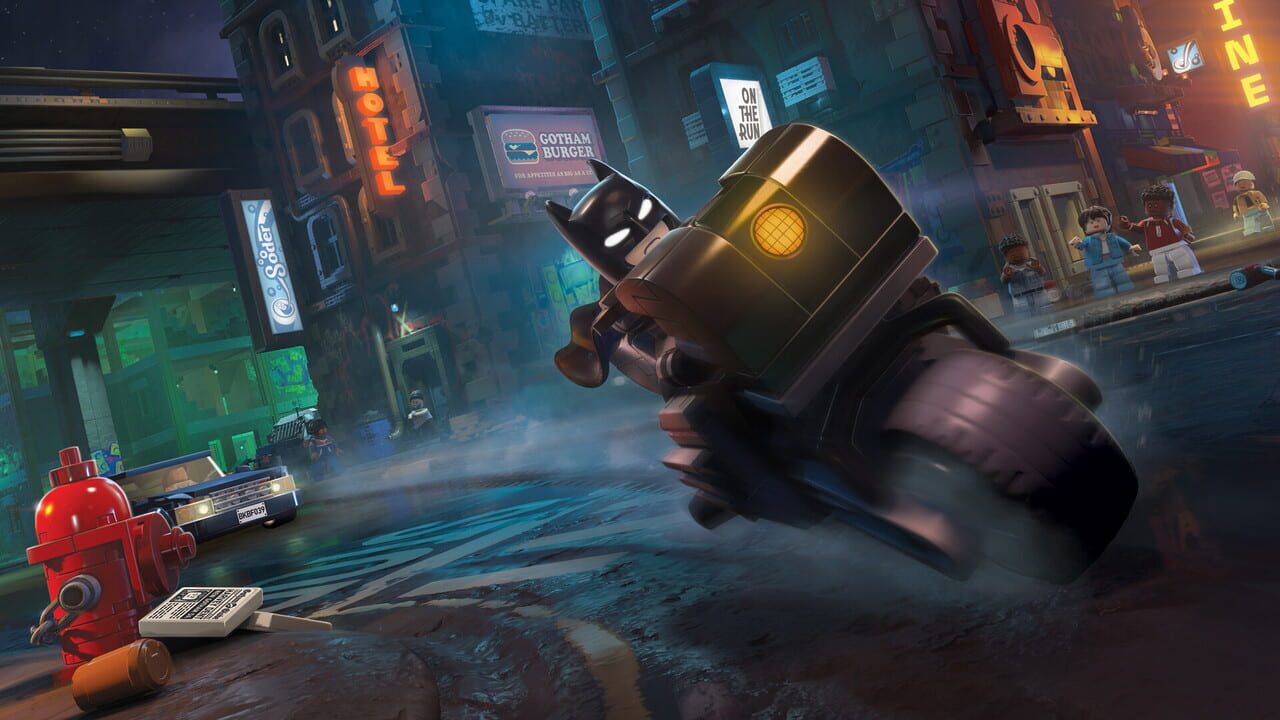
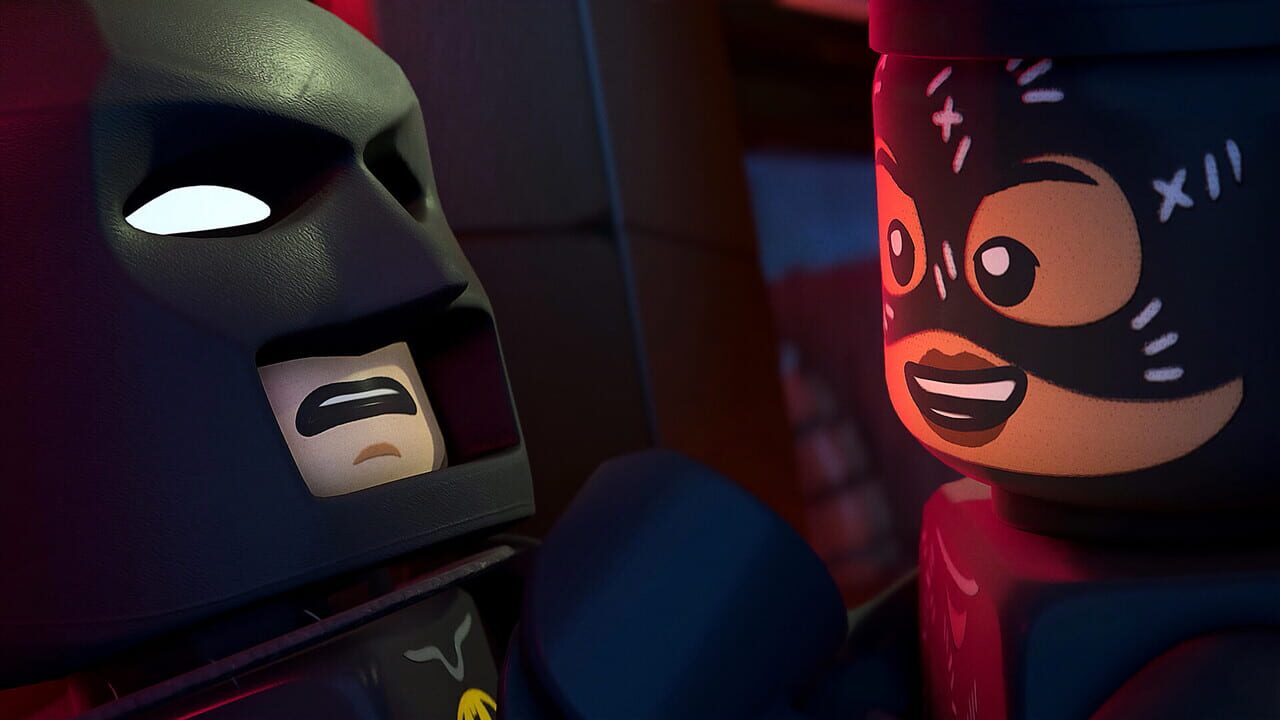
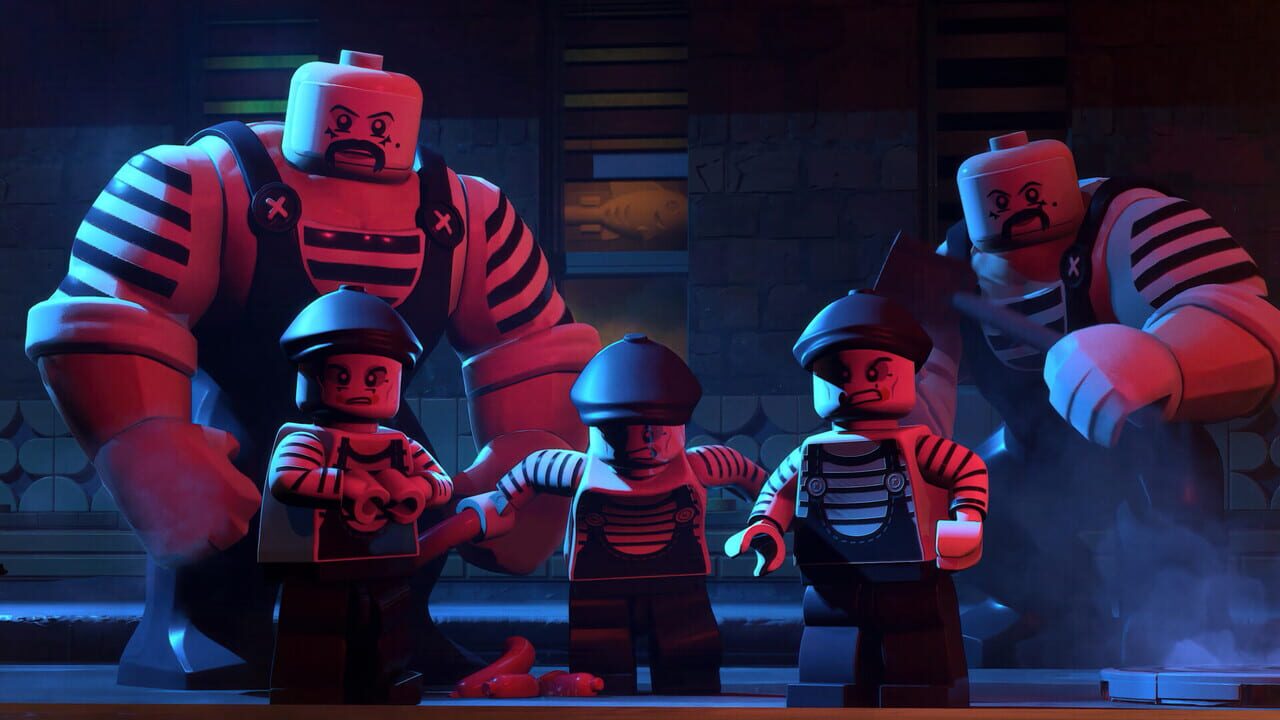
LEGO Batman: Legacy of the Dark Knight, released by TT Games and Warner Bros. Interactive in May 2026, is the latest LEGO entry in a franchise the developer has been mining for two decades. The game's design pitch is the most ambitious LEGO-Batman to date: a single playable narrative that spans the character's full publication history, from the 1939 Detective Comics debut through the 1960s television series through the Burton and Nolan films through the Arkham games through the Reeves-era and beyond. The LEGO format, with its built-in capacity for tonal modulation through scale and humor, is structurally well-suited to absorbing the contradictions of a character who has been remade in registers ranging from camp comedy to grim noir.
The frame this essay wants to give the reader is broader than the game and broader than Batman. The character is one of a small number of cultural figures who have demonstrated a specific kind of cultural durability: continuous adaptation across many decades, in many media, by many hands, with the character remaining recognizable across every adaptation despite often radical tonal and narrative shifts. The pattern is rare. The pattern, when it does occur, reveals something specific about the figure that has earned the durability. Once the reader has the pattern in view, they can identify which contemporary cultural figures have it and which do not, and the answer to the latter question is more revealing about contemporary culture than the answer to the former.
The serious academic literature on Batman as a cultural phenomenon has been substantial for at least three decades. The British cultural-studies scholar Will Brooker published the foundational entry, Batman Unmasked, in 2000, and followed it with Hunting the Dark Knight in 2012. Brooker's project across both books was to trace the character's mutability as the primary fact about him, and to argue that the standard fan-cultural argument about who the "real" Batman is - the brooding Frank Miller Dark Knight Returns version, the camp Adam West television version, the Nolan-era trauma-driven figure, the Bob Kane debut, the BTAS Bruce Timm refinement, the Reeves detective - was a category error. The real Batman, on Brooker's argument, was the figure produced by the cumulative pattern of all these versions, with each version interpreting the others and being interpreted by them in a continuous textual conversation.
Brooker's framework drew on Henry Jenkins's broader work on what Jenkins called convergence culture and what an earlier generation of literary theorists had called intertextuality. The Batman text is not located in any single Batman artifact. The Batman text is located in the network of references each Batman artifact makes to the others, and in the cumulative pattern that emerges across the network. The reader (or viewer, or player) who has consumed many Batman versions across many years has, in their cognitive map of the character, a layered figure whose specific properties are inheritable across versions: the cowl shape Finger suggested in 1939 is the same shape Reeves used in 2022; the Bat-signal that first appeared in 1942 is the same signal Burton stages in 1989; the relationship to Alfred that Detective Comics #16 established in 1940 is the same relationship Nolan stages with Michael Caine in 2005.
The earlier and probably foundational theoretical framework for this kind of cultural figure was Umberto Eco's 1962 essay The Myth of Superman, written in Italian and translated into English in his 1979 collection The Role of the Reader. Eco's project was to identify what was structurally interesting about the contemporary American superhero as a narrative form, and his central observation was that the superhero text operates in a temporal register the literary criticism of the time was not equipped to handle. The superhero, Eco argued, exists in a perpetual present: he ages slowly or not at all, the events of any given issue do not produce permanent consequences for the world the next issue continues from, the relationships do not develop along the linear timeline that organizes the realist novel. Eco called this the iterative-mythic register, distinguishing it from the linear-historical register of the novel. The superhero is, in Eco's vocabulary, a myth in the strict cultural-anthropological sense: a figure whose stories can be retold endlessly with variations, each variation legitimate, none being the canonical version that supersedes the others.
This is the structural property that makes Batman, and a small number of other figures, capable of the durability the pattern requires. The character is mythic in Eco's sense. The character can be retold. The retellings do not invalidate each other. The figure persists through all of them because the figure has been deliberately built (by Kane and Finger in 1939, by every subsequent writer) to be retellable. The cowl shape is the constant. The orphan origin is the constant. The vow against killing is the constant. The cave, the butler, the wealthy alter ego, the gallery of distinctive antagonists, the city, the bat-signal, the moral seriousness underneath the costume - these are the small set of inheritable features that every adaptation has to honor and within which any adaptation can do almost anything. The features are enough to identify the figure. The features are sparse enough to absorb almost any specific story.
Now consider the specific Batman versions across the eighty-seven years. The 1939 Kane-Finger figure was a pulp-noir vigilante operating in a Depression-era city where the institutions had visibly failed to deliver justice and the masked private actor was the cultural compensation for the institutional failure. The 1966 Adam West television figure was a camp ironic refraction of the same character through the specific mid-1960s American cultural condition of post-war prosperity-and-self-mockery, in which the original earnestness of the pulp register could not be sustained without ironic distance and the television series cheerfully provided the distance. The 1989 Burton film was a Reagan-era nighttime expressionist Batman whose specific cultural-political context was the urban-decay-and-yuppie-counterreaction moment in late-1980s American cities, with Gotham standing in for the New York City of the period and the Joker standing in for the chaotic energies the period was anxious about. The 1992 Bruce Timm animated series was a children's adaptation that translated the Burton aesthetic into a Saturday-morning register without losing the moral seriousness, and is widely held to be the high-water mark of the character's continuous adaptability - the version that simultaneously honored every previous version and produced its own specific take. The Nolan trilogy from 2005-2012 was the post-9/11 grim-realist Batman whose specific cultural project was to render the character as a study in trauma, institutional collapse, and the cost of vigilante action in a world where the moral certainties of the earlier versions had become harder to credit. The 2022 Matt Reeves film was the contemporary detective-noir Batman whose specific cultural register was the prestige-cable serial drama, with the character treated as a young investigator working a specific case across an unusually grounded Gotham. The forthcoming and continuing Batman comics, the various LEGO entries, the upcoming films and television adaptations, will each be the version of Batman the specific cultural moment they are produced in needs the character to be.
Each version is a complete answer to the question of what Batman is for, in the moment of the version's production. None of them invalidates the others. The character has been generic enough to absorb every cultural moment's anxieties, and specific enough to remain recognizable across all of them. This is what Eco's mythic-iterative framework predicts, and what Brooker's intertextual framework documents, and what the LEGO game's structural premise makes literal by treating the entire publication history as continuously playable across a single campaign.
The cultural-historical implication of this pattern is that the small number of figures who have demonstrated this kind of durability are a real category, distinct from the much larger category of culturally successful figures who have not. Sherlock Holmes, who has been continuously adapted since Conan Doyle began publishing in 1887, is in the category. James Bond is in the category, since 1953. Doctor Who is in the category, since 1963. Dracula is in the category, since Stoker in 1897. A small number of other figures - Robin Hood, King Arthur, Sherlock's small set of canonical antagonists - are in the category but at lower frequencies of adaptation. The category is bounded.
What characters do not get into the category is more revealing. Most successful original characters get one or two adaptations and then become historical artifacts. Most franchise reboots fail to produce the inheritable cumulative figure that lets the next adaptation continue the work. The Tom Cruise Mission: Impossible films are a successful franchise but the Ethan Hunt character has not produced anything close to the cultural saturation Batman has. The various recent attempts at producing new superhero figures (the various Marvel cinematic protagonists, the recent attempts to build new DC characters into franchises) have produced commercial success but not the multi-decade cross-medium iterative-mythic figure the foundational characters did.
The reason for the difference is, on the Brooker-Eco framework, structural. The figures that get into the category are the figures whose specific properties were assembled, often by accident, in a way that left them open to retelling at the level of narrative form, not just at the level of plot. Batman's properties - the cowl, the orphan, the vow against killing, the city, the gallery of antagonists - are minimal in number and rich in interpretive possibility. The contemporary attempts to build new cultural figures often start with much more specific origin stories, much more elaborate backstories, much more locked-in tonal registers. The result is a figure that can be successful in its initial cultural moment but that does not have the negative space the long-running adaptation requires.
This is the part of the analysis that travels past Batman and past the LEGO game. The reader who has the frame can apply it to almost any contemporary cultural figure they encounter. The question worth asking is not whether the figure is currently popular but whether the figure has the structural properties - minimal specification, large interpretive negative space, inheritable features that can be honored across very different tonal registers - that the long-running iterative-mythic figure requires. Most contemporary cultural figures do not have those properties. The few that do are the ones likely to be still being adapted in 2070.
What the LEGO Batman game does, in the small specific way the LEGO franchise has been doing for two decades, is make the structural property literal. Every Batman in the game is a LEGO Batman: the same plastic minifigure, with cosmetic variations across the eras the game covers, recognizable in every version because the structural properties Kane and Finger established in 1939 are honored at the level of the figure's design. The 1939 LEGO Batman, the 1966 LEGO Batman, the Burton-era LEGO Batman, the Nolan-era LEGO Batman are all visibly the same character with different paint schemes. The LEGO format does not flatten the differences between the eras - the game's writing, voice acting, and tonal register modulate to fit each era's specific cultural register - but the figure itself is constant across all of them. This is the inheritance Kane and Finger built into the character, made unusually visible by the format's commitment to modular reproduction.
The cultural-historical durability the LEGO format honors is, on the longer view, the actual achievement Batman represents. The character has continued because the character was built to continue. The retellings have not exhausted the figure because the figure has substantial structural negative space the retellings can occupy. The eighty-seven years are not a long failure of cultural attention to find a new hero. They are evidence of how rare the structural durability is, and how worth honoring it is when it does appear.
The next Batman, whoever produces it and whenever, will continue the pattern. The figure has the properties the long-running adaptation requires. The cultural moment of 2030 or 2050 or 2070 will have its specific anxieties, and the Batman of that moment will be the version that absorbs those anxieties and re-presents them in the cowl Finger sketched in 1939. The LEGO game's compression of the eighty-seven-year history into a single playable retelling is, in the small commercial way the format permits, a recognition of the cultural-historical fact the character has demonstrated. The figure has earned the durability. The retelling will continue, because the character was built - accidentally, by two men in a Bronx studio facing a publication deadline - to be retellable, and the retelling has not yet found its terminus.