



Pick the most recent open-world game the reader has finished. Now try to recall a specific moment from it: not a major story beat, not a famous setpiece the marketing made unforgettable, but a small specific place. A particular street corner. A particular building. A path between two locations the reader walked many times. For most readers, the attempt is going to be harder than the reader expects. The names of major locations might come. The general visual signature of the world might come. The specific small places that the reader actually spent time in mostly will not.
Now try the same exercise with a smaller, more hand-crafted game the reader played a long time ago. The Midgar slums of the original 1997 Final Fantasy VII. The shop interior in the early hours of Earthbound. The specific corridor turns of Resident Evil's Spencer Mansion. The opening shacks of Half-Life 2's City 17. Most readers who played these games will find that the specific places come back faster, in more detail, and with more emotional weight than the open-world places do. The smaller games' geographies have stayed in the reader's brain. The open-world games' geographies, despite involving substantially more total game time, have mostly not.
The frame this essay wants to give the reader: there is a measurable reason for this asymmetry, and the reason is one of the most consistent findings in the spatial-cognition literature of the past sixty years. Game worlds become memorable to their players when the worlds are organized in ways the brain's spatial-memory systems can convert into stable mental maps. Most contemporary open-world design is structured in ways that work against this. Most older hand-crafted game design was structured, accidentally, in ways that worked with it. The result is a generation of contemporary games that produce many hours of play and very little durable spatial memory in the player. Final Fantasy VII Rebirth, the second entry in Square Enix's Final Fantasy VII remake project released in February 2024, has stepped from the first category into the second across the course of its development, and the cost of the step has been substantial in ways the surrounding conversation has been slow to recognize.
This is a frame that travels. The reader who has it can apply it to almost every game world they encounter from this point forward. The question is whether the world has been built to produce stable mental representations in the player, or whether the world has been built to produce many hours of engagement without producing stable representations. Both kinds of world can be enjoyable. The first kind is doing something the second is not, and the difference is the part of the contemporary game-design conversation that the marketing copy is least likely to name.
The foundational research on this is Kevin Lynch's 1960 book The Image of the City, a study of how Americans in three large cities (Boston, Jersey City, Los Angeles) carried mental maps of their cities in their heads. Lynch and his team interviewed hundreds of residents, asked them to draw their cities from memory, and tracked which features of the urban environment showed up reliably in the drawings and which features did not. The results have shaped the cognitive geography of urban design ever since. Lynch found that residents' mental maps of their cities were organized around five specific kinds of features: paths (the routes the residents traveled), edges (the boundaries between different districts), districts (the named subareas of the city), nodes (the specific points of intersection or activity), and landmarks (the visible reference points the residents used to orient themselves).
Cities that had clear examples of all five elements produced strong, detailed mental maps in their residents. Cities that lacked clear examples (Lynch's example was Jersey City, where the residents' mental maps were significantly thinner than the Boston residents' maps) produced weaker mental maps. The asymmetry was not a function of how long the residents had lived in the cities. The asymmetry was a function of how the cities had been built. Some urban environments support the formation of mental maps; some do not.
The implication for game design is direct. The game world that has clear paths, edges, districts, nodes, and landmarks supports the player in building a mental map of the world. The game world that lacks them does not. The player who has finished such a world will, in years to come, be able to recall specific places from it with the same kind of detail Lynch's Boston residents had for their actual city. The player who has finished a world that lacks the elements will, on the same time horizon, recall only the most marketed-up locations and the broad visual signature, in the way Lynch's Jersey City residents recalled their actual city.
The original 1997 Final Fantasy VII opened with one of the medium's most accomplished implementations of Lynchian urban design in game form. Midgar, the corporate city under the plate, had paths (the specific corridors the player walked many times). It had edges (the plate above, the slum boundaries, the train system that defined where the player could go). It had districts (Sector 5, Sector 6, Sector 7, the upper plate, the slums). It had nodes (Aerith's church, the Seventh Heaven bar, the train station). It had landmarks (the Shinra Building, the pillar, the specific shape of the plate from below). The player who walked Midgar across the original game's roughly five-hour opening built a mental map that has, for many of the franchise's longtime players, persisted for over twenty-five years. The Midgar of 1997 is, in the brains of the people who played it, one of the most durable fictional cities the medium has produced.
The 2020 Final Fantasy VII Remake preserved this. The remake's expanded Midgar was longer and more visually detailed, but the underlying Lynchian structure was substantially intact. The player who finished the remake was the player who knew Midgar the way the player who finished the original knew Midgar. The remake had, in this register, done the work the franchise's continuation required.
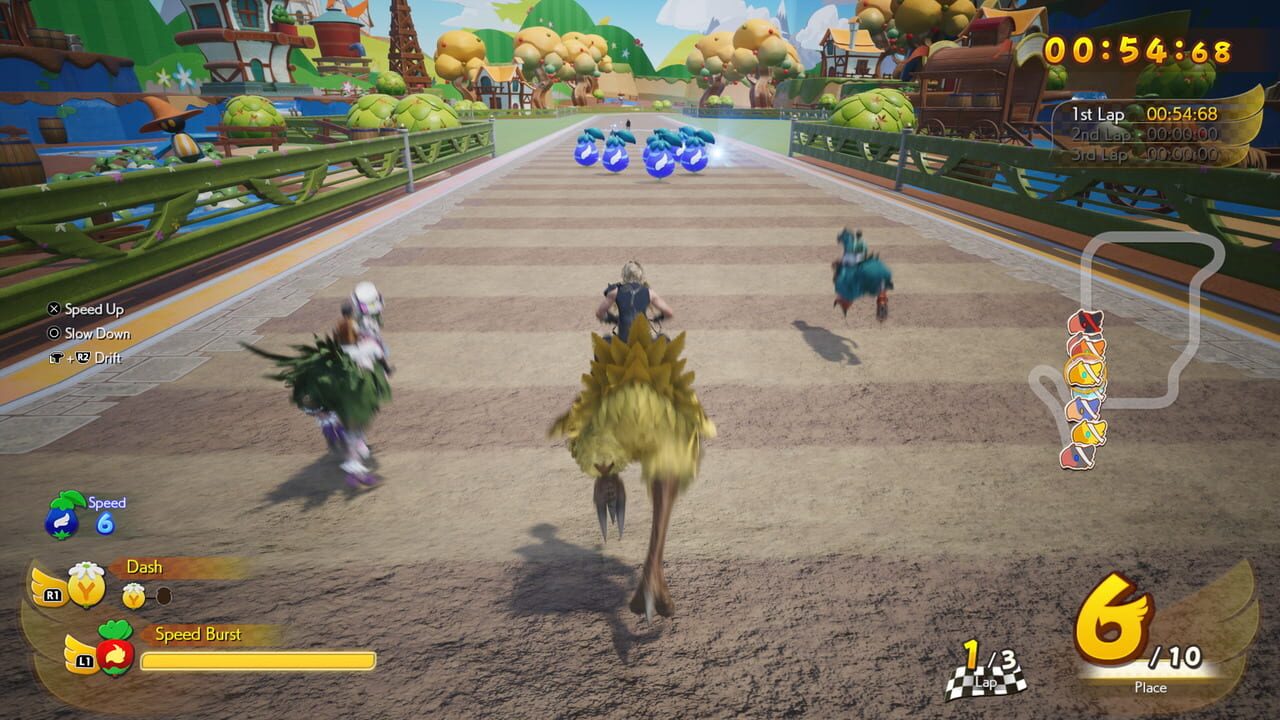
Rebirth, the second entry in the remake trilogy, has been structured differently. The game opens the world up into the broad regional geography the original 1997 game also opened up after Midgar. The remake project has rendered this regional geography with substantial production values and a great deal of content. The geography is, however, structured along the conventions of the contemporary open-world genre rather than along the conventions Lynch's framework would predict produce durable mental maps. The map is large. The activities are distributed across the map in patterns determined by the engagement-design conventions of the genre. The player traverses the geography mostly through fast-travel rather than through repeated walking. The chocobo trails are the same kinds of trails the contemporary open-world genre has standardized. The activity icons are the same kinds of icons. The result is a geography that the player has spent many hours in and that, on the available reception evidence, is producing substantially thinner spatial memory than the original 1997 game's geography produced.
This is the source of the specific complaint a substantial portion of the franchise's longtime audience has been making about the new game, without quite being able to name what is missing. The complaint is not, in any reductive sense, that the game is bad. The complaint is that the new geography is producing less durable spatial memory than the original geography produced. The audience is, in Lynch's vocabulary, getting paths without districts, traversal without nodes, content without landmarks. The hours are real. The mental map is not forming.
Yi-Fu Tuan, the Chinese-American geographer whose 1977 Space and Place refined the conceptual framework Lynch had introduced, gave the deeper version of the analysis. Tuan distinguished between space (abstract undifferentiated extension the body moves through) and place (specific located meaning the body has accumulated in a particular location). Space is the realm of motion. Place is the realm of dwelling. The same physical area can be either, depending on the body's relationship to it. A tourist passes through space. A resident dwells in place. The two registers are not the same.
The original Midgar was, in Tuan's strict sense, a place. The player walked it slowly enough, across enough repeated traversals, that the specific locations accumulated meaning the player carried. The slums became the slums in the player's emotional life rather than just on the map. The Shinra Building became the Shinra Building the player was infiltrating, with the specific dread of approaching that the design had earned. Tuan's framework names what was happening: place was being produced through the player's accumulated bodily presence in specific locations.
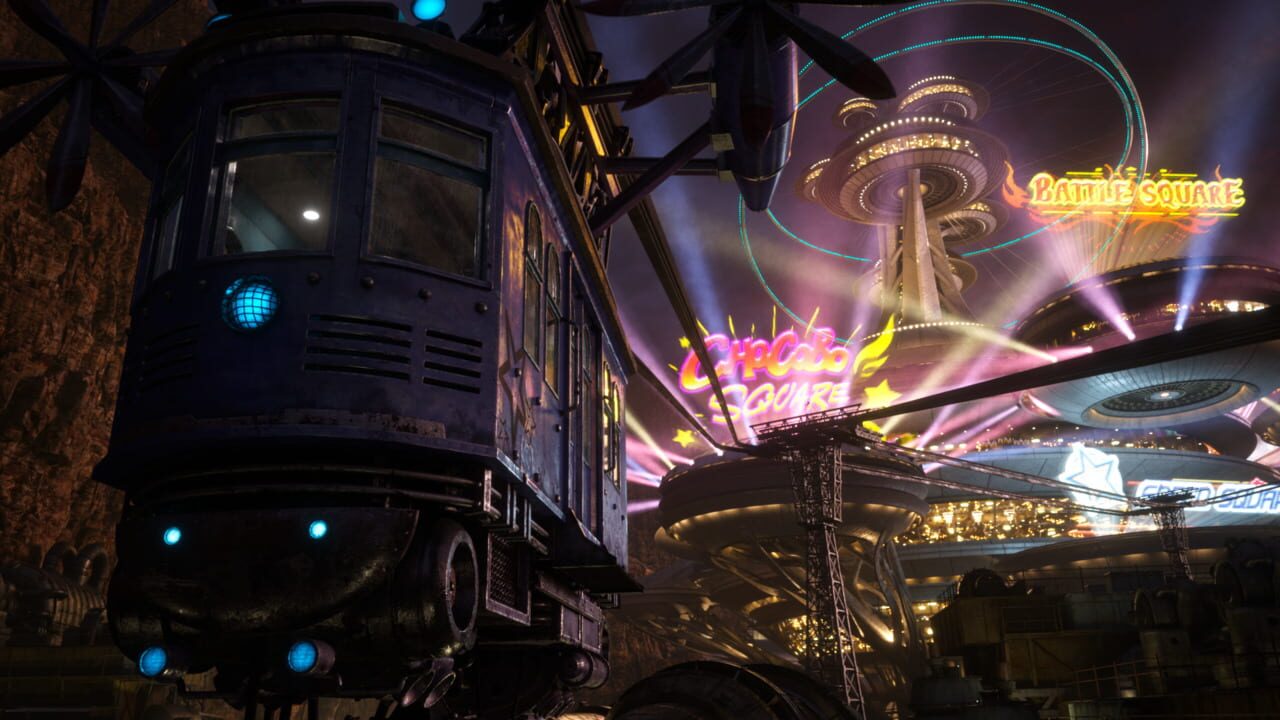
Rebirth's wider geography is, in Tuan's strict sense, mostly space. The player is moving through it. The player is not, with most of the locations, dwelling in them. The exceptions are interesting. The Costa del Sol resort, the Gold Saucer chapter, the Cosmo Canyon homecoming for Red XIII: each of these is a sequence in which the design has slowed down enough to allow place to form. The player spends real bodily-presence time in these locations. The locations accumulate meaning. The locations stay in the player's spatial memory. The player who finishes the game will, in years to come, remember Cosmo Canyon and the Gold Saucer with the same kind of clarity they remember Midgar. The player will not remember most of the open-world map at the same level.
This is the genuine accomplishment Rebirth has produced inside its broader structural problem. The set-piece chapters where the design has committed to place are doing the cognitive work the franchise's history is built on. The wide open-world regions between the set-pieces are mostly not. The game contains the older place-tradition inside it, alongside the newer open-world space-tradition. The cognitive cost is the dilution: the player's bodily presence is being distributed across so much space that the place work has less of the player's attention than it would have had in the older form.
This is not a problem specific to Rebirth. This is the central design problem of contemporary open-world games as a category. The category's economic logic favors more content over deeper content. The category's marketing logic favors larger numbers (hours played, square kilometers of map, number of activities) over qualitative depth. The category's design conventions have stabilized around producing many hours of engagement at a steady texture rather than producing fewer hours of accumulated place-formation. The player is being given more total game time and less durable cultural-cognitive material to carry away from the game.
The reader who has the frame can apply it forward into evaluating any future open-world game's announcement. The question is whether the design is committing to place-formation at the specific locations the game will use as its emotional anchors, or whether the design is going to spread the player's attention across so much space that no specific location can become a place in Tuan's strict sense. The marketing copy will not name this. The design's commitments, when they are reported, will. An announcement that emphasizes the size of the map, the number of activities, the variety of biomes, and the freedom of player choice is signaling that the game has been designed for space-production rather than place-formation. An announcement that emphasizes specific locations, the accumulated meaning of returning to them, the slow building of relationships with named towns and recurring characters, is signaling the opposite.
The third entry in the Final Fantasy VII remake trilogy, when it eventually releases, will face this choice in its sharpest form. The original 1997 game's third act is built around specific locations the franchise's audience has been carrying in their heads for nearly thirty years: the Forgotten Capital, the Northern Crater, the conclusion's specific spaces. Each of these locations is a place in Tuan's strict sense. Each of them needs to remain a place in the remake's version. Whether the third entry's design continues Rebirth's open-world space-grammar or returns, partially or wholly, to the place-grammar the original and the Remake committed to, will determine whether the trilogy as a whole succeeds at producing the cumulative cognitive-emotional weight the original game produced, or whether the trilogy ends having produced more total content with less durable carry-forward.
The reader who finishes this essay can carry several practical frames into their own play. The first frame: when finishing an open-world game, notice which specific locations have actually become places in the reader's spatial memory and which have remained space. The pattern will reveal what the design committed to and what it did not. The second frame: when planning play time, consider whether the time investment is going into something that is likely to produce durable cognitive-emotional material the reader will carry forward, or whether the time investment is going into engagement without accumulation. Both can be enjoyable. They are different in cognitive kind. The third frame: when an older game's spatial memory comes back unexpectedly years later, recognize the return as evidence of what the design accomplished. The places that stayed in the reader's brain are the places the design's craft built carefully enough to deserve the staying.
The Midgar of 1997 is still where it has always been, in the disk and in the hippocampi of the players who walked it. The places the franchise has produced since then have varied in how much of the same staying-power they have built. The reader can, from this point forward, recognize the difference as it happens, and value the games whose worlds the reader's brain has been willing to carry. The recognition is the small useful thing this essay can offer. The next open-world announcement is around the corner. The question of whether the place-work has been done is, on the design's choices that the studios will tell on themselves about in interviews, the question worth asking before the reader commits the time.