



In 1979, a federal court asked Stuart Grassian, a psychiatrist at Harvard Medical School, to evaluate the mental state of fourteen prisoners who had been held in the solitary-confinement unit of the federal penitentiary at Walpole, Massachusetts. The prisoners had been challenging the conditions of their confinement. The court wanted an independent assessment of whether the conditions were producing measurable harm. Grassian interviewed each of the fourteen prisoners, took detailed histories, and assembled what would become one of the foundational clinical descriptions of what extended isolation does to the human nervous system.
The pattern he documented in the resulting 1983 paper for the American Journal of Psychiatry was unusually consistent across the fourteen prisoners. Almost all of them reported, in clinical detail Grassian published verbatim, a specific cluster of symptoms: hyperresponsivity to external stimuli, perceptual distortions and hallucinations (most often auditory, sometimes visual, sometimes olfactory), severe panic attacks triggered by what should have been ordinary events, difficulties with thinking, concentration, and memory, intrusive obsessional thoughts that the subject experienced as foreign to their own mind, paranoia, and overt psychotic episodes. The pattern was so consistent that Grassian concluded he was looking at a specific clinical syndrome - not a collection of pre-existing conditions, but a single condition produced by the specific stressor of extended sensory and social deprivation. He proposed naming it for what produced it. The literature has, in the four subsequent decades, mostly adopted Grassian's framing.
The condition has continued to be documented and refined in the research literature ever since. Craig Haney, the social psychologist at the University of California Santa Cruz who has done the most extensive contemporary work on supermax prisoners, has confirmed and extended Grassian's findings across multiple studies of populations held in long-term solitary in the American carceral system. The American Psychological Association's official position, established through Haney's work and that of subsequent researchers, is that extended solitary confinement produces measurable psychiatric harm in a substantial fraction of those exposed to it, that the harm is often permanent, and that the practice is incompatible with the standards of treatment the international human-rights framework has been moving toward for decades.
The American supermax prison system has, across the same forty years, continued to hold tens of thousands of inmates in conditions equivalent to or worse than the ones Grassian documented at Walpole. The 2020 Time-In-Cell report from the Liman Center at Yale Law School estimated that approximately 60,000 prisoners in the United States were being held in solitary or restrictive housing on any given day. The figure has fluctuated by state and over time. The fundamental practice has continued.
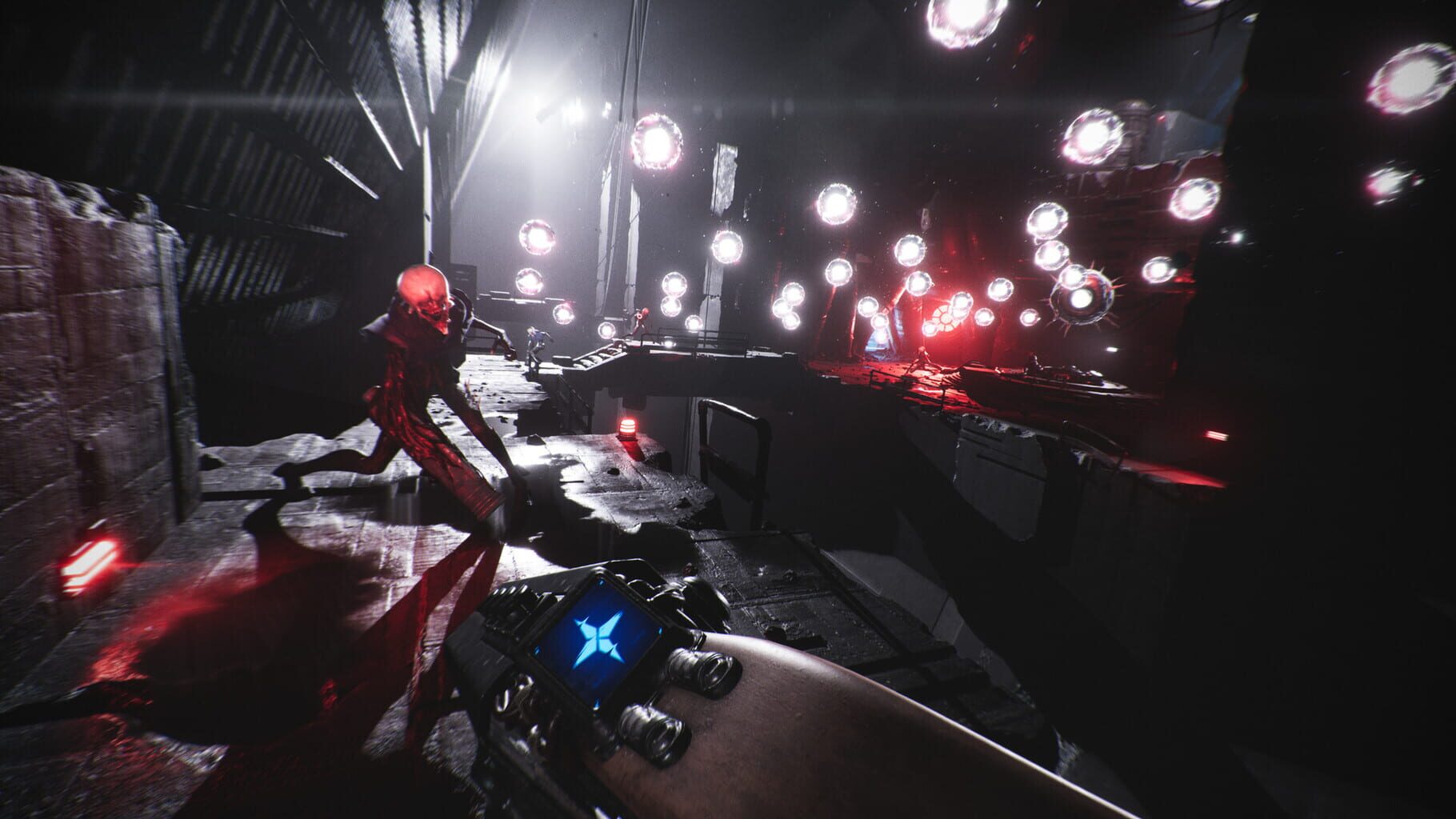
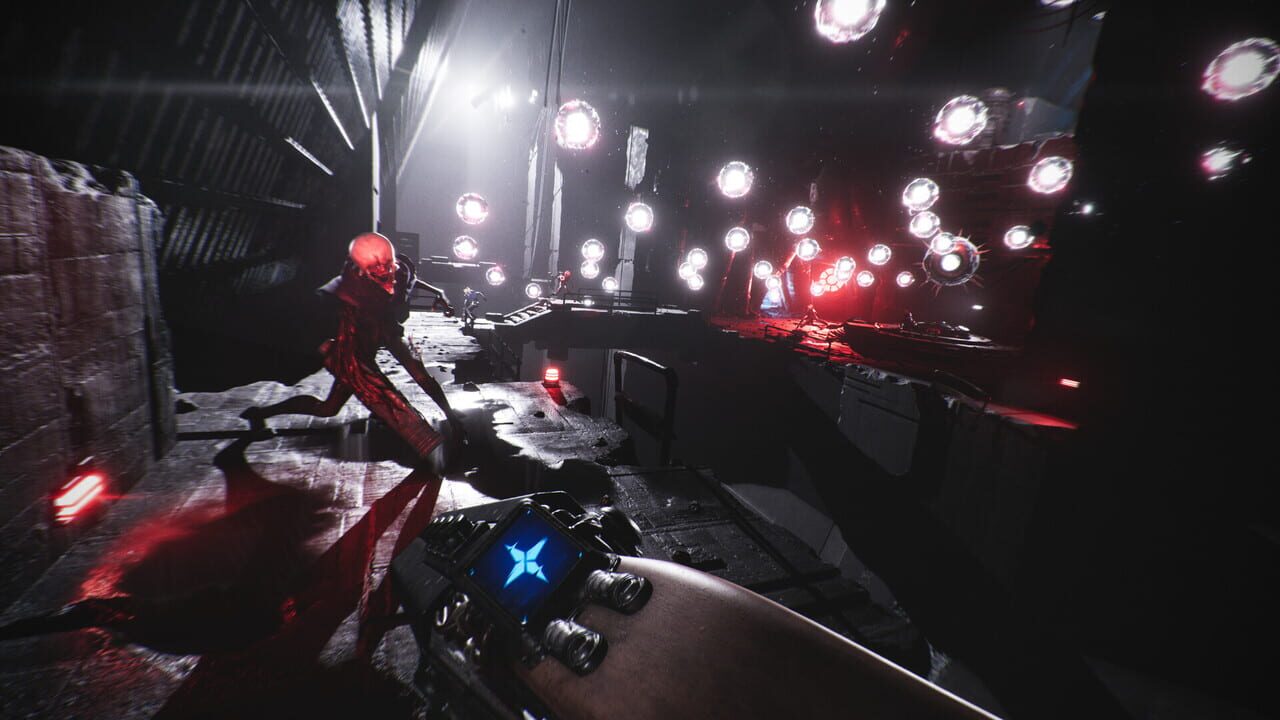
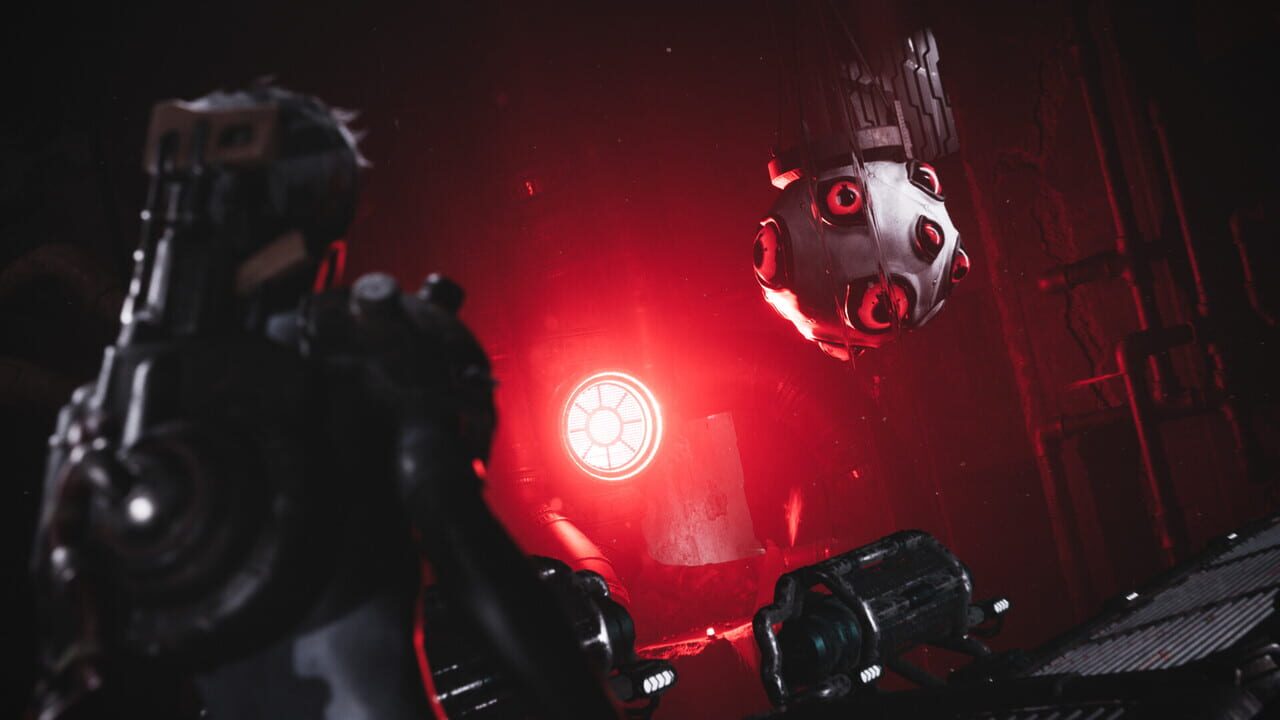
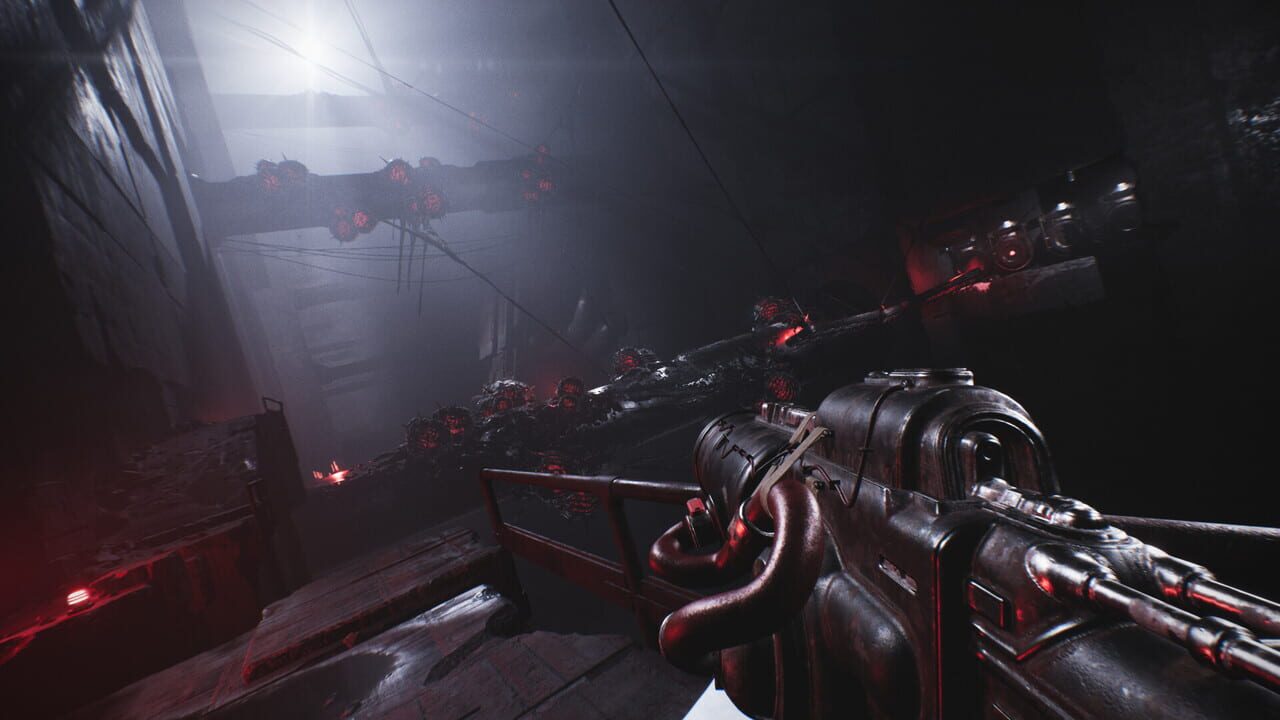
This is the cultural-political background against which Luna Abyss, the science-fiction first-person shooter released by Bonus Stage Publishing in May 2026, is interesting in a way the game's marketing has not articulated and probably should not be expected to. The game's premise - a prisoner sent into a derelict megastructure beneath the surface of a mimic moon, accompanied only by an AI guard and the residual presence of whatever was in the megastructure before - is a science-fiction translation of the supermax experience. The prisoner is alone in a vast space. The communication with anyone outside is mediated entirely by the AI handler. The architecture is hostile, vast, and disorientating. The duration is indefinite. The game places the player, for entertainment, into a controlled simulation of a condition the actual carceral system has been running on tens of thousands of people, without their consent, for thirty years.
The frame this essay wants to give the reader is that this kind of game - the SF-isolation game whose lineage includes SOMA, Outer Wilds, Subnautica, and now Luna Abyss - is doing cultural work that the surrounding political conversation has been failing to do. The work is the work of making the experience of extended solitary imaginable. The public conversation about supermax confinement has been hobbled, for forty years, by the fact that almost no member of the voting public has any first-hand sense of what extended isolation in a hostile environment is actually like. The clinical research is available and damning, but research papers do not produce the kind of visceral imagination that political change requires. Fiction can produce that imagination. Fiction has been one of the most reliable historical engines for shifting public attitudes about carceral practices - from Dickens on the Philadelphia Penitentiary in 1842, through Solzhenitsyn on the Gulag, through Norman Mailer on Gary Gilmore, through Ava DuVernay on 13th. Games that put the player inside the experience are the contemporary medium's version of this older fictional intervention.
The clinical mechanism of what extended isolation does to the human nervous system is, on the available evidence, reasonably well understood. The human cognitive architecture is calibrated for a constant background of sensory and social input. The visual system is calibrated to process scenes with moving objects in them; the auditory system to process voices, footsteps, ambient environmental sound; the social-cognition system to maintain a continuous interpretive model of other minds in proximity. When the input is reduced below the threshold the system was calibrated for, the system begins to generate its own signal to fill the gap. The hallucinations Grassian's prisoners reported are not, on the contemporary neuroscience, indicators of pre-existing pathology. They are the predictable behavior of a perceptual system being asked to operate in conditions far below its evolutionary baseline. The brain, in the absence of input, produces input. The produced input is not anchored to external reality, and the longer the deprivation continues, the less anchored it becomes.
John Cacioppo, the late University of Chicago social neuroscientist whose 2008 Loneliness consolidated two decades of work on what extended social isolation does specifically to the social brain, gave the contemporary research framework for understanding why the social dimension of isolation is so destructive. Cacioppo's research demonstrated that the human nervous system is calibrated for sustained social contact at a level the contemporary cultural environment has been failing to deliver for the general population, and that the consequences are physiological as much as psychological. Chronic loneliness produces measurable changes in cardiovascular function, immune response, sleep architecture, and cognitive performance. Long-term loneliness, on Cacioppo's lab evidence, has roughly the mortality effect of moderate smoking. The body, when deprived of social contact, breaks in specific physiological ways.
What extended solitary confinement does is impose this deprivation in concentrated, involuntary, high-intensity form. The conditions Cacioppo's research documented in chronically lonely elderly adults - measurable cognitive decline, immune dysfunction, depressive symptomatology, eventual mortality risk - are conditions the supermax confinement literature has documented in much more compressed time scales and at much higher severity. Grassian's framing of solitary confinement as a clinical syndrome with a specific symptom cluster maps directly onto Cacioppo's framing of chronic loneliness as a clinical condition with specific physiological consequences. The two literatures, developed in parallel and largely in separate professional communities, converge on the same finding: the human nervous system cannot do this and continue to function.
Luna Abyss puts the player into a simulation of this. The duration is compressed - the campaign is, by current reports, in the fifteen-to-twenty-hour range - and the conditions are softened by the conventions of the action-game genre (the prisoner has weapons, has things to do, has a goal). But the central proposition is preserved: the protagonist is alone, in a vast hostile space, with no social contact beyond the AI handler. The player's experience of the game's atmosphere has been described by early reviewers in language that overlaps with the Grassian symptom cluster. Players report perceptual heightening that crosses into the uncanny. Players report intrusive thoughts. Players report a specific affective texture the genre's standard vocabulary has had difficulty naming. These are not, on a careful read, just descriptions of effective atmospheric design. They are descriptions of the player's nervous system responding to a controlled simulation of isolation conditions that the clinical research has identified as genuinely difficult for the system to process.
This is not, of course, equivalent to actual solitary confinement. The differences in degree are vast and matter. The player can quit the game. The player has voluntary control over the engagement. The duration is bounded. The consequences of the simulated conditions are entirely confined to the play session. None of the actual supermax conditions - the involuntary indefinite duration, the physical confinement to a cell, the absence of escape, the institutional hostility of the system - are present. The player is having a controlled aesthetic experience of a condition that the actual sufferers do not have the option to make controlled or aesthetic. The distinction matters and should not be elided.
What the game can do, and what the medium can do at its best when it works in this register, is make the experience of extended isolation imaginable to a public that has had very little prior exposure to it. Atul Gawande, in his 2009 New Yorker piece Hellhole, made exactly this argument about the role of imaginative work in changing the political conversation about supermax confinement. Gawande's claim was that the practice had been able to expand to its 2009 scale (and now its 2026 scale) in substantial part because the voting public could not imagine what it was like, and that the public's lack of imagination was the result of the carceral system's success at making the experience invisible. Fiction that makes the experience visible - that gives readers and viewers and players a first-person sense of what extended isolation does - is, on Gawande's argument, the cultural intervention the political conversation has been waiting for.
The science-fiction-isolation genre as a category has been doing this work for some time, mostly without the participants noticing. Solaris (Stanisław Lem, 1961, filmed by Tarkovsky in 1972 and Soderbergh in 2002) is a study of how isolation in a small space affects a cognitive system equipped to operate in social context. 2001: A Space Odyssey (Kubrick, 1968), in its long middle act, is a study of the same. Moon (Duncan Jones, 2009) is the explicit cinematic treatment. The video game adaptations of the proposition - SOMA, Outer Wilds, Subnautica, now Luna Abyss - extend the form into the medium that can put the player's own perceptual system into the experimental position the films can only depict.
What makes Luna Abyss distinctive in this lineage is the AI handler. The previous entries in the genre have mostly given their isolated protagonists no companion at all (Outer Wilds, Subnautica) or a single human voice mediated through technology (SOMA's CATHERINE, Hellblade's voices). Luna Abyss makes the constant interlocutor an artificial intelligence whose role is institutional - the AI is the warden, the only entity the prisoner is permitted to interact with, with the institutional voice of the carceral system embedded in its conversational patterns. This is closer to the actual supermax experience than the previous SF-isolation games have been. The supermax prisoner's contact with the outside world is, in practice, mediated by the institutional voice of the corrections officer. The relationship is structurally what Luna Abyss has rendered, with the AI handling the cognitive load the human staff would carry in the actual prison.
The cultural-political question the game raises but cannot, on its own, answer is whether the imaginative experience of extended solitary confinement, delivered in a controlled aesthetic form to a paying audience, can do useful political work in shifting public attitudes toward the actual practice. The evidence from other fictional interventions is mixed. Hellhole shifted some elite-level attitudes about supermax in 2009 but the practice has, on the available evidence, expanded since then. The HBO series Oz made the conditions of long-term incarceration visible to a substantial mainstream audience in the late 1990s without producing major carceral reform. The fiction does cultural work, but the cultural work does not always translate to political change at the pace its makers might hope.
What the game can probably do, more modestly, is contribute to the kind of slow shift in public imagination that political change eventually depends on. The next time the reader encounters a news story about supermax confinement, the news story will have, in the reader's cognitive background, a small concrete imaginative referent the reader did not have before. The reader will know, in some small approximate way, what the architecture feels like. The reader will know what the AI voice sounds like when it is the only voice. The reader will know what hours alone in a vast unfamiliar space do to attention. The knowledge is partial. The knowledge is also, on the historical record of how political conversations about hidden carceral practices eventually shift, the kind of knowledge that has to accumulate in the public before the conversation can change.
The cognitive science on what the supermax system is doing to the human nervous systems of the people held inside it has been clear for four decades. The political conversation has, on the available evidence, not yet caught up. The cultural products that bring the experience into the imagination of the voting public are doing slow work that the explicit policy advocacy has not been able to do alone. Luna Abyss is one of these products. The game does not lecture the player about the analogy. The game lets the player sit inside the experience for fifteen hours and emerge having had a small visceral version of it.
What happens with that small visceral experience, after the player puts the controller down and re-enters the world of their own social and sensory plenty, is part of the cultural-political question the medium has been participating in for some time without making the participation explicit. The participation matters. The cognitive evidence about what extended isolation does is unambiguous. The cultural translation of that evidence into public imagination is one of the few routes by which the political conversation about supermax practice eventually changes. Luna Abyss is small contribution to a long slow shift. The shift is, on the historical evidence, what carceral reform has always required.