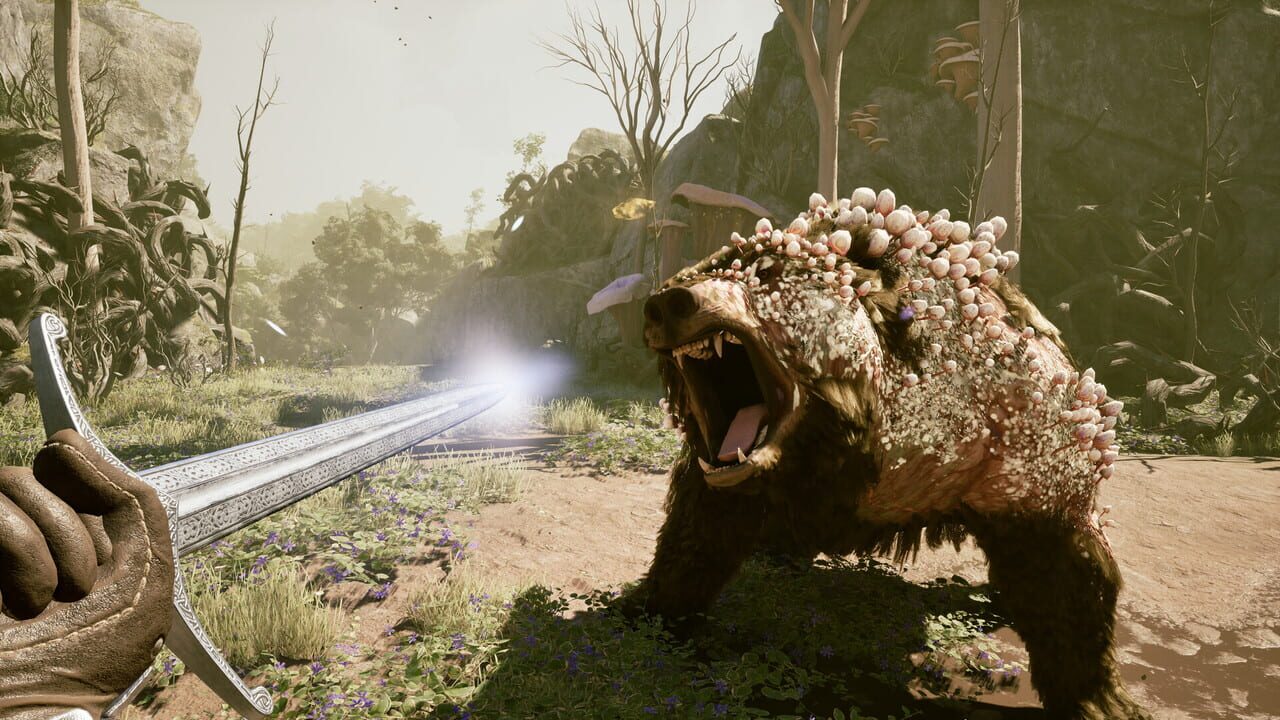
The campfire is at the end of the day's travel. Three of the four companions are seated within ten paces of the fire. One is checking the supplies. The player walks up to the first companion. The companion looks up. The next five to fifteen minutes will be a conversation: a quiet exchange in which the companion's biography opens a small further chamber, a small unresolved thing from her past gets named, the player gets a dialogue tree of three or four responses, the response the player picks shifts the relationship by some small amount, and at the end of the exchange the companion goes back to looking at the fire. Twenty-five years of RPG design have trained the player to know exactly what this is, exactly how it works, exactly what its emotional shape is going to be, and exactly how to value the small accumulating effect of doing it over and over with each companion across a forty-hour campaign.
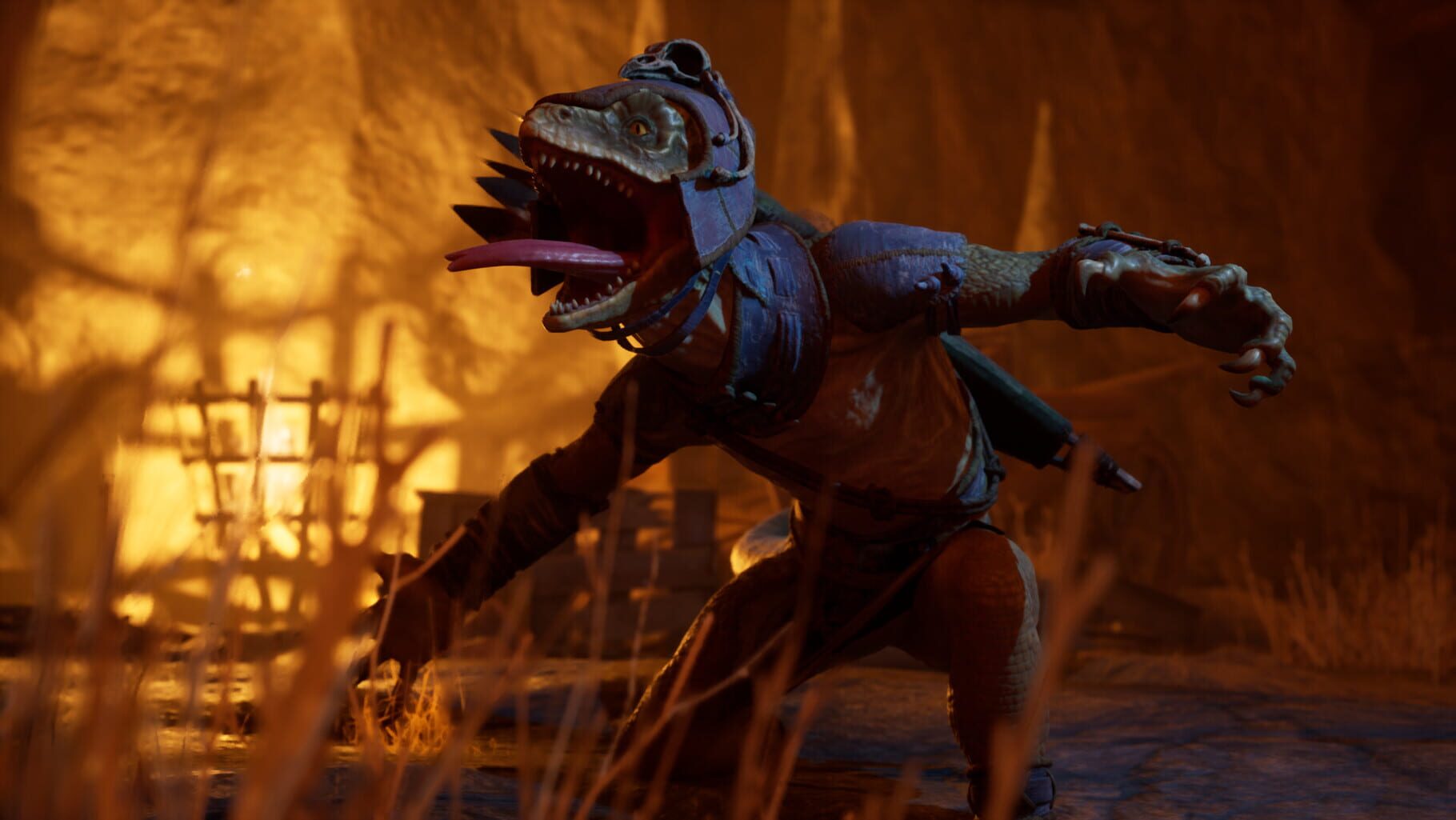
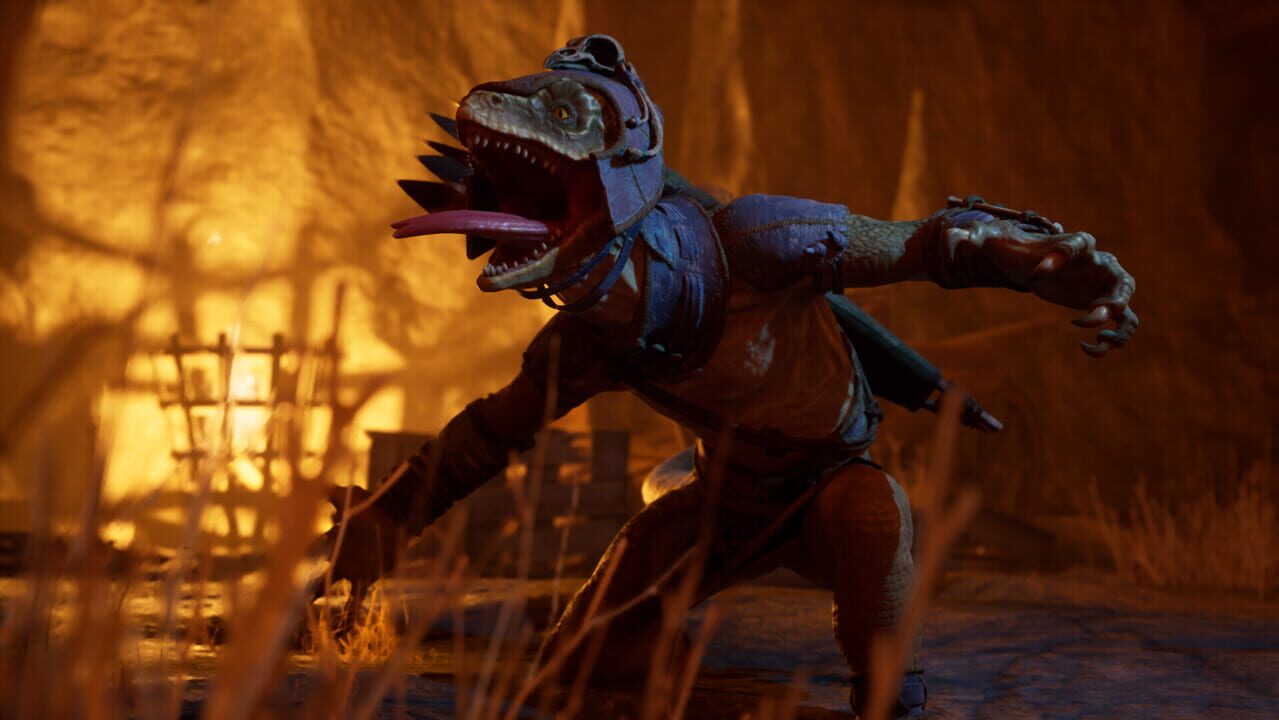
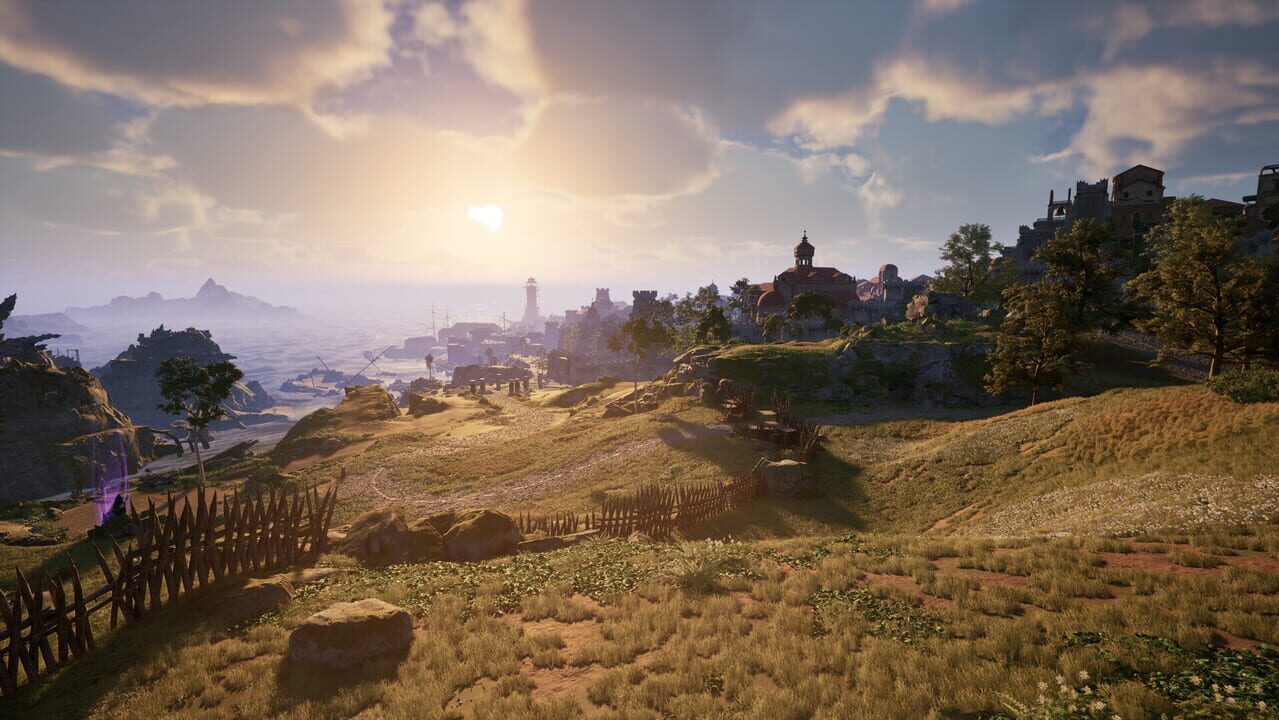
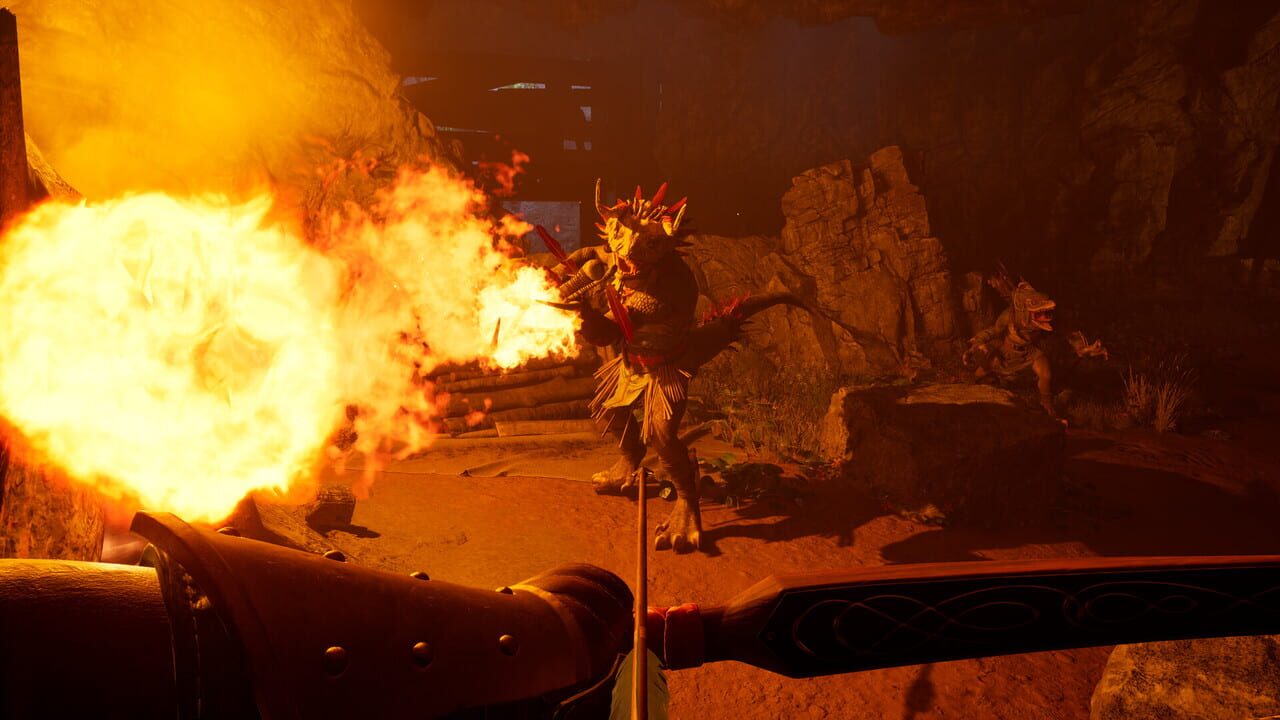
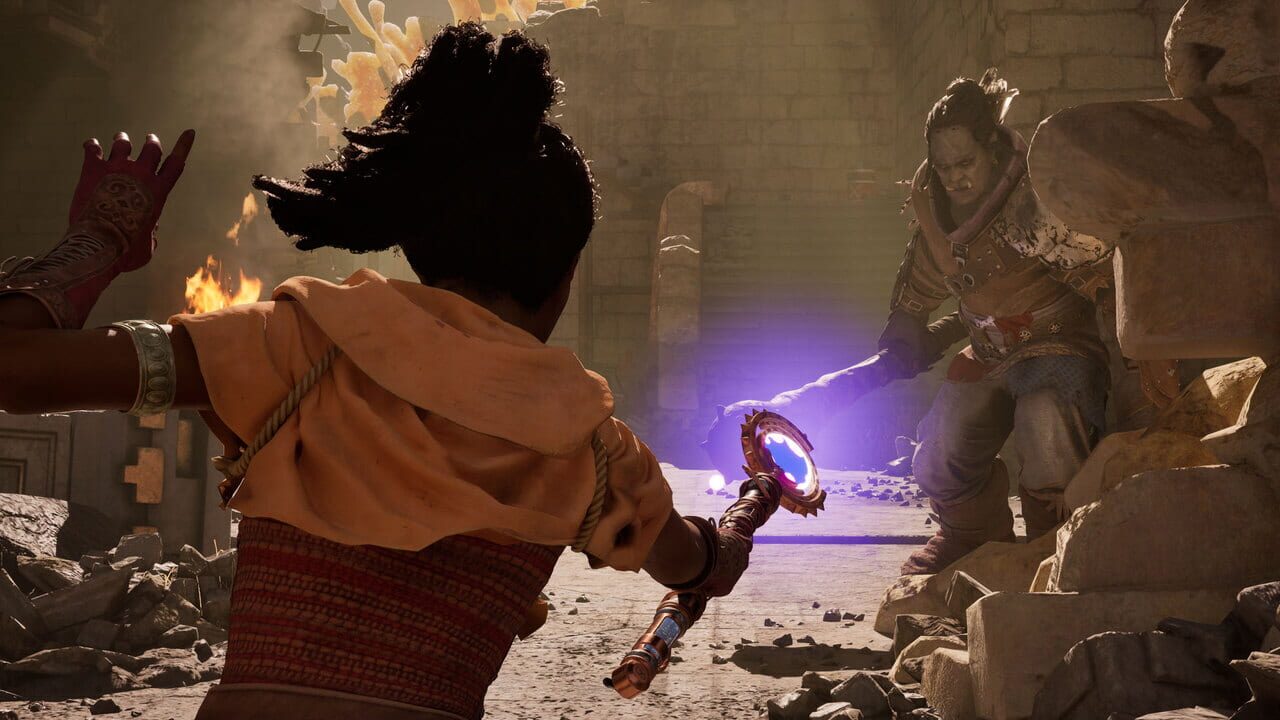
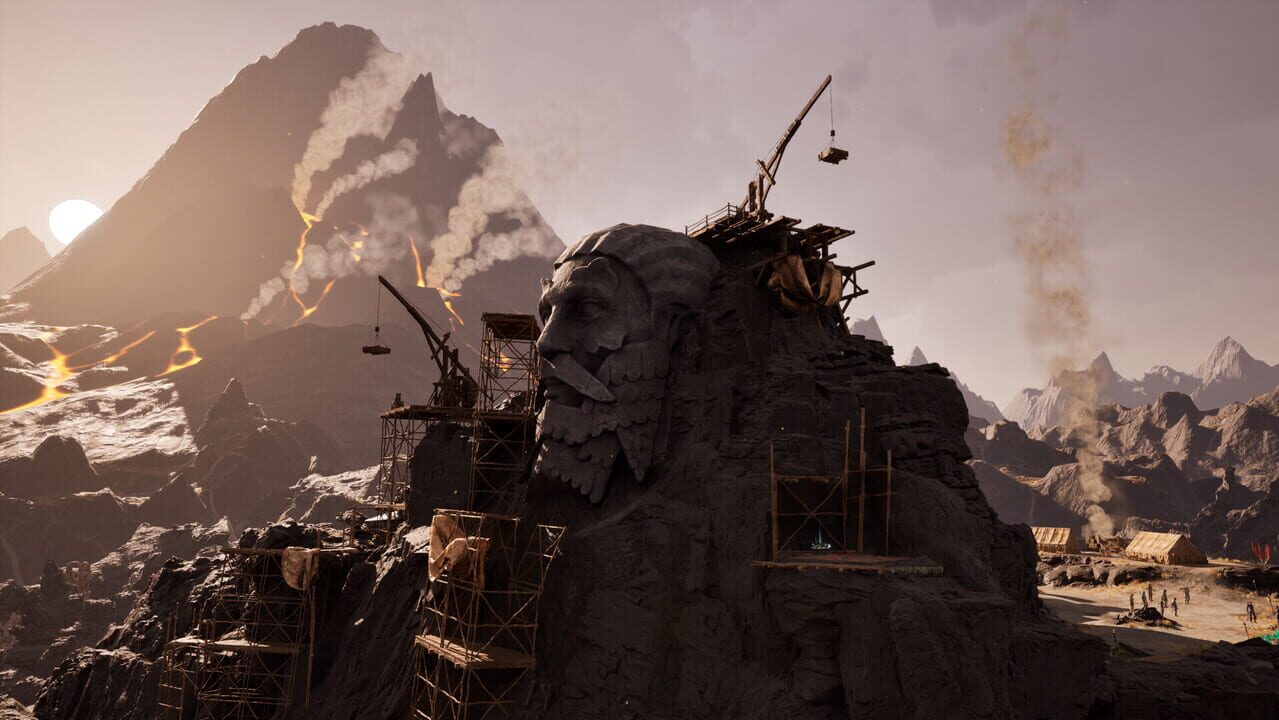
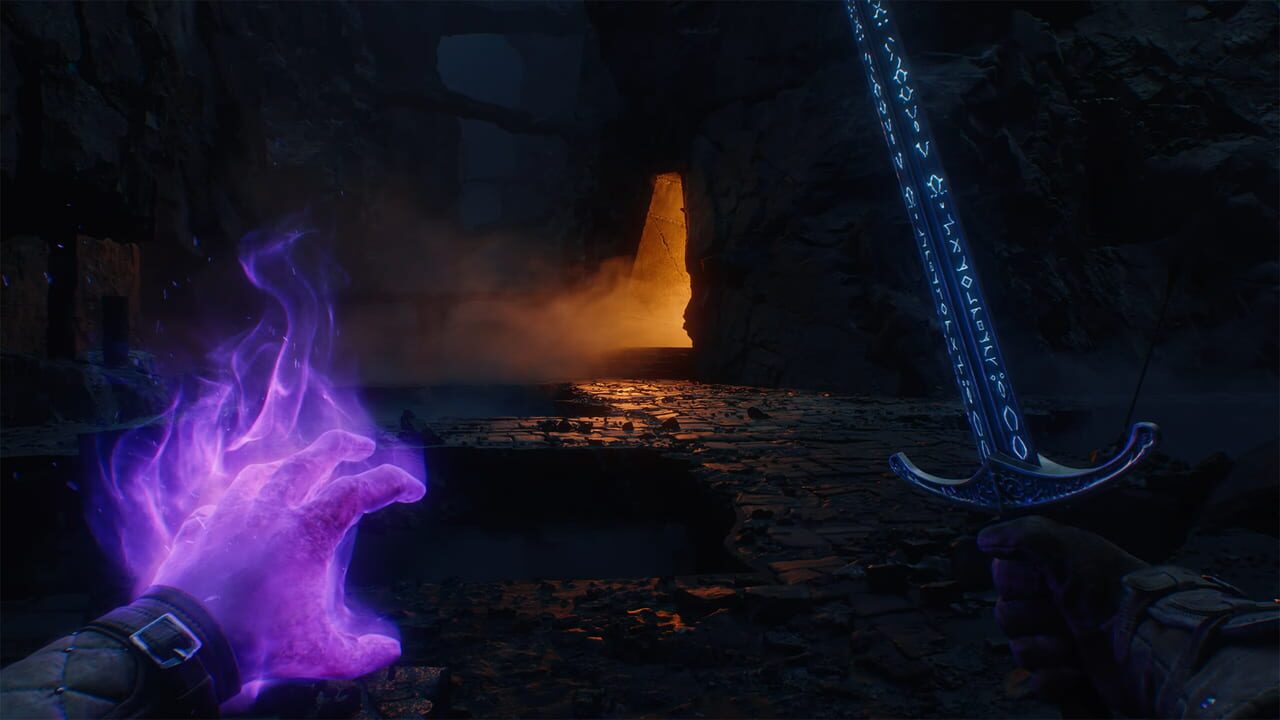
Avowed, the Obsidian RPG released by Microsoft in February 2025, makes a different decision. The companions in Avowed are present in the world, traveling with the player, fighting alongside the player, occasionally commenting on the immediate situation, but the long companion conversations are not the structure of the game. There is no campfire ritual. The companions do not, in any structured way, open the small interior chambers BioWare had been training the audience to expect for a quarter-century. Some players have found this an artistic step forward. Many have found it a disappointment that the surrounding critical conversation has had difficulty articulating.
The frame this essay wants to give the reader: the BioWare campfire was not a stylistic preference. It was a piece of cognitive training in a specific human cognitive skill that the surrounding social environment has been progressively withdrawing the opportunities for. The skill is sustained attention to another person's interior life. The disappearance of the campfire is the disappearance of the training. The audience's complaint is, on a careful read, the audience missing the skill more than the game.
This sounds bigger than the campfire-companion structure can carry. It isn't.
Theory of mind is what the cognitive-science vocabulary calls the human ability to track other minds. It is the skill of being able to hold, in one's own head, the contents of someone else's head: their beliefs, their desires, their unspoken intentions, their incomplete knowledge of the situation, their emotional state, the fact that their emotional state has a history that explains why they are reacting the way they are reacting. The skill has been documented in human development since infancy. It develops in stages across childhood, reaches maturity in late adolescence, and continues to be refined across adulthood by practice with the specific other minds the adult encounters. The cognitive-science research on theory of mind has been one of the more productive subfields of the broader cognitive sciences for the past fifty years.
Theory of mind, on the available evidence, is also a skill that maintains itself only through practice. People who spend less time engaged with other minds get less practiced at the work. The technical literature has documented this in autistic adults whose specific cognitive style makes the skill harder to develop in the first place, in clinically depressed adults whose social isolation reduces the practice opportunities, in elderly adults whose social network has shrunk, and most provocatively in younger adults whose social lives have moved primarily online in ways that substitute the lower-bandwidth signals of digital communication for the higher-bandwidth signals of physical co-presence. The skill is not gone in any of these populations. The skill is reduced relative to the population's own past performance and relative to the population's stated preferences.
This is the cultural-historical situation a recent generation of adults has found itself in. They are, on the available evidence, getting less practice at sustained attention to other minds than their parents or grandparents had at the same age, for reasons that are larger than any of the individuals involved. The texting-and-feeds rhythm of contemporary social life is structurally lower-bandwidth than the in-person, sit-down, look-at-each-other rhythm that human cognition evolved to operate inside. The substitution is not, on the available evidence, neutral. The brain pays a small cost. The cost has been accumulating, in this generation specifically, for roughly fifteen years.
The novel, across the four centuries of its dominant cultural form, has been the primary cultural site at which the developed-world adult population has practiced sustained attention to interior life. The Toronto cognitive psychologist Keith Oatley spent much of his career documenting this. Oatley's research, gathered in Such Stuff as Dreams (2011), demonstrated empirically that adults who read substantial amounts of literary fiction score measurably higher on theory-of-mind tasks than matched control groups who read primarily non-fiction or who do not read substantially at all. The effect held across multiple replications and multiple methodologies. The novel, Oatley's lab established, is not just entertainment. The novel is a cognitive-training apparatus for sustained interior-life attention, and the population that reads novels at adult quantities has measurably better attention-to-other-minds than the population that does not.
What the BioWare RPG did, almost accidentally, was build the novel's cognitive training apparatus inside a video game. The campfire conversations were not, on a careful read, narrative content. They were structured exercises in sustained interior-life attention, conducted across a fictional companion's developing biography, delivered in chunks the player could absorb at their own pace, repeated across many companions and many hours, with the cumulative effect of training the same theory-of-mind skill the novel had been training for centuries. The audience did not, on the public record, recognize this. The audience experienced the campfire as the part of the game they liked most without being able to say why. The cognitive training was happening in the small interior chambers each conversation opened.
The exercise has a specific mechanical shape, worth naming before turning to what Avowed removed. Mass Effect 2 assigns each squadmate a loyalty mission, and completing it well, by choices the game never explains in advance, earns that character's loyalty, which then improves the character's odds in the finale. Two loyalty tracks are built to collide: once both Miranda and Jack are loyal, and once both Tali and Legion are loyal, the game stages a confrontation between them that the player cannot skip. Talk both characters down and both relationships survive; fail, or take a side, and the relationship not taken is lost, sometimes for the rest of the game. The player is not refereeing a plot event so much as holding two competing, fully formed accounts of what is right, each belonging to a specific mind built up over the preceding hours, and predicting which one that mind will still recognize as fair afterward. Dragon Age: Origins runs a plainer version of the same architecture. Each companion's approval sits on a scale the interface never shows as a number, moved by dialogue choices and by who else is standing close enough to overhear them, and a companion pushed low enough on it will try to leave the party for good, with a single chance to talk the character back. The game confirms almost nothing about where the number currently stands, and reveals only well after the fact whether the player's model of the character was right.
A sharp reader could object that none of this is the novel's exercise at all. Oatley's and Zunshine's findings describe what happens when a reader builds another mind out of unadorned prose, one clause at a time, with nothing to work from but the words. A companion conversation is fully performed: a written line, an actor's reading of it, a face rigged to move with the reading, a score cued underneath it. The interior state arrives finished, the way it arrives in a film, not the way it arrives in a paragraph that withholds the character's face entirely and dares the reader to supply one. On this reading, the campfire scene is closer to watching than to reading, and the transfer the essay wants to draw from Oatley's lab to a studio's writers' room does not obviously hold.
The objection is right about what the performance supplies and wrong about what the exercise actually measures. A false-belief task, the standard instrument the theory-of-mind literature uses to test the skill, does not ask a child to describe a character's face; it asks the child to predict an action from a belief the child cannot see. The dialogue-tree choice at the campfire works the same way. The performance supplies tone, history, a face, a voice, but none of that tells the player what this particular companion, not a companion in general, will make of the next thing said, and the game withholds that answer, sometimes for hours, sometimes until the companion raises it unprompted at a later fire. The prediction is the player's own, built from everything the performance has supplied and tested against evidence the interface deliberately delays, and a silent text box can force that same delay exactly as well as a fully mocapped cutscene. What a companion who is merely present, traveling and fighting without a structured mechanism for being wrong-footed, stops asking of the player is precisely that delay: the wait to find out whether the model was right.
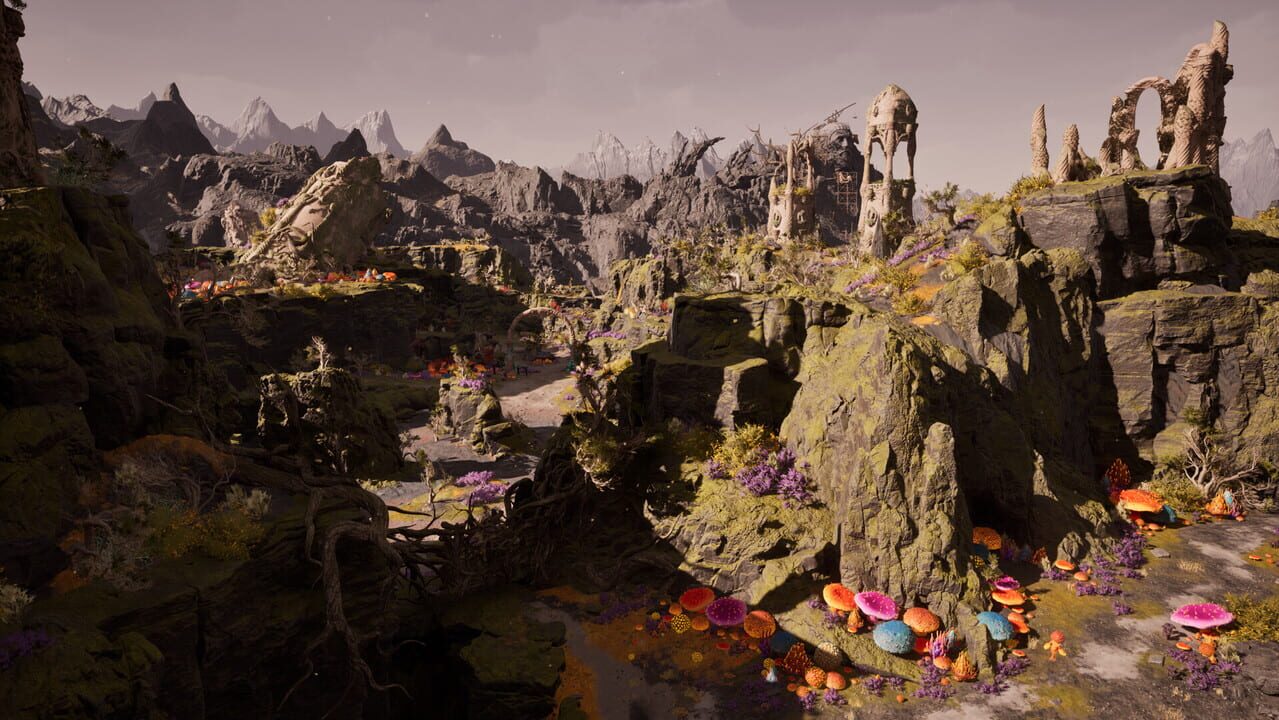
This is what Avowed has stepped away from. The decision is defensible on its own design terms. Obsidian wanted to make a different kind of RPG, one whose companions were colleagues and traveling partners rather than relationship-arc subjects. The combat is well-tuned. The world is rendered with more visual confidence than the studio has previously achieved. The dialogue, when it happens, is sharper for being less frequent. The game is, on every available technical measure, a competent piece of RPG design. The audience's disappointment is not about the technical execution. The audience's disappointment is about the loss of the cognitive training apparatus the BioWare contract had been delivering for twenty-five years, in a moment when the audience's surrounding social life has been delivering substantially less of the same training than it used to.
This is, on a careful read, what Larian's Baldur's Gate III (2023) actually demonstrated about the contemporary RPG audience. The Larian game's commercial success at the scale it achieved is not, in the standard explanation, just a function of Larian's craft. It is a market signal that the audience for the older BioWare contract is substantially larger than the publishing arithmetic had been assuming. The audience is, on the BG3 sales evidence, hungry. The audience is also, on the available cognitive-science evidence, hungry for a specific reason: the contract was delivering theory-of-mind practice the audience's other adult activities have been delivering less of.
The claim makes a further prediction, worth testing before turning to what the pattern implies for the medium. If the exercise depends on a companion's capacity to be wrong-footed, not merely a companion's capacity to talk, then a game that keeps every piece of the campfire's furniture, the seating, the hub, the warmth, the conversation, while removing the possibility of the companion pushing back, should disappoint an audience in close to the same way Avowed did, for close to the same reason. BioWare's own Dragon Age: The Veilguard, released 31 October 2024, roughly fifteen months after Baldur's Gate III and less than four months before Avowed, comes close to running that test, and it was run by the studio that built the original contract.
Veilguard kept its companions close, gave them a shared home base to return to between missions, and wrote them with evident care. What it did not keep was the earlier games' willingness to let a companion actually mind what the player did. Dragon Age: Origins let Alistair deliver real disapproval over the player's choices about a throne he did not want; Dragon Age II let Fenris and Anders carry real hostility toward each other over the treatment of mages, hostility the player could not simply talk away. Veilguard's companions, on the record left by the people who played through them, do not do this. PC Gamer ran a review under the headline "The Veilguard is the first Dragon Age game where my companions don't care enough about anything to argue with me"; TheGamer covered the same reaction under "Dragon Age: The Veilguard Has Fans Missing Mean Companions." The complaint converged, across separate outlets, on the same missing part: not the campfire itself, since Veilguard has one in every sense that matters visually, but a missing capacity, in the people sitting around it, to be genuinely put out.
The commercial record runs the same test from another angle. Electronic Arts told investors in its fiscal third-quarter earnings call, on 5 February 2025, that Dragon Age had engaged roughly one and a half million players in its launch quarter, close to half of what the company had projected, and that Dragon Age had underperformed its net-bookings expectations alongside EA Sports FC 25 that same quarter. Chief executive Andrew Wilson did not name the writing, the combat, or the visuals as the problem; those had reviewed well. Two BioWare-lineage role-playing games shipped within roughly fifteen months of each other. The one that kept its companions capable of real, hidden, correctable disapproval, Baldur's Gate III, became the best-selling game Larian had ever made. The one that kept the companions and removed the disapproval, Veilguard, missed its own publisher's internal forecast by enough to change that publisher's full-year guidance. Different studios, different budgets, the same missing ingredient, and the same shape of disappointment.
The implication for the medium is more interesting than the standard "is Avowed good or bad" framing has been able to register. The contemporary commercial RPG has been one of mass culture's few remaining structured environments for sustained interior-life practice. The form has been delivering this almost invisibly, alongside its more visible delivery of combat, exploration, loot, and story. The studios making contemporary RPGs have been making them, mostly, without realizing that the campfire-companion structure was the form's most important cognitive contribution. The audience has been buying them, mostly, without realizing that the campfire-companion structure was the part of the form they were buying it for.
Avowed's specific design choice has made this visible. The studio removed the campfire, and the audience noticed what the campfire had been doing. Whether the next decade of the form recovers the structure that was lost depends on whether the studios making future RPGs absorb the implication of the Avowed reception. The reception is, on the available evidence, not telling the studios that the BioWare formula was the wrong formula. The reception is telling the studios that the BioWare formula was doing work the broader cultural environment is now delivering less of, and that the audience can feel the absence.
Lisa Zunshine, the cognitive literary scholar whose 2006 Why We Read Fiction extended Oatley's empirical work into a more developed theoretical framework, gave the deepest version of this argument. Zunshine's claim was that the novel as a form is structurally optimized for the human cognitive habit of recursively tracking nested mental states. When the novel describes character A wondering what character B believes about character C's intentions toward character D, the novel is exercising the reader's ability to track four layers of nested minds simultaneously. Human cognition is, in fact, capable of this kind of tracking up to about five layers; beyond that, the cognitive load exceeds the working-memory capacity and the reader loses the thread. The novel has, across its history, calibrated its mental-state nesting to exactly the level that pushes against this cognitive ceiling without exceeding it. The reading is, in a precise cognitive-load sense, exercise.
The BioWare RPG built this same exercise into game form. The campfire conversation that asks the player to attend to the companion's interior state, while also tracking the companion's history with other companions, while also tracking the player-character's own ongoing relationship with the companion, while also tracking the broader political situation the companions are operating inside, is a four-or-five-layer mental-state-nesting exercise that maps directly onto what Zunshine's framework documents the novel as doing. The game is, in a precise cognitive-load sense, exercising the same recursive mental-state-tracking ability the novel exercises. The campfire is the small structured environment in which the exercise happens. The campfire is where the cognitive work the form is doing actually lives.
This is what the cultural-criticism vocabulary about RPGs has not had the vocabulary to name. The form has been doing something specific, measurable, and cognitively important for two decades, and the conversation around the form has been organized around narrative quality, character writing, voice-acting performance, and other surface-level properties that are real but secondary. The substrate the form has been delivering is the recursive mental-state-tracking exercise. The substrate has been the form's most durable contribution to the cognitive ecology of the contemporary adult who plays RPGs.
The takeaway for the reader is concrete. When the next RPG arrives, the question worth asking is not whether the companions have well-written dialogue trees, though that matters. The question worth asking is whether the design has built structured opportunities for sustained interior-life attention with the companions across the campaign, and whether those opportunities are paced and depthed in ways that engage the reader's nested mental-state-tracking. The novel does this through prose. The campfire-companion RPG does it through structured conversational exchanges. The Avowed-style working-party RPG does it less, in different ways, with different consequences. None of these are wrong. They are, however, doing different cognitive work on the audience's brain, and the difference is the part of the form that the surrounding conversation has been least equipped to recognize.
A small further note. The contemporary cultural conditions are not, on the available evidence, going to start delivering more theory-of-mind practice opportunities to adults through the normal channels of work, family, and friendship. The conditions are pointed the other way. This means the cultural objects that continue to deliver the practice are doing something the surrounding environment is structurally failing to provide. The novel will continue to deliver it for the population of adults who still read novels at adult quantities, a population that has been shrinking for thirty years. The video game form, in its specific BioWare-style RPG subset, has been delivering it for the population of adults who play RPGs, a population that is, on the available evidence, larger than the novel-reading population and continuing to grow.
The implication is that contemporary RPG design, when it builds the campfire structure carefully, is doing something that matters more than the form has been credited with. The studios making these games are not just producing entertainment. They are producing one of the small remaining commercial environments in which the contemporary adult mind exercises a cognitive skill that the surrounding adult environment has been letting atrophy.
Avowed, by stepping away from this, has performed a small accidental experiment. The experiment has demonstrated, by the audience's reaction, what the structure was doing all along. The next RPG to ship will benefit from knowing what the experiment found. The audience was not asking for a different kind of RPG. The audience was asking for the same kind of RPG, made better, by studios that finally know what the form is for.
That knowledge is the small useful thing the Avowed reception has surfaced. It is worth the disappointment the reception has involved. The next decade of the form, if the studios listen, can recover what was lost and build on it. The reader who finishes this essay can carry the frame forward into every future RPG announcement. Ask whether the campfire is there. Ask what the design is doing with it. The answer is the part of the form that matters most, and the part the marketing copy is least likely to name.