


In 2006, in a laboratory at the University of Notre Dame, the cognitive psychologist Gabriel Radvansky began a series of experiments designed to test a casual observation that almost every adult has made about themselves at some point in their daily life. The observation is this: you are sitting at your desk in your home office, and you decide you need a specific item from the kitchen. You stand up. You walk down the hallway, into the kitchen, and as you cross the threshold of the kitchen doorway, you realize that you can no longer remember what you came for. You stand in the kitchen briefly. You walk back to your desk. The moment you cross the threshold of the office doorway, you remember what you wanted. You return to the kitchen.
This experience is so common that almost every adult has had some version of it. The folk-explanation has typically been some combination of attention failure, distraction, age-related cognitive decline, or generic forgetfulness. Radvansky's hypothesis was that the experience was none of those things. The hypothesis was that the doorway itself was doing something cognitive - that the act of crossing an architectural threshold was, in the brain's event-tracking machinery, triggering a specific operation that interfered with the ongoing maintenance of short-term task-relevant information.
The experiments Radvansky and his collaborators designed to test this were, by the standards of cognitive psychology, unusually clever. Participants in the first major published study performed a task that involved memorizing objects on a table and then moving them to a second table. The second table was sometimes in the same room as the first; sometimes the participant had to walk through a doorway into a different room. Crucially, the distance traveled in both conditions was the same. The only difference was whether the participant crossed an architectural threshold. The result, published in 2006 in Memory and Cognition, was that the participants who walked through the doorway showed measurably worse memory for the object they were carrying than the participants who walked the same distance without crossing a doorway. The doorway itself was producing the forgetting. The experiments have been replicated with substantial variation (virtual doorways in VR environments, doorways in unfamiliar rooms, doorways under different lighting conditions) and the basic finding has held up. The effect is real. The literature has, in the two decades since, characterized it as one of the more consistent findings in event-perception research.
The mechanism Radvansky proposed for the effect, developed in collaboration with the Washington University psychologist Jeffrey Zacks across what is now nearly two decades of joint work, is what is now called event segmentation theory. The theory's central claim is that the human cognitive system does not perceive time as a continuous flow. The system perceives time as a sequence of discrete events, and the system automatically segments incoming experience into event boundaries - moments where one event ends and the next begins - using specific perceptual cues. The cues include changes in spatial location, changes in actor configuration (someone entering or leaving), changes in goal structure, and changes in causal context. When a boundary is detected, the brain performs a small operation: it stores the just-completed event in long-term memory, clears the active working-memory contents that were specific to the just-completed event, and begins building a new working-memory context for the next event.
Walking through a doorway is, in this framework, one of the more reliable event-boundary cues the brain uses. The architectural threshold marks a spatial transition that almost always corresponds to a context transition. The brain, on detecting the threshold, executes its standard boundary operation. The contents of working memory that were specific to the previous context - including the task-relevant information about what the participant came for - get cleared from active maintenance. The information is not lost; it is, on Radvansky's evidence, still retrievable when the participant returns to the previous context, which is why the kitchen-and-back routine works. The information has been moved from active working memory to context-tagged long-term memory. The doorway did the moving.
The theory names which cues trigger the operation without yet saying why a threshold does the triggering rather than some smaller change in the visual field. The theory's answer is prediction error. An event model, on this account, is not a static description of the current scene but a running forecast: the perceptual system predicts a few seconds ahead and checks the prediction against what actually arrives. Most moments confirm the forecast closely enough that the model needs no revision. A few moments push the error sharply upward: a person leaves the room, a goal is completed, the cause of what is happening changes, or the perceiver's own position crosses into a space the current model was never built to predict. When that happens, the brain treats the spike in error as the signal that one event has ended and another has begun. A spatial threshold is simply an unusually efficient way to produce the spike, since crossing one reliably precedes a large, hard-to-predict change in what surrounds a person. A lifetime of doorways has taught the perceptual system to treat the threshold itself as a proxy for the change, firing the segmentation response before the new room has even been examined.
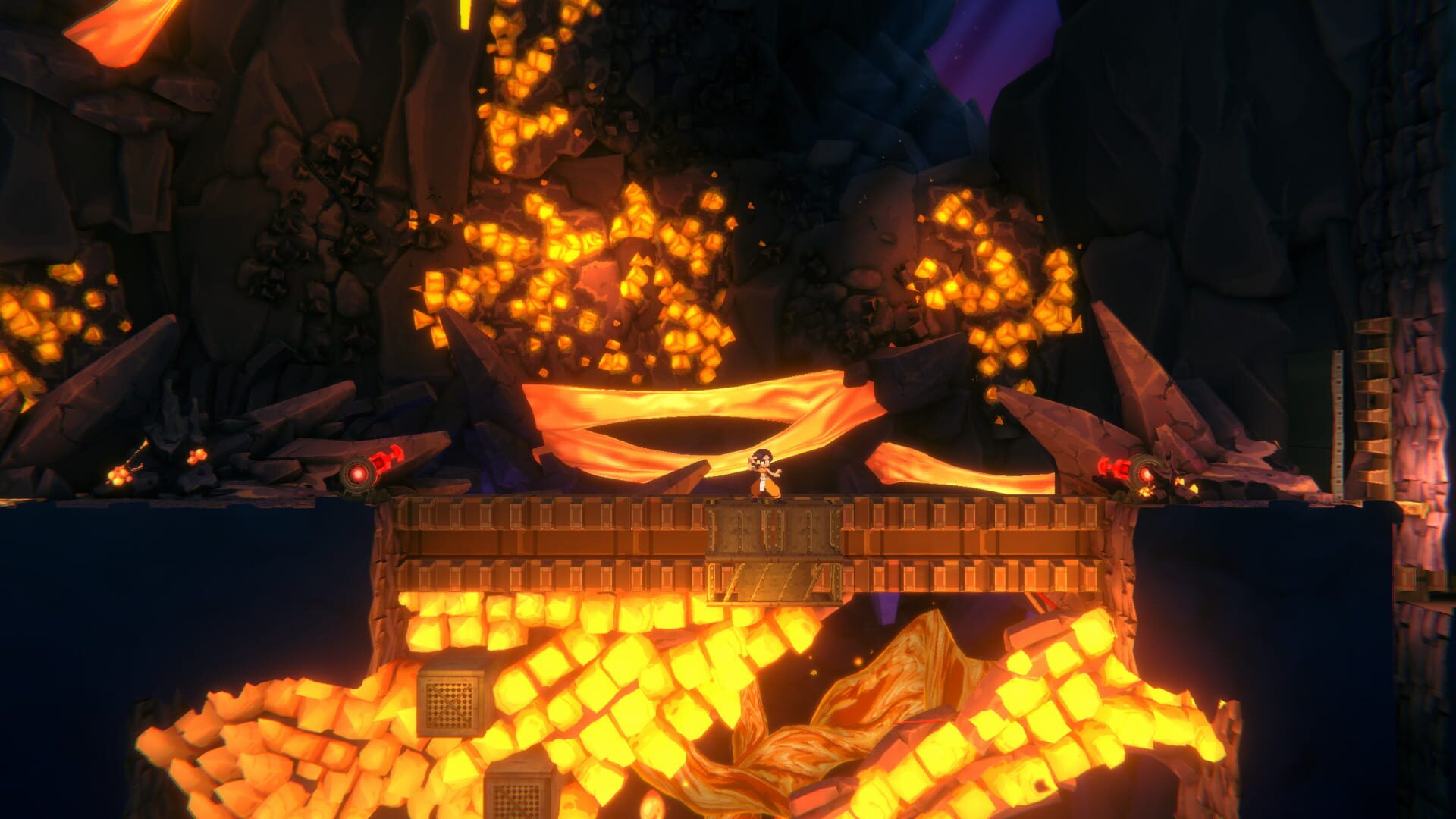
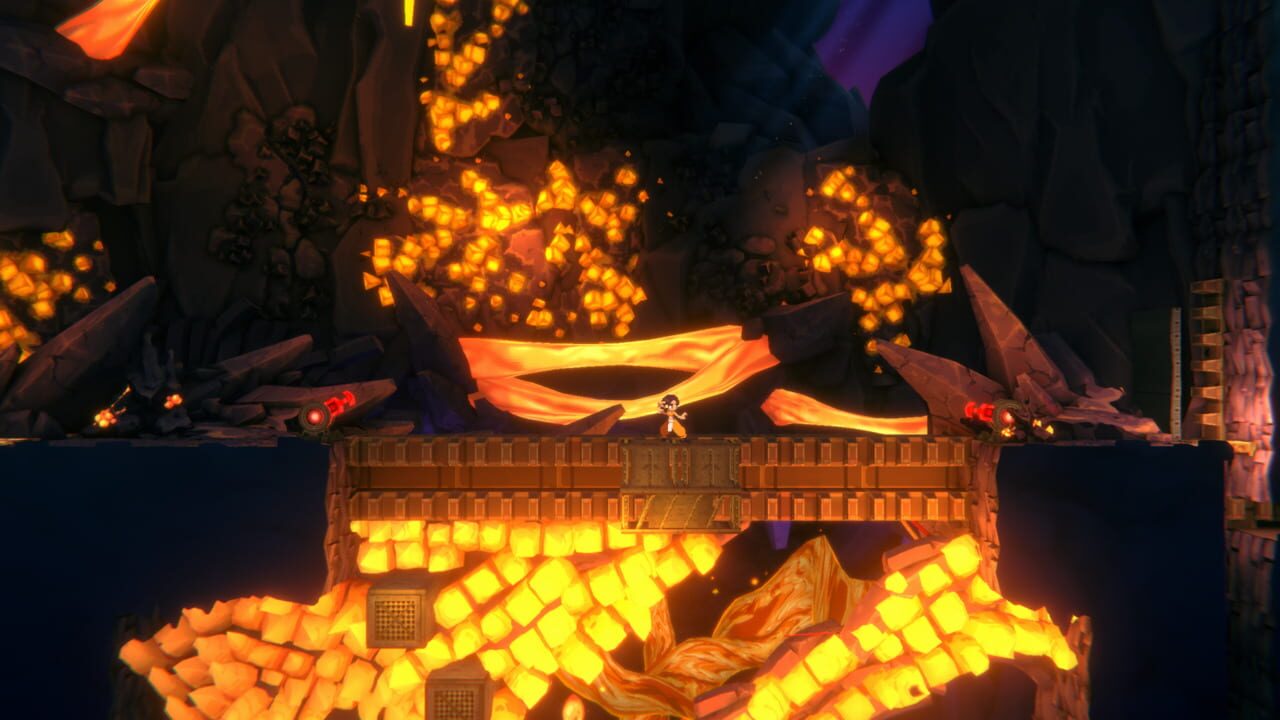
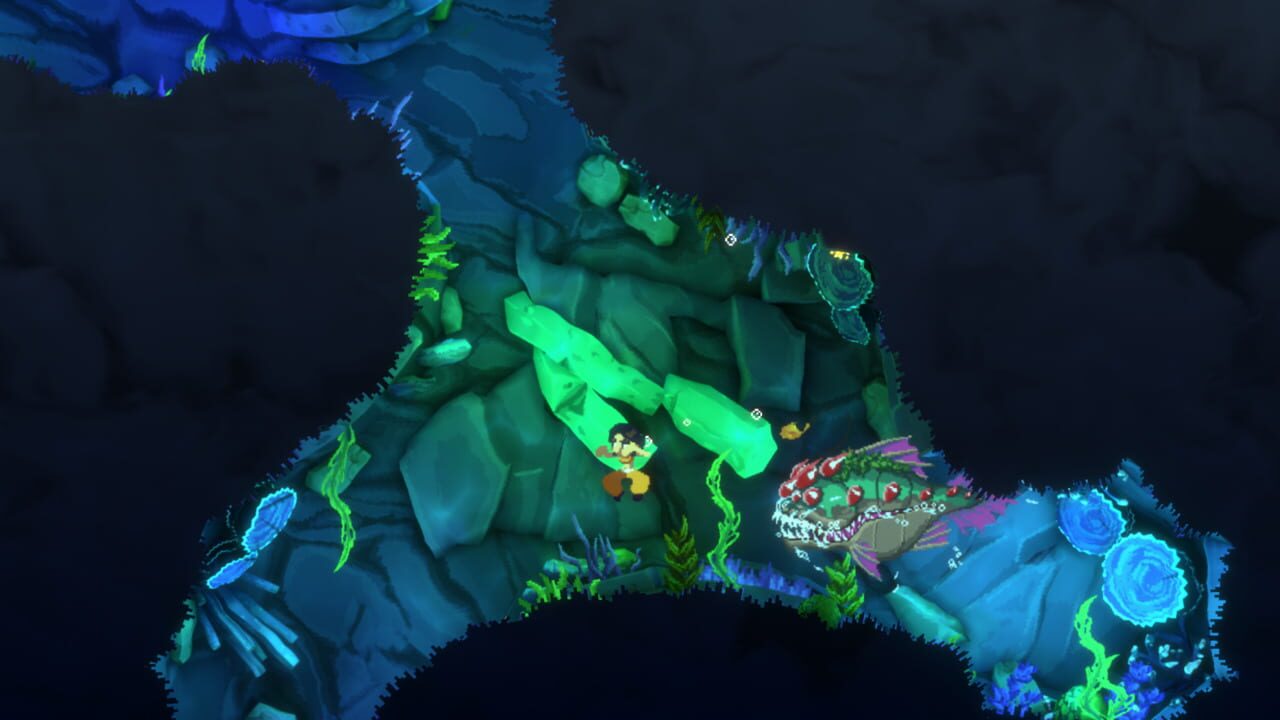
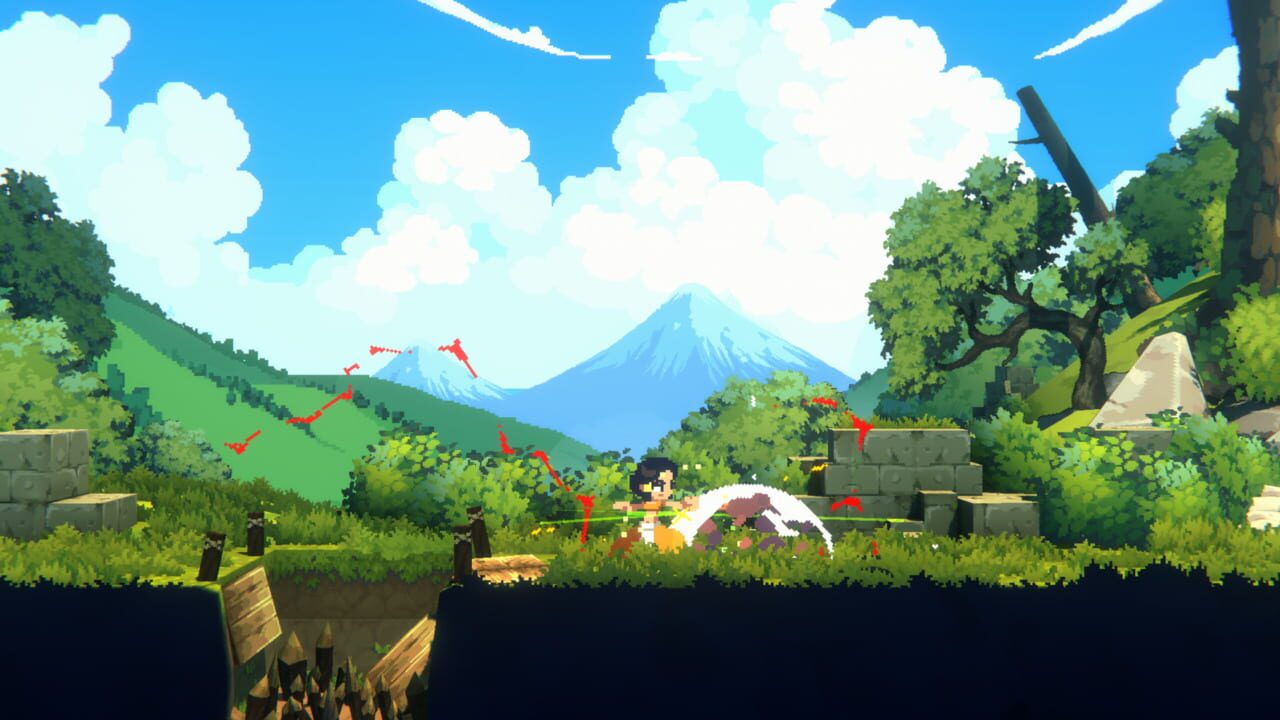
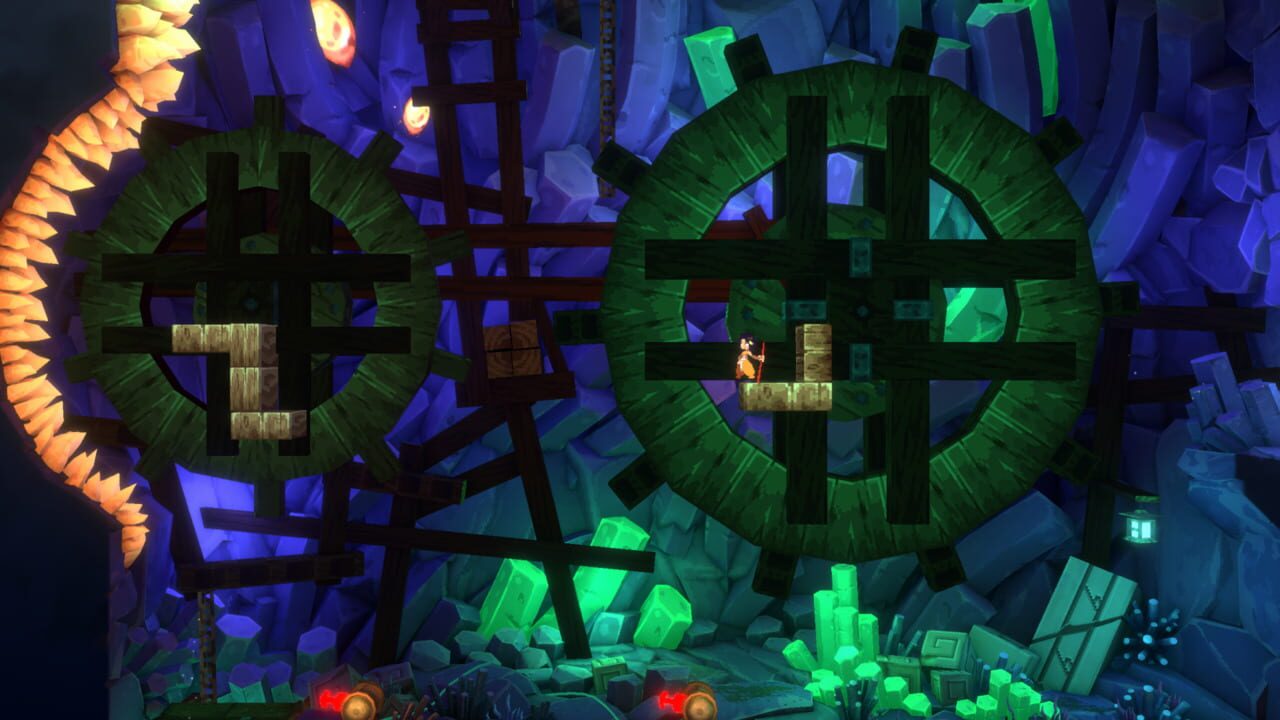
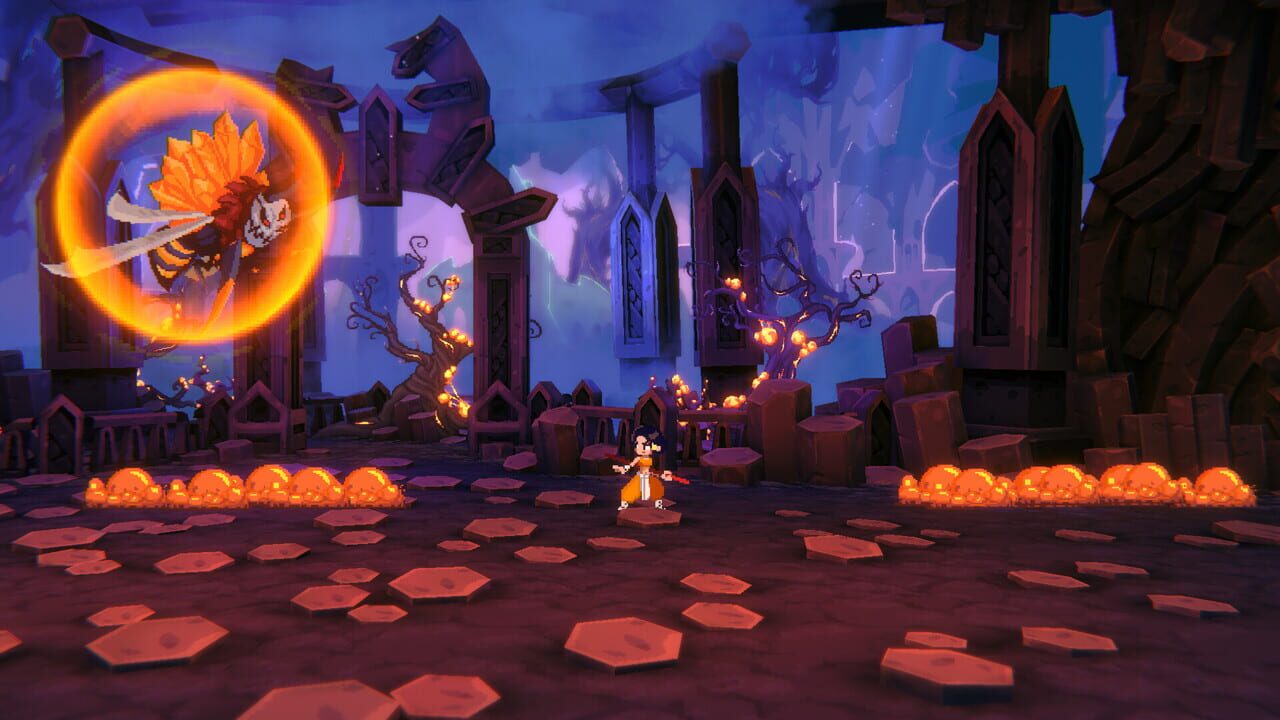
This is the cognitive-science background against which Akatori, the small Metroidvania released by the independent developer Game Endeavor in late May 2026, becomes interesting in a way the studio almost certainly did not plan for. The game's central mechanical premise involves a world-switching transformation: the protagonist, an avian figure named Akatori, can shift between parallel versions of the same physical space, with different layouts, different obstacles, and different items present in each version. The shift operates at specific architectural locations the player has to find and use. The shift is, on the game's mechanical surface, a Metroidvania traversal mechanic in the lineage of the dimension-switching mechanics that A Link Between Worlds and Titanfall 2 and Dishonored 2 and several other games have used over the past decade. The mechanic is, in cognitive-science vocabulary, a deliberate event-boundary trigger.
The frame this essay wants to give the reader is that game design has been, mostly without naming it as such, doing experimental cognitive science for several decades. Game designers know what makes players forget things, what makes them remember things, what produces the specific sensation of confusion at a boundary, what produces the specific sensation of clarity after passing through one. The designers' knowledge has been folk-craft knowledge - what works through iteration and play-testing - rather than formally-articulated cognitive theory. But the working craft knowledge has tracked the cognitive-science findings with surprising fidelity. The doorway effect Radvansky has been documenting since 2006 is precisely the cognitive operation that good Metroidvania designers have been exploiting since the original Metroid in 1986. Akatori is the latest entry in a long unacknowledged collaboration between game design and the cognitive-psychology lab.
What makes Akatori distinctive in this lineage is the deliberateness with which the game uses thresholds. Most Metroidvanias use architectural transitions as a navigation framework - the rooms connect, the player moves between them, the boundaries are present but rarely thematized. Akatori makes the boundary itself the central mechanic. The player's transformation between dimensions happens at specific marked locations, and the player has to consciously attend to which version of the space they are currently in. The cognitive operation Radvansky's lab has been characterizing - the working-memory clearing that happens at event boundaries - is, in Akatori's design, the operation the game is making the player perform consciously and repeatedly.
The claim is testable against a case closer to home than the genre-lineage list suggests, because one of the games already named there solves the identical design problem, two versions of one space, without gating the switch to a threshold at all. Titanfall 2's 2016 campaign level "Effect and Cause" gives the player a wrist-mounted device, the Time Gauntlet, that toggles between a present-day ruin and the same facility functioning normally in the past, on command, anywhere in the level, including mid-jump and mid-wall-run. The level's senior designer, Jake Keating, has said the idea grew in part out of watching the History Channel series Life After People during a stretch at Respawn Entertainment that followed his departure from Infinity Ward's Call of Duty team. That production detail matters less than what it explains: Keating built two freely available states of one location, a toggle the player could flip at will, anywhere in the level. The player crosses no doorway to move the facility from one state to the other. The toggle is a button, and the level is widely and rightly cited as one of the better pieces of level design a modern shooter campaign has produced.
This comparison is useful because it could easily have come out the other way. If the interesting cognitive fact about Akatori were simply that it holds two versions of a room in mind at once, "Effect and Cause" would already be doing the identical thing, in a form the doorway-effect literature has nothing to say about, since nothing in Radvansky's paradigm turns on how many states a space has. The literature's cue is architectural: a spatial threshold specifically, the kind of thing the Time Gauntlet was built to make irrelevant. Dishonored 2's Timepiece, the other paired-timeline device in the essay's opening list, keeps the same freedom: the Outsider's artifact can be raised anywhere inside Stilton Manor, refusing to activate only when the player's exact position would land inside a solid object in the other period, a physics check rather than a location check. Two of the games most often mentioned alongside Akatori for this kind of premise deliberately uncoupled the switch from any specific place. Akatori went the other way, requiring the player to find and stand in a marked spot before the shift will happen at all, which is what makes the choice look considered: two well-built, well-reviewed levels solved the same problem and neither one needed a doorway to do it.
This produces a specific cognitive texture in play that few Metroidvanias achieve. The player who has been carrying a goal in active working memory ("I need to get the key item from this room") shifts to the alternate version of the same room, and the goal does not automatically clear in the way it does when the player walks between unrelated rooms. The shift produces something between a context transition and a context continuation. The player's brain is, in real time, working out whether the new spatial configuration counts as a new event or as a variant of the ongoing one. The play sessions that result have a specific perceptual quality that the genre has rarely produced: the player is constantly negotiating with their own event-segmentation machinery in a way that the standard Metroidvania does not require.
A reader who knows the cognitive-science literature past its most famous result might object to how settled this essay has made the doorway effect sound. The 2006 and 2011 studies established the phenomenon in a controlled task, but the years since have not simply piled up confirmations of it. A 2021 study in BMC Psychology, running four separate experiments, found no reliable memory cost from crossing a threshold in an immersive virtual environment when the task carried no added cognitive load, a result the authors describe as positive evidence for the null hypothesis rather than a mere failure to reach significance. Two further experiments, one using video of a real environment and one using an actual building the participants walked through, found no measurable memory impairment either, regardless of load. Taken alone, that pattern would be a real problem for treating the doorway effect as a fixed, context-free tax on memory, and it complicates the confident way the effect tends to get retold, this essay's opening scene included.
The complication cuts in a specific direction rather than a general one, and the direction favors a video game over a house. The one condition in which the four experiments did find an effect was the immersive virtual environment carrying a concurrent memory load, and what turned up there was a specific kind of error: participants grew more willing to accept the wrong object as the one they had been carrying, an increase in false alarms rather than the classic drop in accurate recall. The two experiments conducted in real, physically walked space found nothing, load or no load. On this evidence, the doorway effect is better supported as a virtual-environment phenomenon under cognitive load than as a general fact about hallways, which is an odd thing for the popular version of the story to have gotten backward, since a screen-mediated threshold operated by a controller is exactly what an immersive virtual environment is.
It is also exactly what Akatori's transformation is. The player is, on the design already described, always holding something (a room's layout, a partial route, the location of an item) while crossing into the alternate version of it, which is exactly the condition under which the most rigorous replications actually found an effect. The skeptical replication, in other words, does not so much weaken the reading offered here as relocate it, from an architectural doorway to the exact kind of virtual one a video game builds.
The broader implication for game design is that the doorway effect is one of a small number of cognitive operations that designers can deliberately invoke. The Zacks-Radvansky framework identifies several event-boundary cues the brain uses reliably: spatial transitions (doorways, area changes), goal-structure transitions (the completion of one task and the beginning of another), causal-context transitions (a sudden change in what is making things happen), and actor-configuration transitions (the arrival or departure of relevant characters). Each of these cues can be deployed in design to produce specific cognitive effects: deliberate forgetting at the boundary, deliberate context-resetting, deliberate working-memory clearing. The folk craft of game design has been using these cues for decades. The formal cognitive science has been catching up to articulate what the craft has been doing.
There is a more general implication for the reader's own daily life that the cognitive-science work has been developing. If the brain segments experience at architectural and contextual boundaries, and clears working memory at those boundaries, then the reader's ability to maintain task-relevant information across boundaries can be improved by deliberate technique. The folk advice of writing things down before walking somewhere is more cognitively grounded than it sounds; the writing creates an external memory trace that the doorway cannot clear. The folk advice of rehearsing the task verbally while walking is similarly grounded; the rehearsal keeps the information in active working memory through the boundary that would otherwise displace it. The Radvansky-Zacks research has been providing the scientific underpinning for memory-management techniques that the surrounding culture has been transmitting as common-sense advice without knowing why the techniques work.
The doorway effect has also been documented as having age-related variations. Older adults, on the available studies, show stronger doorway-effect forgetting than younger ones, which is why the experience becomes more noticeable across the lifespan and is sometimes mistakenly attributed to general cognitive decline. The contemporary literature treats the age-related increase as one piece of a broader pattern of differential event-segmentation effects across the lifespan, rather than as a generic decline indicator. The doorway is doing the same operation across all ages; the operation has different working-memory consequences depending on the age-related capacity of the working-memory system to maintain information against interference.
There is one further finding from the event-segmentation literature that bears specifically on Akatori's design choice. Zacks's lab has shown, in a series of studies on what they call narrative event segmentation, that the brain treats fictional narrative events with the same segmentation machinery it uses for direct experience. Watching a film, reading a novel, or playing a video game produces measurable event-boundary responses in the brain's standard event-segmentation regions. The boundary cues that work in direct experience (spatial transitions, goal-structure shifts) work the same way in fictional narrative. The reader who has been turning pages and then suddenly cannot remember a plot detail from three chapters earlier is experiencing the doorway effect's narrative version: the chapter break or scene transition has triggered the boundary operation, and the working-memory content from the previous segment has been moved to long-term storage in a way that makes immediate retrieval harder.
Game design that uses architectural transitions to control event segmentation is, on this framework, performing direct manipulation of the player's cognitive event-tracking machinery in ways that few other media can. The film director has to use cuts; the novelist has to use chapter breaks; both are mediated operations that the audience interprets. The game designer can put a literal doorway in front of the player, and the player's brain will respond to the architectural threshold with the same cognitive operations the brain uses for real doorways in the world. The medium has a direct access to the event-segmentation machinery that the other narrative forms do not.
This is one of the medium's more interesting and underrecognized cognitive properties, and Akatori's specific use of it deserves more attention than the genre's standard reception will likely give it. The world-switching mechanic could have been treated, in design, as a generic Metroidvania traversal device. The studio has, intentionally or not, made it operate on the cognitive boundary the doorway-effect literature has been characterizing. The play sessions that result are, in some real cognitive sense, more cognitively active than the genre's average. The player is doing more event-segmentation work per minute. The brain is doing more of what Radvansky and Zacks have been documenting in their labs.
The reader who plays Akatori will, by the end of the campaign, have practiced the world-switching transition some thousands of times. The practice will not produce any direct external benefit. What the practice will produce, on the available cognitive-psychology evidence, is a small refinement of the event-segmentation machinery for the specific kind of dimensional-shift cue the game uses. This will not transfer to the reader's real-life doorway-effect experiences in any meaningful way. The reader will still forget what they came for when they walk into the kitchen. The reader will, however, have spent the play sessions exercising a cognitive function that the standard daily life does not usually exercise this deliberately. Whether the exercise produces any durable cognitive effect is the kind of question the perceptual-learning literature would, in principle, be able to answer with the right experimental design. The literature has not, as of yet, been done.
What is available, and what this essay wants the reader to carry away, is the recognition that the small puzzling experience of forgetting at a doorway has a documented scientific explanation and a name. The next time the reader walks from one room to another and stands briefly confused, the experience is the doorway effect. The brain has executed the event-boundary operation. Working memory has been cleared. Returning to the previous room will, with high probability, restore the information. The cognitive science underneath the experience is two decades old, well-replicated, and characterizes one of the more reliable small phenomena of ordinary adult cognition. Akatori's design, by making the operation explicit, gives the reader an opportunity to notice the cognitive machinery doing its standard work in real time. The opportunity is small. The opportunity is also one of the more interesting small things the medium of the video game can offer that other narrative forms cannot.