




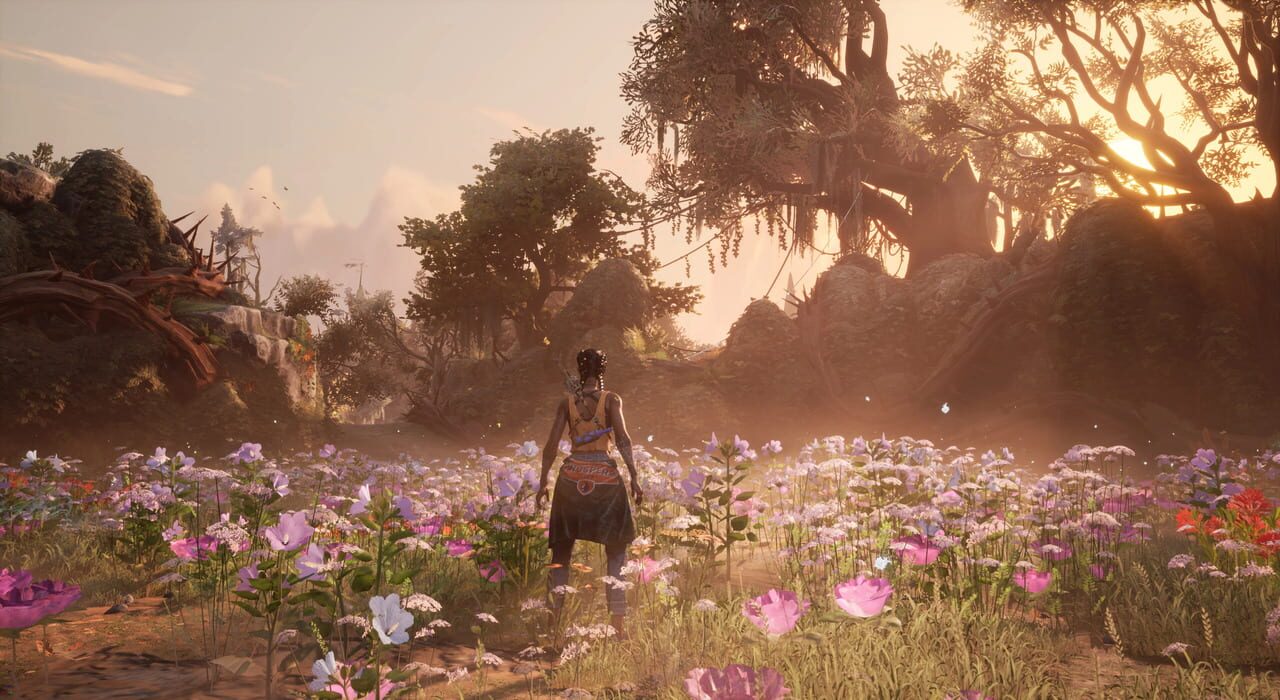
Pick a frame from any big-budget video game released in the past five years. Almost regardless of the genre, the studio, or the platform, the frame is going to be doing a specific thing the contemporary medium has been doing for thirty years: it is trying to look like a film. The lighting model approximates the way actual film stocks respond to light. The camera angles draw from the cinematic vocabulary of contemporary blockbuster filmmaking. The depth-of-field effects mimic the specific optics of expensive cinema lenses. The textures aim for the photographic accuracy that high-resolution cinematography produces. The motion of the characters references the specific body language of professional film performances. The dialogue is mixed for the audio environment of a theatrical sound system. The whole package is, in its aesthetic aspiration, a film the player has been allowed to control.
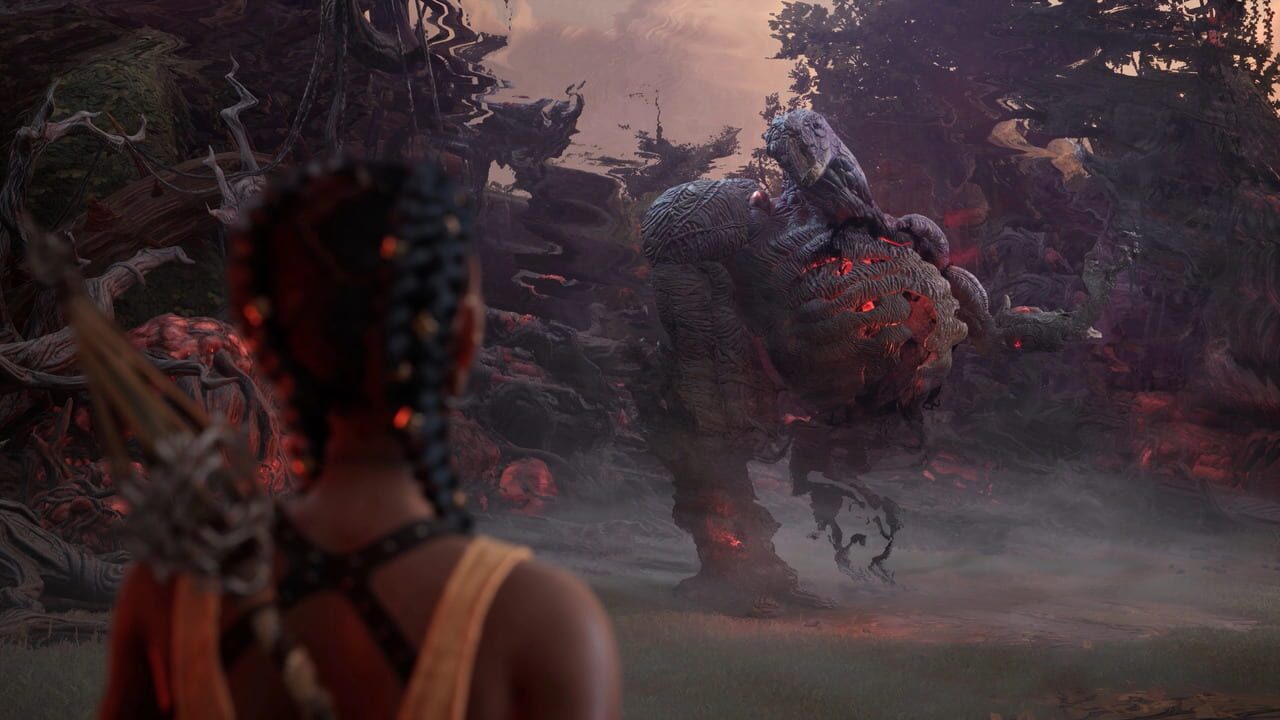
Now pick a frame from South of Midnight, the action-adventure game Compulsion Games released in April 2025. The frame looks like something else. The character moves with the deliberate frame-by-frame articulation of a stop-motion animation. The environment has the slight hand-touched quality of a painted backdrop. The lighting is not trying to look like a film stock. The textures are not trying to look photographic. The whole package looks, in its aesthetic aspiration, like a thing that was made by people, with the hands of the makers visible in the result. The visible hand is not an accident. The visible hand is the design's primary aesthetic commitment.
The frame this essay wants to give the reader: the contemporary commercial video game has been operating under a specific aesthetic assumption for thirty years, namely that the medium should aspire to the visual register of cinema. The assumption has produced extraordinary technical accomplishments. The assumption has also produced a specific narrowing of what the medium can look like, and the narrowing has perceptual consequences for what the form is able to do to its audiences. A small number of recent games have deliberately declined the cinematic aspiration. The result is a body of work the surrounding conversation has been calling stylized or painterly or hand-made, without quite naming what the visible-hand commitment is doing to the player's perceptual experience. South of Midnight is one of the most committed recent entries in this body of work, and the body of work matters for reasons that travel past the specific games involved.
This is a frame that travels. The reader who has it can apply it to almost every cultural product they encounter. The mass-market film whose surface aspires to the look of "prestige cinema," the streaming series whose visual design mimics premium-cable conventions, the indie album whose production aesthetic copies major-label engineering, the literary novel whose prose adopts the cadences of MFA-program workshop fiction, are all examples of cultural products that have made the same aesthetic choice the largest video games have been making: aspire to the dominant register of the form's prestige tier. The choice is not, in any of these cases, wrong. The choice is one available choice among several, and the products that decline it are usually doing something the products that accept it cannot do.
The foundational argument for what is at stake here comes from the German philosopher Walter Benjamin, whose 1936 essay "The Work of Art in the Age of Mechanical Reproduction" remains one of the most-cited works in the contemporary humanities. Benjamin's central concept was what he called aura: the specific quality a unique made object has that distinguishes it from its reproductions. The original painting in the gallery has aura; the photograph of the painting in the textbook does not, or has substantially less. The aura, in Benjamin's analysis, is constituted by the object's specific history, by the visible evidence of the maker's hand, by the object's existence in a particular time and place, and by the impossibility of the object being substituted by another object that looks the same. Mechanical reproduction, Benjamin argued, was changing the cultural-historical conditions under which aura could exist. The reproducible image was becoming the dominant cultural form. The auratic image was becoming rare.
Benjamin was writing about photography and film in the 1930s. His framework has aged into one of the more useful tools for thinking about contemporary digital culture more broadly. The contemporary digital image is, in Benjamin's vocabulary, the most thoroughly reproducible image any technology has ever produced. The pixel-by-pixel identity of the image across millions of viewing devices, the absence of any "original" copy, the ease with which the image can be infinitely replicated without loss, all combine to make the digital image structurally hostile to aura. The aura that the painting in the gallery had, the photograph in the album had, the film print in the cinema had, has been progressively withdrawn from the contemporary visual environment by the technical conditions of digital reproduction.
What this has meant for the video game medium specifically is that the form has been operating, for its entire history, in an aesthetic environment structurally hostile to aura. The contemporary photorealistic blockbuster is the medium's most thoroughly reproducible visual form. The game's frame is rendered identically on millions of consoles. There is no original. There is no visible maker's hand. The result is, in Benjamin's strict vocabulary, an entirely auratic-deficit visual object. The audience experiencing the object is experiencing visual information at high fidelity without the specific affective signal that aura produces in human visual perception.
The audience has, mostly, not had a vocabulary for this. The audience has been calling the resulting affective deficit by various names: the games look "samey," the visual language has become "stale," the medium feels "tired." Each of these is the audience reporting a specific perceptual experience without having the concept that names what is being reported. The concept is auratic deficit. The audience has been receiving visual information at high fidelity and getting the small specific perceptual reward that aura would have provided at much lower fidelity.
The contemporary stylized-indie wave, of which South of Midnight is one of the most accomplished recent examples, has been doing something specific to recover this. The stylized game's visible-hand quality is, in Benjamin's framework, the specific aesthetic device that makes aura available in the digital medium. The hand-touched texture announces that a person made this. The deliberate animation frame-rate announces that someone composed this image in a way the camera could not have composed it. The painterly compositional choices announce that the image has been organized around perceptual properties that the photographic default does not engage. The aura the digital medium had been structurally withholding is, through these specific choices, partially restored.
This is the perceptual work the stylized indie wave has been doing for the past decade. The wave includes Cuphead (which used the visible hand of 1930s rubber-hose animation to restore aura in a 2D action game), Hades (which used the visible hand of classical figurative illustration), Pentiment (which used the visible hand of fifteenth-century manuscript illumination), Children of the Sun (which used the visible hand of graphic-design poster traditions), The Plucky Squire (which alternated between hand-touched 2D and traditional 3D registers to make the contrast itself the design's argument), and Disco Elysium (which used the visible hand of mid-century social-realist painting). Each of these games is doing a different version of the same recovery work. Each of them has, on the audience's response, produced specific affective experiences that the photorealistic blockbusters have not been producing.
South of Midnight's specific contribution is to do this in a third-person action-adventure register at major-studio production values. The game's specific aesthetic choice is to render the player character's animation as deliberately frame-by-frame stop-motion, while the surrounding environment is rendered in a continuous (smooth, non-stop-motion) register. The contrast between the two animation modes is the design's primary aesthetic argument. The character is, at the level of visual rendering, marked as a made thing. The world the character moves through is rendered in the continuous register the audience expects from contemporary 3D games. The combination produces a specific perceptual effect that the casual conversation has been calling "stop-motion" or "painterly" without quite naming what is happening to the player's visual cortex.
What is happening is that the visible-hand quality of the character's animation is doing the aura-recovery work Benjamin's framework predicts. The player's eyes have substantially more to do at the character than at the environment. The brain's visual processing is engaging more deeply with the character than the surrounding game's design would normally invite. The cumulative effect across the campaign is that the player has been visually present in the character's body in a way the photorealistic default does not invite. The character has become a made thing in the player's perceptual life, rather than a generic-puppet-with-textures the player has been moving through a generic-environment-with-textures. The aura that the digital medium had been withholding has been restored, specifically, at the level of the character's visible-hand animation.
There is a strong objection to this account and it deserves to be given its full weight before the argument goes further. Benjamin's claim was that mechanical reproduction drains aura from an object by making it endlessly repeatable. A successful style is exactly as repeatable as a successful camera technique. Once a visible-hand register has been shown to work, commercially and critically, the way Cuphead's reception showed it could work after 2017, the register becomes available to any studio with a shader budget and a marketing team that has noticed what "hand-painted" and "hand-drawn" do on a storefront page. Stop-motion character animation, deliberately uneven frame timing, a painterly texture pass: none of these strictly require a specific maker at all. Each can be specified in a design document and executed by an animator who has never touched clay or a pencil. A visible hand that can be commissioned the way a lighting model is commissioned has stopped doing the work Benjamin's framework assigns to aura and started doing something else: relocating the reproduction one level up, out of the image and into the style, where it is exactly as copyable as the photorealistic pipeline it was supposed to answer.
The essay's own list of examples supports the objection more than it might like. Cuphead in 2017, Hades in 2020, Pentiment in 2022, Children of the Sun and The Plucky Squire both in 2024: a critic can already assemble that list, which means a publisher's marketing department can assemble it too, and by now has. Seven years is not a long time for a formal choice to travel from a specific answer to a specific problem to a line item a platform holder can point to when soliciting the next pitch for something that looks hand-touched. Whatever is happening to aura at the level of any single image, something else is happening at the level of the category, and the category gets easier to manufacture every year that passes.
Much of this is true, and true of a large share of the contemporary stylized-indie field. A hand-painted look reached for because hand-painted looks currently sell on a storefront page produces the same sameness already described in the photorealistic default, only relocated to a different surface. Whether a specific stylized game escapes that trap depends on what the visible hand is doing there, and whether the choice answers to anything beyond a product listing's need to stand out in a crowded storefront.
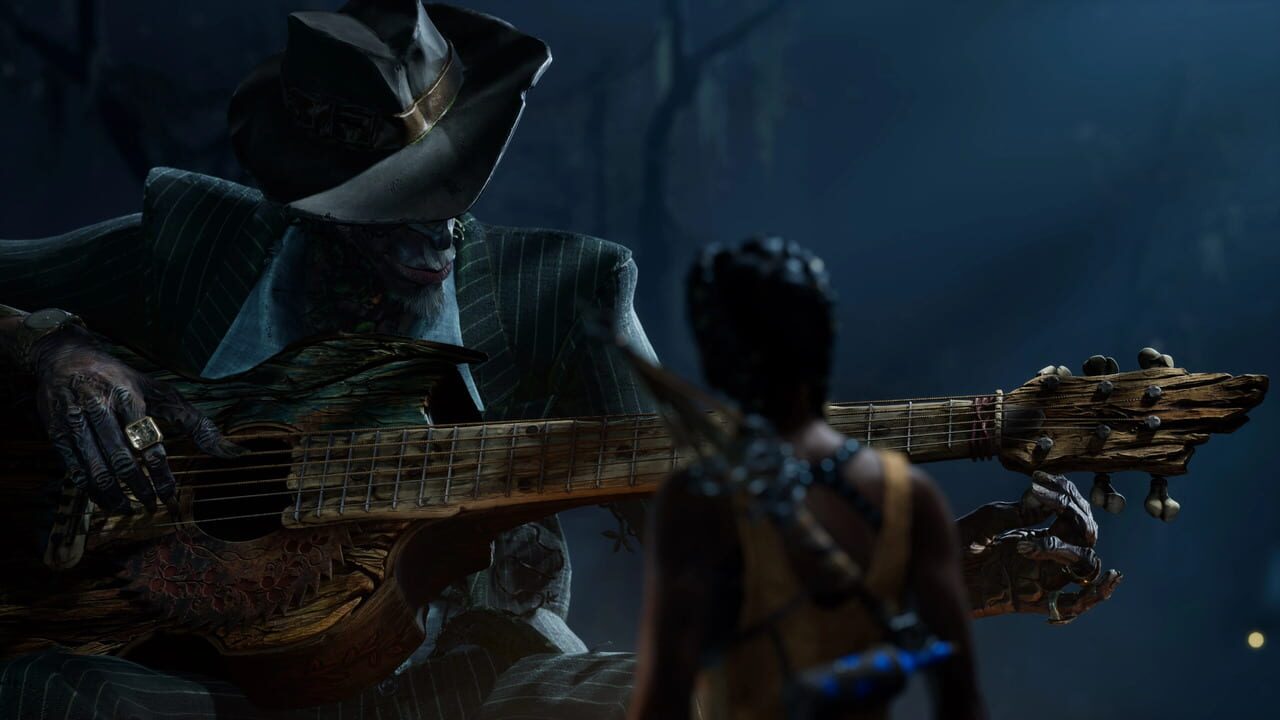
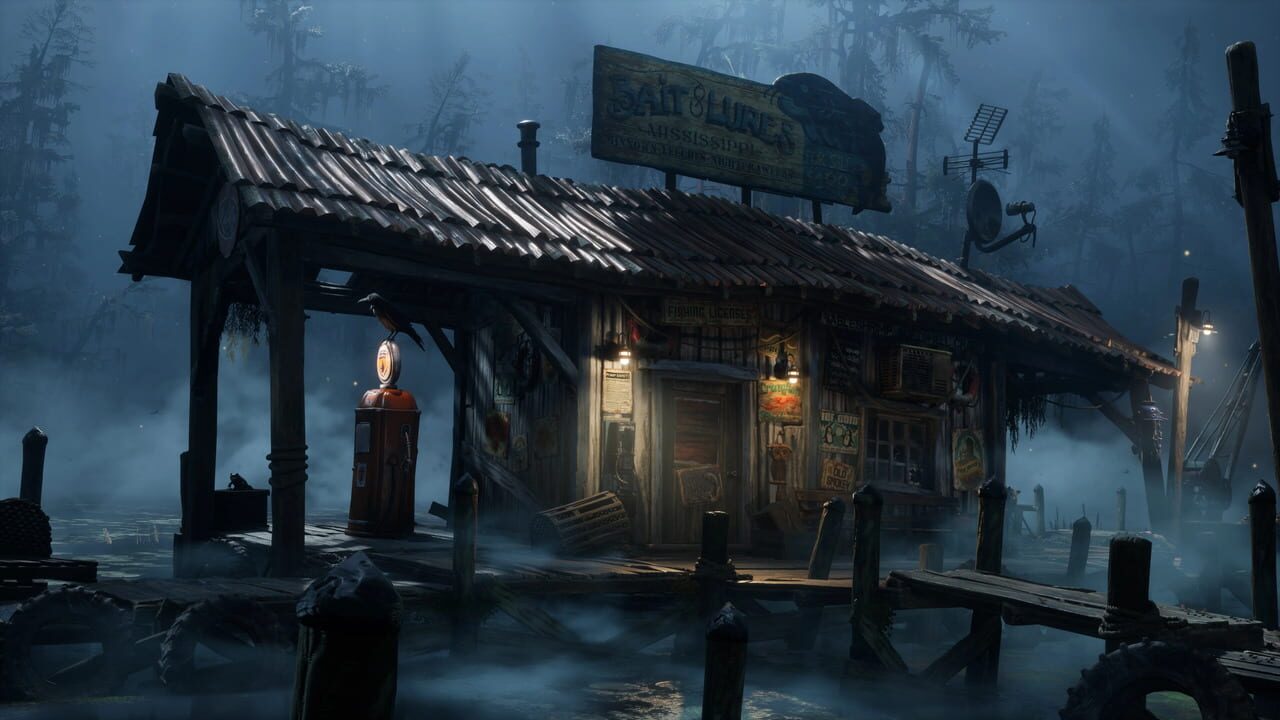
The cultural sources the game draws from are part of why the recovery works. The game is set in the American Deep South and draws explicitly on the African-American folk-magic tradition: the haint, the boo hag, the various spirits that the regional folklore organizes itself around. The folk-magic tradition is, in its actual cultural history, a tradition of made objects: the bottle tree, the painted door, the protective charm, the conjure bag, all of them objects whose specific making was the source of their efficacy. The stop-motion aesthetic returns to the image of the folk-magic tradition the made-ness that the tradition's actual practices have always involved. The image's labor-visibility matches the tradition's labor-visibility. The aesthetic choice is not arbitrary. The aesthetic choice has been thought through at the level of cultural-historical fidelity.
The perceptual account explains why the choice works on an audience. It does not explain why a studio would choose it, and the reason is worth naming because it is not primarily aesthetic. Compulsion Games is the Montreal studio behind Contrast (2013), a noir-inflected 2.5D platformer built around a shadow-projection mechanic, and We Happy Few (2018), a dystopian survival game that gave the studio its commercial breakout, the same year Microsoft folded Compulsion into Xbox Game Studios. None of the three Compulsion games named here were made by a team fielding the resources of the largest first-party productions on the market. Pursuing the photorealistic default costs a specific, escalating amount: thousands of unique high-resolution textures, physically accurate material scans, motion-captured performance for every principal character, and a lighting pipeline tuned across months of iteration to avoid the specific failures, the dead eyes, the waxen skin, the uncanny gait, that photorealism punishes and that a stylized register simply does not produce, because a stylized register was never claiming to be a face in the first place.
The stop-motion animation register that makes Hazel a made thing in the player's eye is also, not incidentally, cheaper to make well than the alternative. Continuous, high-frame-rate character animation of the kind a big-budget cinematic game needs is usually built from motion-capture data: an actor in a suit, a capture stage, a pipeline of engineers cleaning and retargeting that data onto a rigged model, before an animator starts refining individual shots. Deliberately held poses and stepped, incomplete-seeming motion, the technique South of Midnight borrows from stop-motion filmmaking, can be authored by a smaller animation team working frame by frame in a way that a photorealistic character's every-frame-unique motion cannot. The constraint does not diminish the choice, but it explains why a mid-size studio was in a position to make it at all, and why the visible-hand wave named above is disproportionately a mid-size and small-studio phenomenon: Studio MDHR, Supergiant, the unusually small internal team Obsidian gave Pentiment, and a Montreal developer whose two previous titles looked nothing like each other and nothing like this one, rather than the studios large enough to amortize a fully photorealistic pipeline across a hundred-hour open world.
This changes what the opening contrast is actually measuring. The frame from a big-budget release and the frame from South of Midnight are not simply two aesthetic philosophies available to any studio in equal measure. A publisher's photorealistic pipeline functions as a visible proof of solvency, a demonstration that enough was spent to compete on photorealism's own terms, the way a film's production value has always been legible as a budget line before it is legible as a style. The stylized register recovers aura, on Benjamin's account, and does so at a price a smaller studio can actually pay. Both facts explain the same set of games.
The reader who has the frame can apply it forward into evaluating almost every cultural product they encounter. The question is whether the product has been made in the dominant prestige register of its form, or whether the product has made the specific aesthetic decision to do something that the prestige register makes structurally unavailable. The prestige register has its strengths. The stylized alternative has different strengths. The two are doing different perceptual and affective work on their audiences, and the difference is the part of the conversation that the standard "is it good or bad" framing has been least equipped to articulate.
Margaret Livingstone, the Harvard neuroscientist whose work on what painting does to the visual system has been documented across multiple decades, gave the cognitive-science framework that makes the stylized indie wave's perceptual work measurable. Livingstone's research has demonstrated that the human visual system is composed of multiple distinct pathways that respond to different visual properties. The photorealistic rendering pipeline engages mostly one of these pathways (the parvocellular pathway, which processes fine detail and color) while letting another go quiet (the magnocellular pathway, which processes luminance contrast, motion, and overall spatial relationships). Stylized rendering with visible-hand qualities tends to engage the magnocellular pathway with substantial work, in ways the photorealistic rendering does not. The cumulative effect on the player's visual experience is the perceptual difference the audience has been feeling without having the science to name.
The reader who finishes this essay can carry several useful frames forward. The first frame: when a cultural product looks deliberately different from the dominant prestige register of its form, the difference is usually not just a stylistic preference. The difference is doing specific perceptual or affective work that the dominant register has been structurally suppressing. Recognizing this changes what the reader values in the product and what the reader looks for in future cultural-product announcements.
The second frame: in one's own cultural diet, notice whether the diet has been weighted heavily toward products that aspire to the prestige register of their forms, and whether the weighting has been producing the specific cumulative affective experience the contemporary cultural conversation has been documenting as auratic deficit (the sense that everything looks similar, that the visual environment has become tired, that no specific cultural product has been able to deliver the specific small affective signal the audience has been missing). If yes, the small handful of contemporary cultural products that have made the aura-recovery choice are worth seeking out. They will, on the available evidence, deliver something the prestige register has been failing to deliver.
The third frame: when a studio, a director, a writer, or a designer has demonstrated they can sustain the aura-recovery choice across long-form work, the demonstration is rare enough to be worth tracking. The next project they make is, on the available evidence, more likely than the surrounding cultural-product field to deliver the specific experience the contemporary moment has been failing to make available.
The figure is moving toward Hazel. The left arm completes its swing a fraction of a second before the right leg begins the next step. The eye catches the discontinuity. The brain registers the discontinuity as a choice. Somebody touched this frame. The image, for the duration of this small commercial release, has been allowed to bear the trace of that touching. The trace is the gift. The trace is what most contemporary digital culture has been engineered to remove. The cultural products that defend the trace are doing useful work the surrounding conversation has been slow to credit, and recognizing them as the specific kind of work they are is one of the more useful tools the reader can carry forward into evaluating what kind of cultural environment the contemporary moment is producing and what kind it has been losing.