
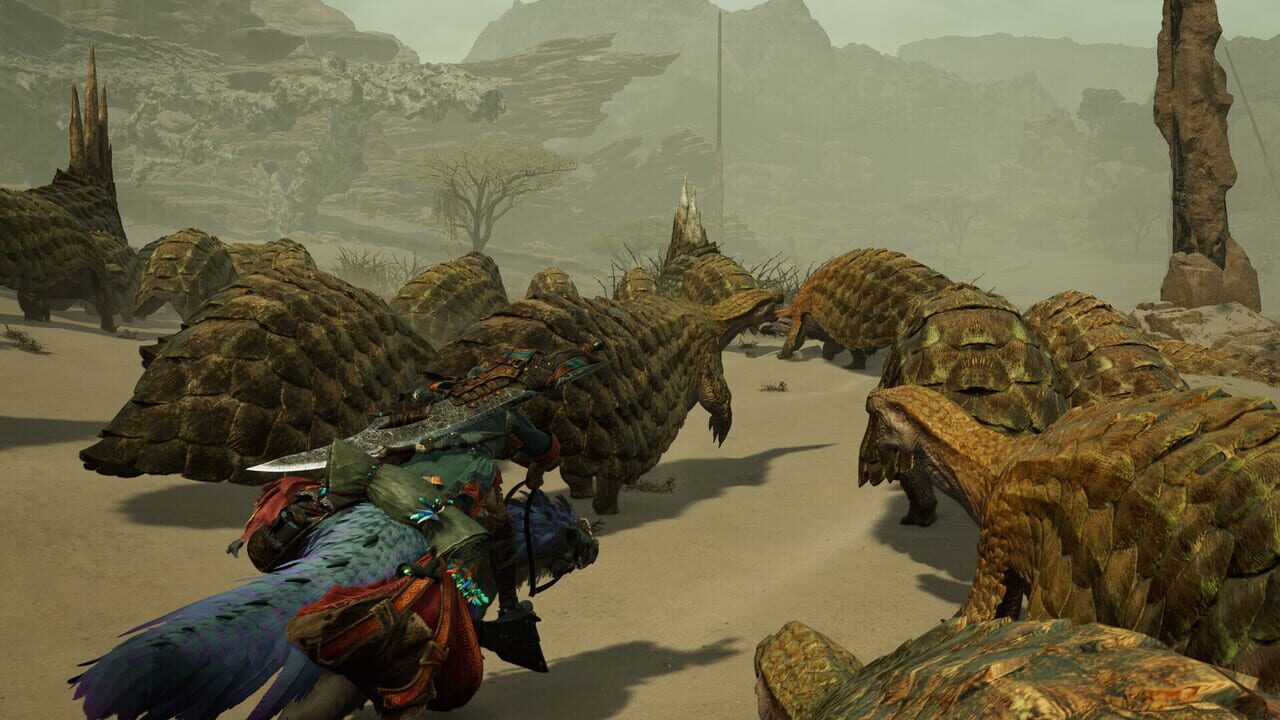
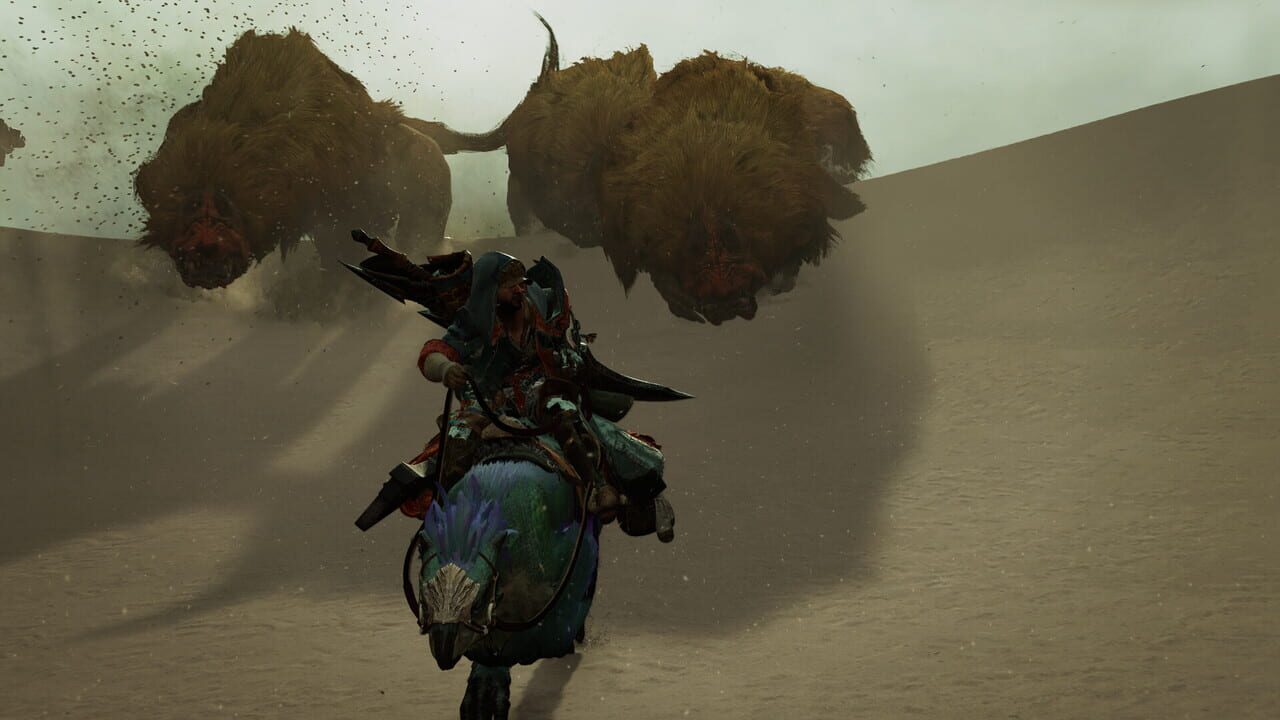

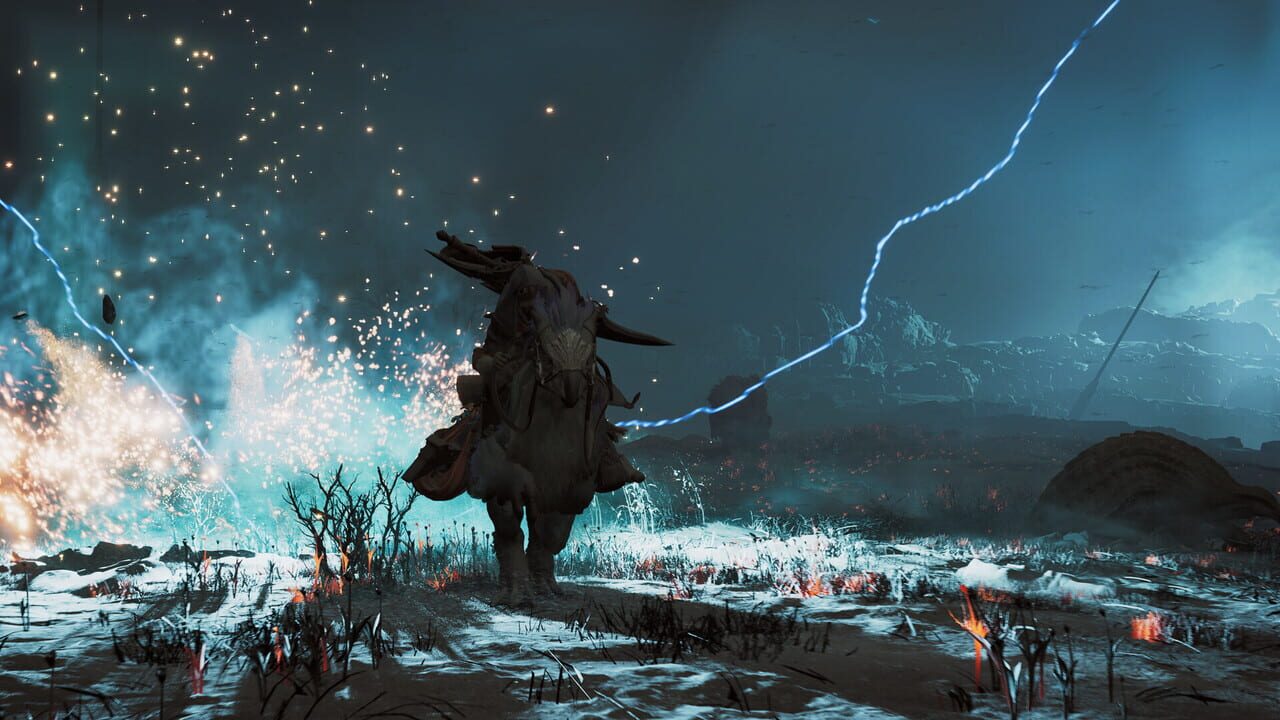

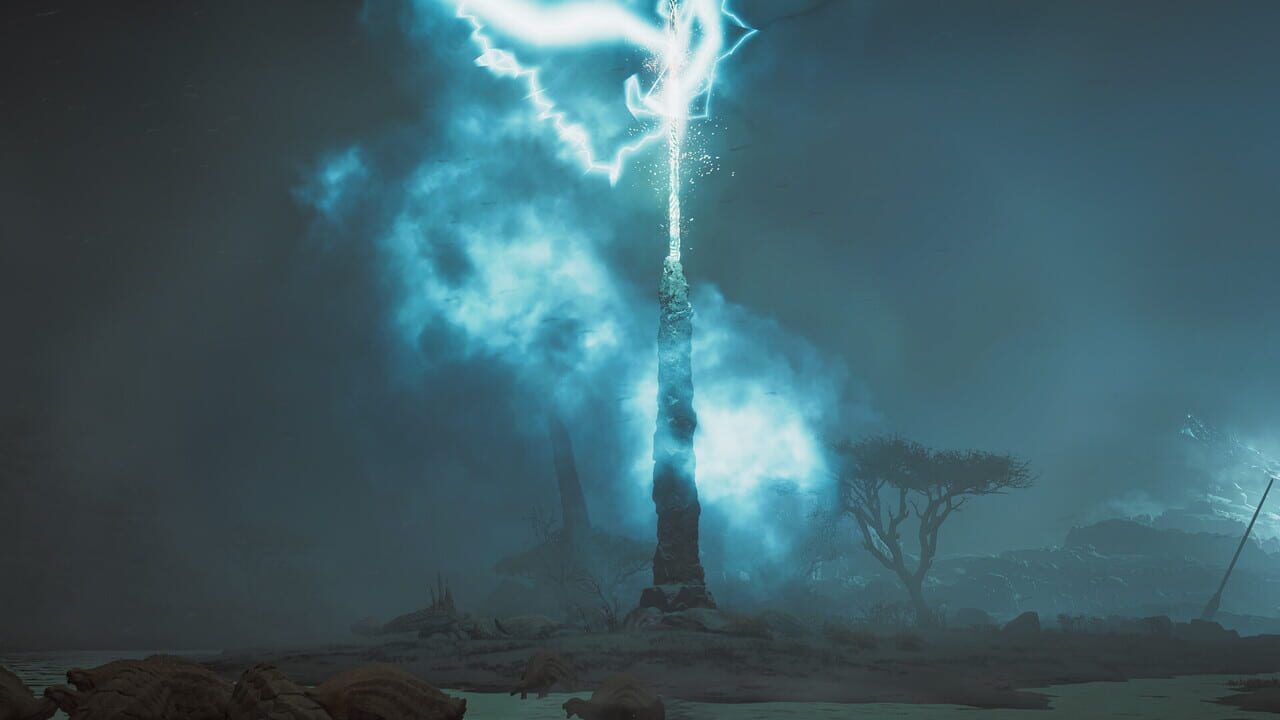
The Monster Hunter franchise, across six mainline entries and twenty years of development, has been one of the most distinctive design propositions the medium has produced. The pitch of the original 2004 game and its many successors has been straightforward to describe and harder to fully explain. The player tracks a large monster across a region. The tracking takes time. The hunt takes longer. The combat, when it begins, is slow, demanding, and tightly tuned to specific weapon-and-armor combinations the player has spent earlier sessions crafting. The cycle repeats. Across many cycles, the player develops the specific kind of expertise the franchise's audience has, for two decades, organized their gaming lives around.
The franchise's sixth mainline entry, Monster Hunter Wilds, was released by Capcom in February 2025. The early reception has been broadly positive. The franchise's audience has, in the longer arc of the reception, been registering a specific disappointment that has been hard to articulate. The new game is, by every available technical measure, more polished and more accessible than the previous entries. The new game is also, on the careful judgment of the franchise's longtime audience, somehow doing less of the specific cognitive work the previous entries had been doing. The mismatch between the polish and the experience is the part of the surrounding conversation that has been least well-served by the standard "is the game good or bad" framing.
The frame this essay wants to give the reader: contemporary commercial games are almost universally being shipped with what publishers call quality-of-life improvements. The phrase implies that the design has been carefully refined and the unnecessary friction has been removed. The phrase also frequently means that the design has removed the conditions under which the form was doing useful cognitive work, in the name of accessibility, with consequences for what the audience receives that the marketing copy does not name. The pattern is consistent across many recent franchise entries, and recognizing it changes how the reader can evaluate any future game-design announcement.
This is a frame that travels. The reader who has it can apply it to almost every contemporary cultural product they encounter, not just games. The phrase "quality of life" has analogues in many other industries. The pre-cut vegetables that have removed the friction of preparation from cooking, with consequences for the cook's relationship to the meal. The dating-app interfaces that have removed the friction of approach from courtship, with consequences for the depth of the relationships that result. The streaming services' algorithmic recommendation that has removed the friction of selection from cultural consumption, with consequences for the breadth of what gets consumed. The GPS navigation that has removed the friction of route-finding from driving, with consequences for the driver's spatial knowledge of their own city.
In each of these cases, the removed friction is being sold as improvement, and in each of these cases, the removal is also doing something else: it is removing the substrate on which the previous form's specific value depended. The friction was not, in any of these cases, just an inconvenience the design was correctly minimizing. The friction was, in many cases, the substrate on which the cognitive or emotional or relational work the form was doing happened. Removing the friction removes the work.
The mature pre-Wilds Monster Hunter form had calibrated a specific verb economy around the proposition that hunting is, at its core, a perceptual-attentional practice. The player who has been in the franchise for many entries has developed substantial competence in reading environmental signs, in deducing monster patterns from incomplete evidence, in matching weapon-and-armor selections to specific monster vulnerabilities, in pacing a hunt across the available time, and in coordinating with up to three other players whose own competences may overlap or complement the player's in productive ways. The cognitive work is substantial. The cognitive work is also, on Mihaly Csikszentmihalyi's well-replicated flow-research framework, exactly the kind of work that produces the specific psychological reward state that flow research has documented for fifty years.
What Wilds has done, in the friction-reducing register the contemporary commercial pressure has been pushing the medium toward, is compress many of the perceptual-attentional steps the franchise's form previously required. The new game's tracking is faster and more automated. The new game's information presentation is more comprehensive, less requiring of player inference. The new game's between-hunt preparation has been streamlined in ways that remove some of the small specific tasks the previous games had been calibrating. The new game's accessibility is, on every available measure, higher than the previous games' accessibility. The new game's cognitive substrate is, in the same measure, thinner.
K. Anders Ericsson, the late expert-performance psychologist whose research program dominated the field of expertise studies for forty years, gave the framework that makes the cost visible. Ericsson's central claim, developed across many studies, was that genuine expertise in any complex domain is built not by general engagement with the domain but by what he called deliberate practice: the specific kind of practice that targets the limits of current ability and pushes against them in structured, repeated ways. The musician practicing a difficult passage at slow tempo until it becomes accurate is doing deliberate practice. The chess player working through positions until specific patterns become automatic is doing deliberate practice. The Monster Hunter player working through specific monster encounters across many failed attempts until the player's reading of the encounter becomes fluent is, in Ericsson's strict sense, doing deliberate practice.
The deliberate-practice substrate the franchise's mature form had been providing is, in Wilds, substantially compressed. The hunts arrive faster, resolve faster, demand less of the player's perceptual-attentional resources, and reward fewer of the specific competences the previous form had been building. The franchise's longtime audience is, by direct cognitive accounting, getting less deliberate-practice opportunity per hour of play than the previous form delivered. The audience can feel the difference even when the conversation about the difference has been almost entirely about surface design choices.
This is the part of the conversation that the standard "the game is more accessible" framing has been least able to handle. Accessibility is not, in itself, a bad design property. Many of the previous franchise entries' rough edges genuinely were unnecessary friction that the form could have removed without losing the substrate. Some of Wilds' specific refinements are, on a careful look, genuinely improvements. The problem is that the friction reduction has been applied across the form indiscriminately, including in places where the friction was the substrate the form's value depended on. The result is a game whose surface measures are higher across the board and whose specific cognitive-practice value is lower than the franchise's mature form had been providing.
Focus Mode and Wounds are the test case this general claim needs, because they are additions to the combat rather than faster versions of something that already existed, and the strongest objection to this essay's argument runs directly through them. Wilds lets a hunter aim an attack or a guard at a chosen point on a monster's body while Focus Mode holds the camera's lock, and it introduces Wounds: marks that open on a monster's hide once a location has absorbed enough punishment, that glow under Focus Mode, and that take amplified damage from every subsequent hit, the hunter's or an ally's, until the mark is closed with a targeted Focus Strike that can stagger the monster outright. A hunter who reads a monster for open wounds, times the Focus Strike for the right moment, and manages the short window before a mark scars over is doing something that looks, at a glance, like exactly the reading-and-response competence the mature form spent twenty years cultivating. The concession is real: World and Rise already let a hunter aim a ranged weapon and angle a swing, and no version of the franchise has ever asked a hunter to fight blind. If Focus Mode and Wounds simply relocated the franchise's old skill rather than deleting it, the claim that Wilds asks less of its audience would be wrong, or badly overstated, and the honest version of this essay has to take that possibility seriously rather than waving it off.
The two systems test a different kind of skill rather than relocating the old one, and the difference is instructive about what quality-of-life design changes when it adds a system instead of simply cutting one. In the pre-Wilds form, a part's readiness to break was inferred, never shown: a hunter tracked cumulative damage the interface never displayed, read a limp, a discoloration, a change in gait, and committed to a target under an uncertainty that did not resolve until the part gave or the hunt ended. Wounds removes that uncertainty and replaces it with a signal. The glow marks the exploit; Focus Mode supplies the aim. What the earlier games asked a hunter to diagnose under incomplete information, Wilds asks a hunter to confirm under a lit indicator. Ericsson's own framework explains why the substitution is not a wash. Deliberate practice is defined by sustained difficulty at the edge of current ability, of the kind that forces the ability itself to adapt, not by the mere presence of a timed input. A response to a glowing cue is a reaction check, the same kind of skill nearly every contemporary action game already asks for. It is a real skill, but not the diagnostic one that tracking and the hidden damage math used to require, and it does not build the same competence over the same number of hunts. Wilds has redistributed the franchise's cognitive demand rather than deleted it, moving weight away from the perceptual-attentional register the earlier games specialized in and toward the execution-timing register most of the genre's neighbors already share. A hunter who has mastered Focus Mode has gotten good at something real. It is a more common something than the specific inferential competence the tracking used to cost.
This is a pattern that applies far beyond Monster Hunter. The Souls franchise, by deliberate contrast, has resisted most of the friction-reduction pressure across its now-decade-and-a-half of mainline entries. The reason the resistance has been worth defending is that the friction in the Souls games is, on a careful read, the substrate on which the form's specific cognitive value depends. Removing the friction would remove the form's value. The studio's institutional discipline in refusing to remove the friction is one of the more under-credited reasons the Souls form has remained vibrant when many of its peers have been degraded by quality-of-life additions that the press releases described as improvements.
Bernard Suits, the philosopher of games whose 1978 book The Grasshopper: Games, Life and Utopia gave the contemporary philosophy of games its most-cited foundational text, made the deeper argument the analysis depends on. Suits defined a game as the voluntary acceptance of unnecessary obstacles in pursuit of a specific goal. The unnecessary obstacles are the game. Without the obstacles, there is no game; there is only the goal, achievable more efficiently by other means. The golfer who used a helicopter to deliver the ball to the hole is not playing golf, because golf is constituted by the obstacles the golfer voluntarily accepts. The same is true of every other game form. The obstacles are the substance.
What contemporary quality-of-life improvements often do, in Suits's framework, is remove the obstacles the form was constituted by. The form's substance is, in the process, reduced. The form survives as something else, frequently something less interesting. The audience that has been participating in the form for the substance the obstacles produced now receives a thinner version of what they had been showing up for. The audience's disappointment is, in Suits's vocabulary, structurally explicable: the game has been turned into less of a game.
The reader who has the frame can apply it to almost every contemporary cultural product they encounter. The question is whether the form's specific friction is the unnecessary kind that the design should reduce, or the substrate kind that the form is constituted by. The two are distinguishable on careful inspection. The unnecessary friction is the friction the form's specific value does not depend on (clunky menus, slow load times, confusing UI, badly explained mechanics that the player has to figure out for non-design-purpose reasons). The substrate friction is the friction the form's value does depend on (the specific perceptual-attentional work that the form's cognitive practice is built around, the specific time costs that the form's emotional weight requires, the specific social negotiations that the form's relational content depends on).
The reader can apply this distinction with practical results. The pre-cut vegetables that remove the chopping friction are, in many cases, removing the substrate of the cook's actual relationship to the meal. The dating-app interface that removes the approach friction is, in many cases, removing the substrate of the courtship's relational development. The GPS that removes the route-finding friction is, in many cases, removing the substrate of the driver's spatial knowledge. None of these are categorically bad. All of them have specific costs the surrounding "convenience" vocabulary has been mostly unable to name.
The implication for the medium of games is direct. The franchises that have committed to retaining their substrate friction across the past decade have, on the available evidence, generally retained their cultural-cognitive value. The franchises that have removed substrate friction in the name of accessibility have, on the same evidence, generally produced thinner versions of themselves. The pattern is robust enough that the reader can predict, with reasonable accuracy, which announcements promising "quality of life improvements" will produce strong games and which will produce weaker ones.
The signal is in the specific language. An announcement that promises "improvements to UI clarity," "faster load times," "better matchmaking" is signaling unnecessary-friction reduction, which is usually fine. An announcement that promises "streamlined onboarding," "simplified systems," "more accessible learning curve" is signaling substrate-friction reduction, which is frequently not fine. The two categories of language are distinguishable. The studios that understand the distinction are making what the medium's healthier decades were distinguished by. The studios that conflate the two categories are usually producing the thinner versions of the games their franchises had previously been delivering.
Calling this conflation may be too generous a word, and Wilds is a specific enough case to check which word actually fits. None of what the essay has described is a mystery to the studio that built it, and the question worth answering directly is why a developer with two decades of evidence that substrate friction built the franchise's value would choose to remove it anyway. The answer is arithmetic, not aesthetic misjudgment, and Capcom has published the arithmetic itself. Wilds, released February 28, 2025 for PlayStation 5, Xbox Series X and S, and PC, surpassed eight million units sold within three days, the fastest any title has reached that mark in the company's history. Monster Hunter World, by comparison, had needed the same three days to move five million units at its January 2018 launch, and World went on to become Capcom's best-selling game of all time. By the end of March 2025, Capcom's own sales materials put Wilds past ten million units worldwide, a new company record for a title's first month on sale. World had already proven that a friction-reducing Monster Hunter could cross over to an audience the franchise's earlier, more demanding entries had never reached in comparable numbers. Wilds continued the trend World started, at a steeper rate, and the company has no commercial reason to read the result as anything other than confirmation that the direction was correct.
This changes what kind of claim the essay is making about the pattern, and the change is worth being precise about. Capcom did not fail to notice what the friction reduction cost the franchise's longtime players. It simply never priced that cost against the number that actually mattered to the business. Most of the eight million buyers in the first three days had not put in the hundreds of hours the deliberate-practice argument depends on. A meaningful share were buyers the faster tracking, the clearer information, and Focus Mode's more legible feedback loop made the franchise newly legible to. A design choice that thins the game for a veteran and widens the buyer pool by several million units succeeds by the only measure a public company uses to judge one. The dynamic is not particular to Capcom. Any franchise old enough to have built a core audience and large enough to want a mainstream one is making the same trade under the same pressure, and the reporting cycle publicly traded publishers answer to has no line item for the deliberate-practice value the core audience is losing. The core audience's disappointment is real and, in the revenue the redesign produces, invisible. Recognizing the pattern does not hand the veteran audience any leverage over it: the leverage such an audience would need is a purchasing bloc large enough to outweigh the new buyers the thinning brought in, and the sales figures say plainly that no bloc of that size exists. What recognizing the pattern buys the reader instead is the ability to stop mistaking the next franchise's quality-of-life announcement for an oversight that feedback might correct, and to read it instead as an early forecast of which part of a game's specific value is about to be sold off for a specific, publishable sales figure.
The reader who finishes this essay can carry several practical frames forward. The first frame: when a sequel announcement promises quality-of-life improvements, look carefully at what specific kinds of friction the announcement is naming. The kinds matter. The second frame: in one's own life, notice the activities where convenience improvements have removed the substrate the activity was constituted by, and ask whether the reader's relationship to the activity is what it was before the convenience arrived. The reader who notices the pattern can sometimes recover the activity's substance by deliberately reintroducing some of the substrate friction (cooking with whole vegetables instead of pre-cut, walking instead of driving, reading slowly instead of skimming, choosing books rather than letting algorithms choose). The third frame: when an activity feels less satisfying than it used to, the cause is often substrate-friction removal somewhere in the chain. The cause is usually identifiable. The substance is usually recoverable.
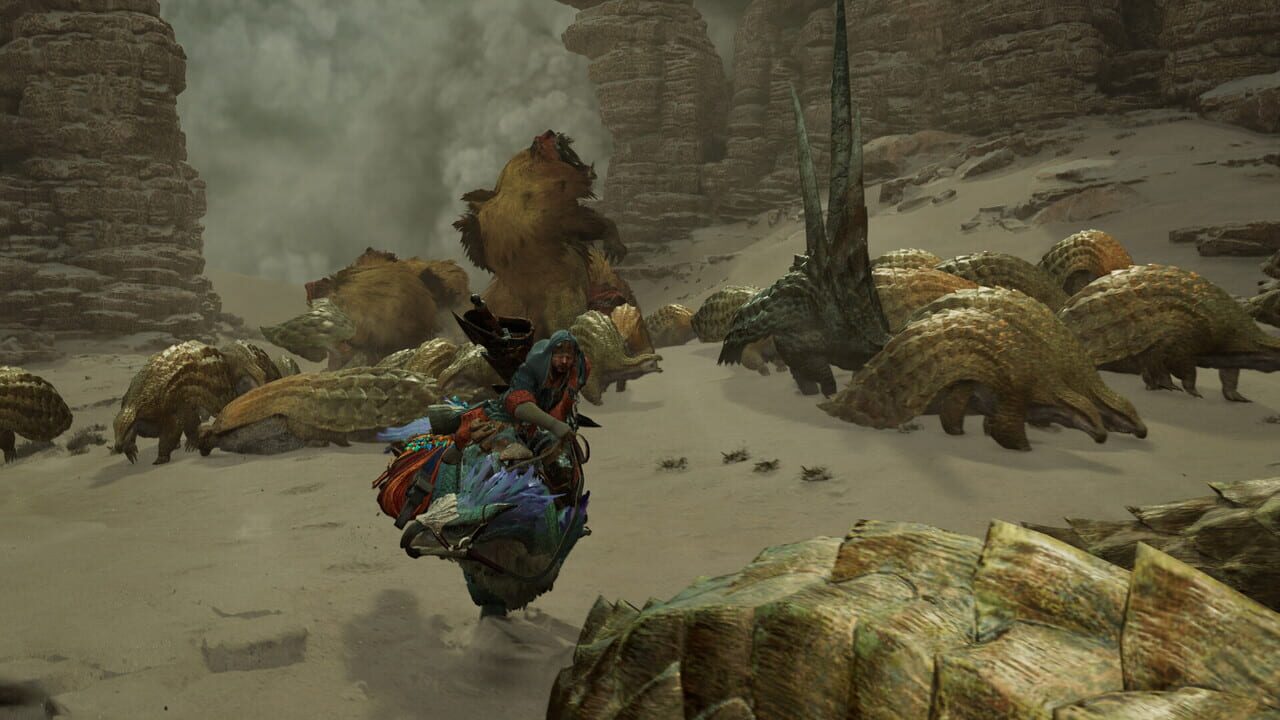
The Doshaguma's tracks lead off into the pale gray trees. The hunter in the mature pre-Wilds version of the franchise would have followed the tracks for many minutes, attending to ground sign, scent, vegetation displacement, the small specific perceptual labor the design had calibrated the player into doing. The hunter in Wilds can pin the location on the map and proceed directly to it. The combat will arrive faster. The cognitive work the slower approach was performing will not have happened. The animal will still die. The hunter will still collect the parts.
The frame the reader can carry: the difference between the two is the substance the franchise had been building. The contemporary commercial pressure has been pushing the medium away from the substance, in the name of convenience the marketing apparatus knows how to sell. The franchises that resist the pressure deserve to be recognized for the resistance. The franchises that yield to it are usually, on a careful look, losing more than the convenience vocabulary lets the audience know they are losing.